What is it that we as a nation are missing?
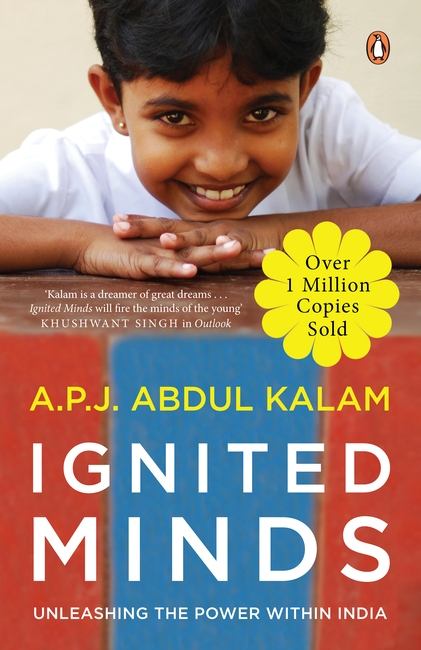
Why, given all our skills, resources and talents, do we settle so often for the ordinary instead of striving to be the best?
At the heart of Ignited Minds is an irresistible premise: that people do have the power, through hard work, to realize their dream of a truly good life. Kalam’s vision document of aspiration and hope motivates us to unleash the dormant energy within India and guide the country to greatness.

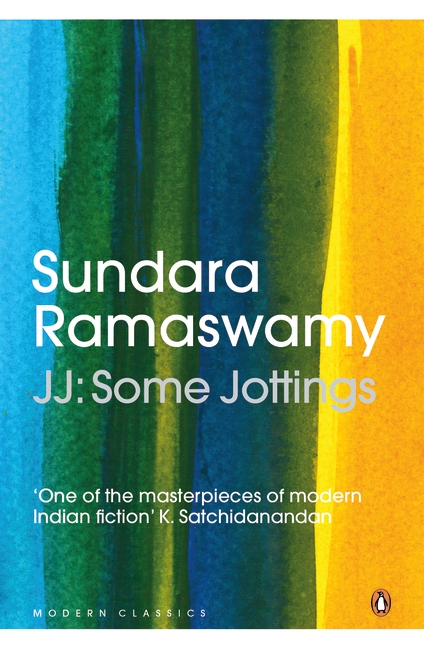
Joseph James-or JJ-is dead. A famously outspoken figure in Malayalam literature, his death is particularly mourned by Balu, a Tamil writer who endeavours to preserve the luminary’s legacy by penning a biography of JJ. For this, Balu must immerse himself in the politicized and divisive Malayalam literary world, where JJ has made quite a few enemies. Thus begins an enthralling novel of ideas, brimming with sharp wit and laced with satire, as Balu gathers his thoughts and experiences to pay homage to JJ-only to discover that he might have bitten off more than he can chew.
An undisputed classic of modern Tamil fiction, JJ: Some Jottings remains bitingly relevant and scathingly funny in its vision of a society where artistic integrity is besieged by personal agendas.

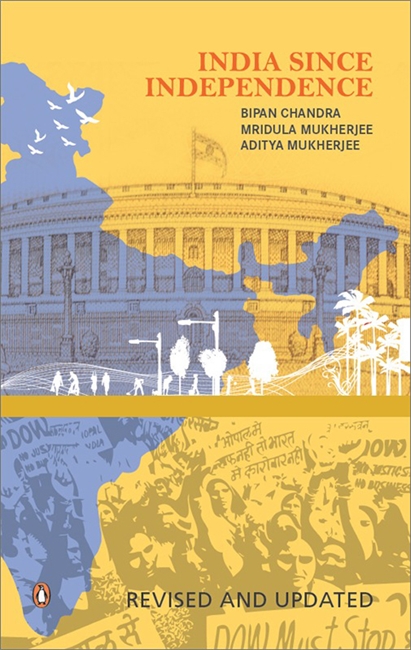
The story of the forging of India, the world’s largest democracy, is a rich and inspiring one. This volume, a sequel to the best-selling India’s Struggle for Independence, analyses the challenges India has faced and the successes it has achieved in the light of its colonial legacy and century-long struggle for freedom. It covers the framing of the Constitution and the evolution of the Nehruvian political and economic agenda and basics of foreign policy; the consolidation of the nation and contentious issues like party politics in the Centre and the states, the Punjab problem, and anti-caste politics and untouchability. These, along with objective assessments of Jawaharlal Nehru, Indira Gandhi, Jayaprakash Narayan, Lal Bahadur Shastri, Rajiv Gandhi, Vishwanath Pratap Singh, Atal Bihari Vajpayee and Manmohan Singh, constitute a remarkable overview of a nation on the move.

Winner of the 2019 Hindu Young World-Goodbooks Award for Best Book (Non-Fiction)
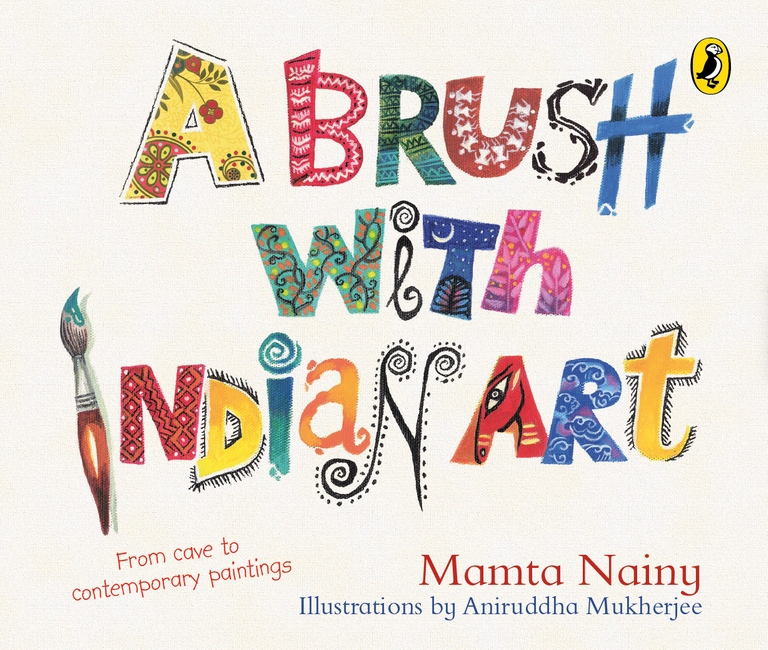
Embark on a vivid journey on which you’ll learn about the origins and evolution of art in the country. Prepare to be amazed by the first pictures made by early humans; reflect upon the serenity of Buddhist cave paintings at Ajanta; marvel at the splendour of Mughal miniature art; delight in the religious depictions of Tanjore; study the hybrid Company and revivalist Bengal styles; and discover the best of modern and contemporary artists.
Watch it all come alive in intricate black-and-white sketches and stunning photographs of the most celebrated visuals across time.
A rich primer on the different schools of art and the most significant movements in Indian art history, A Brush with Indian Art might even nudge you into propping up your first canvas!

‘Sex underlies human existence, and if human life is sacred, how can sex not be?’
As squeamish as India is today about sex, this is also the land where queens once copulated with head horses at religious ceremonies, where the art of love-making was declared the revelation of the gods and recorded in elaborate detail in the kama sutras and prostitution was a form of sacred offering at temples adorned with erotic sculptures.
Using India as a paradigm, Rita Banerji illustrates that sexual morality is not an absolute but a facet of living that undergoes periodic upheavals. She delineates four major periods in Indian history when there were significant shifts in the collective social perception of sex and sexuality, and the associated customs and beliefs. What causes this revision in sexual ethos? To explain this, Sex and Power proposes a modified version of Nietzsche’s slave versus master morality theory. The theory, which is tested against the dynamics of each of the four defined periods, establishes that the moral overview of any given period is determined not by a set of pre-existing ethics but by the existent power structure of the period in question.
The accepted moral code actually serves the party in power. How would this theory play out in the context of India today? Banerji examines this question at length as one of extreme urgency, and concludes that the three most burning issues facing the country today-population explosion, AIDS and female genocide-are the manifestations of a collective sexual malfunctioning of society and need to be redressed in the context of an existent social and economic power hierarchy.

Terrorists from the Free Kashmir Front hijack a coach on the Shatabdi Express with forty people; just outside Madras. A nephew of the defence minister is among the passengers. Within the first five minutes they have killed a railway guard and caused the authorities to panic. The Special Operations Force; a team of crack commandos from the Army; is called in to deal with the crisis.
Heading the operation is Lieutenant Colonel Rajan Menon-Raja-who is soon convinced that these are not ordinary terrorists. They have the backing of a highly intelligent but crooked head. He dubs the ruthless genius the Krait. Raja leads his men in a brilliant rescue operation in Madras; but he knows this is only the opening gambit in a sinister plan devised by the terrorist mastermind; the Krait will strike again. And he realizes with dismay that the enemy might be one of them . . .
They say that the hangman’s job is an art. Positioning the knot under the prisoner’s ear is the most important part of the job; get it exactly right and there’s not a quiver from the rope except for that little jerk at the drop, when his neck breaks. A few millimetres off, and the man’s neck does not break; he dies of strangulation, slowly painfully.
Written with rare power and unflinching directness, this is a compelling, often unsettling account of a life of great psychological and moral complexity.
The real life story of the Hangman working for the king of Travancore, a small pre-independence South Indian kingdom unfolds in full detail. Each time he returned from the gallows, he told himself that it would be the last time. But he went back, a hundred and seventeen times. He did what he was ordered to do and shut out difficult memories, till an encounter with a writer almost a quarter century after his last hanging forced him to confront his past.
This Book takes us into the mind of a Man struggling to come to terms with his Dharma, his conscience, and his shame.

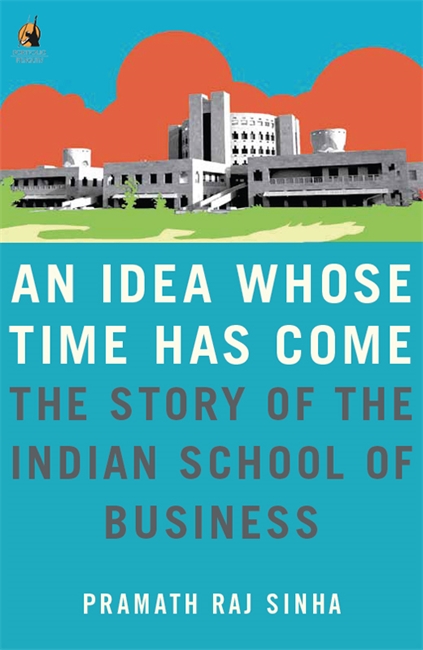
Ten years ago, the founders of the Indian School of Business, Hyderabad articulated a vision that was as daunting to execute as it was simple to state: to build a world-class business school in India.
The rest is history: within a decade the ISB grew from a start-up venture to globally top-ranked business school, named among the top twenty business schools in the world three years in a row, with the distinction of being the youngest business school ever to enter the world top twenty rankings.
An Idea Whose Time Has Come traces the ISB’s eventful history and also examines the reasons that account for the institute’s success. What emerges is a tale of perseverance and dedication, of challenges met and rewards reaped, and of an unshakeable idea that was painstakingly transformed into an invincible institution. It is no wonder that the ISB continues to attract thousands of confident, purposeful men and women every year and moulds them into talented professionals.

This is not a biography.
Nor is it a linear march of a man from childhood to success.
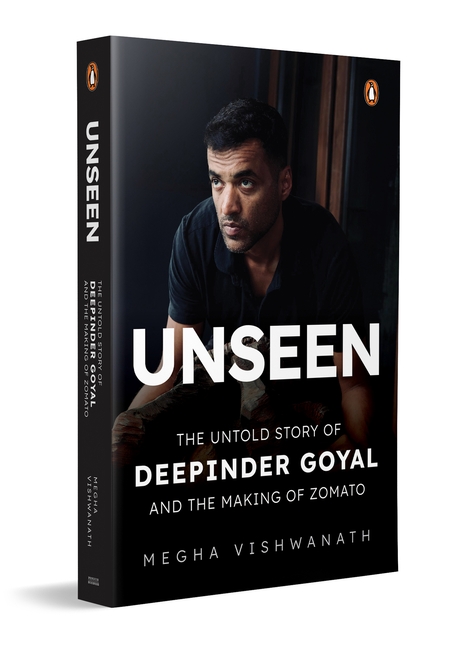
Unseen is the anatomy of a founder who doesn’t chase stability but thrives in contradictions—restless yet laser focused, flirting with high stakes and uncertain outcomes.
In July 2021, as Zomato became India’s first tech unicorn to go public, its founder, Deepinder Goyal, was largely untouched by the reverberating glory. Unseen begins where most stories end, at the peak, only to pull you into the shadows that shaped it.
Through the eyes of former journalist Megha Vishwanath, this is the deeply personal journey of a stuttering boy from small-town Punjab who grew into the reluctant face of a billion-dollar brand. Vishwanath pieces the narrative through hundreds of interviews, capturing the voices of those who worked with Deepinder, fought with him and followed him—through years of watching him build, break and build again.
Assembled from fragments of private battles, impossible questions and split-second decisions that altered the course of one of the largest companies of our generation, this book reveals what happens when ambition is stripped of vanity, brilliance sheds its theatre and success arrives without peace.
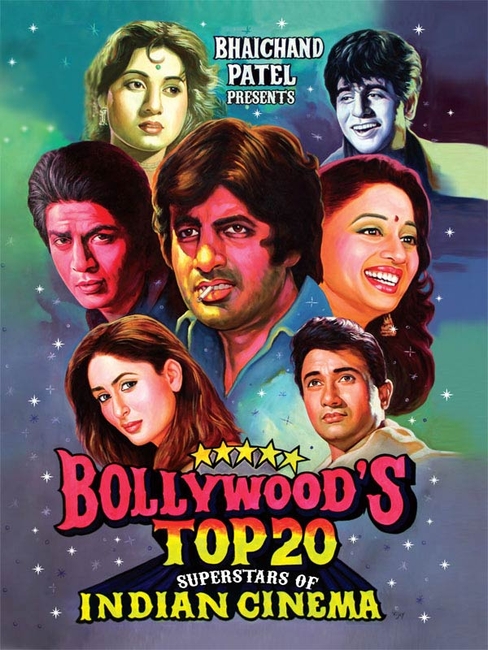
Hindi cinema has cast a seductive spell over its spectators for close to a century now. Visually arresting, dynamic in outlook and pulsating with life, Bollywood has entertained and enthralled moviegoers over the years with its melodious music, its colourful drama and its lively plotlines. At the very heart of the Bollywood mystique is the towering presence of its galaxy of stars-demigods and divas who have shaped and defined popular cinema, and popular imagination, from one generation to the next.
Bollywood’s Top 20 is an exciting collection of brand new essays by renowned writers that pays tribute to Hindi popular cinema’s biggest stars of all time-from Ashok Kumar, Dilip Kumar, Dev Anand, Raj Kapoor, Nargis and Madhubala to Rajesh Khanna, Amitabh Bachchan, Aamir Khan, Shah Rukh Khan, Kajol and Kareena Kapoor-who are indispensable to the Bollywood pantheon. Each piece offers unique insights into the lives of Bollywood’s most exceptional legends-their struggles and triumphs, downfalls and scandals, and the inscrutable x-factor that made them carve a niche for themselves in an industry bursting with talented professionals and desperate hopefuls.