



Only too often, we falter when it comes to completing a task properly and on time. It is the last 10 per cent that seems to elude us-and this usually results in a negative customer experience.
But then some companies-Wal-Mart, Starbucks, Nestlé and Southwest Airlines, to name a few-are far ahead of the curve: they have customers at the heart of whatever they do.
What do these companies do that sets them apart? They genuinely believe in delivering a great customer experience; the thinking that accompanies this belief makes all the difference.
The Last Ten Per Cent shows us how to go that extra mile.
Archives: Books
The Aspirational Investor
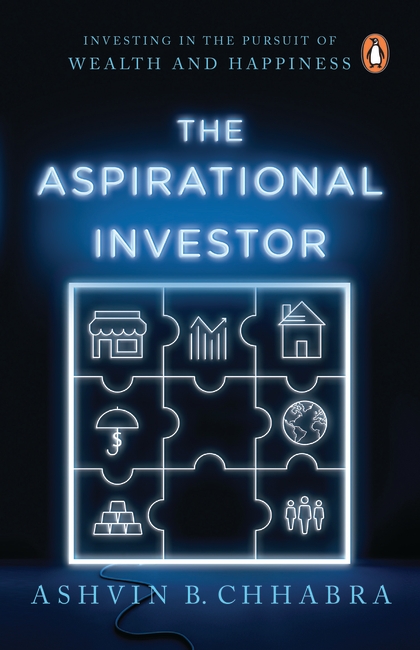
Investing is not about beating the markets. It should be about your life’s goals: be it achieving safety for your family, a better life for your children, starting or expanding a business or creating wealth. Unfortunately, today, we are often preoccupied with the wrong priorities-like increasing returns at all costs or finding the next star fund manager.
In The Aspirational Investor, Ashvin B. Chhabra, chief investment officer of Merrill Lynch Wealth Management, offers a practical, innovative framework for making smarter choices about aligning your investment strategy to your life’s goals. What investors need, argues Chhabra, is a framework that shifts the focus of investment strategy from portfolios and markets to individuals. He reveals some surprising facts about wealth creation, reinterprets the success formulas of investing greats like Warren Buffett, and lays out a concise road map for identifying, prioritizing and quantifying financial goals.
Raising the bar for what we should expect when we decide to invest, The Aspirational Investor sets us on a path
to more confident and fulfilling financial lives.
Let’s Talk In English
Do you shy away from situations that require you to speak in English? Do you wish to command an army of words at a moment’s notice? Filled with innovative and practical learning devices, this book is a comprehensive guide to mastering the art of reading, writing and speaking English. As a learner who has spent many years navigating the treacherous slopes of the language, Manish Gupta understands the challenges faced by an Indian learner. He recounts his own struggles and narrates his interactions with people to outline tips and tricks to improve vocabulary, pronunciation and spoken English.
Inside Unreal Estate
A candid tell-all tale of India’s most debated sector
Starting off as a trainee engineer, Sushil Kumar Sayal was determined to be a success in real estate, at a time when it was viewed as an unscrupulous profession. He has since worked with companies like Mahindra Gesco, DLF and Alpha G, and has played a significant role in establishing the Real Estate Asset Management (REAM) model in the country. In his fast-paced memoir are many anecdotes of dodgy builders, maverick investors and corrupt bureaucrats..
Brand Shastra
What is the similarity between selling a brand and standing out for promotion? Can the principles of B2B marketing really give marriage a happily ever after? Is using celebrities to sell shampoo the same thing as getting references for your resume? How can lessons from the branding of Starbucks and McDonald’s change your life?
This is not the sort of marketing you learn in business schools, but more a science which influences human perception and through it, behaviour. From the days of Adam, this is that power we all understand intuitively and use every day. From losing weight to implementing better work-life balance to how we incentivize conduct in our friends and colleagues—there are lessons and insights in the book that you’ll find yourself relating to and applying in how you lead your life.
Combining the business and branding experience of a CEO, with the storytelling ability of a novelist, Mainak Dhar’s Brand Shastra will stimulate, inspire and entertain.
Making The Elephant Dance:
How should incumbents transform themselves?
Making the Elephant Dance provides a roadmap using the levers of business excellence, innovation and globalization by documenting the Tata group’s transformational journey from a $5.8-billion Indian firm in 1992 to a $103-billion global powerhouse in 2014, with over 65 per cent of revenues coming from outside India.
Tata is one of the most admired companies in the world. This book explains the sequence of leadership and management interventions that Tata used following the liberalization of the Indian economy in the 1990s to become the largest private-sector employer in both India and the United Kingdom, and acquire iconic brands such as Jaguar Land Rover and Tetley.
Sunil Mithas profiles the transformational journey of incumbents such as Tata Steel, Jaguar Land Rover, Tata Consultancy Services, Titan, Indian Hotels, Tata Power and Tata Chemicals to provide a framework for almost any organization to rediscover its potential and charge ahead.
The Dharma of Business
Business law in medieval and early modern India developed within the voluminous and multifaceted texts called the Dharmashastras. These texts laid down rules for merchants, traders, guilds, farmers, and individuals in terms of the complex religious, legal, and moral ideal of dharma.
This exciting book provides a new perspective on commercial law in this period. In addition to a description of the substantive rules for business, the book reinterprets the role of business and commerce within the law generally and demonstrates that modern assumptions about good business practice could benefit from the insights of this ancient tradition. It thus makes a compelling case for the relevance of the dharma of business to our own time.
Financial Affairs Of The Common Man
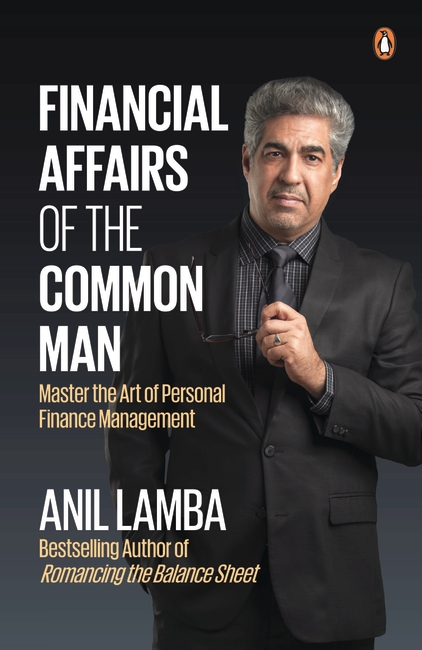
Financial Affairs of the Common Man presents a collage of the various aspects of personal finance management that every individual should pay heed to. It introduces the concepts that you must understand to effectively plan your finances, and provides the tools and the knowledge needed to do so.
Read this book, written with the common man in mind using easy-to-understand language, to understand the power of compounding and the effects of inflation on investments. It’s time to familiarize yourself with mutual funds and SIPs, and to gain a deeper insight into the making of personal balance sheets and income tax provisions.
Habit Of Winning
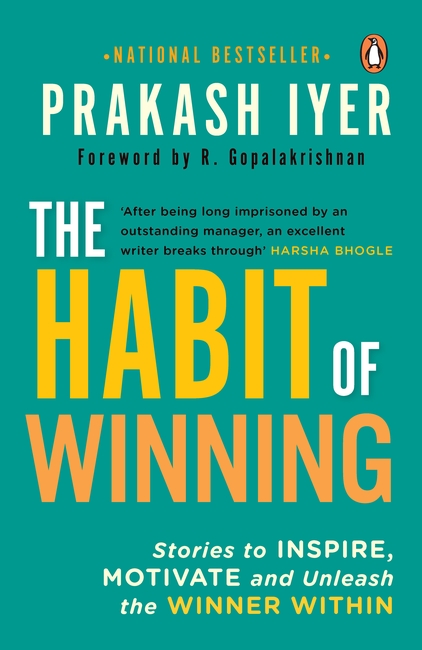
Do you feel like throwing in the towel, but want to be a great leader? Would you like to build an organization? Do you want your child to be the best she can be? If you answered yes to any of these questions, The Habit of Winning is the book for you. It is a book that will change the way you think, work and live, with stories about self-belief and perseverance, leadership and teamwork-stories that will ignite a new passion and a renewed sense of purpose in your mind.
The stories in The Habit of Winning range from cola wars to cricketing heroes, from Michelle Obama’s management techniques to Mahatma Gandhi’s generosity. There are life lessons from frogs and rabbits, sharks and butterflies, kites and balloons. Together they create a heady mix that will make the winner inside you emerge and grow.
Celebrating Life

The universe has bestowed limitless powers and infinite siddhis on the human consciousness. Along with being effective and successful in the personal and professional spheres, the purpose of human life is also to ensure the complete blossoming of the individual consciousness. In Celebrating Life, Rishi Nityapragya shares the secrets that can help you explore your infinite potential. He offers an in-depth understanding of how to identify and be free from negative emotions and harmful tendencies, and how to learn to invoke life’s beautiful flavours-like enthusiasm, love, compassion and truth-whenever and wherever you want.
Celebrating Life is an intensely honest expedition that teaches you how you can be a master of your circumstances and make your life a celebration.