



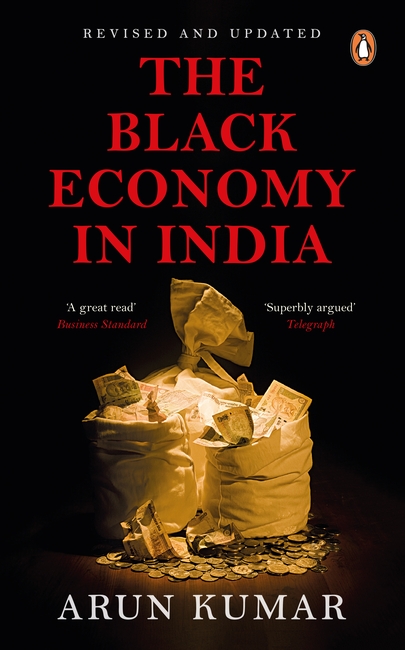
India’s white economy is inextricably linked with its black economy. Where in 1991 the black economy constituted about 35 per cent of the national economy, it had increased to 62 per cent by 2013. Both legal (industry, services, real estate, the share market) and illegal (havala, smuggling, narcotics) activities, as well as instances of corruption, contributed to this situation. But the cash, or ‘black money’, circulating in the country is merely around 3 per cent of the total domestic black economy. In this scenario, how effective has the central government’s move to demonetize 500- and 1000-rupee notes in November 2016 been?
In the only such book on the subject, written especially for the general reader, Arun Kumar critically examines the causes and consequences of black income generation and the possible ways to curb it. Backed by empirical data, his incisive analysis lays bare the pernicious effects of black income on the macroeconomy and the resultant inefficiency in society. It also focuses on the nexus of businessmen, politicians and the executive in perpetuating the black economy.
A groundbreaking book, The Black Economy in India shows how demonetization is not the way to end black economy, since what India must do is empower citizens and make leaders accountable.
Archives: Books
The Discovery Of India
The Discovery of India has acquired the status of a classic since it was first published in 1946. Nehru’s brilliant intellect, deep humanity, and lucid style make ‘The Discovery of India’ essential reading for anyone interested in India, both its past and its present.
Written over five months when Jawaharlal Nehru was imprisoned in the Ahmadnagar Fort, The Discovery of India has acquired the status of a classic since it was first published in 1946.
In this work of prodigious scope and scholarship, one of the greatest figures of Indian history unfolds the panorama of the country’s rich and complex past, from prehistory to the last years of British colonial rule. Analysing texts like the Vedas and the Arthashastra, and personalities like the Buddha and Mahatma Gandhi, Nehru brings alive an ancient culture that has seen the flowering of the world’s great traditions of philosophy, science and art, and almost al its major religions.
Nehru’s brilliant intellect, deep humanity and lucid style make The Discovery of India essential reading for anyone interested in India, both its past and its present.
Non-Stop India
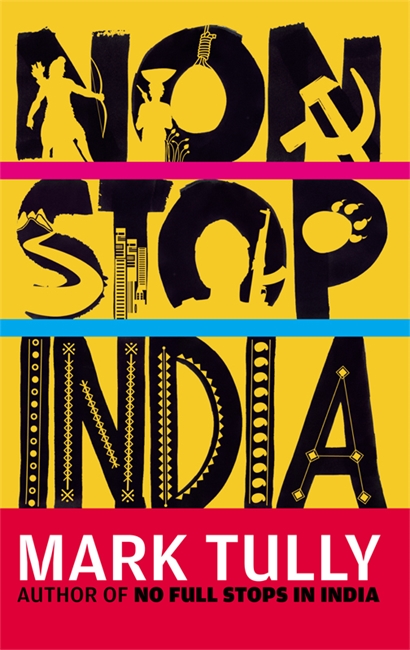
Today, India is likely to become one of the major economies of the twenty-first century. But many unresolved questions remain about the sustainability of such growth and its effect on the stability of the nation. Veteran journalist Mark Tully draws on thirty years of reporting India and travels the length and breadth of the country to find the answers. Have the changes had any impact on the poor and marginalised? How can the development of the country’s creaking infrastructure be speeded up to match its huge advances in technology and industry? With a gift for finding the human stories behind the headlines, he looks at the pressing concerns in different areas of life such as governance, business, spirituality and ecology.
In revealing interviews with captains of industry and subsistence farmers, politicians and Dalits, spiritual leaders and bandits, Mark Tully captures the voices of the nation.
From the survival of India’s languages and the protection of wildlife, to the nation’s thriving industries and colourful public affairs, Non-Stop India is a testament to India’s vibrant history and incredible potential, offering an unforgettable portrait of this emerging superpower at a pivotal moment of its history.
Nehru
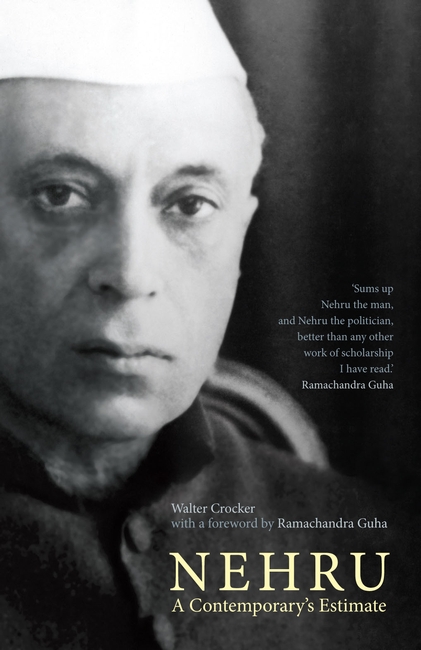
Elegant, perceptive, and startlingly prophetic, Nehru: A Contemporary’s Estimate is one of the finest accounts of Nehru ever written. Walter Crocker, the Australian high commissioner to India, admired Nehru the man—his grace, style, intelligence and energy—and was deeply critical of many of his political decisions—the invasion of Goa, India’s Kashmir policy, the Five Year Plans. This book, written shortly after Nehru’s death, is full of invaluable first hand observations about the man and his politics. Many of Crocker’s points, too—especially the implications of the Five Year Plans and of the introduction of democracy to India—are particularly relevant today. Out of print for many years, this classic biography has been reissued with an authoritative foreword by Ramachandra Guha.
Macaulay
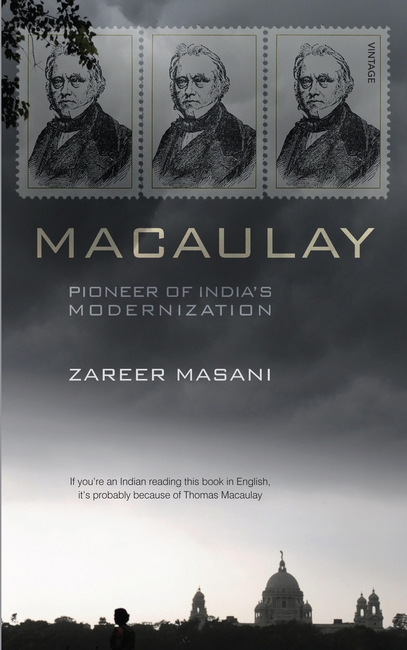
Thomas Macaulay is most famous for having introduced the English language as a medium for learning in India, creating a class of westernized Indians who are sometimes derisively referred to as ‘Macaulay’s children’. Was this an act of cultural imperialism or a modernizing move far before its time?
Macaulay has always inspired both admiration and hostility in India. Ever since he served on the Supreme Council of India in the 1830s, his thinking and policies have had a profound, transformative impact on the subcontinent. Today, some Dalit activists even celebrate him as their liberator from caste tyranny.
Macaulay is the first biography of this vastly influential figure for the general reader, giving a vivid sense of a brilliant, eccentric, contradictory man and his complex times. In a portrait that is as elegant as it is intriguing, Zareer Masani traces Macaulay’s fascinating journey from child prodigy, historian and parliamentary orator in London to imperial administrator in India, and then a revered elder statesman back in Britain. The reader is allowed a glimpse into what it felt like to be at the centre of power in a global empire, ruling over hundreds of millions of Indian subjects and shaping the destiny of a subcontinent.
Culture of Encounters
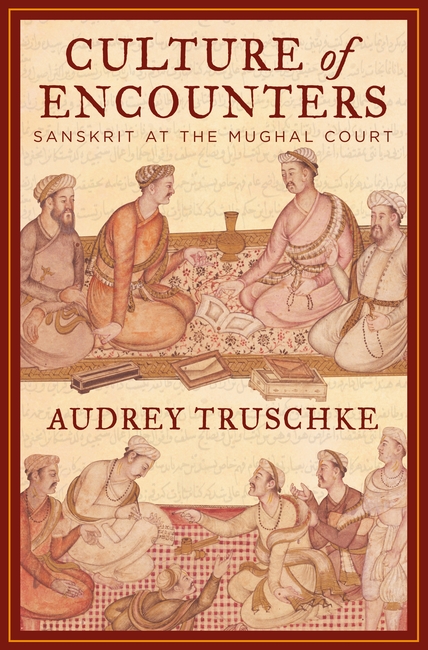
Told by the authority on the subject, Culture of Encounters gives us insight into how and why the Mughals-one of the most powerful imperial powers-poured immense energy into drawing Sanskrit thinkers to their courts, adopted and adapted Sanskrit-based practices, translated dozens of Sanskrit texts into Persian, and composed Persian accounts of Indian philosophy. Beginning with the invitation of Brahman and Jain intellectuals to King Akbar’s court, this incisive work details the numerous, Mughal-backed texts they produced under emperors Akbar, Jahangir, and Shah Jahan.
These cross-cultural encounters created a dynamic idea of Mughal rule essential to the empire’s survival. Many works, including Sanskrit epics and historical texts, were translated into Persian, elevating the political position of Brahmans and Jains and cultivating a voracious appetite for Indian writings throughout the Mughal world.
The first book to read these Sanskrit and Persian works in tandem, Culture of Encounters recasts the Mughal Empire as a multi-lingual state that collaborated with its Indian subjects to establish its role as an Indian empire. Revisiting a forgotten part of India’s history, Audrey Truschke certifies the critical role of the sociology of empire in building the Mughal polity, which came to shape the literary and ruling cultures of early modern India forever.
Environmentalism

In this book Ramachandra Guha, an acclaimed historian of the environment, draws on many
years of research in three continents. He details the major trends, ideas, campaigns and
thinkers within the environmental movement worldwide. Among the thinkers he profiles are
John Muir, Mahatma Gandhi, Rachel Carson, and Octavia Hill; among the movements, the
Chipko Andolan and the German Greens. Environmentalism: A Global History documents
the flow of ideas across cultures, the ways in which the environmental movement in one
country has been invigorated or transformed by infusions from outside. It interprets the
different directions taken by different national traditions, and also explains why in certain
contexts (such as the former Socialist Bloc) the green movement is marked only by
its absence.
Massive in scope but pointed in analysis, written with passion and verve, this book
presents a comprehensive account of a significant social movement of our times,
and will be of wide interest both within and outside the academy. For this new edition,
the author has added a fresh prologue linking the book’s themes to ongoing
debates about the environmental impacts of global economic development.
Freedom Song
The Magic Of Hobson Jobson
A frightening prophecy
A magical festival
A boy on a quest to save
A sinking island
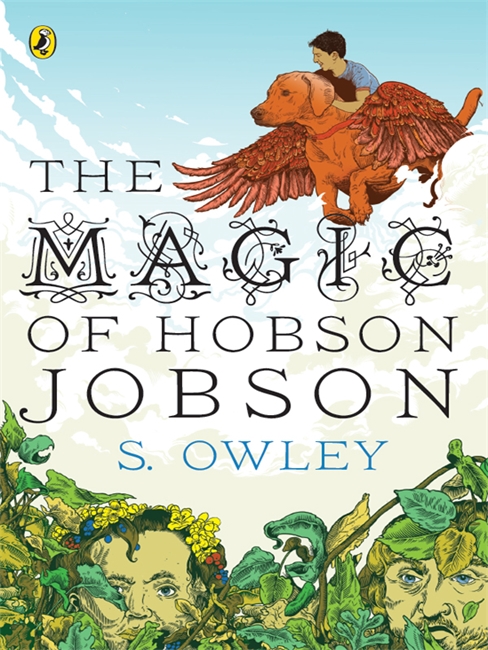
On the island of Durjipore, a place forgotten by the rest of India, live thirteen-year-old twins Floyd and Farook Foxwallah. The festival of Hobson-Jobson dawns but is marred by a series of kidnappings. When Farook becomes the next kidnapping victim, his pied-eyed twin, Floyd, considered unlucky since birth, vows to rescue him. He sets off on a journey to a mysterious world where he encounters several magical creatures, including a flying dog, the legendary forest-dwelling Ressuldars, a waterfall of faces and the evil underwater beings, the Merrows. Floyd realizes that he might just be the one destined to rescue the kidnapped children and save Durjipore. But will his bad luck get in the way?
A fascinating story of an unlikely hero, The Magic of Hobson-Jobson will take you on a breathtaking journey across wondrous lands.
Pashu
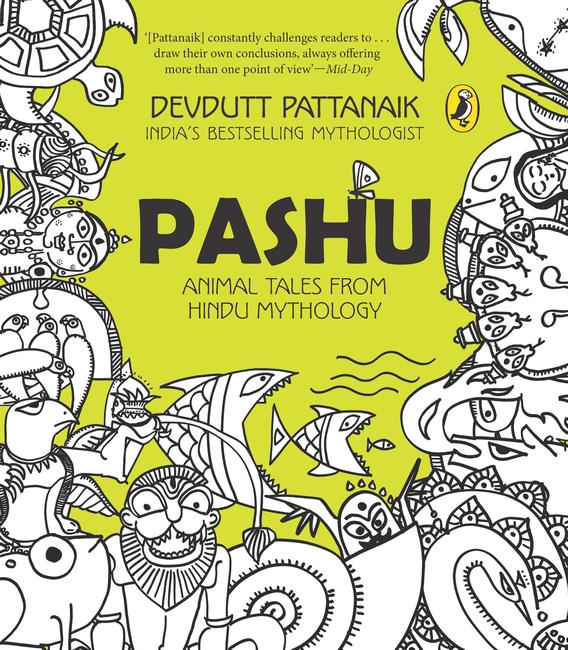
A unique feature of Hindu mythology is the key role played by animals, or pashu. The Puranas, ancient Hindu story chronicles, reveal that Brahma, the creator, had a son called Kashyapa, whose many wives gave birth to different types of pashu:
* Timi gave birth to animals who swim
* Vinata gave birth to animals who fly
* Kadru gave birth to animals who crawl
* Surabhi gave birth to animals with hooves
* Sarama gave birth to animals with paws
* Surasa gave birth to animals who defy classification.
This book retells their stories. With over 75 gorgeously illustrated anecdotes, Devdutt Pattanaik reveals how our ancestors imagined the animal kingdom and the key role animals played in human lives.