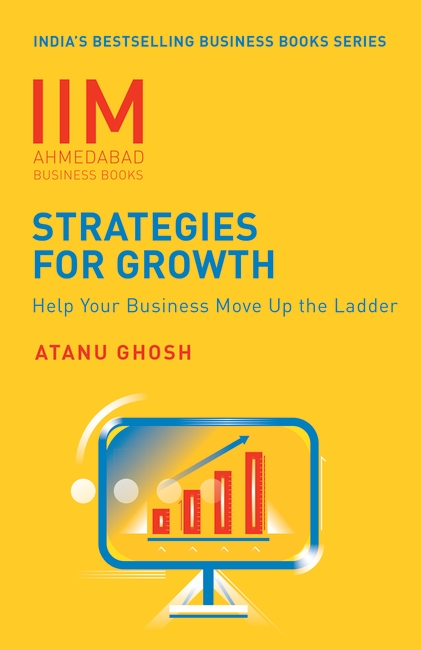
Every organization—small or large, managed professionally or by a family—wants to grow. Strategies for Growth explores the different expansion strategies companies adopt, and the management and marketing challenges they face along the way. Amply illustrated with business experiences from the Indian context—such as those of Bharti Airtel, Amul, GE, Infosys, Compaq, and HP—this book tells you all you need to know to make the best decision for your company.
The IIM Ahmedabad Business Books bring key issues in management and business to a general audience. With a wealth of information and illustrations from contemporary Indian businesses, these non-academic and user-friendly books from the faculty of IIM Ahmedabad are essential corporate reading.

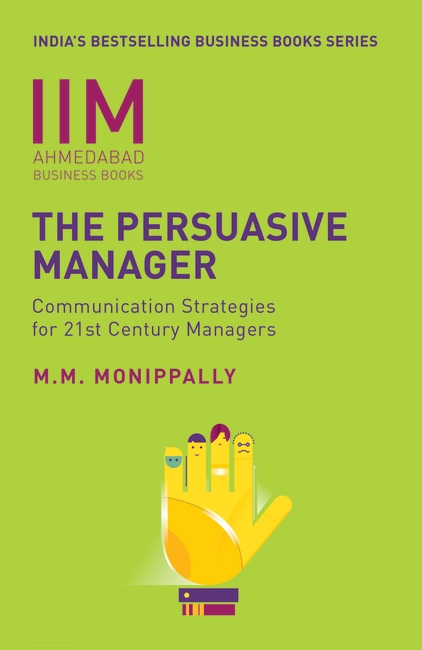
The Persuasive Manager argues compellingly that strategic communication lies at the core of business leadership, and helps organizations run smoothly and effectively. What is persuasion, and how should managers balance their ability to persuade and exercise authority without becoming authoritarian? If credibility and mutual goodwill are to be established, then the need to inspire loyalty and build interpersonal relationships becomes an essential managerial strategy. The book explores the role of persuasion at different levels of the corporate hierarchy—how does a manager convince her subordinates to initiate change? How can peers, or customers and suppliers, be won over and their opinions influenced? Persuading bosses is a particularly tricky business, so how does one use the perfect mix of tact, reasoning, discussion, and ingratiation? With its wealth of real-world illustrations, scenarios, and tips, The Persuasive Manager is the perfect communications roadmap for all managers.
The IIM Ahmedabad Business Books bring key issues in management and business to a general audience. With a wealth of information and illustrations from contemporary Indian businesses, these non-academic and user-friendly books from the faculty of IIM Ahmedabad are essential corporate reading.

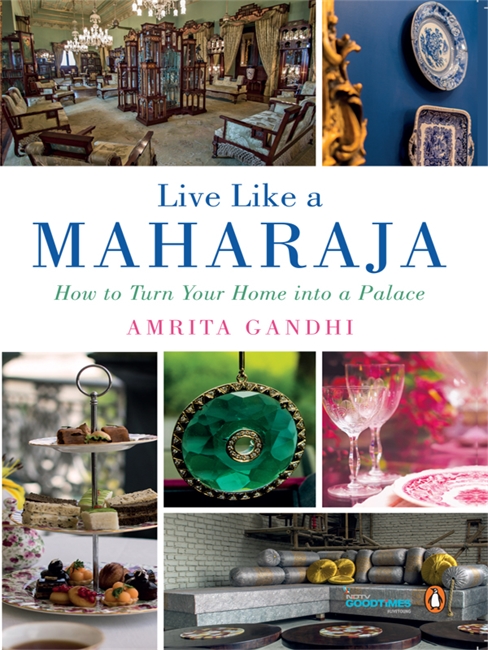
From the anchor of the incredibly popular NDTV Good Times show, Royal Reservation
On her show, Amrita Gandhi has been a welcome guest to royal families
all over India. Live like a Maharaja: How to Turn Your Home into a Palace
is her treasure trove of royal lifestyle tips and secrets that will change
the way you live. Discover the art of setting a dining table from
the royal house of Rampur; learn how to accessorize your chiffon sari
like Maharani Gayatri Devi of Jaipur; uncover Saif Ali Khan’s style
commandments and master the secrets of an authentic Hyderabadi
biryani from the chefs of the Falaknuma Palace.
Full of great advice on how to create luxury out of the ordinary,
this book is an exciting journey into the lives and homes of India’s
royal families, revealing the prized lifestyle secrets that will make
kings and queens of all of us.

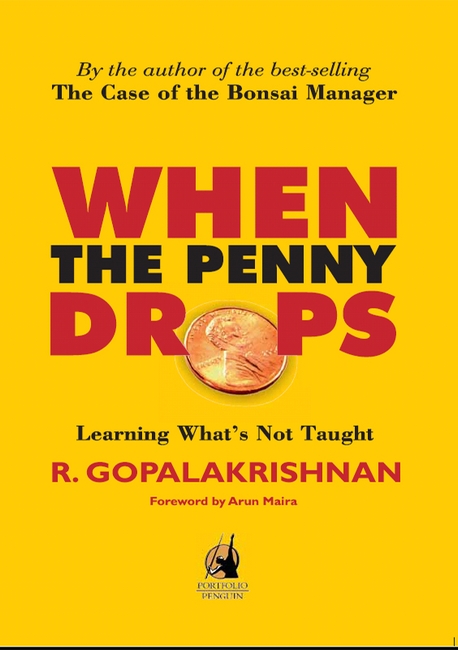
All knowledge is the result of experiences, either one’s own or the recorded experiences of other people. While theoretical knowledge can be acquired in academic institutions, putting it into practice and gaining intuitive wisdom requires many years of experience.
If a person keeps an open mind and is willing to listen, one can learn from triumphs and failures-their own and those of others. Doing this can help them gain insights into themselves, have moments ‘when the penny drops’.
Everyone has positive and negative attributes. Negative traits such as jealousy, arrogance, refusal to accept new ideas might stand in the way of personal progress. Identifying and managing these negative attributes can be a difficult task.
When The Penny Drops: Learning What’s Not Taught is filled with anecdotes of people in similar situations and their experiences. The book is divided into four parts. The first part looks at the author’s own career, spanning forty years, in the field of management. The next three parts look at the different aspects of personal and work factors that managers have to deal with.
Peppered with life stories and anecdotes, experiences from his own career and from those of famous personalities like J.R.D. Tata, When The Penny Drops can help managers gain insights into their own psyche and their way of functioning.
‘”Sachin Sachin” will reverberate in my ears till I stop breathing’
Sachin Tendulkar: The Man Cricket Loved Back is an ESPNcricinfo anthology of fine writing on India’s greatest cricketer. This collection brings together affectionate and perceptive appreciations from teammates and rivals who played alongside and against Tendulkar (among them, V.V.S. Laxman, Rahul Dravid, Sourav Ganguly, John Wright, Allan Donald, Greg Chappell, Sanjay Manjrekar and Aakash Chopra) and contributions from the who’s who of cricket writing, including Gideon Haigh, Mike Marqusee, Ayaz Memon, Ed Smith, Mark Nicholas, Rohit Brijnath, Sharda Ugra and Mukul Kesavan. It also features several interviews conducted with Tendulkar over the years, and superb pictures of him on and off the field, making for a comprehensive portrait of the cricketer and the man through the eyes of those who have watched and studied him from up close.
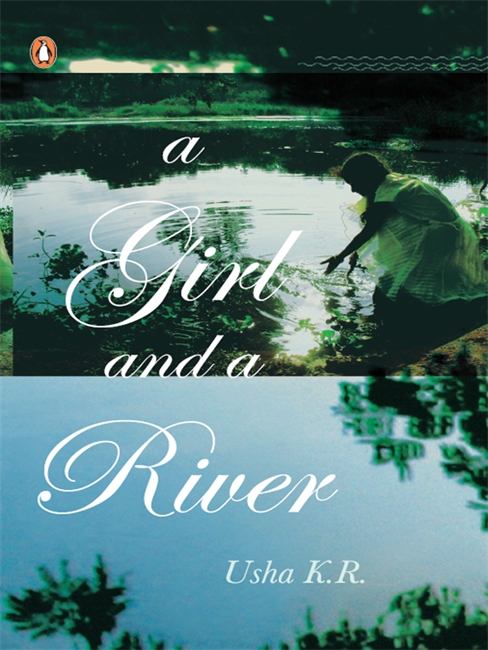
It is the 1930s and the fire of the freedom movement from distant Bengal and Delhi is warming the languid bones of the small town in Mysore, where Kaveri and Setu grow up. Theirs is a liberal, prosperous household and the family takes its privileges for granted. Mylaraiah, their father, believes that they are twice protected from such delusions as “swaraj”, once by the British and then by the maharaja. While Setu absorbs their father’s unquestioning veneration of the British, Kaveri, profoundly affected by Mahatma Gandhi’s visit to their town, comes to recognize their attempts to be ‘more English than the English’ as rather shameful. In an attempt to follow her heart and take charge of her own future, Kaveri defies her father and participates in the Quit India march organized by Shyam, the hot-headed revolutionary she is attracted to. Angered and jealous, and loyal to his father, Setu is forced into betraying his sister. The small town is shaken into life quite brutally when it faces a police firing for the first time in its history. But Kaveri is safe and home, or so Setu thinks . . . Fifty years later, Setu’s daughter tries to unravel the circumstances of her uneasy upbringing, of the grit-in-the-eye feeling to her childhood; understand her cold father, her self-effacing mother and their refusal to talk about their past. Two books and a letter found in a tea tin in the attic lead her to Kaveri, and it is Kaveri whose fate remains shrouded in mystery, who has the answer to her questions. But even with all the pieces of the jigsaw in hand, the picture eludes her. She is forced to come to terms with the insidiousness of family bonds as she realizes that the truth, if it at all exists, is made of elisions and imperfections.
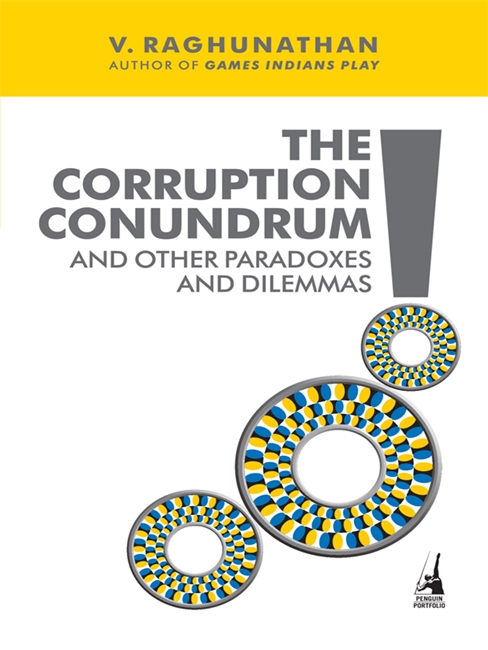
How can you be a ‘well-known secret agent’? How is it that ‘corruption is universally disapproved of and yet universally practised’? The world of dilemmas and paradoxes touch our lives on a regular basis. In The Corruption Conundrum and Other Paradoxes and Dilemmas, V. Raghunathan shares some of the more interesting examples, allowing us to delight in the excitement, mystery, confusion, exasperation and that occasional flash of clarity and enlightenment that is often experienced when the world of paradoxes and dilemmas hits our own.The book takes the reader through some of the fascinating illustrations, classical and well-known, as well as the less common examples, in the field of management, finance and work life.
Following the same easy, readable style of his previous bestseller, Games Indians Play, this new book will certainly make you more curious about the world that surrounds us.
Meet Rhea Kanwar: Thirty, unmarried and tending to fat.
One morning Rhea realizes it’s time she did something about her life, or she would turn into Bubbles Auntie, her mom’s best friend, who says things like ‘I’m a recycled virgin’. Bubbles Auntie also has to be invited to every family celebration, because ‘she has no one’.
So Rhea dives into the marriage market. Each time she meets a new guy, he’s perfect, but then each guy has a weirder problem than the last. Vyash freaks out when he realizes Rhea isn’t on the pill; Jay has a KEWL tattoo; Mazher might be too much of a gentleman; and Sid is really, REALLY bad in bed, but practically perfect outside it. And then there’s Arf, her best friend she’s been in love with all this time. How is she going to choose?
Awash with caricature and banter, Half Love Half Arranged debuts a voice that could well be the next Anuja Chauhan.
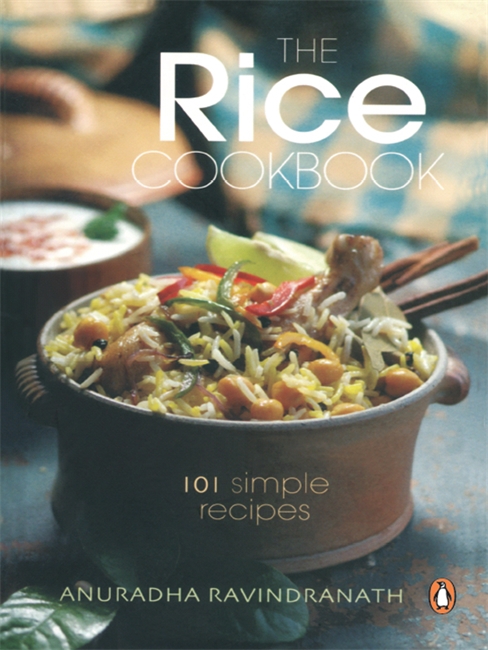
A rice dish is usually the centrepiece of a meal in most parts of India, and this book is invaluable for someone who wants to cook it with a difference. In this engaging book, Anuradha Ravindranath brings together a collection of rice recipes that spans the gamut of cuisines and courses, to present the most delectable and simple rice dishes.The Rice Cookbook is perfect for busy people with no time to spare, so they can create menus based on ingredients available in the kitchen. Anuradha’s unusual recipes for delectable rice dishes use an assortment of vegetables, lentils, chicken, meat and fish, and can be prepared swiftly with impressive results. The book also includes recipes for complete one-dish meals and easy-to-prepare rice snacks and desserts. With something for everyone, The Rice Cookbook is a delight not only for the experienced cook but also for those who like to try their luck in the kitchen once in a while. Recipes include mushroom and bell pepper rice; vegetable rice in coconut milk;green Bengal gram khichdi; bean sprout and sesame khichdi; spinach and egg rice; chicken biryani with tomato and chilli; chop biryani with mustard; mince and chickpea biryani; fish biryani with vegetables; and jaggery rice with cashew nuts.
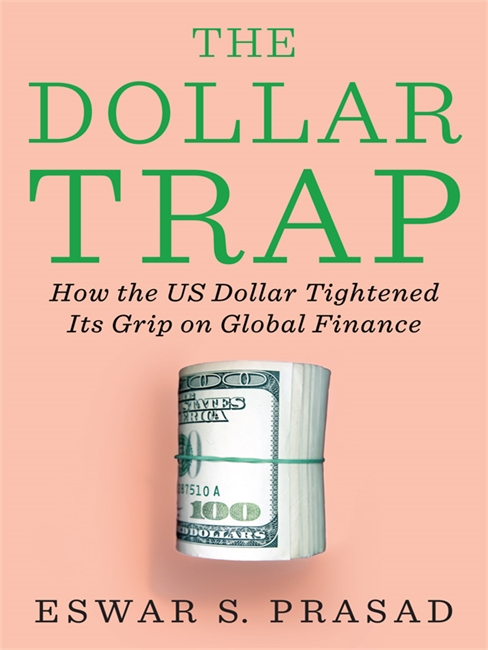
Eswar S. Prasad examines how the dollar came to have a central role in the world economy and demonstrates that it will remain the cornerstone of global finance for the foreseeable future. Marshalling a range of arguments and data, and drawing on the latest research, Prasad shows why it will be difficult to dislodge the dollar-centric system. With vast amounts of foreign financial capital locked up in dollar assets, including the US government securities, other countries now have a strong incentive to prevent a dollar crash. Prasad takes the reader through key contemporary issues in international finance-including the growing economic influence of emerging markets, the currency wars, the complexities of the China-US relationship, and the role of institutions like the International Monetary Fund-and offers new ideas for fixing the flawed monetary system. Readers are also given a rare look into some of the backdoor scheming that goes on in the corridors of international finance.The Dollar Trap offers a panoramic analysis of the fragile state of global finance and makes a compelling case that, despite all its flaws, the dollar will remain the ultimate safe-haven currency.