



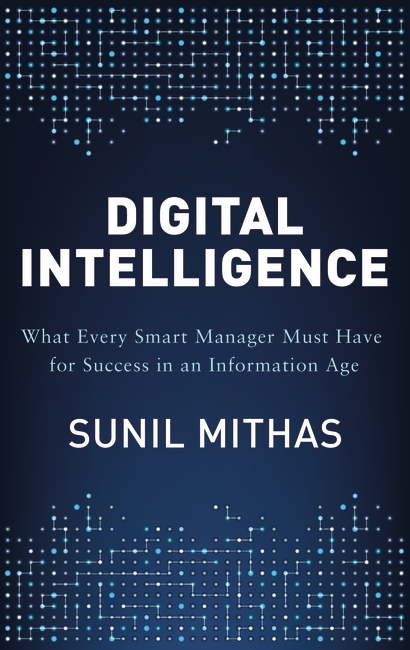
Digital intelligence-the ability to understand and use the power of information technology-is becoming critical for organizations and managers to thrive in the global marketplace. The digital revolution is impacting almost every industry, functional area and business process, as shown by innovative market entrants such as Uber and Airbnb. Success in the digital economy will require leaders and managers to invest in their own digital intelligence and that of their teams to navigate the ongoing transformations.
Technical skills and knowledge are important in any dynamic and growing economy, and especially in economies such as India where technology provides a way to leapfrog competitors and accelerate growth. Here, managing and nurturing digital intelligence is not only key for economic success, but also necessary to achieve sustainable development for millions of consumers and workers at the base of the pyramid.
This remarkable book by an expert and leading scholar on digital strategy tells you how to innovate digitally and make your organization future-ready.
Archives: Books
The Value Elephant: The Head and Tail of Wealth Creation
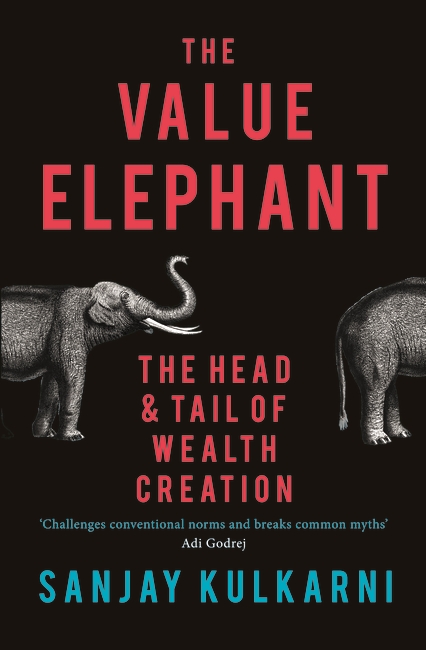
If six sightless men were asked to describe ‘value’, they’d probably touch it and describe it in parts, without getting a sense of the whole. But to build lasting wealth, you must perceive the entire ‘value elephant’.
Great fortunes are made and lost in financial markets. Sanjay Kulkarni’s approach, called V-GRO, enables identification of fundamentally strong businesses which are available at a discount; debunks a number of myths like ‘price is always right’ and ‘earnings are everything’; and creates positive results for investors.
But that’s not all. The same fundamentals, Kulkarni argues, can be applied inside a business to create value. He demonstrates how CEOs, professional managers and owners of businesses can ride the ‘value elephant’ to make businesses more valuable, regardless of ownership and industry segment.
Invoking the experiences of several business leaders who have created lasting wealth for their investors, The Value Elephant reveals what it takes to successfully create value in the Indian environment.
The Wedding Photographer

On a seventeen-hour-long flight, a chance upgrade to business class lands journalist Risha Kohli next to handsome young real-estate tycoon, Arjun Khanna. What’s more? Risha has been moonlighting as a wedding photographer and her next assignment is Arjun’s sister’s wedding: the most talked-about social event of the year!
But Arjun doesn’t trust journalists and suspects that this smart, sexy and incredibly spunky girl is only using their mutual attraction as a ploy to invade his privacy for a newspaper scoop. And Risha, unaware of Arjun’s personal demons, is worried that this irresistible boy’s unnerving behaviour will jeopardize her biggest professional gig so far.
What follows is a rollercoaster of snarky quips, sizzling chemistry and simmering drama amidst a Big Fat Punjabi Wedding.
The Two-Minute Revolution
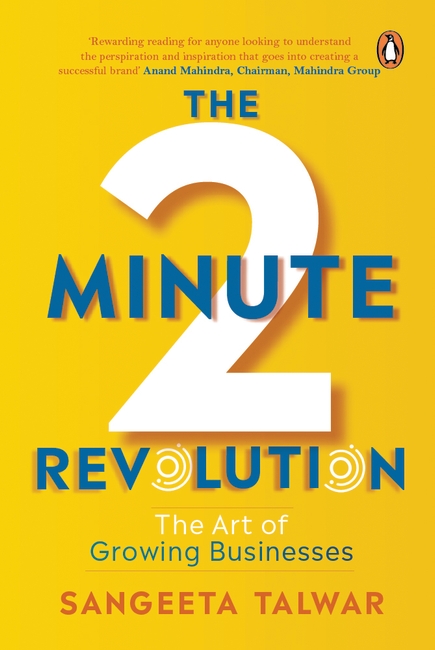
Unlike usual business books, The Two-Minute Revolution provokes you to think big-about innovation as well as excellence in on-the-ground execution.
Sangeeta Talwar, the first woman executive in the FMCG industry, who established one of the most beloved and enduring brands of India-Maggi Noodles-shares creative and strategic lessons which can help you grow and add value to your business. Drawing from decades of first-hand experience in Nestle, Tata Tea and Mattel, she prescribes a plan of action that includes tactics such as keeping all the balls in the air, executing to perfection, being consumer obsessed and pivoting on profitability.
Insightful and packed with fascinating examples-from creating and launching Maggi Noodles to spearheading the highly effective Jaago Re campaign for Tata Tea-this book suggests tried and trusted strategies for building extraordinary brands.
Haar Se Jeet Tak
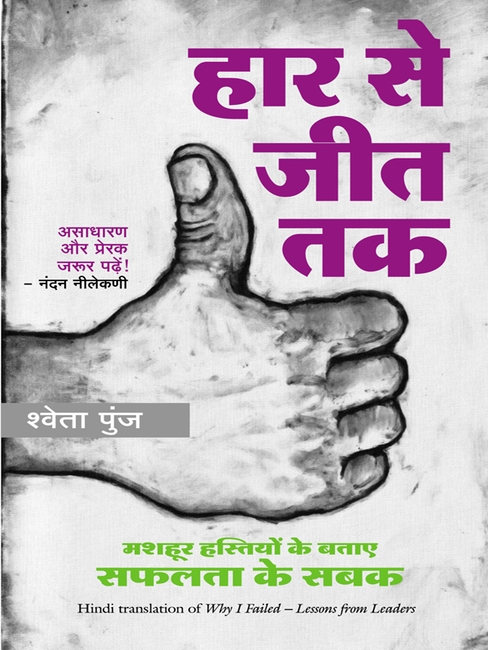
This is Hindi Translation from English Book ‘Why I Failed: Lessons from Leaders’.
Fail! And we are stamped for life. Don’t we try and run from failure all our lives? But, ‘spontaneous doing has to go through failures.’ Acknowledging failure is singularly the most difficult thing to do. It takes tremendous courage to come out and say, yes, I failed. Shweta Punj chronicles sixteen such leaders who have celebrated their failure as much as their success. Each story is an anatomy of failure. So whether it was the difference between ‘need’ and ‘want’ that led Abhinav Bindra to miss that winning shot, or whether it was a suicide attempt that pushed Sabyasachi Mukherjee into fully realizing his potential—these stories will prod you to look at failure differently.
Going for Gold
After 2008, as the world lurched from one financial crisis to another, the price of gold rose to over Rs 35,000 per 10 g in 2013. It has since fallen precipitously to a five-year low-under Rs 25,000 for 10 g.
Where will the price of gold go now? How will it perform as an investment? And can we profit from it?
We all want to invest for the future-perhaps for retirement, for a child’s education or to build a nest egg. Whether you are an ordinary or professional investor, a student or an academician, you are faced with a bewildering array of portfolio choices. Where can you find a safe haven for investment that will give you a reliable store of wealth and value untouched by the turmoil of the modern world? In Going for Gold, Nanda Menon outlines the dynamics of the gold market, its demand and supply, its cost of production and geopolitics. Aimed at experts as well as the general reader, this book will answer all your questions on why gold is one of the top investment choices for wealth creation and preservation for Indians.
Mindfulness with Moksha
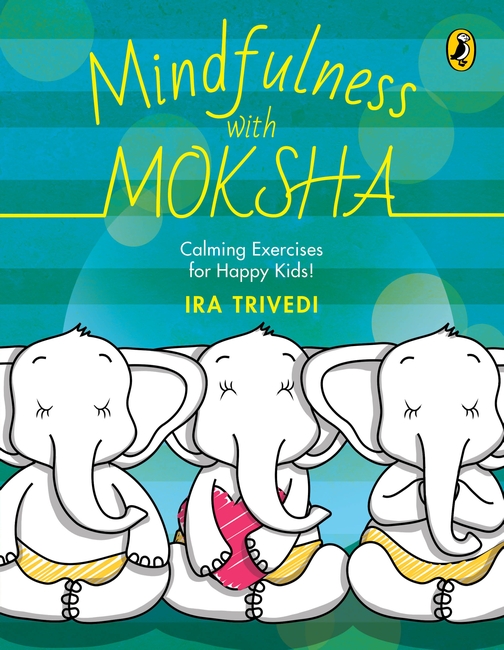
The practice of mindfulness at any age can have profound effect on your life. So why not get your young one to start early? In this fast-paced world, with so many distractions, it is important to stay grounded and not lose sight of what’s important. Being mindful brings clarity, mental strength, focus and inner peace. It improves the concentration needed to ace exams, and do better in school and life. In the long run, it boosts happiness and creativity, and lowers stress and anxiety.
With this calming read-along book, parents and guardians can help their children work through fun exercises-a great way to spend quality family time!
Written by Ira Trivedi, a renowned yoga acharya, Mindfulness with Moksha helps your child (and you) explore the ultimate benefits of the discipline.
The Very, Extremely, Most Naughty Asura Tales for Kids
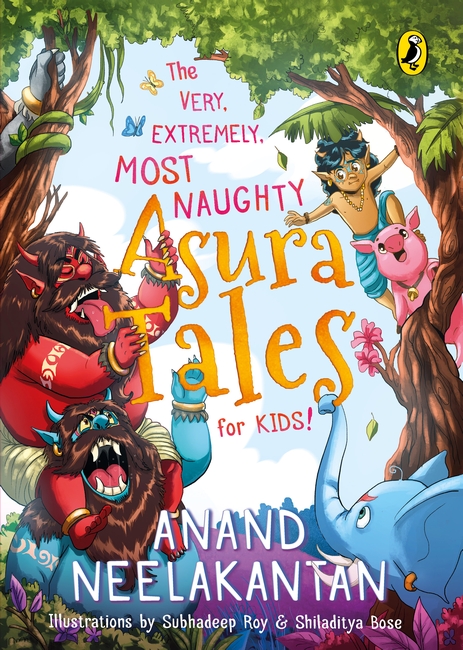
Aren’t we chubby, aren’t we cute?
Aren’t we lovely, as sweet as fruit?
Give us a bear hug, give us a kiss
Regret not later for giving it a miss.
Don’t go by these sweet words-for all little asura kids are naughty and troublesome and always up to something! Little will you know when you land in a muddy puddle or your long hair gets chopped off into a bob. They will prod, pull and tug you till you yell-just like the gods in the heavens, especially Vishnu and Shiva who are simply fed up!
Indulge in some very, extremely, most funny naughty tales of asura twins Kundakka and Mandakka, who hate going to school; clumsy Bhasma and pet pig Nakura, who create trouble in the village; brothers Atapi and Vatapi, who like to eat ninety-six cartfuls of fruits as dessert; the great Bana who claps with his thousand hands and so many more!
The Incredible History of the Indian Ocean
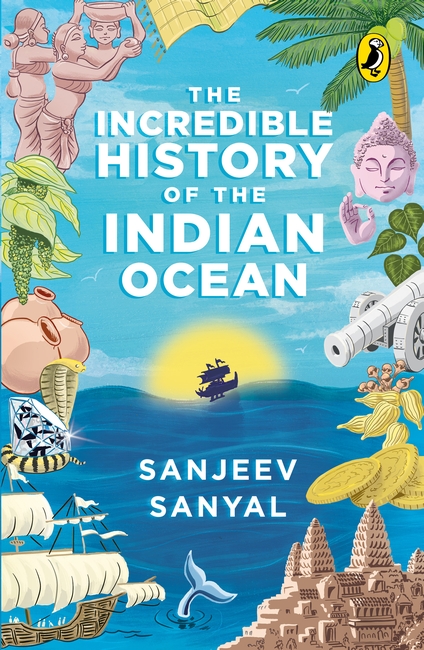
An adaptation of The Ocean of Churn for young readers
When did the first humans arrive in India and how did they get here?
What are Roman artefacts from hundreds of years ago doing in a town near Puducherry?
How did merchants from Arabia end up near Kochi?
From the east coast of Africa to Australia, one big blue body of water has connected diverse peoples and cultures for thousands of years: the incredible Indian Ocean. Read on to learn about the fearless travellers and sailors, pirates and conquerors who set out to cross the ocean in search of gold and glory, and discover how geography can shape the course of history.
Barefoot to Boots
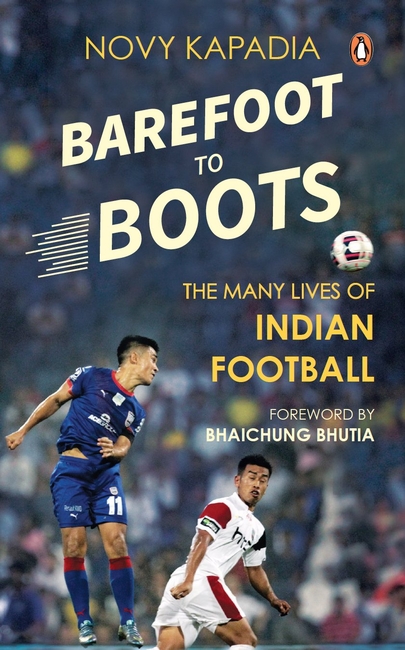
Few football-crazy fans today may be aware that India was once called the ‘Brazil of Asia’. Or that the competition between East Bengal and Mohun Bagan is ranked among the top-fifty club rivalries in the world. Brilliant players, world-class coaches and passionate fans-including political leaders and film celebrities-once combined to make India a football-worshipping nation. A major source of sports entertainment in India, football has thrived in several places apart from Kolkata. The game has also been inextricably linked to community identity, shrewdly used towards political ends, and contributed richly to our cultural heritage.
In Barefoot to Boots, renowned journalist Novy Kapadia reveals Indian football’s glorious legacy through riveting descriptions of on-field action, stories of memorable matches, lively anecdotes and exclusive conversations with legendary players and officials. Having witnessed the evolution of the sport for over fifty years, Novy charts its eventful journey up to the present to enthral old and new fans alike. The book will offer invaluable insight into the future of the game as the Indian Super League dramatically changes the face of domestic football and India hosts the FIFA U-17 World Cup for the first time.