



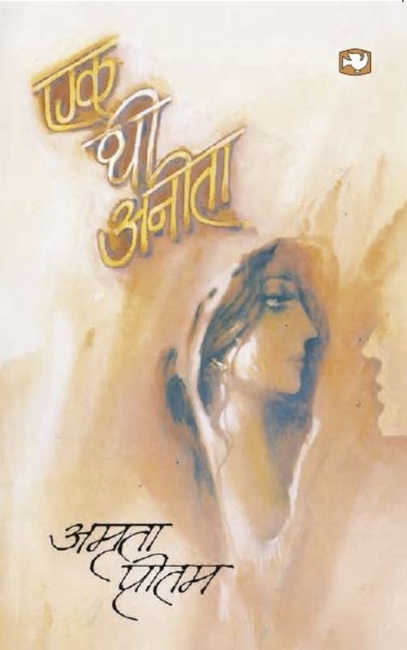
Anita is the heroine of novel ‘Ek Thi Anita’ she has no any path, but she goes there is any sound, doesn’t know from where it comes and called her. Amrita Pritam wrote herself about this novel that it is hear that love did signature on the canvas of age and some flowers are the guest at the house of branches. The story of this novel , steeped in the definition of love, makes every reader feel a sense of eternal love.
Archives: Books
Unearthed: The Environmental History of Independent India
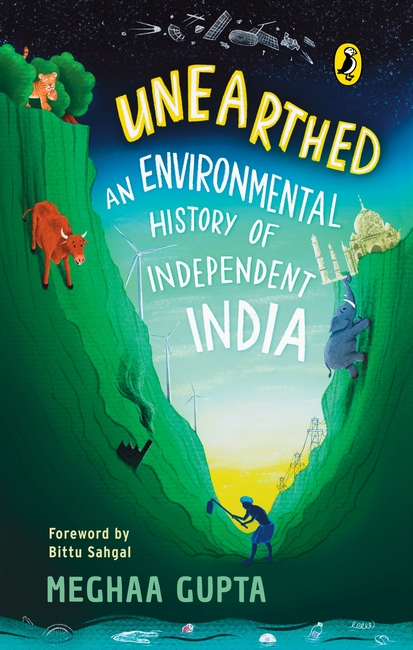
Protesting against dams, protecting tigers, hugging trees, saving seeds, making room for elephants, battling mountains of waste, fighting air pollution, coping with soaring temperatures-India and its people have shared a remarkable relationship with the environment.
From the Green Revolution to the National Action Plan on Climate Change, Unearthed: An Environmental History of Independent India chronicles the country’s historical movements and significant green missions since 1947. Interspersed with lots of trivia, tales of eco-heroes and humorous cartoons, this easy-to-read account uncovers the story of a past with the hope that we will rewrite India’s future.
The Scientific Edge
India has a rich history of scientific accomplishments. In the fifth century, nearly one millennium before Copernicus, the Indian astronomer and mathematician Aryabhata theorized that the earth spins on its axis. Likewise, in the twentieth century physicist Meghnad Saha’s ionization equation opened the door to stellar astrophysics.
But India’s scientific achievements have occurred as flashes of brilliance rather than as a clear trajectory of progress. So how did India, with its historic university system and
excellent observatories, lose its scientific edge?
Cosmologist, founder director of the Inter-University Centre for Astronomy and Astrophysics, and science fiction author Jayant V. Narlikar tracks the highs and lows of Indian
science across the millennia, distinguishing fact from fiction. Through a lively narrative of breakthroughs and failures, he explores the glories of India’s scientific advances and questions the more fanciful so-called discoveries. His essays are invigorated by his excitement for new findings, and he argues passionately for preserving the true scientific temperament instead of granting legitimacy to such pseudosciences as astrology.
Above all, Narlikar raises issues that both the layperson and the scientist need to consider as India seeks to lead the world in information technology and biotechnology.
Ayurveda
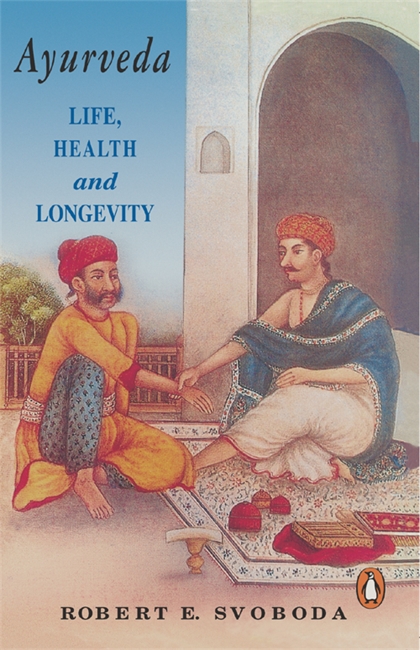
This book is not a defence of Ayurveda. A sound, scientific framework of healthcare that has saved countless lives over 5000 years does not need defenders. It needs champions, and to be given wings. In a world that needs Ayurveda more than ever, Dr G.G. Gangadharan, who has been researching both the theory and the practice for the past thirty-five years, shows in his book the logic behind the science. He points out that our bodies are intelligent systems designed to keep most diseases at bay but we must pay more attention to the signals they give us. Doing so comes with the implicit promise of true restoration. It is a promise to restore your bod and mind to its initial healthy state. Ayurveda has so much to offer; its simple application can transform daily life. In this book, you will find the secret to greater happiness through balance and long-lasting health-the idea that healthcare must address the individual as a whole and not just the disease.
Book Of Prayer
Prophets, saints and ordinary seekers, some known, many anonymous, show us the way to a celebration of the Divine and a sacred connection with all life. Contained in these pages is the wisdom of the great religious texts, among them the Upanishads, the Bible, the Qpran, the Dhammapada and the Adi Granth. There are verses by mystics and saint-poets like Kabir, Bulle Shah, Lal Ded, Meera Bai, Jnanenshwar, Aandal, Maliadeviakka and St Francis of Assisi, and poems by famous literary figures like John Donne, Christina Rossetti and Gerard Manley Hopkins. Also included are songs of hope composed by people coping with the compulsions of everyday life – farmers, sailors, doctors and students. Compiled and edited by Renuka Narayanan, India’s popular columnist on religion, this collection of the prayers of so many human beings across time and space offers moving proof that we all crave the same protection and deliverance.
Faith

In this book, Renuka Narayanan, one of Indias leading mainstream commentators on religion and sprituality, looks at ways to fill the empty space that Sartre famously called ‘the God-sized hole’ in our consciousness. Eschewing extreme viewpoints, she tries to apply the ‘Big Idea’ to our little lives, and makes many interfaith discoveries. This volume contains a selection of her writings in ‘Faithline’, the popular column.
The Great Indian Love Story
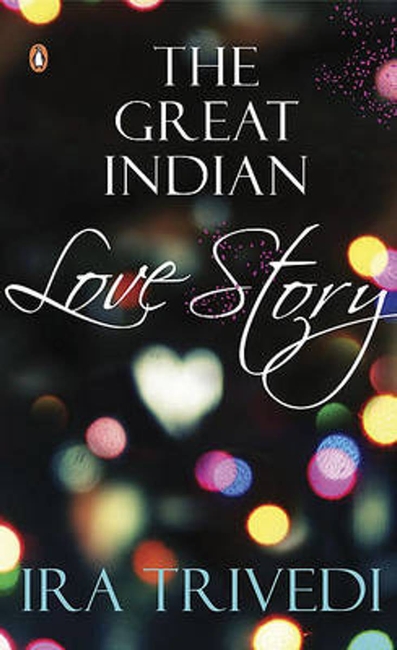
The Great PBI – Indian Love Story is set in a PBI – World where appearances mean everything and nothing is as it seems. There’s no time for love in a PBI – World that revolves around the latest Ferraris, the hottest nightclubs, diamonds, single malts, cocaine and ecstasy. In this whirl of wild parties, sex and drugs we meet Serena Sharma who lives her life one debauched night at a time, always falling for the wrong men. Her life is a rollercoaster ride: her father’s death followed by her mother’s remarriage, a broken heart and a lost love. Adding to this is her torrid affair with Amar Khanna—a trophy husband, coke addict and serial adulterer. Riya, jaded by her unsuccessful attempt to find a job in America, returns to Delhi to find the city of her childhood changed beyond recognition. Striking an unlikely friendship with Serena, Riya finds her complacent torpor shattered. The Great PBI – Indian Love Story is also the story of Parmeet, Serena’s mother, who looks for passion outside her marriage with disastrous consequences, and S.P. Sharma, Parmeet’s husband, who is driven to violence by her infidelity. Ira Trivedi weaves together sex, revenge, glitz, friendship and a chilling murder to create a potent cocktail in this gripping novel on the perfidious nature of love and power.
Finger Pointing To The Moon
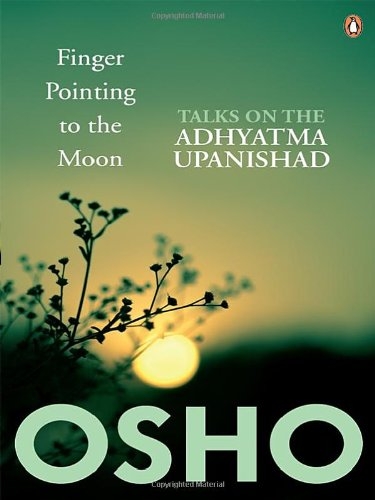
In Finger Pointing to the Moon: Talks on the Adhyatma Upanishad, Osho draws on the ancient wisdom of this Upanishad to reflect on God, religion and the liberation of the self. Religion for him is not worship, devotion and prayer, but mumuksha, the deep longing for freedom from the fetters of everyday life that can lead a seeker on the path to enlightenment. When one reaches this state of kaivalya, the abode of truth and eternal bliss beyond mind and speech, one becomes unified with the God within oneself. Then one achieves true knowledge and true mastery over the self. These seventeen talks that Osho delivered at Mount Abu, Rajasthan, make this book a truly enriching guide for those seeking to look within and find answers to the enigmas of human existence.
Flight Of The Alone To The Alone

The ancient Kaivalya Upanishad is a search for ultimate freedom. It begins with a prayer to strengthen the senses. It takes great individual effort to become free, says Osho, but before making that effort, a greater, existential power has to be invoked: ‘the first effort’. Embracing the senses is not a sign of weakness or indiscipline. The senses are, on the contrary, the door to experiencing the divine, a means to freedom. Often people misunderstand this, calling that which comes within the grasp of our sense organs ‘the world’ and that which doesn’t, ‘the divine’. According to this Upanishad and to Osho, both are divine. That is why Osho continually emphasizes the importance of love, celebration, creativity and humour on the path of awareness. Flight of the Alone to the Alone brings together a series of talks given by Osho on the Kaivalya Upanishad. It explores the nature of existence and tackles some of life’s most fundamental challenges: achievement, loneliness, the eternal quest for happiness, and freedom.
On The Kebab Trail

Create the Moti Mahal magic in your own home
The kebab is one of India’s-and the world’s-most beloved foods. In On the Kebab Trail, Monish Gujral, grandson of the founder of the Moti Mahal chain of restaurants, the legendary Kundan Lal Gujral, travels the world in search of the most delectable kebabs, providing some rare family recipes along the way.
Here are Turkish clay-pot kebabs, Kashmiri Tabak Mas and Arabian hamburgers. And here are the definitive recipes of all the classic Indian kebabs-kakori, pasanda, boti, gilafi. Including vegetarian and fish kebabs, and recipes for chutneys and breads, On the Kebab Trail is the ultimate indulgence for all kebab lovers.