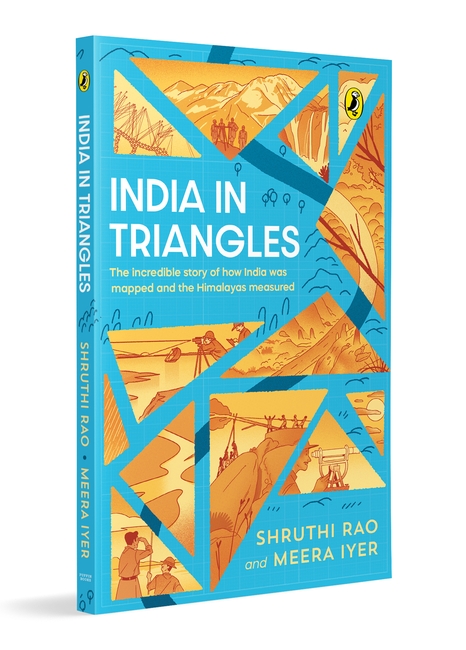
Step into the boots of fearless surveyors as they trek across forests, mountains and monsoons—facing disease, wild animals and gruelling terrain—to chart the subcontinent with astonishing precision.
This was the Great Trigonometrical Survey, an ambitious mission to map India using triangulation—a brilliant method that helped them measure every inch with accuracy. Along the way, they calculated the height of the world’s tallest mountain and revealed the true shape of the earth.
Packed with adventure, ingenuity, mishaps and the unsung heroes of science, this is the epic true story of mathematics, grit and discovery.

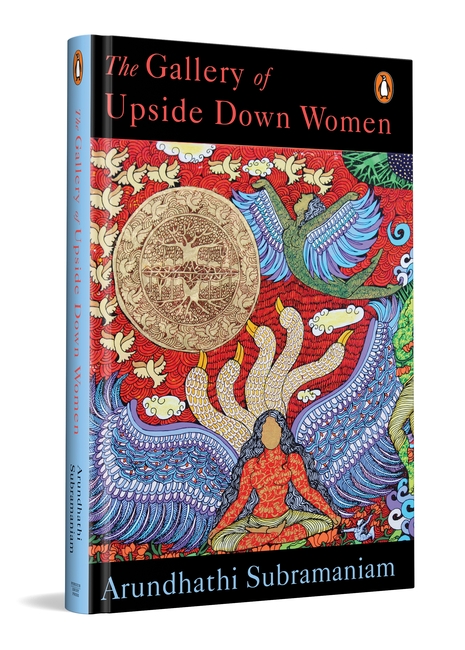
Arundhathi Subramaniam’s poems map a wobbling world, trying to find its axis in the season of change. Fabric tear, lands splinter, stances harden, loved ones die, names dissolve. But wandering through these pages are some extraordinary women – women who vault nimbly over borders, walk naked, walk aslant and sometimes upside down. Leaping from the past into global present, these exuberant voices offer tips on how to retain one’s spine through life’s giddiest rollercoaster rides.
Blurring the divide between the mundane and the magical, the historical and the imaginary, they point to a new world that might lie within the folds of the old. A world that requires a new set of skills: how to find the right nicknames, ‘how to gatecrash into the present’, how to ‘go skinny-dipping in the self’. These are songs of bewilderment, insight and startling freedom.

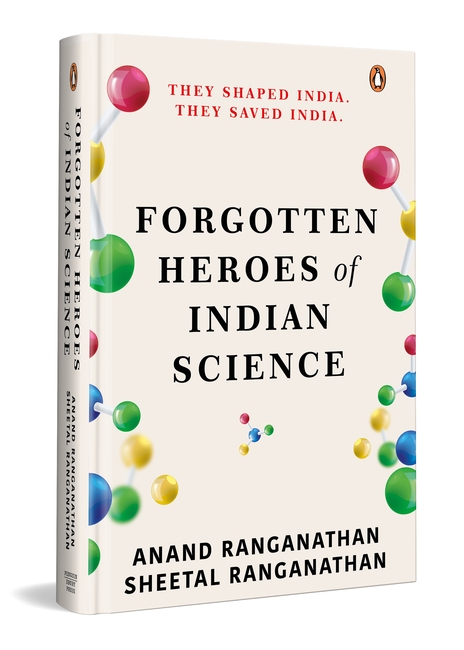
Upendranath Brahmachari conjured a potent drug to vanquish the spectre of kala-azar, saving millions from the deadly disease. Ram Nath Chopra explored ancient ayurvedic knowledge, extracting a natural compound from sarpagandha to treat seizures and high blood pressure. Azizul Haque and Hem Chandra Bose etched a novel cipher for fingerprints, birthing the science of forensics with their elegant method. Though pilfered by Scotland Yard, it found mention in the intricate plot of Arthur Conan Doyle’s The Sign of the Four. Yellapragada Subbarow sculpted five monumental discoveries that reshaped modern medicine, saving countless lives—yet, in a poignant twist of fate, could not save his own.
These stories are not mere chronicles of inventions, but sagas of lives devoted to the pursuit of brilliance. They bring alive the history and sociocultural milieu of the times these men lived in, how they changed the landscape of Indian science and how they proved that the only difference between the ordinary and the great is this: the ordinary think they are great and the great think they are ordinary.

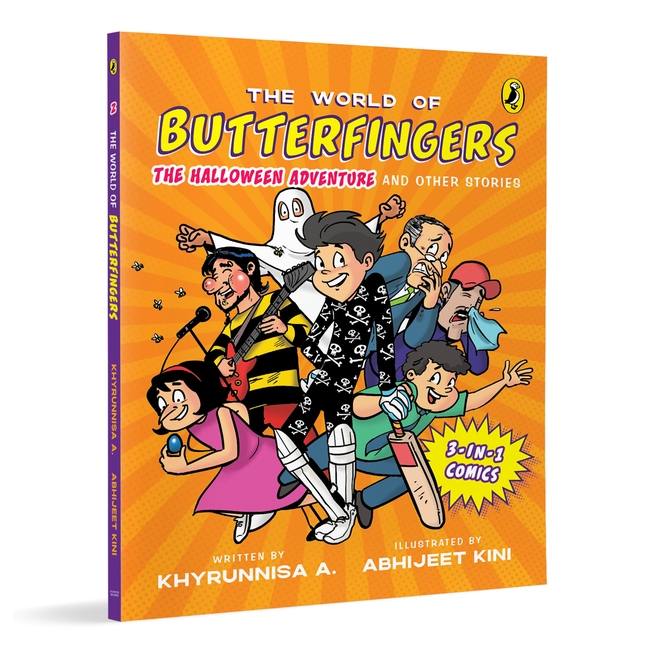
Chaotic Butterfingers, aka Amar Kishen, and his misadventures return in this second collection of comic stories. From saving bees to catching bank robbers to solving the mystery of a haunted house to pulling off a wildly ambitious history exhibition— Butterfingers does it all!
- The Heebee Jeebees are set to perform, but can Amar help them find the secret ingredient for their show?
- A trip to Ooty during Halloween takes a rather unexpected turn with a bank robbery and a haunted house mystery!
- Disaster strikes when Amar and his friends are tasked with setting up a history exhibition, leaving everyone with a case of the giggles.
So, drop everything and jump into this book . . . it’s no surprise that where there’s Butterfingers, there’s bound to be fun, thrills and, of course, spills.
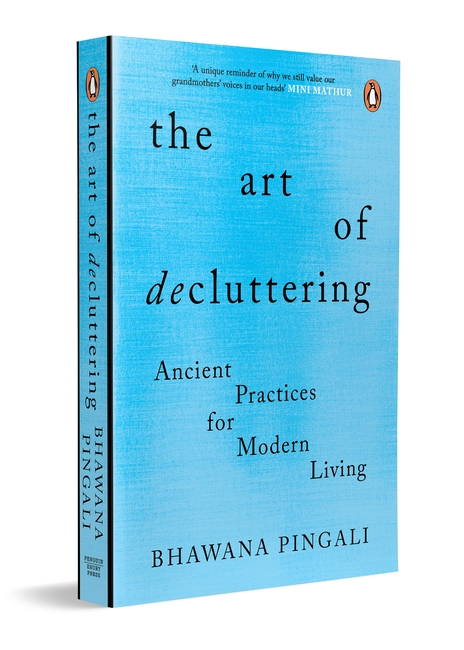
Bagging seeds to relax our eyes, making a cloth pad as self-care, draping a saree like trousers to go upside down, drawing to feed ants: can ancient rituals, practices and their objects work as modern ‘tools’ to ‘declutter’ our almost overloaded senses?
Clutter—real and virtual—is a part of our life now. These cleansing rituals and healing practices are believed
to have old-world history, rooted essence, purgative properties, health benefits, and zero or minimal waste.
If tweaked, it can even help us declutter to stay on top of our body–mind game.
Laced with nostalgia and punctuated with delightful memories, explorations and failures, The Art of Decluttering takes you through nine retellings of clothing, home and body, which make aspects of ancient Indian ritualistic life relatable to the modern reader.
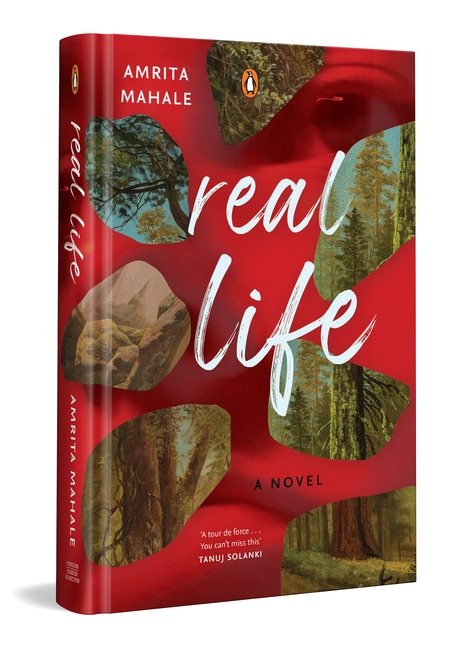
In the remote Mahamaya Valley in the Himalayas, wildlife biologist Tara has vanished. Hunting for answers, Tara’s best friend Mansi sets out to retrace her whereabouts in the days before her disappearance. The prime suspect Bhaskar sits in police custody, his obsession with Tara laid bare, his testimony a labyrinth of contradictions and half-truths. As the investigation deepens, the valley reveals its own mysteries—a backpacker paradise where the timeless and the ephemeral collide, where technology and nature clash, and where a woman’s voice can be silenced in countless ways.
Rendered in exquisite prose, Real Life is a gripping mystery that transforms into a masterful exploration of love and loss, visibility and erasure, AI and surveillance and the never-ending tussle between individual desires and societal demands.
In an age of surveillance and enforced conformity, what does it mean for a woman to seek a more authentic, real existence?
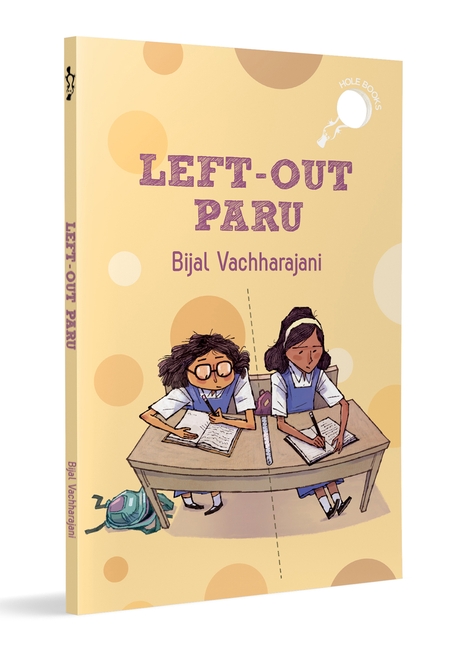
The kids in Paru’s new class make fun of her because she is left-handed. The bullying is led by Nina, Paru’s deskmate. How is Paru to make things right left?
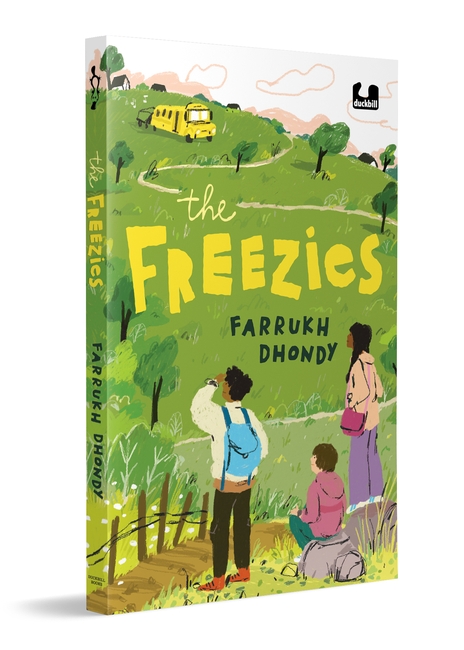
Suleikha, Leo and Kai call themselves the Freezies because they’ve been frozen out of the popular groups of their village school.
One day, a battered van with a trailer attached is found parked in the Mead, the open village green. In it is Mr Christaki, who is unkempt in appearance but gentle in speech. His appearance creates fissure lines in the village, which divides into camps that cannot agree over what is to happen with Mr Christaki. Meanwhile, Mr Christaki makes his own place in the community and becomes music tutor to the Freezies.
And then events spiral and grow until it becomes something much bigger than the Freezies could have ever imagined, and they have to plan a daring and dangerous public ruse to save their friend from the devastating fate he faces . . .

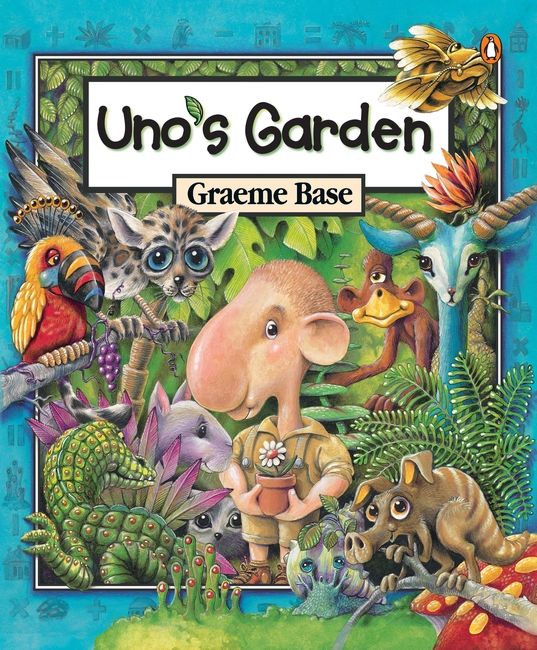
From the creator of the international bestseller ‘Animalia’ comes a unique blend of story, puzzle, and numbers—a poignant tale of our impact on nature and the possibility of positive change.
When Uno arrives in the forest one beautiful day, there are many fascinating and extraordinary animals there to greet him. And one entirely unexceptional Snortlepig. Uno loves the forest so much that he decides to live there. But, in time, a little village grows up around his house. Then a town, then a city… and soon Uno realises that the animals and plants have begun to disappear . . .
A moving and timely tale about how we all unknowingly affect the environment around us, just by being there, and how we can always learn from our mistakes and find ways of doing things better.

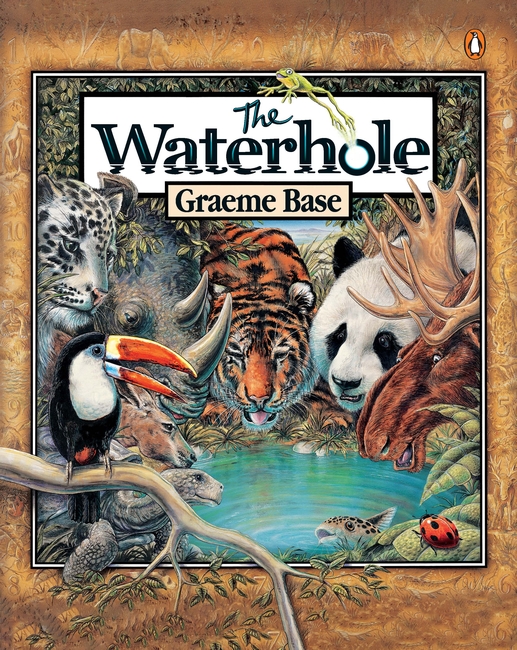
Down to the secret waterhole the animals all come,
As seasons bring forth drought and flood, they gather there as one.
United in their common need, their numbers swell to ten,
But hidden deep amongst the trees lie ten times that again!
THE WATERHOLE is an ingenious fusion of counting book, puzzle book, storybook and art book – an exhilarating journey of discovery, from the plains of Africa and the jungles of the Amazon to the woodlands of North America and the deserts of outback Australia.
‘This new and wonderful picture book provides a feast for the eyes and teasing for the mind. It is a book to be shared, the kind of book that readers will never tire of revisiting – there is always more to explore.’ -READING TIME
‘There is clarity, depth, restraint and detail, all here in a book which is delightful, thoughtful and insightful. I love it!’ -MAGPIES
‘Exquisite barely begins to describe this breathtakingly beautiful picture book by one of Australia’s most talented and successful author/illustrator.’ -THE SUNDAY TASMANIAN