Perfect for young readers who love adventure, friendship, and discovering their own strengths!
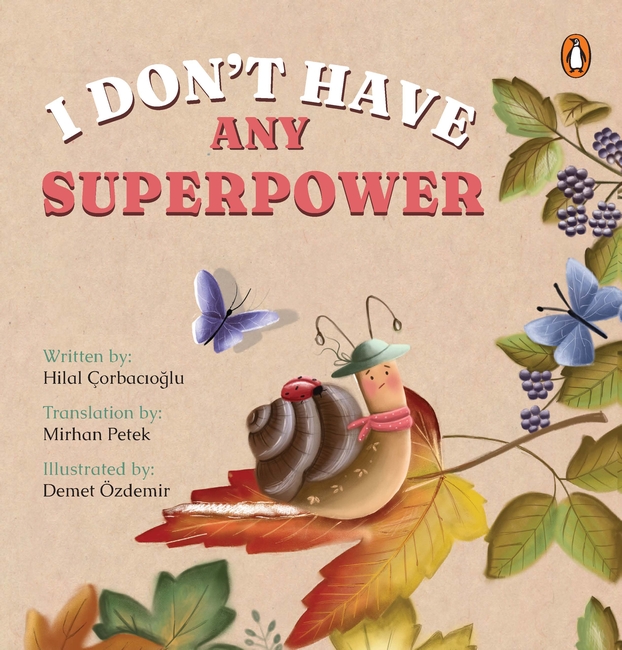
Suzi heads deep into the forest to watch the superpower tournament. Everyone has a superpower, but Suzi does not know what her talent is. With the help of her friends, she finally discovers the answer she has been looking for.
Emphasizing the importance of friendship, the book also draws attention to the importance of helping and discovering.
- Captivating Storyline – A fun and engaging journey that keeps children excited to turn the pages.
- This beautifully illustrated board book is perfect for young readers, teaching valuable life lessons through an engaging and magical adventure.
- Encourages Self-Belief – Helps kids understand that everyone has a unique talent, even if they haven’t discovered it yet.
- Promotes Friendship & Teamwork – Emphasizes the power of helping one another and the importance of kindness.

“All beautiful stories begin with a journey or a stranger coming to town.”
– Leo Tolstoy
The Night We Searched for the Moon – A Heartwarming Children’s Adventure
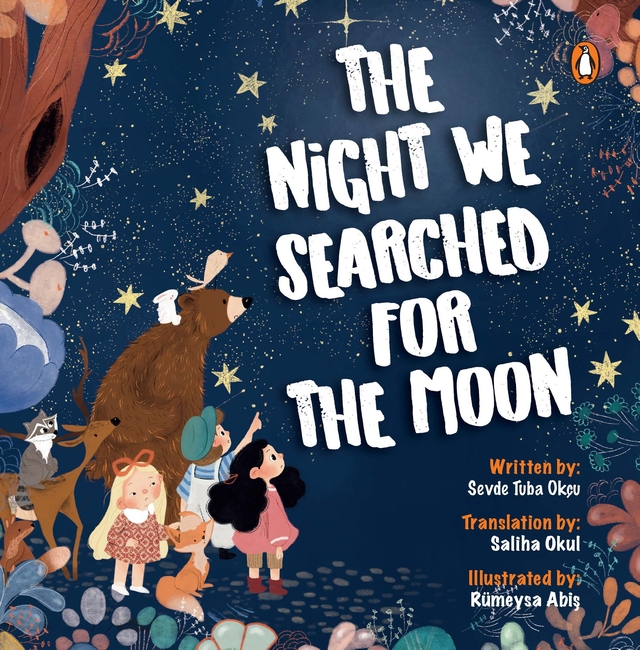
Our story is also a warm journey. On the night the Moon disappears from the sky, all the children and animals set out on a journey in the forest to search for the Moon. They look for the Moon in every corner of the forest, and when they fall into despair, a little girl cheers up the group. This story shows how animals and humans are connected and share the same world. It teaches the importance of living together with peace and respect.
Set in a fantastic universe, ‘The Night We Searched for the Moon’ invites children to search for the Moon in a mysterious forest, and ends with a humorous ending.

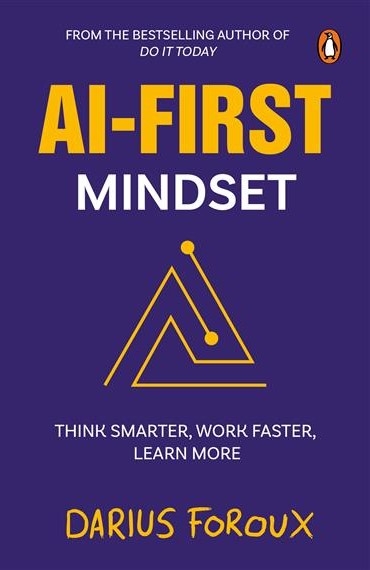
Unlock your potential and stay ahead of the curve with The AI-First Mindset – your ultimate guide to leveraging AI for personal and professional success.
In this game-changing book, bestselling author Darius Foroux shows you how to stop fearing artificial intelligence and start using it to your advantage — at work, in life, and in everything in between. Packed with real-world examples, sharp insights, and personal stories, AI-First Mindset is your roadmap to working smarter, thinking deeper, and thriving in a world increasingly driven by intelligent machines.
From using AI to write, invest, and negotiate, to learning how to balance speed with critical thinking, Foroux gives you actionable strategies to take control of the future — instead of letting it control you.
Key Takeways from the Book:
- Learn how to use AI as a personal productivity coach, creative partner, and decision-making tool.
- Discover real-life examples of AI in action — from writing and investing to everyday problem-solving.
- Gain a competitive edge by combining AI efficiency with deep, intentional work.
- Future-proof your skills by adopting a mindset of curiosity, adaptability, and innovation.
- Understand not just how AI works — but how you can work better with it.

Three historians. Three generations. Spanning nearly a century of work, Romila Thapar, Kumkum Roy and Preeti Gulati, reflect on their lives and their engagement with one of the most demanding, and most crucial, disciplines of our times. Personal narratives of growing up—learning about history, charting new and distinct paths as researchers, the challenges of teaching—meld effortlessly into a larger and complex changing context: the emergence of an independent nation, of movements that have helped shape the process, and of resistance. To what extent, the authors ask, have feminisms made a difference? Can these interventions lead to redefining or rejuvenating the discipline, transforming it into a more inclusive space where diverse voices can be acknowledged and heard with respect and understanding? These and other questions inform this accessible and lucid text.

Most people on Earth today live in a country where birth rates already are too low to stabilize the population: fewer than two children for every two adults. In After the Spike, economists Dean Spears and Michael Geruso sound a wakeup call, explaining why global depopulation is coming, why it matters, and what to do now.
It would be easy to think that fewer people would be better—better for the planet, better for the people who remain. This book invites us all to think again. Despite what we may have been told, depopulation is not the solution we urgently need for environmental challenges like climate change. Nor will it raise living standards by dividing what the world can offer across fewer of us. Spears and Geruso investigate what depopulation would mean for the climate, for living standards, for equity, for progress, for freedom, for humanity’s general welfare. And what it would mean if, instead, people came together to share the work of caregiving and of building societies where parenting fits better with everything else that people aspire to.
With new evidence and sharp insights, Spears and Geruso make a lively and compelling case for stabilizing the population—without sacrificing our dreams of a greener future or reverting to past gender inequities. They challenge us to see how depopulation threatens social equity and material progress, and how welcoming it denies the inherent value of every human life. More than an assembly of the most important facts, After the Spike asks what future we should want for our planet, for our children, and for one another.
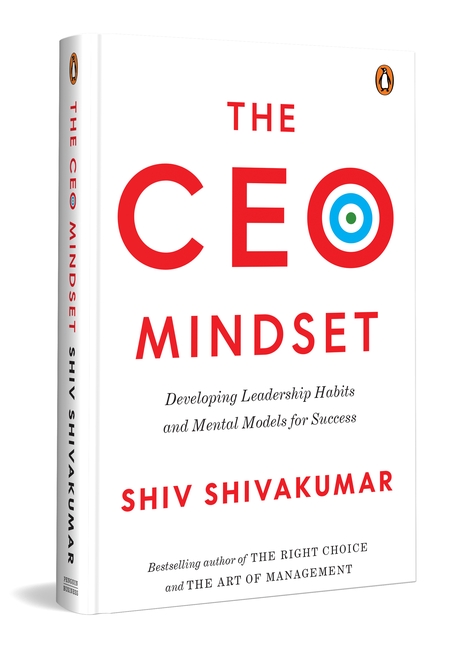
Being a CEO is high up on the list of most people’s career goals. Successful CEOs have a winning attitude, powerful habits and know how to ask the right questions to deliver the best results. But what does it really take to make it as a CEO? This book, penned by corporate leader and management guru Shiv Shivakumar, offers deep insights into the importance of prioritization, reflection, time management, relationships and the evolving landscape of leadership.
Through compelling stories and thorough analysis, Shiv shares invaluable lessons from his own career journey for the first time and brings in perspectives from thirteen leaders across industries like executive search, business, journalism, entrepreneurship, FMCG and education. The book also emphasizes collaboration and the importance of cultivating trust, shedding light on what employees seek from their leaders.
One does not become a CEO overnight—this book will set you on a journey of reflection, inculcating the right leadership values, and develop habits which will pave the way for a more meaningful and rewarding career.
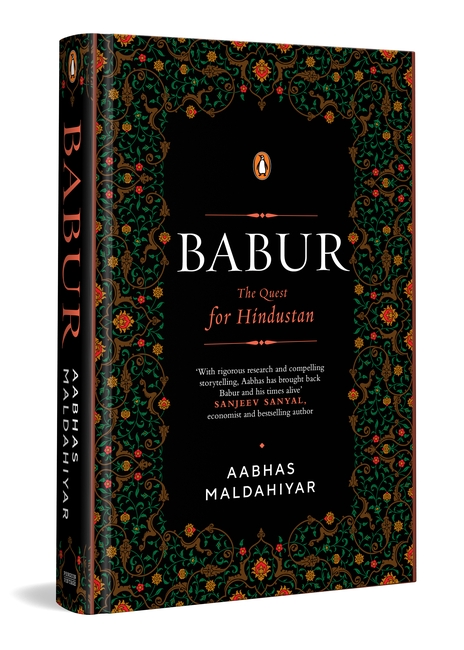
Embark on a captivating journey with Babur: The Quest for Hindustan, where the narrative resumes with Babur’s daring campaign in Bajaur. This meticulously researched biography continues to challenge the conventional portrayal of Babur, offering a nuanced view of his ambitions and complexities. Drawing from the rich Persian manuscript of the Baburnama and other primary sources, this book is a pivotal addition to Babur’s biographical genre, essential for anyone seeking to understand the enigmatic ruler’s legacy. Discover the multifaceted world of Babur, where history and intrigue intertwine.
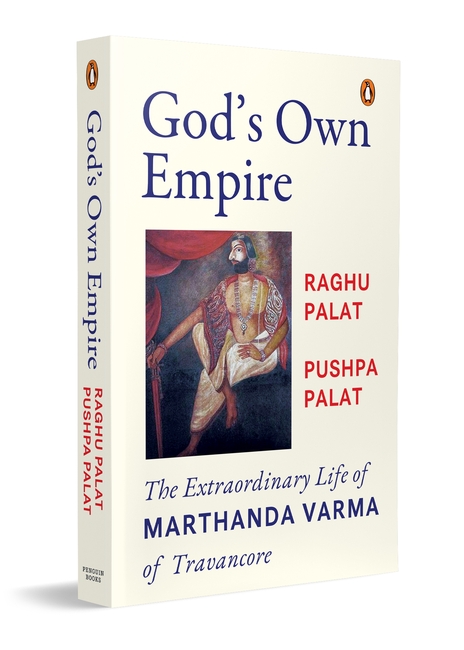
In 1750, at the height of his power, Marthanda Varma made a momentous decision. He decided to hand over the kingdom to Lord Ananthapadmanabha, the reigning deity of the kingdom of Travancore. In future, he decreed that he and his heirs would rule over the kingdom as the ‘dasas’ of the deity. It was the culmination of Varma’s illustrious career as a military leader and statesman.
When Marthanda Varma ascended the throne of Travancore in 1729 as a twenty-three-year-old, it was a kingdom embattled on every front—be it feudatories within the kingdom, rival kings outside or European powers beginning their pursuit of colonies in India.
Varma played a pivotal role in consolidating the royal family’s hold on the kingdom, expanding the kingdom’s boundaries by fighting off external rivals and even fending off the Europeans. He defeated the Dutch in the Battle of Colachel in 1750 and ended Dutch colonial aspirations in India.
God’s Own Empire by Raghu and Pushpa Palat, presents the extraordinary story of Marthanda Varma. Well-researched and accessible, it is the remarkable story of a remarkable man.
A horrific attack on the Rashtrapati Bhavan has brutally killed hundreds of people. And Riya Chaudhary finds herself in the clutches of a barbarous clan that will go to any extent to realize its plan of Ghazwa-e-Hind.
Ravana has begun the Kaal Yagna to awaken Anishtatri—the ancestral goddess of Asuras. After many bloody offerings, Ravana is preparing to offer the final sacrifice — his beloved queen Mandodari. The completion of this yagna shall yield unthinkable results.
The daitya guru Shukracharya and his daughter Devyani are travelling through the jungle—a region lorded by Dandak, the savage grandson of Ikshvaku. Here, they become victims of an appalling tragedy, the echoes of which shall haunt the universe till the end of time. Even the avatar of Lord Vishnu himself shall not be able to escape Shukracharya’s curse.
What is the Puranic mystery hidden in the ashram of the Maha-Tantaric Bhairavi Maa? What is the lord of all the malevolent energies in the universe Ekaksh Aghori’s diabolical plan that aims to restore Asura supremacy in the world?
Comprising four folktales, Sorthi-Brijbhar, Bharthari-Pingla, Heer-Ranjha and
Saranga-Sadabrij, the book is an anthology of stories influenced by the life, time and teachings of Yogi Gorakhnath—an eleventh-century saint—who propounded an inclusive religious philosophy that laid the foundation of the Sufi and Bhakti movement in India.
Initially, the yogis (mystics) of the Gorakhnath sect would sing these ballads on the tune of the sarangi and move door to door for alms. Originally, these stories existed in the oral tradition passed down from generation to generation in the form of ballads. The ballads are full of fairies, genies, witches, magic healers, witch doctors and ghosts besides angels in the form of Peer Baba (hermits) and sages. Over the decades and centuries, these stories have inspired folklorists, theatre artists and nautch parties to perform in melas (community fairs), religious events and marriages.