



Why was the Union Budget of 2015 the most anticipated in over a decade? How will it affect an entire generation to come? Will the government be able to create the required million jobs a month?
Mihir Sharma, the critically acclaimed author of Restart, answers all these questions and much more as he analyses the Union Budget with his trademark insightful observations and dramatic flair.
Archives: Books
Kadal
Mani Ratnam’s Nayakan is among Time’s ‘100 Best Movies Ever’; and Roja launched A.R. Rahman. This book, unique to Indian cinema, illuminates the genius of the man behind these and eighteen other masterly films. For the first time ever, Mani Ratnam opens up here, to Baradwaj Rangan, about his art, as well as his life before films. In these freewheeling conversations—candid, witty, pensive, and sometimes combative—many aspects of his films are explored. Ratnam elaborates in a personal vein on his choice of themes, from the knottiness in urban relationships (Agni Natchatiram) to the rents in the national fabric (Bombay); his directing of children (Anjali); his artful use of songs; his innovative use of lighting; as also his making of films in Hindi and other languages. There are fond recollections of collaborations with stalwarts like Balu Mahendra, P.C. Sreeram, Thotta Tharrani and Gulzar, among many others. And delectable behind-the-scenes stories—from the contrasting working styles of the legendary composer Ilaiyaraaja and Rahman to the unexpected dimensions Kamal Haasan brought to the filming of Nayakan to what Raavan was like when originally conceived. In short, like Mani Ratnam’s films, Conversations surprises, entertains and stimulates. With Rangan’s personal and impassioned introduction setting the Tamil and national context of the films, and with posters, script pages and numerous stills, this book is a sumptuous treat for serious lovers of cinema as well as the casual moviegoer looking for a peek behind the process.
Democracy
One lazy Karachi evening, Brigadier Azad is pre-occupied with thoughts of his mistress, when he is disturbed by the urgent news of a coup threatening the peace in Pakistan.
In crisp military prose and with classic dry wit, Fatima Bhutto lays bare the constant tussle between the military and everybody else.
Is He Fresh?
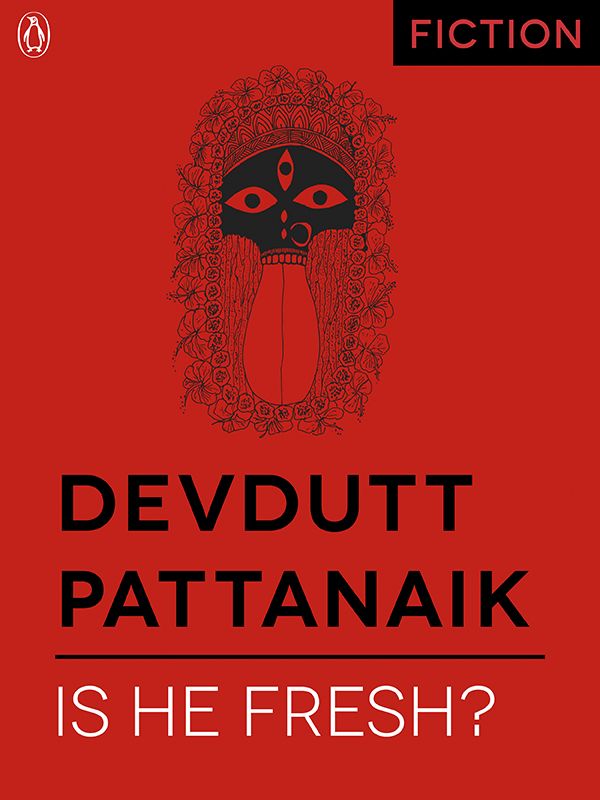
A powerful work of fiction from India’s bestselling mythologist Devdutt Pattanaik
When Mahesh agrees to meet his friend, Akshay, at midnight, in the middle of one of Mumbai’s maze-like slums, he doesn’t realise what he is getting himself into. Taking us through a surreal journey, Pattanaik exposes the frightening inner workings of a tantric circle that engages in human sacrifice to appease the blood-thirsty goddess, Rakta-Vilasini as she demands that the sacrifice has to be kaula, i.e. a virgin.
Devdutt Pattanaik’s clever, profoundly disturbing story takes a no-hols-barred look at the Mumbai underbelly.
Three Truths of Well Being
What does it take to live in well being?
To be in an abiding state of health, peace, love?
In his first-ever self-help book, Sadhguru, a profound mystic of our times, offers his characteristically pragmatic wisdom for a life of joy and fulfilment. Don’t route your joy through heaven, he says. Access happiness for yourself—right here, right now. Starting with three basic dimensions of the self—Body, Mind and Energy—Sadhguru introduces us to simple techniques to realign and transform them into a life of sparkling aliveness. From the ideal approach to food and sleep to the profound secrets of the human spine, from the role of sex and desire to the deepest meaning of love and morality, from the significance of physical postures and psychological attitudes to the notion of authentic spiritual illumination—this book guides us on all this and more.
Also read The Mind and The Energy from ‘Three Truths of Well Being’.
A Wish a Day for a Week
In this sparkling, witty and impassioned essay – delivered as the keynote lecture at the Jaipur Literature Festival 2014 – Amartya Sen meets the Goddess of Medium Things who promises him seven wishes, one for each day of the week. As he spars with the goddess who is often bemused by his demands, Sen writes of the seven changes he thinks India needs most, from improving the teaching of humanities to abolishing Article 377. Humorous in tone, yet deeply serious in intent, A Wish a Day for a Week is a marvellous essay and an important blueprint for India’s development from one of our great thinkers.
The Sword of Tipu Sultan
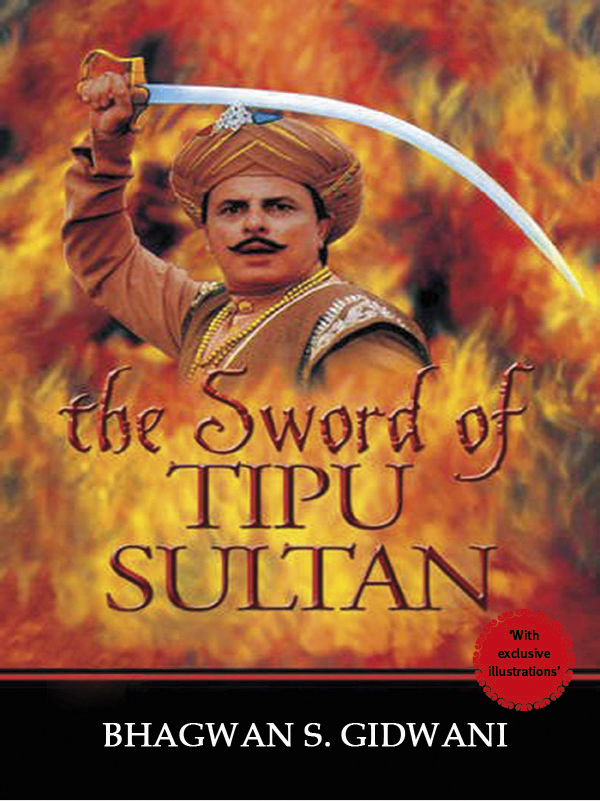
This historical novel tells the story of Tipu Sultan—the man, the lover, the soldier, the prince, the king. It speaks of those who loved and betrayed him; of his interactions with charming ladies and brilliant men; of his greatness and of the craftiness of his contemporaries; of the wit and folly of his times; and of the struggle of men and ideas in the march of history. Based on extensive research, The Sword of Tipu Sultan is an original contribution to historical literature which gives insights into the character of its hero, and the period in which he lived.
Tipu, maligned by historians as a cruel and bigoted ruler, emerges here as a humane, enlightened ruler who believed that God is not confined to any one religion and that all religions therefore deserve equal respect. He was opposed to colonialism, welcomed the American Declaration of Independence and applauded the spirit of the French Revolution. The author establishes him as the first among modern Indian nationalists who knew that India was weakened not by outside powers but the decadence and disunity within.
A vivid portrayal of the drama of Tipu’s times, The Sword of Tipu Sultan captures the amazing spirit of the man who, in the midst of disaster, lost neither his dignity nor his faith. He chose to court death when he could have saved himself, for he firmly believed that his sacrifice would serve as an example for the future generations of India.
Special Edition: With 30 exclusive illustrations, handpicked by the author, from the T.V. Serial which are not part of the Printed book.
The Red Letters
Ved Mehta’s acclaimed Continents of Exile series ends where it began—with a portrait of his father, Amolak Ram Mehta. But this, the final instalment of the eleven-book series, which has been appearing over the last thirty-two years, is its emotional crescendo, the story of the author’s discovery of his father’s affair with a married woman in the British India of the 1930s.
The story has its origins in the 1960s, when Mehta by chance finds his father weeping uncontrollably on his mother’s shoulder during a New York dinner party. As a result, the son begins to unravel a family mystery that takes him on a painful and revealing voyage into his father’s British past in Simla, the magical hill station and summer capital of the Raj. Step by step, he is forced to confront his father’s passionate clandestine affair with Rasil, an exquisite beauty who in her teens was abducted from her poor family and raped. She was subsequently rescued by a Hindu philanthropist, only to end up trapped in an abusive marriage to a rich businessman.
Years earlier, when the Daddyji of the story was working in the Punjab Himalayas as a medical student, he had met a young shepherdess on his rounds, and been intoxicated by her greenish-blue eyes, fair skin, golden hair, and the Nepalese lilt of her voice. At one moment, he caught sight of her concealed tattoo of the consort of Lord Krishna. She said that she, too, intended to marry the voluptuary deity.
Some fifteen years later in Lahore, Dr. Mehta encounters a socialite whom he recognizes as the hill girl of his youth by her tattoo. They re-establish contact and in time become lovers. Their affair is kept alive by the exchange of love letters, or Red Letters—sublime if eccentric works in themselves—that Mehta’s father treasures for the remainder of his life as a memento of his enchanted time.
Mehta’s exploration of his father’s love affair proves painful, as the son realizes that the entanglement, a passing episode in sixty-one years of a loving marriage, had shattering psychological side-effects on his mother—a close friend of Rasil’s—and also on his own life.
The Red Letters is Mehta’s masterpiece, a work of extraordinary intensity that perfectly re-creates the exotic, closed world of British India.
The appearance of this book is a major literary event, signalling the conclusion of Continents of Exile, one of the most remarkable literary achievements of the twentieth century.
Remembering Mr. Shawn’s New Yorker
For more than three decades, a quiet man—some would say almost an invisible man—dwelt at the center of American journalistic and literary life. He was William Shawn, the editor-in-chief of The New Yorker from 1952 to 1987. Through the writers and artists he gathered around him and worked with, the forms of writing he invented, the pieces he encouraged and published, and his gentle but meticulous editing of those pieces, he expanded—permanently—the range of the possible in journalistic and literary writing. Among his writers were Edmund Wilson, Rachel Carson, John Cheever, V. S. Pritchett, J. D. Salinger, Penelope Mortimer, A. J. Liebling, John Updike, Donald Barthelme, Jonathan Schell and Jamaica Kincaid.
In Remembering Mr. Shawn’s New Yorker, a memoir that in itself is a literary achievement of a high order, Ved Mehta—who started writing for The New Yorker at the age of twenty-five, and over some thirty-three years contributed such historic pieces as his brilliant study of philosophers at Oxford and his biographical portrait of Mahatma Gandhi—gives us the closest and most refined description that has yet been written of Shawn’s editorship of the magazine. He portrays in detail the peculiar, nurturing atmosphere of The New Yorker. And he recounts the series of “tremors” that shook the magazine in the last years of Shawn’s editorship that ended in his abrupt, tragic dismissal by the new owners.
Rajiv Gandhi and Rama’s Kingdom
This elegantly written book by the renowned author Ved Mehta is a chronicle of a tumultuous dozen years of recent Indian history—from the unsettled conditions that preceded the assassination of Prime Minister Indira Gandhi to the Hindu revival that followed the assassination of her son Rajiv. As Mehta explores the impulses that brought about the political and economic changes between 1982 and 1994, he also reveals what life is like in modern India, giving us a memorable portrait of an enigmatic land.
Mehta begins by describing the politics that swirled around Indira Gandhi during the last two years of her life—in particular, the growing hostility among Sikhs, Hindus, and Muslims. He tells of the Sikhs’ demand for special status, their uprising against the Hindus in the Punjab, the government’s retaliation, the murder of Mrs. Gandhi by two of her Sikh bodyguards, and the anti-Sikh rioting that followed. He goes on to reconstruct the circumstances surrounding Rajiv’s election as his mother’s successor; the change in atmosphere from optimism to disenchantment as Rajiv’s government became mired in a kickback scandal; Rajiv’s loss of office to V. P. Singh in the 1989 election; and his murder by a secessionist Tamil group from Sri Lanka in 1991. Throughout, Mehta provides vivid details of aspects of Indian history and culture, such as the impact of the accident at the Union Carbide plant in Bhopal, the debate between the judiciary and Muslim clerics over economic support of divorced Muslim women, the peculiarities of the Indian telephone system, and the effect of television and movies on Hindu revivalism. His lucid and incisive book is mandatory reading for those who wish to understand India today.