



The six pieces collected here for the first time have been chosen by Ved Mehta from a decade of reportorial work for The New Yorker. “They reflect, in different ways,” he writes in the foreword, “the worlds in which I feel at home: India, where I was born and brought up; the United States and Britain, where I have lived since I was fifteen; and what Milton called ‘the olive grove of Academe,’ where I spent an interlude of almost nine years. The pieces are united by the ancient theme of the tongue and the pen. . . .” Among the literate personages Mr. Mehta writes about are the U.N. interpreter George Sherry (“A Second Voice”); the English editor and broadcaster Sir William Haley (“The Third”); the Oxford bookman Sir Basil Blackwell (“Quiet, Beneficent Things”); the Urdu translator and critic Ram Babu Saksena (“There Is No Telling”); the Indian novelist R. K. Narayan (“The Train Had Just Arrived at Malgudi Station”); and the American linguist Noam Chomsky (“John Is Easy to Please”).
These men and many of their confreres who appear in the book “might well be surprised to find themselves in the same room,” Mr. Mehta writes. “They would have difficulty in understanding one another’s manners, attitudes, and, in some cases, language. The gathering would indeed be a bizarre one . . . but for me it would be Heaven.” Mr. Mehta combines the literary exuberance of the true writer with the intellectual rigor of the true scholar; his style is marked by wit and sweep and fire. In this book about encounters with virtuosos of the written and the spoken word he has made a delightful addition to the pleasures of literacy.
Archives: Books
Dark Harbor
When Ved Mehta was first invited to Islesboro, a narrow, thirteen-mile-long island off the coast of Maine, he could not have imagined the far-reaching consequences of his visit.
Seduced by a dream of putting down roots in the New World, he finds himself buying a fifteen-acre parcel of land in the rugged terrain of Dark Harbor. To build his house, Mehta hires the architect Edward Larrabee Barnes, famous for designing the IBM Building in New York, the Haystack Mountain School of Crafts in Maine, and museums that include the Walker Art Center in Minnesota.
In sparse and evocative prose, Mehta describes the follies of constructing a house on an island far removed from that other island, Manhattan, where he lives, and where “sound-shadows” effectively allow him to live as if he were not blind. In Dark Harbor, sound disappears into the brush, banks, and woods like a stone tossed into the ocean. With devastating honesty and poignant humour, Mehta details the many dilemmas he encounters during the construction of his remarkable house, from ever-climbing costs to a recurrent infestation of potato bugs in the new-built basement.
Underlying this narrative is a richly allegorical tale about Mehta’s own struggles as a writer and as a man. Even while constructing the house, he finds himself building another edifice—helping to bring into being an enchantment he had thought might elude him. For the house in Dark Harbor is destined to become a home for the woman he falls in love with and marries and, over the years, the children they have together.
Mamaji
Although Ved Mehta has been blind since childhood, he has written eleven books in fifteen years, from his autobiography Face to Face to Daddyji, his memoir of his father. Mamaji is a companion volume to both of these books, and it tells the story of the author’s mother, Shanti Devi Mehta—Mamaji, as her children called her—and, by extension, of an ancient family from an Indian city trying to consolidate its place in the modern world.
Mamaji was brought up in an orthodox Hindu family, practised in the ancient rituals and duties associated with her religion, and she received little schooling. When she was seventeen her father arranged her marriage to Amolak Ram Mehta: the marriage of a girl who couldn’t speak English, was extremely superstitious, and had never been inside a shop to a British-trained doctor who loved music and was addicted to tennis, parties, and cards—and had expected a wife with similar interests.
Writing with his characteristic vividness and eloquence, Ved Mehta once again translates an individual experience into one that is universal.
Delinquent Chacha
Ved Mehta, who has been known chiefly for his reports on the ideas and personalities of contemporary philosophers, historians, and theologians, has, in Delinquent Chacha, written his first novel. It is the story of a rascally, improvident, unquenchable, and ultimately enchanting middle-aged Indian—Anglophile, card-player, dreamer—who spent his early years under the British raj and, finding himself deep in nostalgia now that India is independent, wants nothing so much as to turn himself into an English gentleman. To accomplish his purpose, he sets out for England with a view to becoming an undergraduate at Oxford and a club-man, finds what he assumes to be a temporary job as a porter at the All India Taj Mahal Curry, Chutney, and Soup Restaurant in London, allows himself to be persuaded that he has been honored with the title Companion of the Order of St. Michael and St. George, has himself opulently outfitted in Regent Street, gets into trouble with the law for befuddling his tailors, and defends himself in the courtroom with an eloquent mixture of Indian and British logic. Mr. Mehta has done something that has rarely been done in fiction in recent years: he has invented a large-scale comic character. On the surface, the novel is farce—first-rate farce—but there is more than surface. Beneath all the antic incident, there is a rustle of fresh, witty comment on East and West.
Walking the Indian Streets
After ten years of study in England and America, Ved Mehta revisited his home in India in the summer of 1959. In this book he gives a sensitive and vivid account—sometimes deeply serious, sometimes very funny—of his attempt to reidentify himself first with his family, then with the military and civil leaders of the Indian state. He is joined by his great friend from Oxford, the poet Dom Moraes, and together they spent a carefree month meeting Indian writers and poets, enjoying the social life of New Delhi, Nepal, and Calcutta, and speaking at Indian universities. Ved Mehta then returns alone to Delhi to reflect on what he has seen and heard, to make an ancestral pilgrimage to Haridwar, and—the climax of his visit home—to meet Nehru.
Three Stories of the Raj
Ved Mehta and Adrian Wilson, both MacArthur Prize Fellows, met for the first time at a gathering of recipients of the award. Their conversation turned inevitably to their work—to Ved Mehta’s writing and to Adrian Wilson’s book designing and printing. The concept of publishing a Mehta work in a special edition arose naturally; and the author chose three stories with different characters and events, each revealing an aspect of boyhood in India under the British raj.
Working in Wilson’s studio at the time was Zahid Sardar, a graphic artist from Bombay, and he was eager to illustrate the book. Sardar, who was already planning to visit his native land, took along his sketchbook and copies of the stories, and returned with a group of delicate and perceptive images recreating a vanished way of life.
The title of the first story, “Four Hundred and Twenty,” refers to an infamous law of British India under which Indian subjects were tried for various sorts of antisocial behavior. The story reveals with gentle humor the mixture of petty bureaucracy and profound spiritual feeling during the period, and the deep division between Hindus and Muslims that in time led to the partitioning of the country.
“The Music Master,” the story of a boy’s lessons with a lazy, devious, but appealing guru, shows how the crosscurrents of ancient superstition and modern Westernized thinking have buffeted the Indian subcontinent.
The third story, “Sunset,” presents with great sensitivity and simplicity a picture of a village family, its traditions, and its strengths, in a time of tragedy.
The Lights Changed
A delectable offering of the best stories written by master storytellers, including Ruskin Bond, Anita Desai, Satyajit Ray, R.K. Narayan, Salman Rushdie and Vikram Seth, to name a few. Each story represents the richness and range of contemporary writing for children, and is beautifully illustrated to make this truly a collector’s item.
From The True Adventures of Prince Teentang
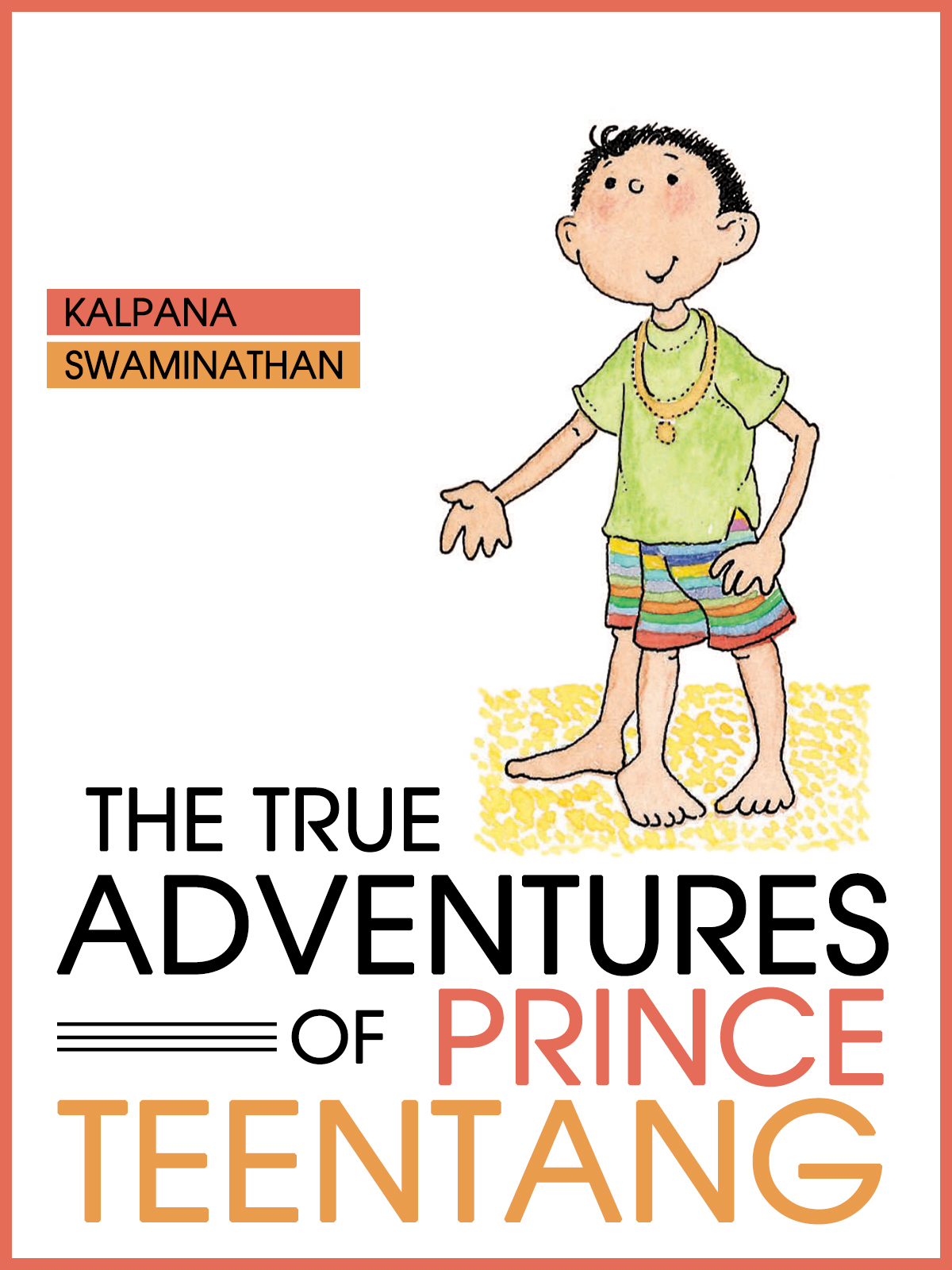
The True Adventures of Prince Teentang outlines the exploits of our dashing young hero – a prince with three legs, in hilarious detail. What do you do when you are born to royalty, with one leg too many? Why, whatever you like! Prince Teentang wreaks merry havoc on his palace as he races along from one adventure to the next while his guardians quake in fear about their heads being hacked off their necks! Kalpana Swaminathan paints a bright, witty picture of a court filled with eccentric folks ruled by a silly tyrant king. Ridiculously hilarious, this excerpt is the perfect short read to lift your spirits.
Dal Delight
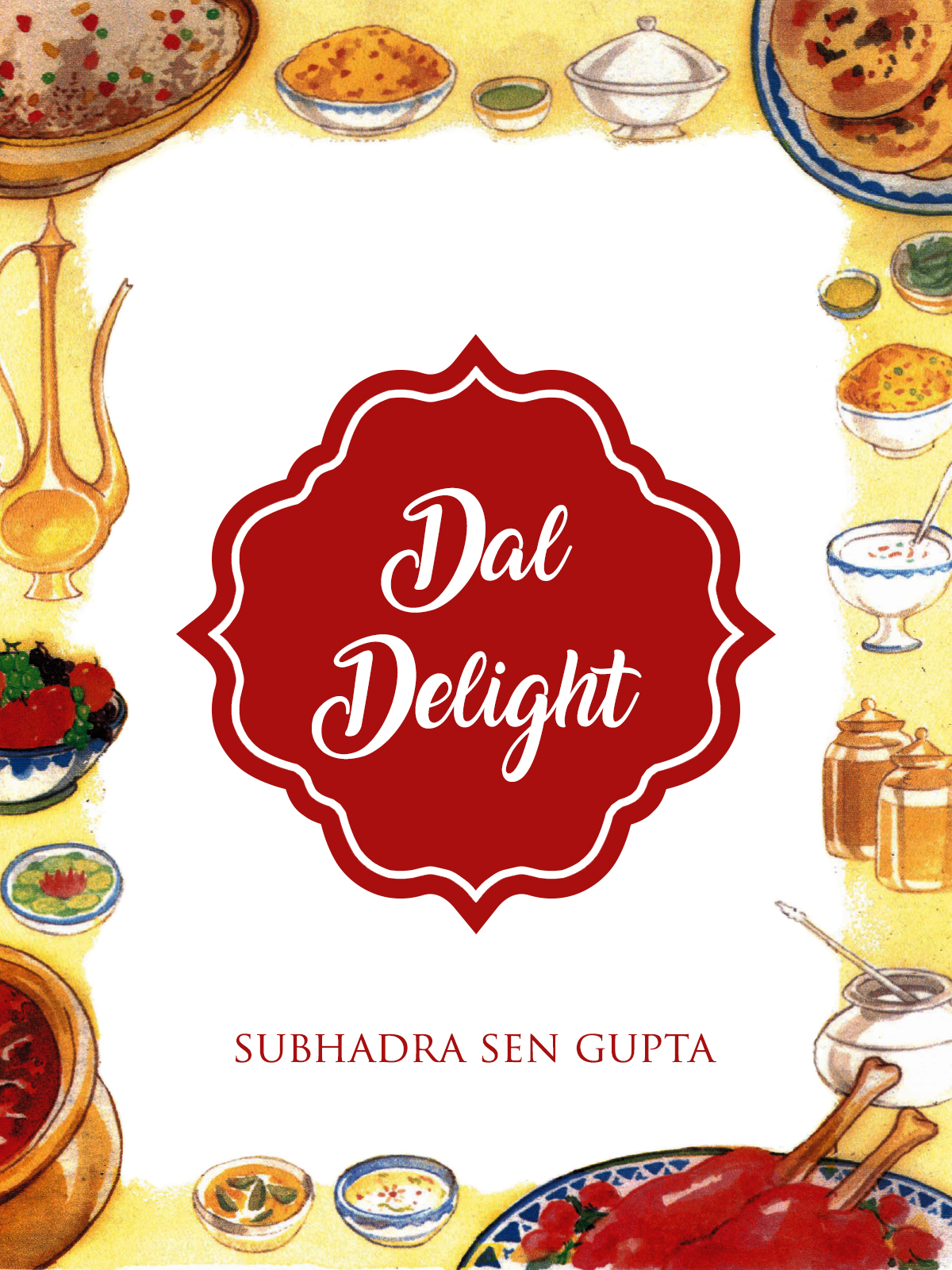
In this deliciously sweet tale, renowned author Subhadra Sen Gupta takes us through the lanes of Lukhnow to a humble cook and a proud Nawab. The Nawab has heard praise and come to visit, but the cook is unlike any he has met before. He doesn’t bow down to his royal highness; he simply says that anyone eating his food must eat it exactly as he demands. The Nawab in good humour agrees, but will he remember to come on time? Will the cook furiously throw away this magnificent food in fury, along with dreams of a better future? Find out in this teekha tale, which brings to life all the fulsome flavours of desi khaana.
The Boy with a Catapult
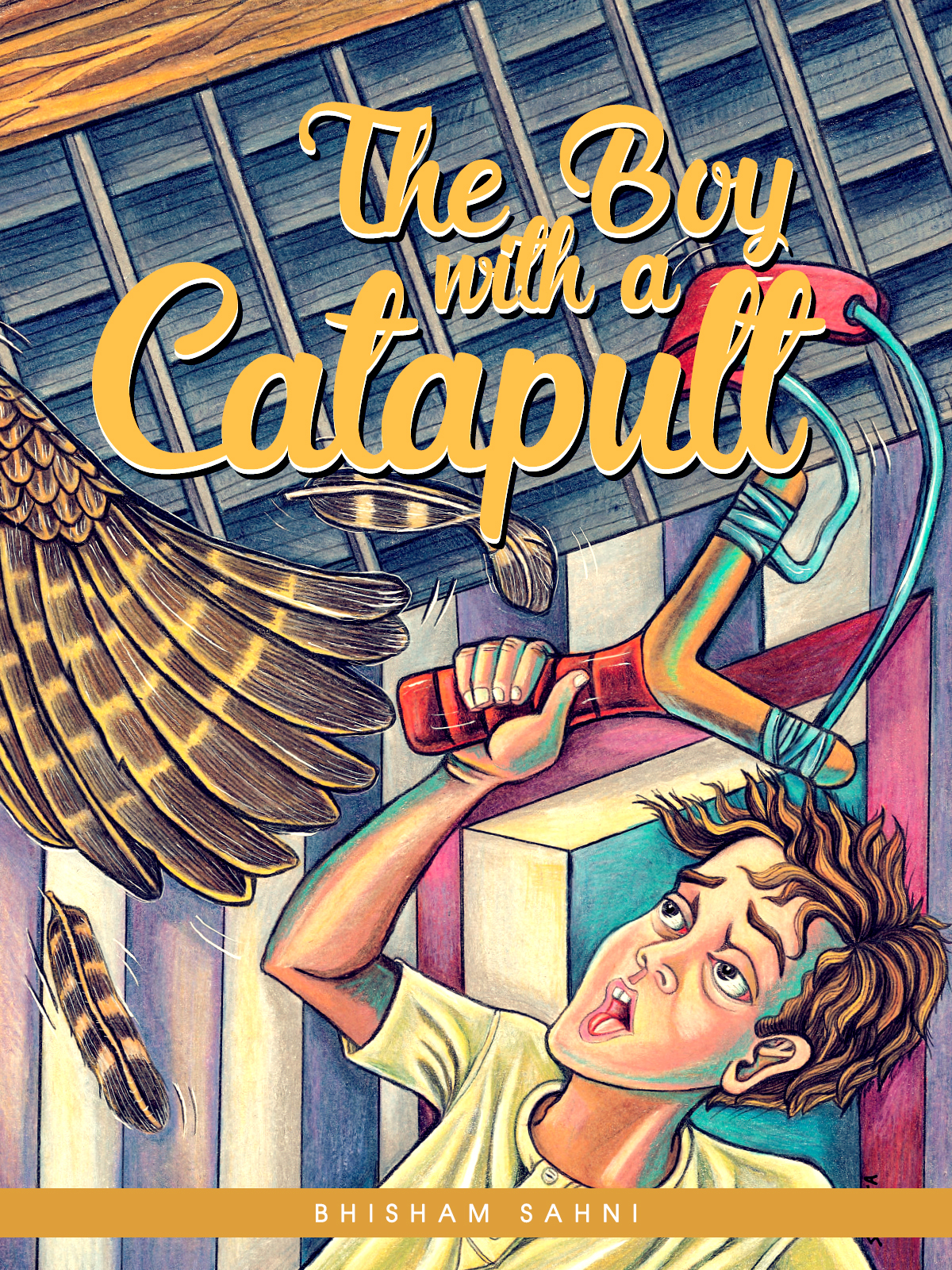
Bhisham Sahni is at his finest in this elegant story of ruthlessness and kindness. Bodh Raj is a boy with murder on his mind and a catapult in his hands. Birds, beasts, insects – none are spared his callous cruelty. Bhisham Sahni takes us on a swift journey of the heart of a boy, and how it can change in an instant from cruelty to fierce protectiveness – all it needs is a reason. Sahni beautifully encapsulates how the worst of us can be redeemed in this simple, timeless tale.