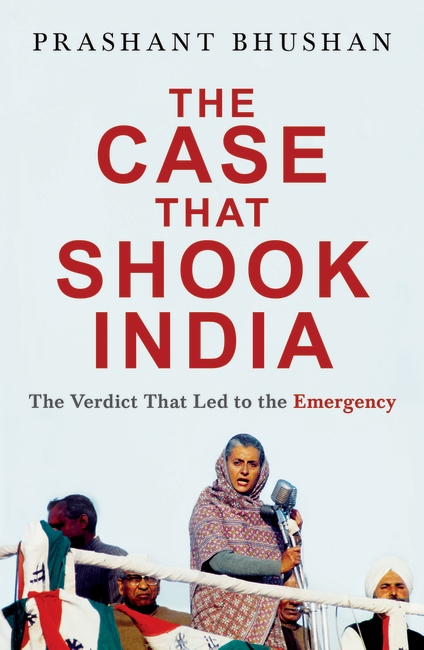
On 12 June 1975, for the first time in independent India’s history, the election of a Prime Minister was set aside by a High Court judgment. The watershed case, Indira Gandhi v. Raj Narain, acted as the catalyst for the imposition of the Emergency. Based on detailed notes of the court proceedings, The Case That Shook India is both a legal and a historical document of a case that decisively shaped India’s political destiny.
The author, advocate Prashant Bhushan, sets out to reveal the goings-on inside the court as well as the manoeuvrings outside it, including threats, bribes and deceit. Providing a blow-by-blow account, he vividly recreates courtroom scenes. As the case goes to the Supreme Court, we see how a ruling government can misuse legislative power to save the PM’s election.
Through his forceful and gripping narrative, Bhushan offers the reader a front-row seat to watch one of India’s most important legal dramas unfold.

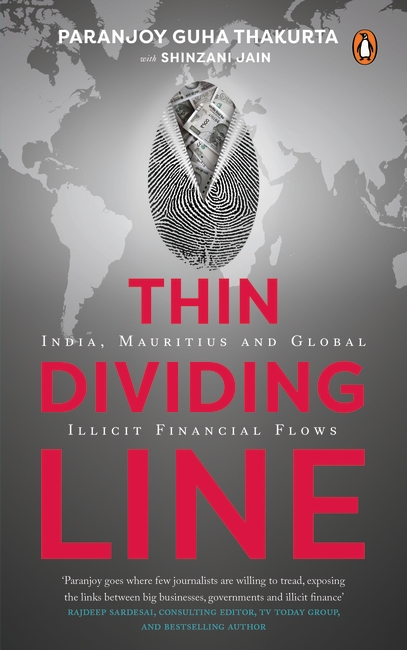
The use of tax havens to not just avoid the payment of taxes but also to evade them has attracted considerable attention across the world and in India. Tax havens, also known as low-tax or no-tax jurisdictions, enable ultra-rich individuals and corporate entities to not pay taxes, legally and illegally. There is a thin dividing line between tax avoidance (often described as ‘good’ tax planning) and tax evasion (deemed criminal in most countries). In fact, the dividing line is so thin it is virtually non-existent. Tax havens have been used by the rich and the powerful to benefit themselves at the expense of the poor and the underprivileged. This led to widening inequality between citizens and across countries.
This book looks at the India-Mauritius Double Taxation Avoidance Agreement in the global context of growing illicit financial flows. This agreement is important because 40 per cent of the total inflows of foreign money into India comes through Mauritius.
You will also read about scandals surrounding the IPL, international companies that came under the scanner for tax evasion, black money, havala and an international criminal industry employing bankers, lawyers and corrupt bureaucrats who run an economy parallel to the world economy

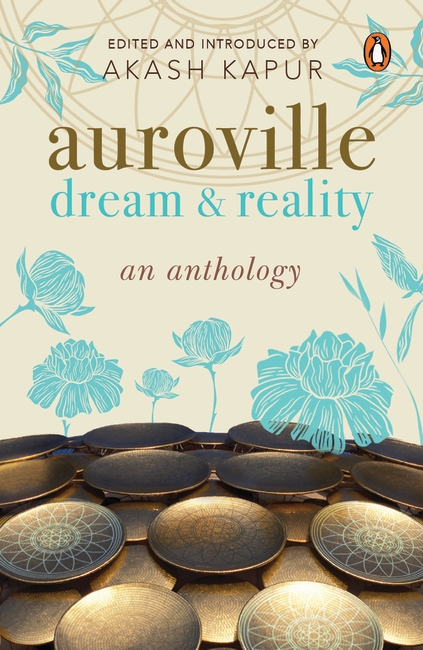
Auroville has a reputation as a cosmopolitan, spiritual township, but it remains an enigma to outside observers. What is life really like in the community? What do its residents believe in, and what are they aspiring toward? This anthology of writing from the community, edited by a long-time resident and representing forty-odd authors from around the world, seeks to shed light not only on Auroville’s ideals but also on its lived reality. The polyphonic narratives in this eclectic collection-including fiction, essays, poetry and drama-capture something of the dreams, hopes, disappointments and sheer hard work that make up this complex, layered and constantly evolving place.
Enlivened by cartoons and accompanied by rare archival photographs, Auroville: Dream and Reality is a view from the inside of this remarkable experiment in communal and intentional living.
‘Auroville is one of the great moral adventures of our time-a brave attempt to break from orthodox political and economic institutions, and create a new community. This bracing anthology describes the bittersweet paradoxes and tensions inherent in building a new city on a hill’-Pankaj Mishra, author of Butter Chicken in Ludhiana
‘This wonderful anthology puts flesh and bones on the experience of building, living, challenging and refining the utopian ideal-a rich portrayal of reality for all who nurture hopes for a better world’-Vishakha Desai, Asia Society Emerita President

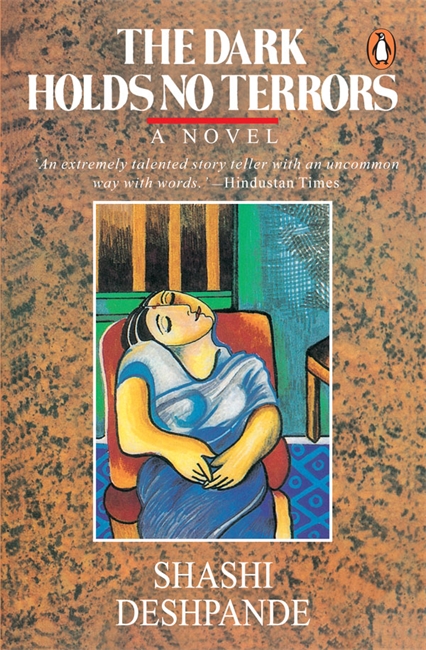
‘Why are you still alive-why didn’t you die?’
Years on, Sarita still remembers her mother’s bitter words uttered when as a little girl she was unable to save her younger brother from drowning. Now, her mother is dead and Sarita returns to the family home, ostensibly to take care of her father, but in reality to escape the nightmarish brutality her husband inflicts on her every night. In the quiet of her old father’s company Sarita reflects on the events of her life: her stultifying small town childhood, her domineering mother, her marriage to the charismatic young poet Mahohar.

The oilman’s oil, the potter’s pot
The elephant’s trunk, the king’s flag
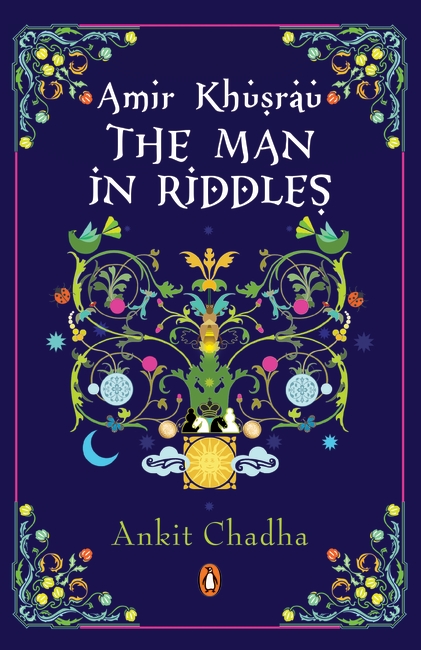
A riddle is a mystery concealed in words, each a clue you must unravel. In this book, it is also a piece of verse, part of the puzzle that is the fascinating life of Amir Khusrau.
Gloriously illustrated, crafted with care and sprinkled with delightful snippets of history, Amir Khusrau: The Man in Riddles is guaranteed to bewilder, inform and entertain children and adults alike.
Work your way through the riddles on your own or challenge a friend, or just read on for the answer and a peek into the thoughts of this enigmatic poet, mystic and musician.

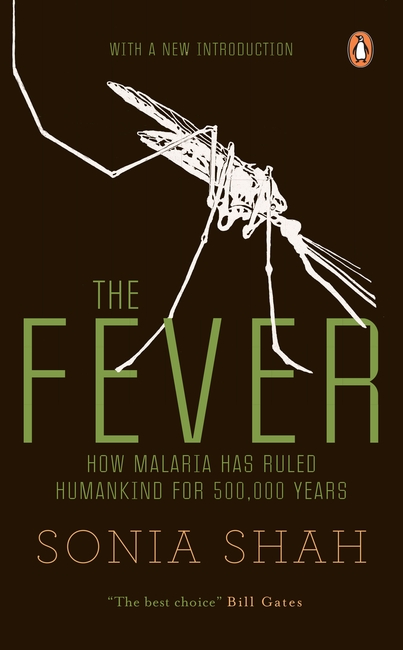
One is often led to believe that mosquito-borne diseases such as malaria and its companion diseases, dengue and chikungunya, are backward and rural diseases that have very little to do with urbanization and development. However, it is often just the reverse. These diseases have been around for over 500,000 years and continue to flourish even as we continue to progress as a race.
In The Fever, journalist Sonia Shah sets out to address this concern, delivering a timely, inquisitive chronicle of malaria and its influence on human lives. Through the centuries, she finds, we’ve invested our hopes in a panoply of drugs and technologies, and invariably those hopes have been dashed. From the settling of the New World to the construction of the Panama Canal, through wartimes and the advances of the Industrial Revolution, Shah tracks malaria’s jagged ascent and the tragedies in its wake, revealing a parasite every bit as persistent as the insects that carry it. With distinguished prose and original reporting from Panama, Malawi, Cameroon, India and elsewhere, The Fever captures the curiously fascinating, devastating history of this long-standing thorn in the side of humanity.
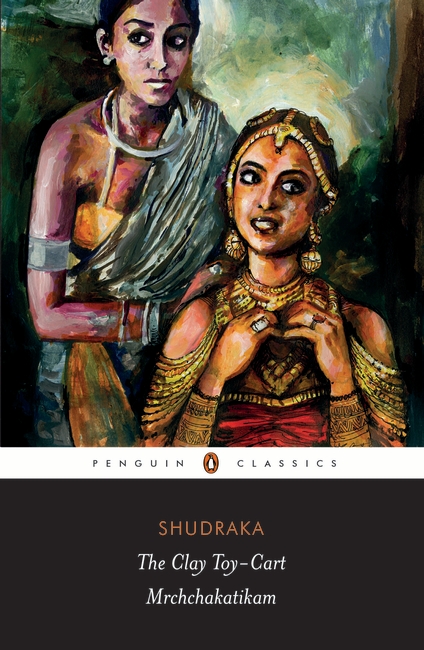
A gripping satire of romance, betrayal and intrigue set in ancient India
The Clay Toy-cart remains one of the foundational works of Sanskrit drama, having been performed numerous times around the world and even serving as the inspiration for Girish Karnad’s highly acclaimed film Utsav.
The story follows the fortunes of a rich and beautiful courtesan, Vasantasena, who falls in love with the handsome Charudatta, a former merchant who is now penniless. Although Charudatta is happily married, he is deeply drawn to Vasantasena. The two embark on a love affair that leads to some terrible complications and shocking reversals of fortune-involving violent crime as well as political rebellion-before matters are ingeniously resolved.
Padmini Rajappa’s lucid translation revitalizes this iconic play for contemporary readers while also shedding light on its unique place in the Sanskrit canon as well as the mystery shrouding the identity of its author.

India has been the subject of many extravagant predictions and hopes. In this powerful and wide-ranging book, distinguished economist Vijay Joshi argues that the foundations of rapid, durable and inclusive economic growth in India are distinctly shaky. He lays out a penetrating analysis of the country’s recent faltering performance, set against the backdrop of its political economy, and charts the course it should follow to achieve widely shared prosperity.
Joshi argues that for India to realize its huge potential, the relation among the state, the market and the private sector must be comprehensively realigned. Deeper liberalization is very necessary but far from sufficient. The state needs to perform much more effectively many core tasks that belong squarely in its domain. His radical reform model includes a fiscally affordable scheme to provide a regular ‘basic income’ for all citizens that would speedily abolish extreme poverty.
An authoritative work of tremendous scope and depth, India’s Long Road is essential reading for anyone who wants to know where India is today, where it is headed, and what it should do to attain its ambitious goals.

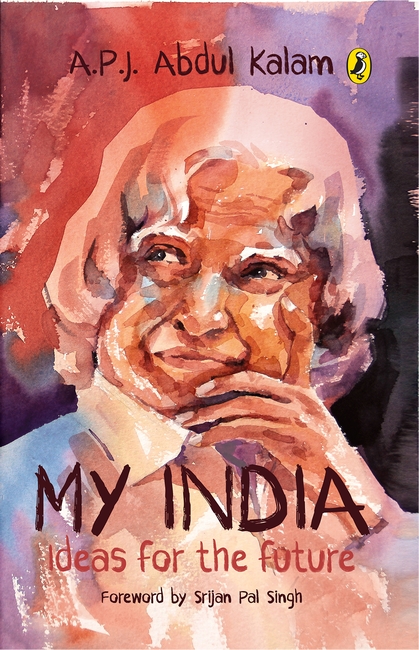
Wisdom and inspiration from India’s best-loved president
My India: Ideas for the Future is a collection of excerpts from Dr A.P.J. Abdul Kalam’s speeches in his post presidency years. Drawn from Dr Kalam’s addresses to parliaments, universities, schools and other institutions in India and abroad, they include his ideas on science, nation-building, poverty, compassion and self-confidence.
Dr Kalam draws on the lives of stalwarts such as Marie Curie and Dr Vikram Sarabhai to encourage and inspire his young readers. Through these speeches, he shares many valuable lessons in humility, resilience and determination, and leads children to think, grow and evolve.
A project very close to his heart, Dr Kalam’s last book for children is a road map for every child to pursue their dreams, to be the best they can be, leading to the realization of a better India.

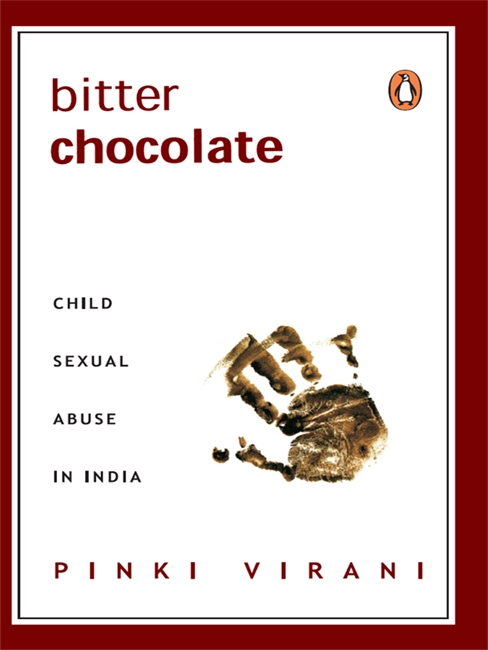
A book that challenges our notions of family honour and morality Sometime, somewhere, the conspiracy of silence around Child Sexual Abuse (CSA) in Indian homes had to be shattered. This path-breaking book”the first of its kind in the country and subcontinent”attempts to give that sexually abused child a powerful voice. It provides damning disclosures about men, and some women, in middle and upper-class families who sexually abuse their children, then silence them into submission. Based on studies, reports and investigation, this book reveals that a minimum of twenty per cent of girls and boys under the age of sixteen are regularly being sexually abused; half of them in their own homes, by adults who have the child’s trust. In Bitter Chocolate, journalist and best-selling author Pinki Virani travels across the country to record the testimonies of the police, doctors, child psychologists, mental health professionals, social workers, lawyers and the traumatized victims themselves. The book opens with an account”brave and devoid of self-pity”of the author’s own experience. Going beyond blaming, Pinki Virani then proceeds with her insightful analysis of the issue in three notebooks. The first spells out what constitutes CSA, why and how this happens, its devastating after-effects which haunt the victims as they grow into adulthood. The second notebook describes these effects through two real-life stories of women who were betrayed as children by men of their family. The third provides practical solutions on how to counter CSA, including a framework involving the law, the parent and their child. A special chapter addresses adults who have never before disclosed their sexual abuse as children. Plus: a nationally coordinated helpline. Accessible yet comprehensive, Bitter Chocolate is written for the young parent and guardian, principal and teacher, judge and police, lawyer and public prosecutor, teenager and tomorrow’s citizen.