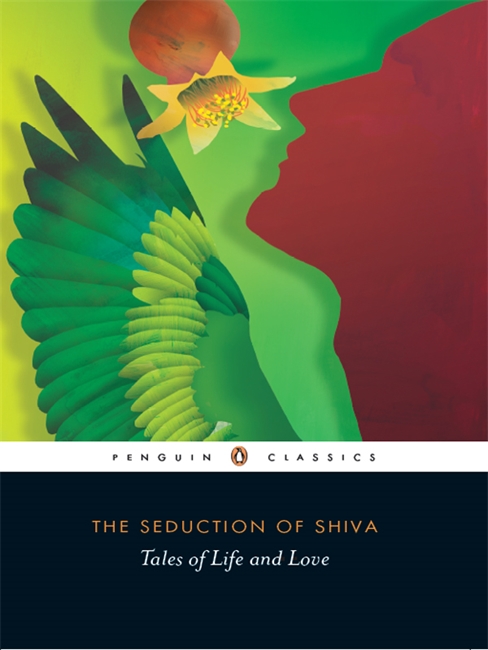
The god Shiva is utterly seduced by Mohini, the enchanting female form assumed by the god Vishnu during the churning of the ocean for nectar. A barber employs wit and wile and rumours of witchcraft to win his wife back from the lustful attentions of their king. The celestial nymph Urvashi curses the Pandava prince Arjuna when he rejects her sexual advances. A woman caught in adultery befools her elders with a religious ritual. A man with a disagreeable missing wife insists nevertheless that she be recovered by his ruler who has a similar problem.
Refined, colloquial, romantic, cynical, satirical by turns, these stories of erotic love, elegantly translated from the Sanskrit classics, make a sustained argument for the secular ends of life of desire tempered with discrimination and pleasure with restraint.
Plants personify the divine— The Rig Veda (X.97)
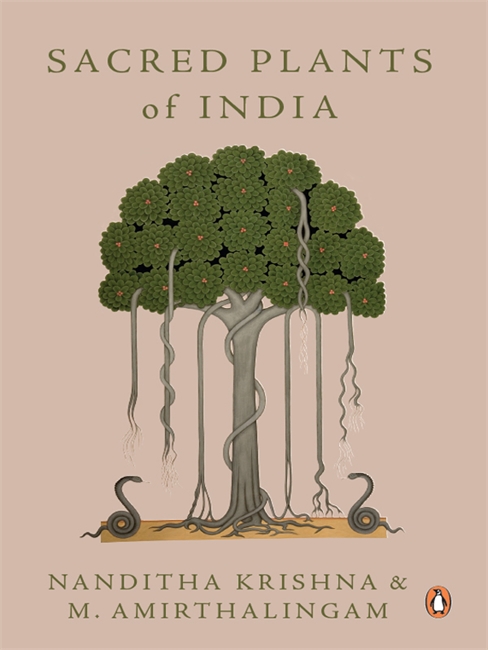
Trees and plants have long been held sacred to communities the world over. In India, we have a whole variety of flora that feature in our myths, our epics, our rituals, our worship and our daily life. There is the pipal, under which the Buddha meditated on the path to enlightenment; the banyan, in whose branches hide spirits; the ashoka, in a grove of which Sita sheltered when she was Ravana’s prisoner; the tulsi, without which no Hindu house is considered complete; the bilva, with whose leaves it is possible to inadvertently worship Shiva. Before temples were constructed, trees were open-air shrines sheltering the deity, and many were symbolic of the Buddha himself.
Sacred Plants of India systematically lays out the sociocultural roots of the various plants found in the Indian subcontinent, while also asserting their ecological importance to our survival. Informative, thought-provoking and meticulously researched, this book draws on mythology and botany and the ancient religious traditions of India to assemble a detailed and fascinating account of India’s flora.

The Greatest Story Ever Told
Dispute over land and kingdom may lie at the heart of this story of war between cousins-the Pandavas and the Kouravas-but the Mahabharata is about conflicts of dharma. These conflicts are immense and various, singular and commonplace. Throughout the epic, characters face them with no clear indications of what is right and what is wrong; there are no absolute answers. Thus every possible human emotion features in the Mahabharata, the reason the epic continues to hold sway over our imagination.
In this superb and widely acclaimed translation of the complete Mahabharata, Bibek Debroy takes us on a great journey with incredible ease.

The Mahabharata is one of the greatest stories ever told. Dispute over land and kingdom may lie at the heart of this story of war between cousins-the Kouravas and Pandavas-but the Mahabharata is about conflicts of dharma. These conflicts are immense and various, singular and commonplace. Throughout the epic, characters face them with no clear indications of what is right and what is wrong; there are no absolute answers. Thus every possible human emotion features in the Mahabharata, the reason the epic continues to hold sway over our imagination. In this superb and widely acclaimed translation of the complete Mahabharata. Bibek Debroy takes us on a great journey with incredible ease.

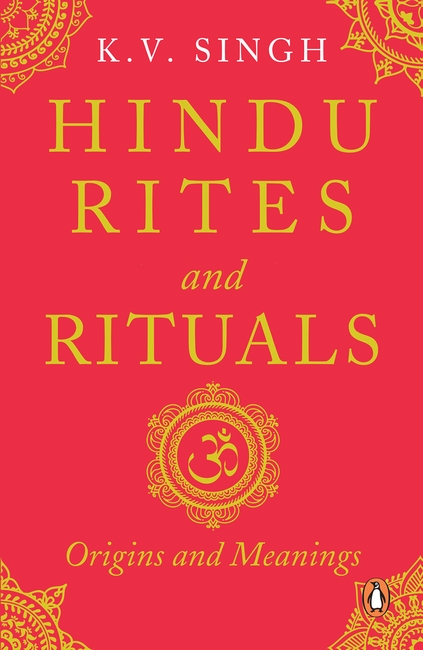
Why is the tulsi considered sacred?
What is the significance of namaste?
Why do Hindus light a lamp before performing a ritual?
Why is it forbidden to sleep facing the south?
Why do Hindus chant ‘shanti’ three times after performing a rite?
Millions of Hindus the world over grow up observing rites, rituals and religious practices that lie at the heart of Hinduism, but which they don’t know the significance of. Often the age-old customs, whose relevance is lost to modern times, are dismissed as meaningless superstitions. The truth, however, is that these practices reveal the philosophical and scientific approach to life that has characterized Hindu thought since ancient times; it is important to revive their original meanings today.
This handy book tells the fascinating stories and explains the science behind the Hindu rites and rituals that we sometimes follow blindly. It is essential reading for anyone interested in India’s cultural tradition.

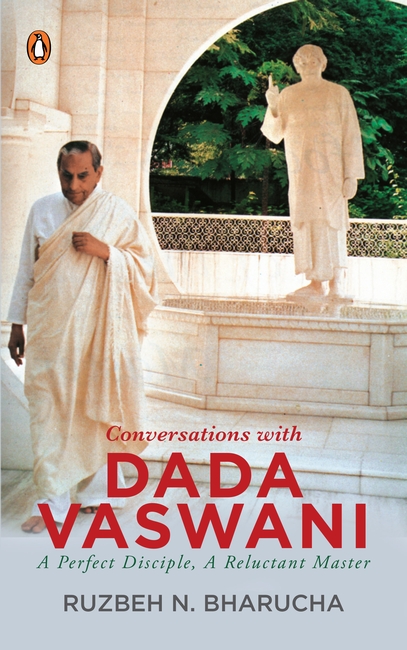
The zenith of spirituality lies not in being a Master, but being the perfect disciple. In the womb of humility lies the greatest reality-not only for this life, but also for the one beyond.
In this book, Dada Vawasni, a Guru to millions, shares His innermost thoughts and ideals with Ruzbeh N. Bharucha, the author of The Fakir trilogy. Their discussions, punctuated by Dada’s trademark sense of humour, are filled with laughter and joy, and yet, within them, lie ancient truths and the wisdom of life.
Their talks cover a range of topics-from the power of prayer to how to live in the world and not be imprisoned by circumstances; from true surrender to the role of the Guru and the disciple, from the concepts of karma and free will to life after death and positive acceptance.
Conversations with Dada Vaswani is a spiritual journey, but, most importantly, it is a dialogue between a Master and a seeker.

Get intrigued by illusions
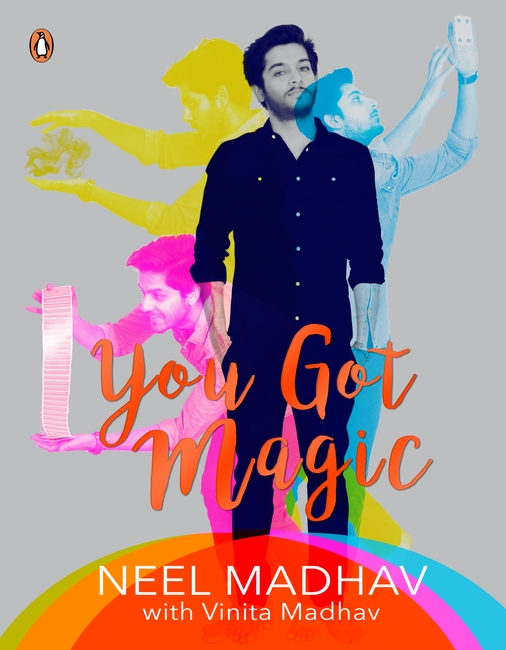
Neel Madhav has traced an enchanted journey right from his teenage years. And today, he is India’s youngest magician, with his very own popular TV show, You Got Magic. In this book, he brings to you wacky and extraordinary tricks with which you can amaze your friends and family.
Simple yet innovative, these sleights of hand, or ‘Neelusions’, are coupled with classic card tricks, and each stunt is brought to life with instructions and photographs. Learn how to don your magician’s hat with any everyday object-from rubber bands and coins to pens and cups! Travel across the country with the wizard of wonders as he dazzles and entertains.

One of India’s two greatest epics, the Ramayana pervades the country’s moral and cultural consciousness. For generations it has served as a bedtime story for Indian children, while at the same time engaging the interest of philosophers and theologians. Now this magnificent translation makes the monumental work available to a new audience.
Believed to have been composed by Valmiki sometime between the eighth and sixth centuries BC, the Ramayana tells the tragic and magical story of Rama, the prince of Ayodhya, an incarnation of Lord Visnu, born to rid the earth of the terrible demon Ravana. Exiled for fourteen years because of his stepmother’s fit of jealousy on the eve of his coronation, Rama enters the forests of Dandaka with his beautiful wife Sita and devoted brother Laksmana. Sita is abducted from the forest by Ravana who takes her to his isolated kingdom on the far side of the southern ocean. The two brothers set out to rescue her and, along the way, make an alliance with a dispossessed monkey, king Sugriva. At the end of a bloody war Ravana is killed and Sita, reunited with her husband, and victorious Rama returns to Ayodhya to claim the throne that is rightfully his.
An idealized heroic tale ending with the inevitable triumph of good over evil, the Ramayana is also an intensely personal story of family relationships, love and loss, duty and honour, of harem intrigue, petty jealousies and destructive ambitions. All this played out in a universe populated by larger-than-life humans, gods and celestial beings, wondrous animals and terrifying demons.
In her translation Arshia Sattar has successfully bridged both time and space to make this ancient classic accessible to the present-day English reader. An added attraction is her superb introduction which provides new insights and background information for both the general reader and scholar alike.
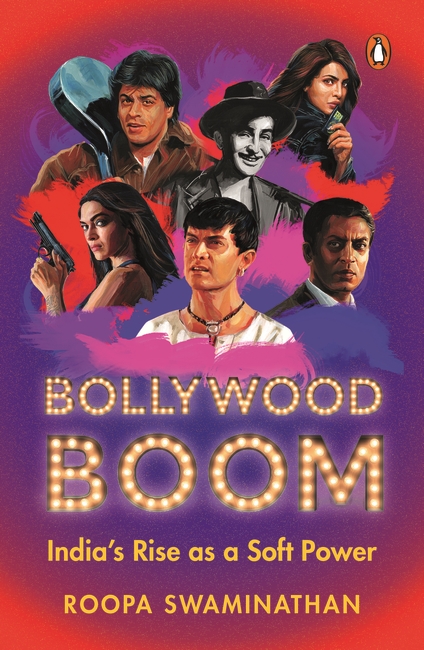
The world is feeling the impact of Bollywood like never before. From the Oscar-nominated Lagaan to Bajrangi Bhaijaan to Ae Dil Hai Mushkil, Bollywood has come a long way since the watershed Dilwale Dulhaniya Le Jayenge and the UK Top Ten debut of Kuch Kuch Hota Hai. Where earlier it was in Russia, East Europe and Africa where Raj Kapoor and Amitabh Bachchan enjoyed a devoted fan base, today the entire world is as entertained by the three
Khans as by the international stars Irrfan, Priyanka and Deepika.
In Bollywood Boom, National Award-winner Roopa Swaminathan opens a window to the spectacular success of Bollywood in the twenty-first century and its direct contribution to India’s rising soft power and influence. Using extensive research, a compelling argument and fun anecdotes, Roopa shows how Bollywood not only brings to the country real income through trade and tourism, but also enhances its global standing.
R. Gopalakrishnan, the bestselling author of The Case of the Bonsai Manager, explores how concepts turn into ideas, which then become prototypes, models and products. Defining thought as the ancestor of innovation; as without thought, there could be no innovation, he explores the impending questions such as – What happens next? How can you take on challenges and keep your ideas relevant? The Biography of Innovation is the definitive book on the life cycle of new ideas and transformations.