



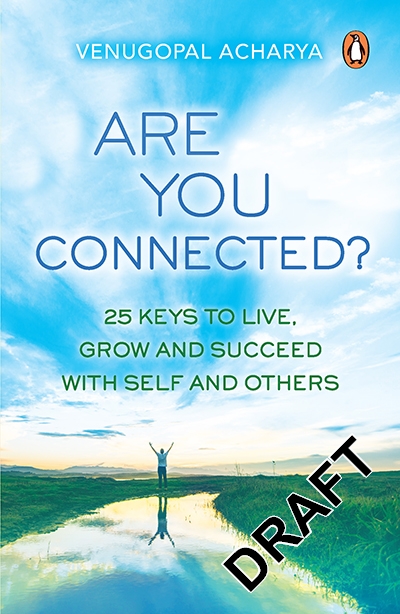
In this book, Acharya Venugopal, a monk from ISKCON, shares the different tools, skills and experiences needed to help one feel loved and connected to one’s own self, the people who matter and to God.
Highlighting the need to go deeper into the meaning and purpose of life, Acharya offers skills to achieve peace of mind and to live in harmony with our true selves. In simple, anecdotal style, he helps us with our relationships with others-friends, family and colleagues. It emphasizes on sharing mutual success and growing with care and compassion.
Are You Connected? is a mantra to a successful life of happiness.
Archives: Books
Nostalgia

A lion on the loose; a barking cat; smoke, and a bridal veil
In an indeterminate future in Toronto, people can now live lives of two or three ‘generations’; when the time feels right, a person can transition into the next generation. Current personal history becomes irretrievable, replaced by an ideal life story of choice: a neatly concocted fiction which aids in constant rejuvenation. But one day, a strange-looking man-Presley Smith-arrives in the office of Dr Frank Sina, presenting symptoms of Leaked Memory Syndrome or Nostalgia; random scenes from a previous generation flash persistently through his mind. When the Department of Internal Security begins to take an interest in Presley’s case, he goes into hiding, and a public search ensues. Who exactly is Presley, and what does this mean for life as his fellow citizens know it?
Dr Sina-rejuvenated in his second or third generation and feeling financially secure but sexually inadequate-struggles to solve this difficult case, even as he deals with his own life. And through it all there is the spectre of the Long Border, separating the rich North and the violence and famine of the failed states. Readers will enjoy this refreshing new turn for Vassanji, as one of the finest Indian writers in English takes us into exciting new territory.
Lost in Time
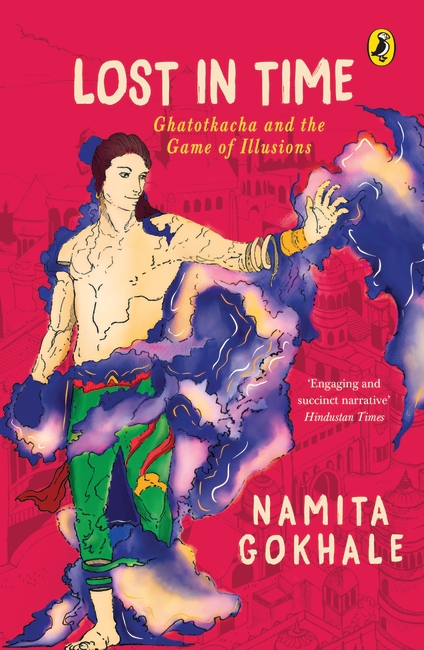
‘I am the rakshasa Ghatotkacha, born of the Lord Bhimasena and the lady Hidimba. I rule over hill and vale, wood and stream, protecting the spirit of the forest and all who live in it.’
Young Chintamani Dev Gupta, on holiday in a bird camp near Lake Sattal, is transported via a wormhole to the days of the Mahabharata. Trapped in time, he meets Ghatotkacha and his mother, the demoness Hidimba. But the gentle giant, a master of illusion and mind-boggling rakshasa technology, wields his strength just as well as he knows the age-old secrets of the forest and the elemental forces. And in his enlightening company, Chintamani finds himself in the thick of the events of the most enduring Indian epic.
An intense yet tender look at a rare friendship as well as the abiding puzzles of the past, this is a fascinating read.
Songs Of A Coward
A king decrees that all humans be skinned alive. A man runs from words that hound him like a pack of wolves. A legion of white snakes sweeps across a land blighted by drought. A beleaguered soul laments the loss of a homeland. A coward’s many virtues are lauded to disturbing effect.
By turns passionate, elegiac, angry, tender, nightmarish and courageous, the poems in Songs of a Coward weave an exquisite tapestry of rich images and turbulent emotions. Written during a period of immense personal turmoil, these verses are an enduring testament to the resilience of an imagination under siege and the liberating power of words in one’s darkest moments.
Bhais Of Bengaluru
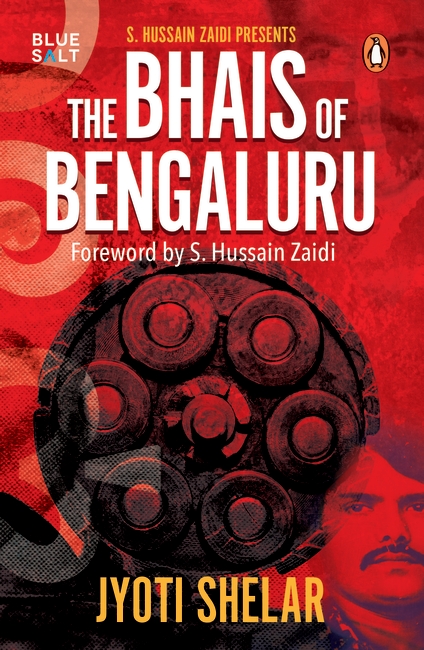
For years, Bengaluru’s underworld has been ruled by shrewd and notorious dons, who grew from small-time extortionists to dreaded names in real-estate circles. Kodigehalli Mune Gowda was crowned the city’s first ‘don’ back in the 1960s, but it was in the ’80s and the ’90s that powerhouses like MP Jayaraj, Kotwal Ramachandra, ‘Boot House’ Kumar aka Oil Kumar, Muthappa Rai, Sreedhar, Bekkina Kannu Rajendra and Srirampura Kitty emerged. In Bhais of Bengaluru, Jyoti Shelar, a print journalist with ten years of work experience as a field reporter, explores this mysterious and fascinating underbelly of India’s Garden City.
The Burden Of Democracy
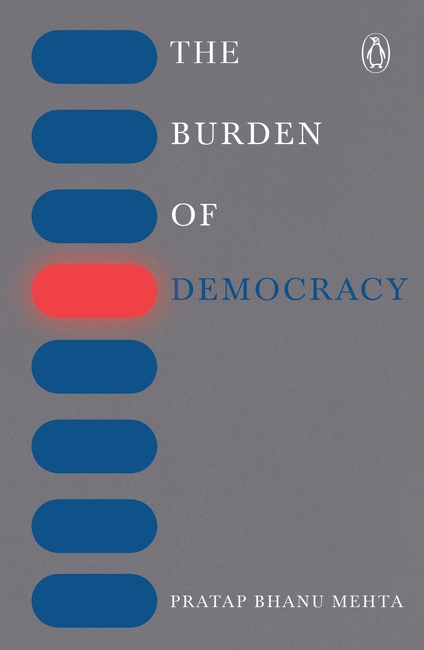
After nearly seven decades of its existence, there is a pervasive feeling that India’s democracy is in crisis. But what is the nature of this threat? In this essay, republished now with a new foreword from the author, Pratap Bhanu Mehtareminds us what a bold experiment bringing democracy to a largely illiterate and unpropertied India was. He argues that the sphere of politics has truly created opportunities for people to participate in society. Looking at various facts, he also finds that persistent social inequality on the one hand and a mistaken view of the state’s proper function and organization on the other have modified and hindered the workings of democracy and its effects in innumerable ways. Posting the quest for self-respect as democracy’s deepest aspiration, this essay explores how inequality and the crisis of accountability have together impeded collective action to achieve such an end. To recover this sense of moral well-being and responsibility, Mehta suggests, is the core of the democratic challenge before us.
Optimistic, lively and closely argued, The Burden of Democracy offers a new ideological imagination that throws light on our discontents. By returning to the basics of democracy it serves to illuminate our predicament, even while perceiving the broad contours for change.
Cut The Crap And Jargon
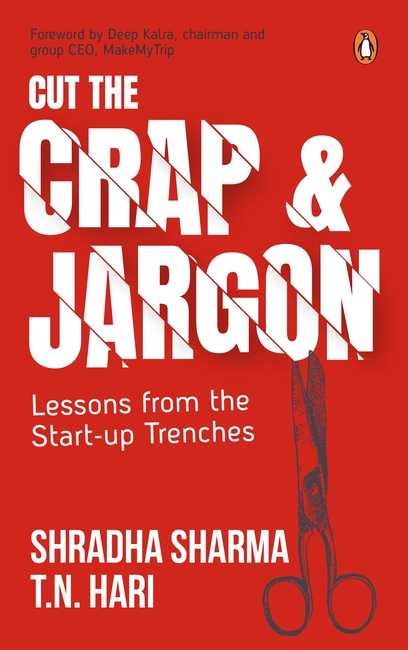
Start-ups are the fountainheads of innovation that power this world. However, they lose the plot when they do not have access to timely, contextual and good quality advice based on a deep understanding of the real issues on the ground that comes with experience in the trenches. It is sad to see intrepid and tenacious entrepreneurs fail because of small things. This book is as much about these as it is about some of the more complex navigational skills required to avoid major pitfalls. A practical book for every entrepreneur, Cut the Crap and Jargon will make an interesting read for a global audience.
Indira Gandhi
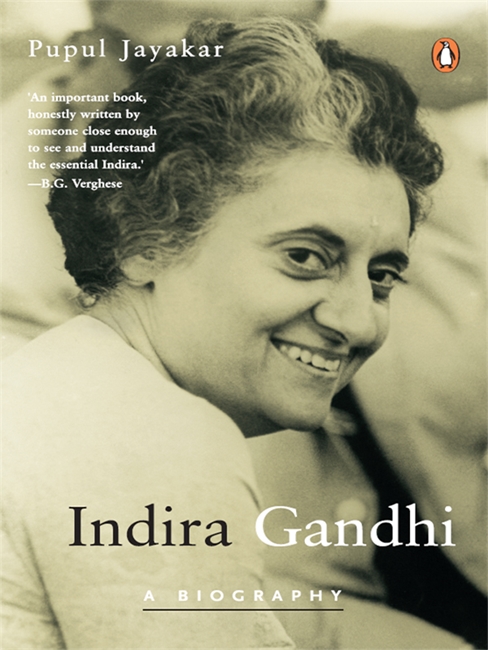
Indira Gandhi – Tryst with Power is a book that focusses on the life of one of India’s most popular politicians – Indira Gandhi. How did she come to power? Did the nation blossom under her rule? for people who have been pondering on such questions, this book has the answers that they have been looking for. Indira broke the conventional, democratic ruling method that her family had been using and adopted a somewhat authoritarian way of ruling the nation.
The emergency that was declared during her reign is shown in this book to be a means of bringing in her son Sanjay into the political scene as her obvious successor. However, after Sanjay’s death, Rajiv Gandhi entered politics and gained almost immediate popularity. All of these political changes showed just how determined Indira Gandhi was to ensure that her family retained its right to rule.
This book offers unparalleled detailing concerning the personal life and political life of Indira Gandhi from the author, who is her own cousin. Owing to this close family link, the book is filled with accounts that could only be told by a family member who knew the Nehru family for a long time. Indira Gandhi’s highly individualized style of functioning in politics has been spoken about at length in this book, along with the countless changes that took place in the political scene of the nation when it was under her rule.
An in-depth portrayal of the life and times of one of India’s greatest political leaders, Indira Gandhi – Tryst with Power has been published by Penguin India in the year 2012 and is available in paperback.
Code Name God
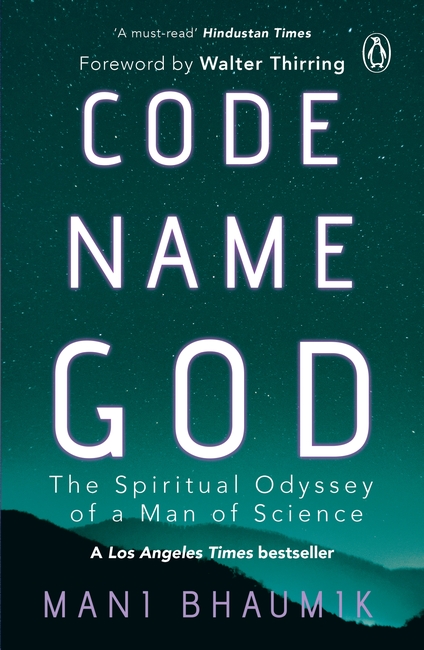
Four hundred years after science overthrew faith, science is itself proving to be a false god, leaving in its wake a disillusioned and despondent mankind.
In Code Name God, Mani Bhaumik, renowned physicist and one of the pioneers of the LASIK eye surgery technology, draws on the field of quantum physics and cosmology to answer the fundamental questions about faith. He demonstrates how both spirituality and science are essential for human beings and how one can strike a perfect balance between the two. The author, who as a youngster lived in Mahatma Gandhi’s camp, details his incredible rags-to-riches journey and his equally remarkable search for meaning in life, which make for a motivational saga.
Insightful and enriching, Code Name God provides a simple and easy-to-understand scientific approach to faith and the realization of god
Hinduism And Nature
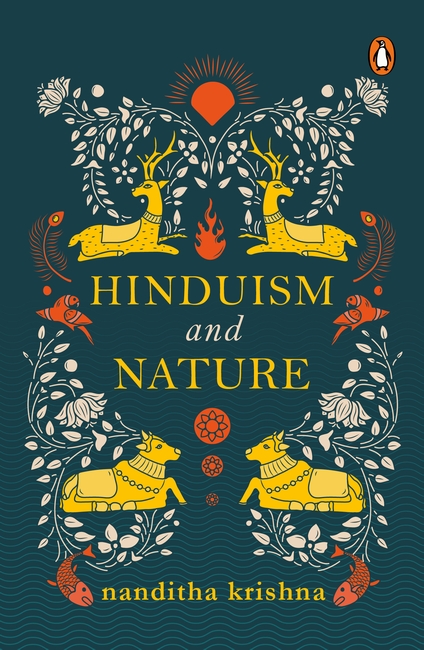
The basis of Hinduism is dharma or righteousness, incorporating duty, cosmic law and justice. Five thousand years ago, the Vedas showed a clear appreciation of the natural world and its ecology, the importance of the environment and the management of natural resources.
Hinduism and Nature delves into the religion’s deep respect for all life forms, the forests and trees, rivers and lakes, animals and mountains, which are all manifestations of divinity. Nature is venerated all over India: every village has a sacred grove, every temple a sacred garden and sacred tree. In this fascinating book, scholar and environmentalist Nanditha Krishna explores both the classical and the tribal traditions that venerated nature, and convincingly argues that we can save the environment only by seeking answers in ancient wisdom.