



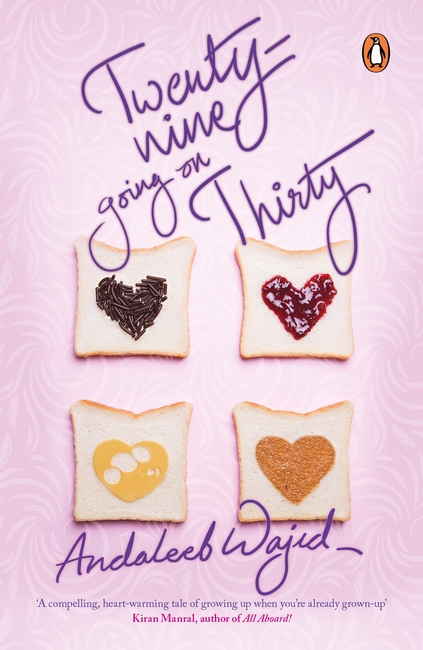
Priya is turning thirty and is overwhelmed. Living in Bengaluru with her best friend, Farida, and working as the social media head of a software firm, she’s feeling the weight of becoming a responsible thirty-year-old. Not just this, she also has to fend off her mother’s persistent queries about when she intends to get married. Things begin to look up when Priya bumps into her charming new neighbour, Ajay. Sparks fly, but she soon finds out that he’s a widower and has some baggage to deal with.
Thankfully, Priya finds moral support in the fact that her friends Farida, Mini and Namrata are approaching the three-O milestone too. Free-spirited Farida, shy Namrata, feisty Mini and Priya are brought together by family drama, boy trouble, and the fast-approaching birthdays. As they navigate love and friendships, they realize there’s a difference between growing up and growing old . . .
Archives: Books
Shah-Jahan

Shah-Jahan-‘King of the World’-ruled the Mughal Empire from 1628 to 1658, a period of multiculturalism, poetry, fine art and stupendous architecture. His legacy in stone embraces not only the Taj Mahal-the tomb of his beloved second wife, Arjumand Mumtaz-Mahal-but fortresses, mosques, gardens, caravanserais and schools. Shah-Jahan was also a ruthless political operator who achieved power by ordering the murder of two brothers and at least six other relatives, an enlightened despot, a king who dispensed largesse to favoured courtiers but ignored plague in the countryside.
Fergus Nicoll has reconstructed this intriguing tale from contemporary biographies, edicts and correspondence, putting together an original portrait that challenges many established legends to bring the man and the emperor to life.
Seven Decades of Independent India
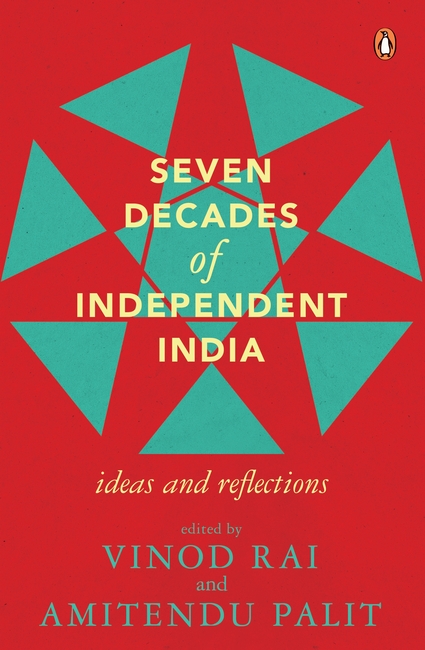
Has democracy in India fulfilled the aspirations of its people? Have institutions delivered? Have public policies succeeded in making substantial differences to living standards? Is the country secure on its external borders? Would the country become an economic powerhouse? And can India be a leading power in the years ahead?
All these and many more questions loom large as India completes seven decades of independence. Major challenges persist on the economic front and in providing adequate and quality healthcare, education, food, sanitation and drinking water. Regulatory preoccupations persist as policymakers continue to search for optimal solutions. The task is made harder by a socio-political environment shaped by various complexities. These include an expanding young workforce, a demanding citizenry, intense social media campaigns and a difficult neighbourhood.
Seven Decades of Independent India, edited by Vinod Rai and Amitendu Palit, reflects on the India of yesterday, today, and tomorrow, by gathering rare and candid insights from some of the most distinguished experts, practitioners and scholars on India. These include D. Subbarao, ex-governor of RBI; Rajiv Kumar, vice-chairman of NITI Aayog; S.Y. Quraishi, former chief election commissioner; Shivshankar Menon, former national security adviser; Ashok Gulati, professor ICRIER and former chairman of Commission for Agricultural Costs and Prices; Sumit Ganguly, professor of political science, Indiana University; A.K. Shiva Kumar, director, International Centre for Human Development; Poonam Muttreja, executive director, Population Foundation of India; Tan Tai Yong, president and professor (humanities) Yale-NUS College, Singapore; Dipankar Gupta, sociologist and former professor, JNU; Pronab Sen, former chief statistician of India and many others.
Till Talaq Do Us Part
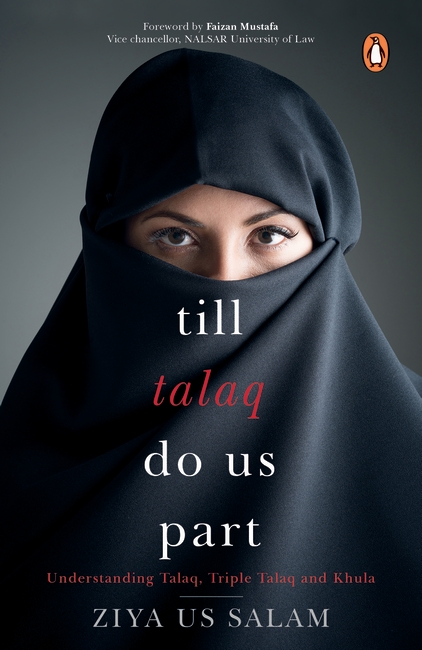
Shayara Bano knocked at the doors of the Supreme Court to challenge her husband’s sudden decision of ending their marriage using the three dreaded words: talaq, talaq, talaq.
A 1980s Bollywood movie sparked off a national debate on the validity of instant divorce, which even saw Dawat-a four-page daily published by the Jamaat-e-Islami Hind-talking about triple talaq as per the Quran.
For a long time, the battle against instant talaq has garnered public attention. In Till Talaq Do Us Part, Ziya Us Salam, an eminent social commentator and an associate editor at Frontline, presents a holistic view of how divorce works in Islam. Ranging from triple talaq to talaq granted over three months to khula and talaq-e-tafweez, the book also discusses other methods of divorce available to a Muslim couple which go ignored thanks to all the attention on talaq, talaq, talaq.
Ha Ha Hu Hu
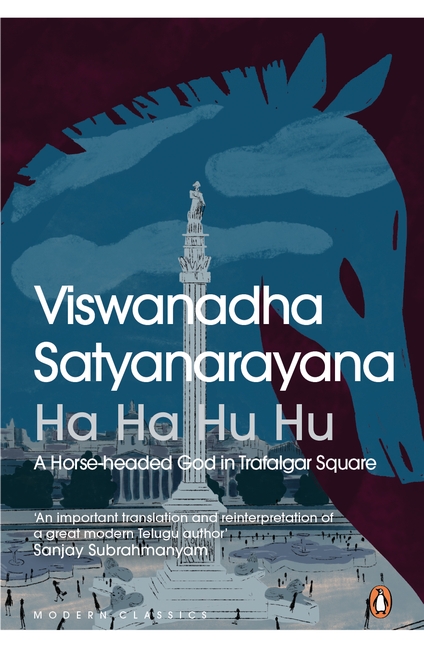
Ha Ha Hu Hu tells the delightful tale of an extraordinary horse-headed creature that mysteriously appears in London one fine morning, causing considerable excitement and consternation among the city’s denizens. Dressed in silks and jewels, it has the head of a horse but the body of a human and speaks in an unknown tongue. What is it? And more importantly, why is it here?
In the hilarious satire Vishnu Sharma Learns English, a Telugu lecturer is visited in a dream by the medieval poet Tikanna and the ancient scholar Vishnu Sharma with an unusual request: they want him to teach them English!
Velcheru Narayana Rao’s elegant translation is accompanied by an erudite introduction and afterword which illuminate the fascinating life and works of Viswanadha Satyanarayana.
Discontent and Its Civilizations
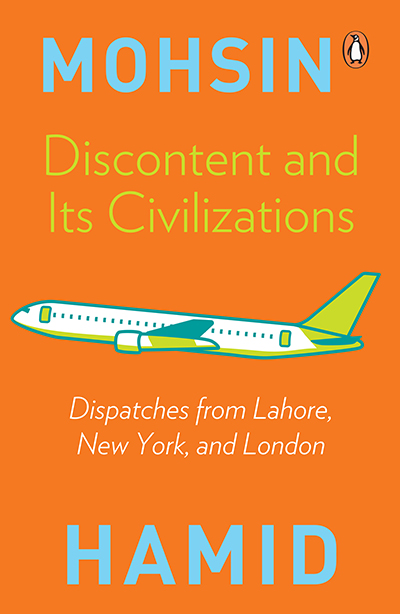
Alongside his highly acclaimed novels, Mohsin Hamid has over the years written superb pieces about politics, literature and his own life. Collected together for the first time, they show that Hamid is not just a great novelist but ‘a master critic of the modern global condition’. Provocative, dexterous and full of ideas—this is a sparkling collection.
Exit West
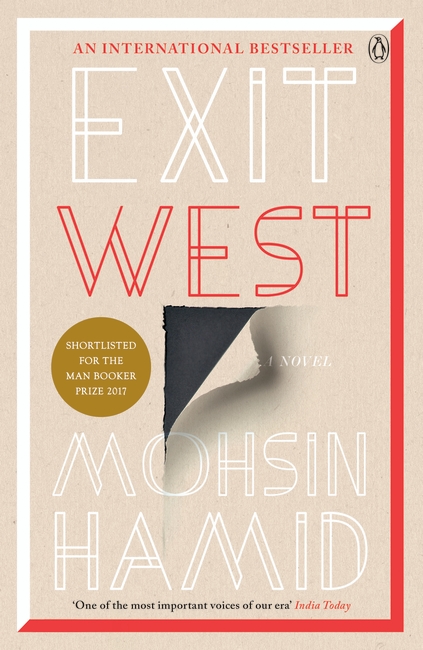
An extraordinary story of love and hope from the bestselling, Man Booker-shortlisted author of The Reluctant Fundamentalist.
This is Nadia. She is fiercely independent with an excellent sense of humour and a love of smoking alone on her balcony late at night.
This is Saeed. He is sweet and shy and kind to strangers. He also has a balcony but he uses his for stargazing.
This is their story: a love story, but also a story about how we live now and how we might live tomorrow. Saeed and Nadia are falling in love, and their city is falling apart. Here is a world in crisis and two human beings travelling through it.
Exit West is a heartfelt and radical act of hope-a novel to restore your faith in humanity and in the power of imagination.
The Complete Short Stories: Vol. 2
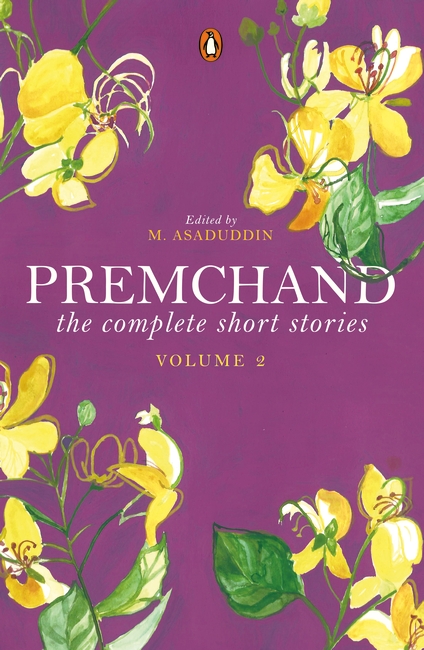
‘Premchand is India. If you haven’t read Premchand, you have missed out on a lot’ The Hindu
Munshi Premchand, widely lauded as the greatest Hindi fiction writer of the twentieth century, wrote close to 300 short stories over the course of a prolific career spanning three decades. His range and diversity were limitless as he tackled themes of romance and satire, gender politics and social inequality, with unmatched skill and compassion. By turns poignant, acerbic, comical and tragic, many of his stories powerfully invoke the countryside-its pastoral simplicity as well as its harsh realities-while others capture the hopes and anxieties that accompany life in a teeming city where the underdog and the exploiter are caught in an age-old conflict.
For the first time ever, Penguin Classics brings together Premchand’s entire short-fiction oeuvre for the delight of the English-speaking world. Along with M. Asaduddin’s illuminating Introduction, this pathbreaking anthology
features several stories not hitherto available either in Hindi or Urdu. Also included are comprehensive notes that provide the publication history of each story-highlighting the differences, sometimes significant and radical, between the Hindi and the Urdu versions of the same story-as well as a definitive chronology, making this a truly singular collection.
TRANSLATED BY M. ASADUDDIN AND OTHERS
The Complete Short Stories: Vol. 3
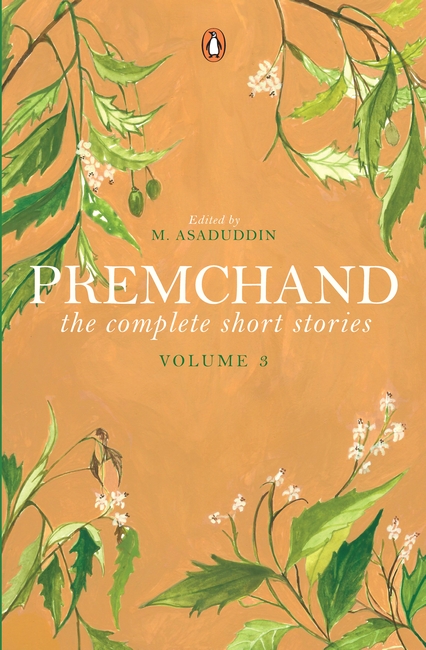
‘Premchand is India. If you haven’t read Premchand, you have missed out on a lot’ The Hindu
Munshi Premchand, widely lauded as the greatest Hindi fiction writer of the twentieth century, wrote close to 300 short stories over the course of a prolific career spanning three decades. His range and diversity were limitless as he tackled themes of romance and satire, gender politics and social inequality, with unmatched skill and compassion. By turns poignant, acerbic, comical and tragic, many of his stories powerfully invoke the countryside-its pastoral simplicity as well as its harsh realities-while others capture the hopes and anxieties that accompany life in a teeming city where the underdog and the exploiter are caught in an age-old conflict.
For the first time ever, Penguin Classics brings together Premchand’s entire short-fiction oeuvre for the delight of the English-speaking world. Along with M. Asaduddin’s illuminating Introduction, this pathbreaking anthology
features several stories not hitherto available either in Hindi or Urdu. Also included are comprehensive notes that provide the publication history of each story-highlighting the differences, sometimes significant and radical, between the Hindi and the Urdu versions of the same story-as well as a definitive chronology, making this a truly singular collection.
TRANSLATED BY M. ASADUDDIN AND OTHERS
The Complete Short Stories: Vol. 4
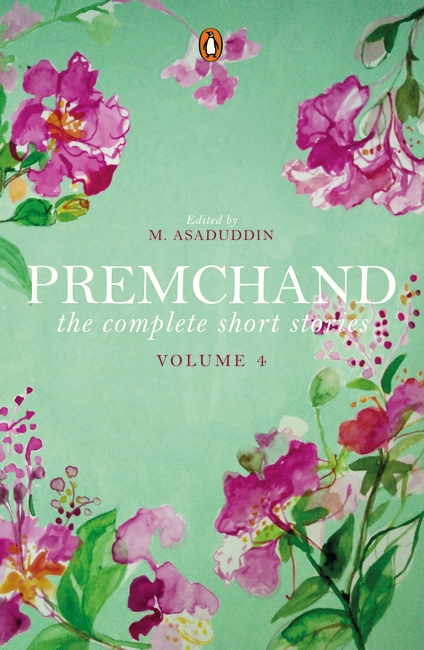
‘Premchand is India. If you haven’t read Premchand, you have missed out on a lot’ The Hindu
Munshi Premchand, widely lauded as the greatest Hindi fiction writer of the twentieth century, wrote close to 300 short stories over the course of a prolific career spanning three decades. His range and diversity were limitless as he tackled themes of romance and satire, gender politics and social inequality, with unmatched skill and compassion. By turns poignant, acerbic, comical and tragic, many of his stories powerfully invoke the countryside-its pastoral simplicity as well as its harsh realities-while others capture the hopes and anxieties that accompany life in a teeming city where the underdog and the exploiter are caught in an age-old conflict.
For the first time ever, Penguin Classics brings together Premchand’s entire short-fiction oeuvre for the delight of the English-speaking world. Along with M. Asaduddin’s illuminating Introduction, this pathbreaking anthology
features several stories not hitherto available either in Hindi or Urdu. Also included are comprehensive notes that provide the publication history of each story-highlighting the differences, sometimes significant and radical, between the Hindi and the Urdu versions of the same story-as well as a definitive chronology, making this a truly singular collection.
TRANSLATED BY M. ASADUDDIN AND OTHERS