‘Premchand is India. If you haven’t read Premchand, you have missed out on a lot’ The Hindu
Munshi Premchand, widely lauded as the greatest Hindi fiction writer of the twentieth century, wrote close to 300 short stories over the course of a prolific career spanning three decades. His range and diversity were limitless as he tackled themes of romance and satire, gender politics and social inequality, with unmatched skill and compassion. By turns poignant, acerbic, comical and tragic, many of his stories powerfully invoke the countryside-its pastoral simplicity as well as its harsh realities-while others capture the hopes and anxieties that accompany life in a teeming city where the underdog and the exploiter are caught in an age-old conflict.
For the first time ever, Penguin Classics brings together Premchand’s entire short-fiction oeuvre for the delight of the English-speaking world. Along with M. Asaduddin’s illuminating Introduction, this pathbreaking anthology
features several stories not hitherto available either in Hindi or Urdu. Also included are comprehensive notes that provide the publication history of each story-highlighting the differences, sometimes significant and radical, between the Hindi and the Urdu versions of the same story-as well as a definitive chronology, making this a truly singular collection.
TRANSLATED BY M. ASADUDDIN AND OTHERS

When Tulsi first meets Madhav, she is irrevocably drawn to his chiselled good looks and charm. Although wary of his many dalliances and the string of broken hearts left in his wake, she is surprised by the intense desire that Madhav arouses in her. And before long, she forsakes her family, her prospective career, her fiancé-all for the love of this inscrutable man. But love can be like poison. And nothing can prepare Tulsi for the heartache and betrayal that lie ahead.
Years later, Tulsi escapes to the ancient city of Vrindavan, seeking redemption amidst the cries and prayers of its anguished widows. However, when her past catches up with her, old wounds resurface with dramatic consequences.
By turns savage and tender, The Poison of Love is a spellbinding tale of love and sacrifice, pain and retribution, confirming K.R. Meera as one of our most fearless and accomplished writers.

Syama Prasad Mookerjee was the founder of the Bharatiya Jana Sangh, the predecessor of the Bharatiya Janata Party (BJP). He is undoubtedly one of the most iconic and controversial leaders in India’s recent history. In spite of his significant political and ideological differences with Jawaharlal Nehru, Dr Mookerjee was inducted to the first cabinet of independent India. However, following the Delhi Pact between the Prime Ministers of India and Pakistan, Dr Mookerjee resigned from the cabinet. His role during the Great Bengal Famine of 1943 and the Great Calcutta Killings and Noakhali Carnage of 1946 was historic. His premature death in custody–in Kashmir–remains one of the unsolved mysteries of India’s political history.
Dr Mookerjee was an educationist, politician and patriot who often opposed the official narratives of his time but fought consistently for India’s independence and pre-eminent position in the world. His life has remained largely unexplored till now. This biography aims to rectify that omission by examining his life in detail and shedding light on the turbulent and contentious events of his times.
Much of the current work on extremism in Pakistan tends to study extremist trends in the country from a detached position-a top-down security perspective that renders a one-dimensional picture of what is at its heart a complex, richly textured country of 200 million people. In this book, using rigorous analysis of survey data, in-depth interviews in schools and universities in Pakistan, historical narrative reporting, and her own intuitive understanding of the country, Madiha Afzal gives the full picture of Pakistan’s relationship with extremism. The author lays out Pakistanis’ own views-on terrorist groups, jihad, religious minorities and non-Muslims, America, and their place in the world. The views are not radical at first glance, but are riddled with conspiracy theories. Afzal explains how the two pillars that define the Pakistani state-Islam and a paranoia about India-have led to a regressive form of Islamization in Pakistan’s narratives, laws, and curricula. These, in turn, have shaped its citizens’ attitudes.
Afzal traces this outlook to Pakistan’s unique and tortured birth. She examines the rhetoric and the strategic actions of three actors in Pakistani politics-the military, the civilian governments, and the Islamist parties-and their relationships with militant groups. She shows how regressive Pakistani laws instituted in the 1980s worsened citizen attitudes and led to vigilante and mob violence. The author also explains that the educational regime has become a vital element in shaping citizens’ thinking. How many years one attends school, whether the school is public, private, or a madrassa, and what curricula are followed, all affect Pakistanis’ attitudes toward terrorism and the rest of the world.
In the end, Afzal suggests how this beleaguered nation-one with seemingly insurmountable problems in governance and education-can change course.
Raised in a progressive Muslim family in the shadows of the Himalayan mountains, where she attended a Catholic girls’ school, Daisy experienced culture shock when her family sent her to the States to attend high school in a mostly Jewish Long Island suburb. Ambitious and talented, she quickly climbed the corporate ladder after college as an architectural designer in New York City. Though she loved the freedom that came with being a career woman, she felt that something was missing from her life. One day a friend suggested that she visit a Sufi mosque in Tribeca. To her surprise, she discovered a home there, eventually marrying the mosque’s imam, Feisal Abdul Rauf, and finding herself, as his wife, at the centre of a community in which women turned to her for advice. Guided by her faith, she embraced her role as a women’s advocate and has devised innovative ways to help end child marriage, fight against genital mutilation, and, most recently, educate young Muslims to resist the false promises of ISIS recruiters.
Born with Wings is a powerful, moving, and eye-opening account of Daisy Khan’s inspiring journey-of her self-actualization and her success in opening doors for other Muslim women and building bridges between cultures. It powerfully demonstrates what one woman can do-with faith, love, and resilience.

BBC and Google have used it in their offices
Oprah Winfrey promoted it on her show
Aamir Khan loved it on Satyamev Jayate
Mira Nair filmed a documentary, The Laughing Club of India, on itLaughter yoga is a revolutionary idea: simple and profound. A practice involving prolonged voluntary laughter, it is based on scientific studies that have concluded that such laughter offers the same physiological and psychological benefits as spontaneous laughter.
Today, laughter yoga has become popular worldwide as a complete workout. It is practised in more than 100 countries, with as many as 2.5 lakh people laughing out loud in India alone.
This comprehensive book by the founder of the laughter yoga club movement, Dr Madan Kataria, tells you what laughter yoga is, how it works, what its benefits are and how you can apply it to everyday life.

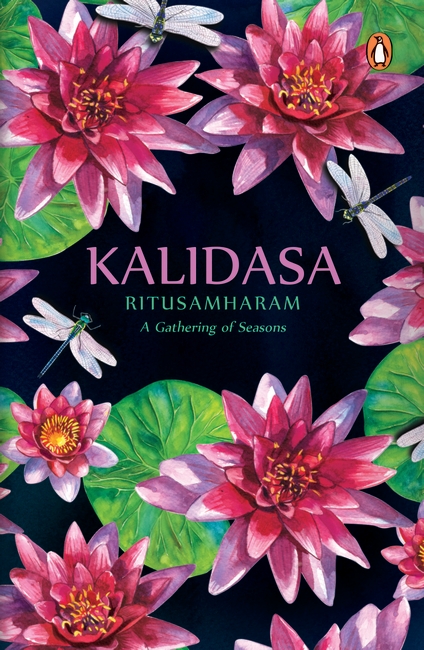
Perhaps the most lively and exuberant of Kalidasa’s extant works, Ritusamharam is a glorious ode to nature’s bounty and the enduring emotional response it evokes in mankind as a whole.
Recounted as a celebration of the passing seasons, it is a feast for the senses, capturing the myriad facets of love and longing in a kaleidoscope of sumptuous imagery: the mischievous moonlight that, like a pining lover, steals glances at sleeping maidens; the monsoon-bloated rivers that rush to the sea with a lustful urgency; the flame of lovemaking that is kindled anew at the onset of winter; the heady scent of mango blossoms that makes even the most unyielding of hearts quiver. Even animals, big and small, are swept into the playful pattern of the great poet’s lyrical homage.
A.N.D. Haksar’s supple and spirited translation is accompanied by an absorbing introduction and notes that shed further light on this extraordinary work.

Madhurima Pandey is twenty-five, single, and gradually coming to terms with the annoying ‘you’re next’ nudges from family and friends. But soon they realize that chances of finding a groom for her are slim-mainly because she’s not. At 93 kilos, she knows she isn’t the ideal weight for marriage, even if her family believes she’s the ideal age.
Despite her reservations, the hunt begins, and so does a spree of rejections-until Harsh comes along. Madhu cannot believe that a boy with no obvious flaws has agreed to marry her. Low self-esteem makes her suspect he’s either impotent or a homosexual, but she doesn’t turn down the proposal immediately. A negligible period of courtship and a hurried engagement follow. But does Madhurima really find her happily-ever-after? Or are there more surprises in store?
Jovial, witty and unapologetically honest, Madhurima Pandey’s story of struggle and survival in the run-up to her D-Day gives you a refreshingly new take on the big fat Indian wedding.

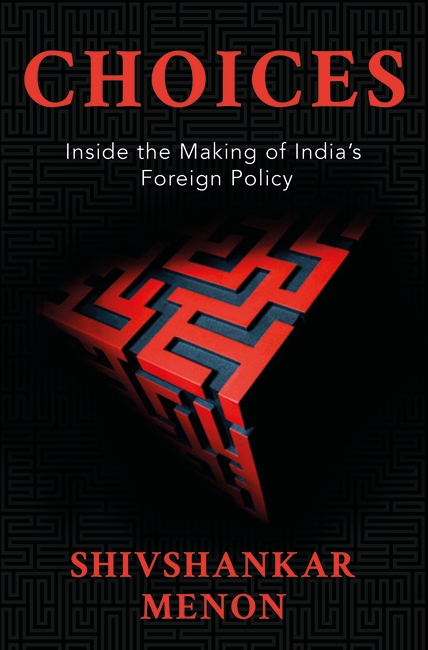
Shivshankar Menon gives an insider’s account of the negotiations, discussions and assessments that went into the making of five pivotal choices in India’s recent history. These include the decision not to use overt military force against Pakistan after 26/11; the civil nuclear deal with the United States; the border agreement with China; the response to the last months of Sri Lanka’s brutal civil war; and the thinking that underlay India’s No First Use nuclear policy. Drawing on his long and distinguished career as a diplomat holding critical positions in India’s external affairs ministry and in the prime minister’s office, Menon considers each situation against the backdrop of India’s evolving definition of her place in the changing global landscape. He brings out the history, politics and principles involved, while examining and dissecting the reasons for the outcome. Analytical, lucid and illuminating, Choices is an unmatched insight into the intellectual heft of foreign policy decision-making by one of India’s most formidable diplomatic practitioners who was actively engaged in these five defining moments.

Krishna presents a ground-up view of emergent realities, delving into the lives of ordinary individuals. Through decades-long investigations, while living in villages and slum communities, he reveals the eye-opening details of missed opportunities and the immense untapped talent that can be honed to enable tremendous consequences for growth and equity.
From presenting possible solutions to the problems of neediness and inequity to considering ways of fixing inequalities of opportunity, The Broken Ladder is a comprehensive account of development strategies in a fast-growing economy.