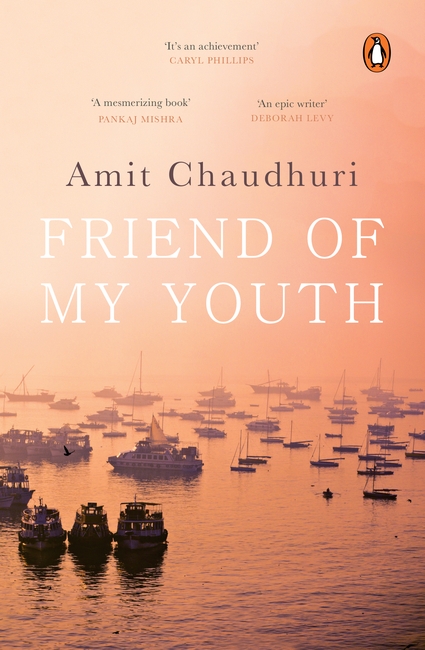
A writer arrives in Bombay on a book-related visit, and finds himself in search of the city he grew up in and barely knows, a city shaken to its core not long ago by the 2008 terrorist strikes-even as he takes for granted his errant local friend, Ramu. A six-foot-tall Kannadiga and one-time junkie who cannot reconcile himself to modern-day adult life, Ramu is an unlikely hero, Bombay incarnate; the writer is his mirrored counterpart in an extraordinary narrative about this city by the sea.
Friend of My Youth is at once an unexpected exploration and a concentrated reminiscence woven around a series of visits to a city that was never really home; a commentary on the power of memory and the stubborn interference of childhood with adult life; a paean to the transformative power of friendship by one of our greatest living writers.

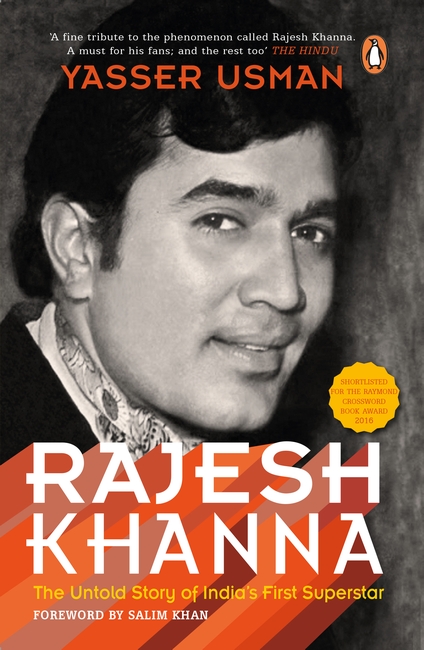
In the 1970s, Rajesh Khanna achieved the kind of fame that no film star had ever experienced before-or has since. But then he saw it all vanish. They say superstardom destroyed him. But was it something else buried deep in his past?
In this riveting biography, award winning journalist Yasser Usman examines Rajesh Khanna’s dramatic, colourful life in its entirety: from little-known facts about his childhood to the low-down on his relationships and rivalries, from his ambitious hopes to his deep-seated insecurities. What emerges is a tantalizingly written, meticulously researched chronicle of a fascinating and mercurial man-one who was both loved and feared by those closest to him. It is a story that encapsulates the glittering, seductive, cut-throat world of Bollywood at its best and its worst.

In light of the many complications that arise following a Caesarean-section delivery-infections, excessive blood loss, internal scarring to name a few-more and more women are reverting to natural births. But the ability to give birth naturally depends on the pregnant woman and not her obstetrician-gynaecologist (OB-GYN). Of course, C-sections are unavoidable in certain cases and, eventually, it is the mother’s and the child’s health that matters.
Birthing Naturally is a comprehensive book on pregnancy wellness that aims to increase the chances of expecting mothers in giving a successful and less-stressful natural birth. This book will help you as a friend and as an antenatal caregiver so you can enjoy your pregnancy, and provide valuable tips for your postnatal period to complete your experience of motherhood.

Explore an exciting and beautiful underwater world with Panna. Watch little blue bird Podna fight a mighty king for his little brown Podni. Join Lord Ganesha on his quest for a pot of kheer. Read about lovelorn Lord Surya pining for his Harshringar, leaving the world in darkness. Help the dove get her egg back.

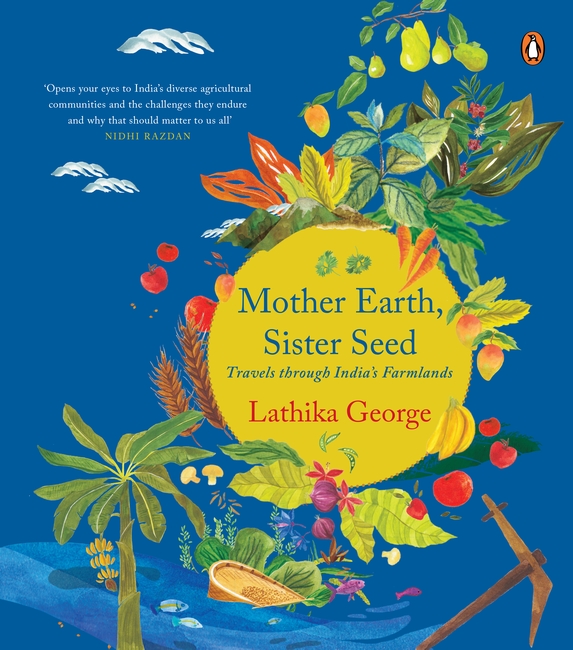
In Mother Earth, Sister Seed, landscape designer Lathika George looks at India’s traditional agricultural communities and the changes-some good, some not-that modernization and urbanization have wrought. Paying tribute to the ancient systems of farming, George talks about the men and women whose livelihoods are derived from the land and the sea. An organic gardener herself, she takes you through the changing seasons of agriculture as she travels around the country, from Rameshwaram in Tamil Nadu and Coorg in Karnataka to the Khasi Hills in Meghalaya and Chamba in Himachal Pradesh, documenting the celebrations, rituals, folklore and recipes associated with each.
Mother Earth, Sister Seed is a lyrical journey dedicated to ways of life that are vanishing. It captures the myriad ways in which the food we eat is produced and brings to life the industrious farmers, fi shermen and forest folk behind it.
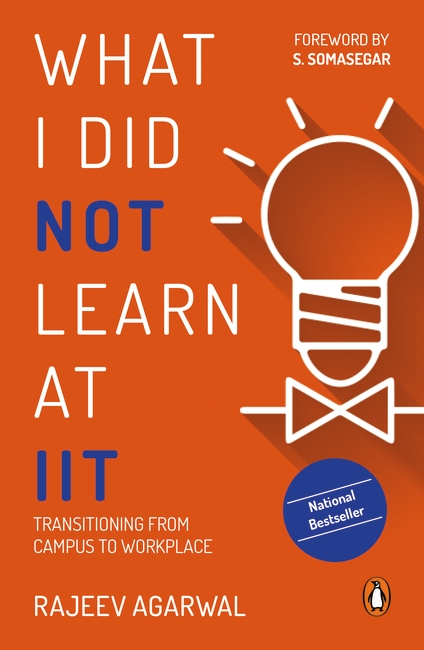
Every year, graduating engineers are told that they are destined for success. But what are the habits and behaviours that actually lead to success? In What I Did Not Learn at IIT, Rajeev Agarwal, founder and CEO of MAQ Software, distils decades of life experience into one accessible and informative guide. In simple language, he explains the success techniques he applied and what worked for him.
Encouraging graduates to look at their careers over a forty-year span, Rajeev explains that successful people choose to be passionate about every job they have. Using a skilful combination of personal stories and checklists, What I Did Not Learn at IIT provides students, young and old, with a roadmap for success.

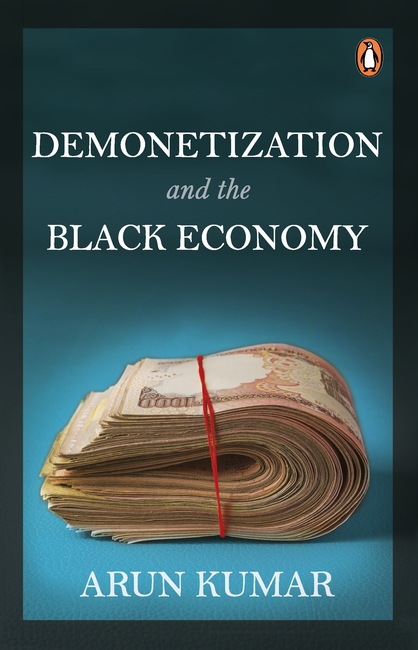
On 8 November 2016, the prime minister announced the immediate cancellation of all
Rs 500 and Rs 1000 denomination notes, wiping out 86 per cent of the currency in
circulation. India’s well-functioning economy went into a tailspin.
This move, it was claimed, was made to wipe out corruption, deter the generation of black
money, weed out fake Indian currency notes and curb terrorism. Overnight, people in India realized that the cash in their pockets had no value. A window of fifty days was granted to 1.3 billion people to convert their old notes into new ones.
Businesses, especially in the unorganized sectors, came to a grinding halt. Patients in hospitals faced huge problems, farmers had difficulty buying inputs, weddings were scaled down, and fishermen watched their catch rot. Many lost their jobs and could not support their families.
A year later, the RBI announced that 99 per cent of the old currency notes had been deposited with
it. India continues to grapple with the effects of this move. The black economy has not been
dented; counterfeiting and terrorism continue; the credibility of the RBI, banks and currency is
damaged; the accountability of the Parliament and the prime minister has been eroded; and the social divide
has widened. There have been many arguments and counter-arguments from both sides, but they have
missed the complete picture.
Demonetization and the Black Economy, for the first time, lucidly explains the story
of demonetization along with its effects on the economy.
Who needs love? It only leads to trouble.
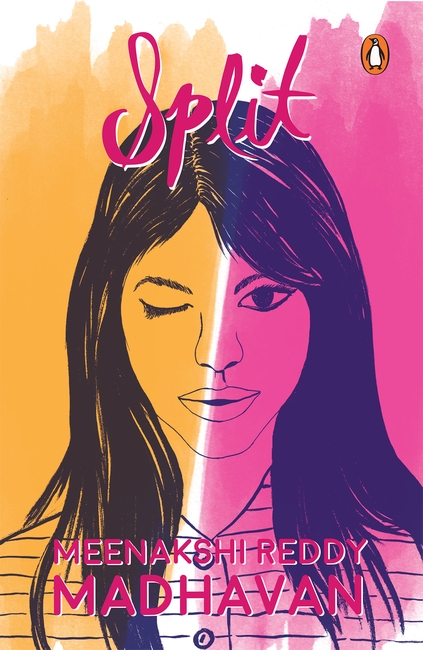
Noor is having the worst year of her life. First her mother decides to leave her father. Then her dad’s mother, the Horrible Old Crone, moves in to look after Noor (who’s sixteen and doesn’t need looking after, thank you very much). And she just knows the HOC is going to be mean about her mother because she never wanted her son to marry a Muslim. And now Noor has to attend some children-of-divorce thing after school-and her gang canNOT find out.
THEN she meets Ishaan. He’s funny and nerdy, and likes all the same things she likes. Except love is stupid, as she’s told everyone, and Ishaan isn’t her type anyway. He wears glasses, participates enthusiastically in the lame children-of-divorce thing, and would rather read than play football in the break like all the other boys.
Could love happen with someone who is the complete opposite of everything you’ve ever stood for? Can forgiveness squirm its way in with love?
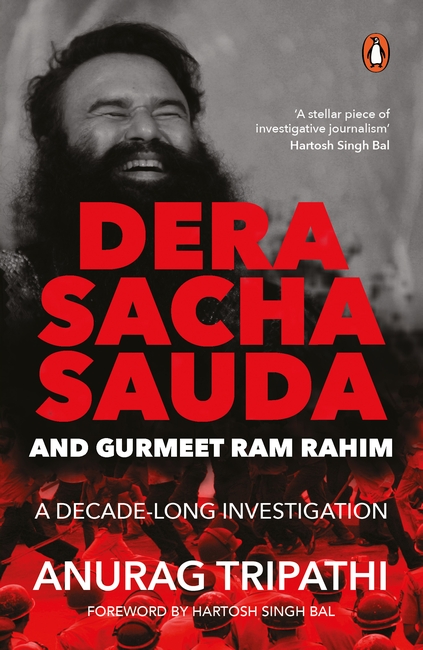
A journalist’s account of investigating Gurmeet Ram Rahim and his empire of exploitation
How did a nondescript young man from a farming family become the head of a quasi-religious sect with a million followers willing to die and kill for their ‘Pitaji’?
The story of the rise of Gurmeet Ram Rahim Singh Insan of the wildly popular Dera Sacha Sauda is anything but ordinary. It allegedly involved sexual exploitation, forced castrations, private militias, illegal trade in arms and opium, and land grab on an untold scale-until the self-styled godman was convicted for one of his many crimes in August 2017.
The book opens with an anonymous letter which led to the first-ever journalistic investigation, in 2007-Tehelka‘s Operation Jhootha Sauda-into the reported criminal activities at the Dera. In the years that followed, the author continued to document the lonely battles for justice against the influential godman who had the might of the Dera’s machinery and manpower behind him.
This book is as much about the grit and determination of ordinary citizens fighting power systems as it is about the difficulty of investigating crimes committed by the rich and powerful in India today.
In 1964, American judge Potter Stewart famously said, ‘I can’t define pornography, but I know it when I see it.’ Over fifty years later, the reverberations of these words are still being felt across the world. Be it proposed porn bans, religious morality or women’s rights, the assumption is that porn has a single, knowable definition. But one man’s art is another woman’s erotica is another person’s sex tape.
In this intrepid, empathetic and nuanced account of the sexual shopping cart that is the internet today, Richa Kaul Padte takes readers on an intimate tour of online sex cultures. From camgirls to fanfiction writers, homemade videos to consent violations, Cyber Sexy investigates what it means to seek out pleasure online.
And as for whether or not something counts as porn? You’ll know it when you see it.