



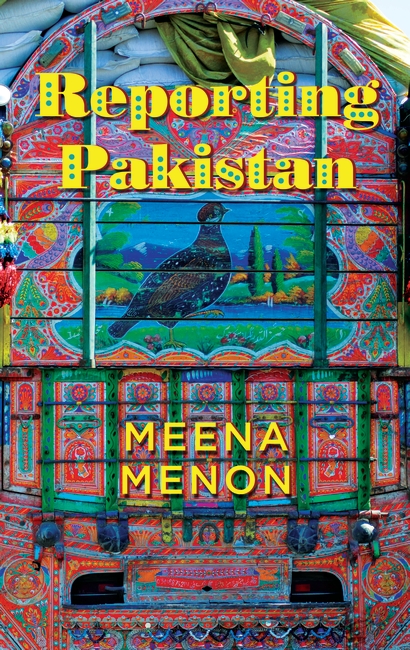
Meena Menon was The Hindu‘s correspondent in Islamabad till she was expelled by the Pakistani authorities in May 2014. In spite of her truncated stay, and the restrictions placed on her movements, Menon managed to write on a range of subjects covering swathes of life in Islamabad. She spoke to people from the persecuted Ahmadi community; she covered protests; interviewed victims of bomb blasts; she spoke to Partition survivors; she visited the sprawling, crowded Afghan refugee camp on the outskirts of the capital; wrote about the Murree Brewery; and described political events, including the high treason trial of General Musharraf.
Reporting from Pakistan is considered one of the more difficult-if exciting-assignments in journalism, more so for an Indian. Despite the limitations, she has produced a probing, incisive portrait of a conflicted society; it is both nuanced and wide ranging, and tries to look not just at politics-but also at the human realities beneath.
Archives: Books
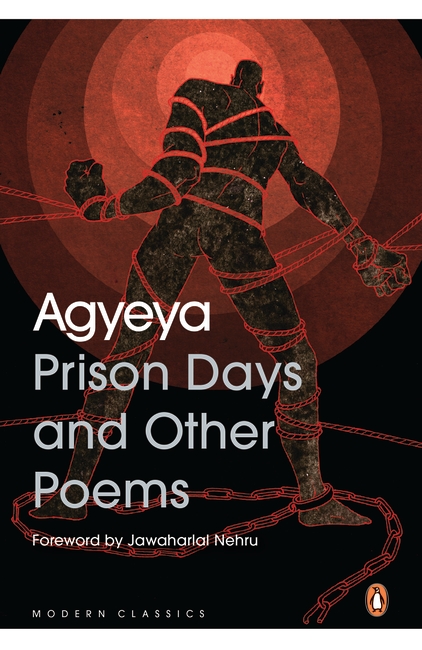
Prison Days and Other Poems
‘These poems have appealed to me greatly. They have stuck in my mind . . . And so I commend these poems and perhaps they might move others as they have moved me’
Jawaharlal Nehru
Agyeya was jailed as a revolutionary by the British authorities in the early 1930s-an experience that indelibly shaped his literary output. The verses in this collection vividly conjure the horror and tedium of imprisonment: the sound of iron gates clanging shut and the shadows cast by the bars of a cell. But Agyeya’s vision never descends into bleakness. Even quarantined, he is constantly aware of the pulse of life radiating outside the prison walls-the lotuses in bloom, the gushing breeze, the mighty seas-as well as the solidarity and compassion that unites those in captivity.
Written between 1933 and 1938, Prison Days and Other Poems astutely captures the mood before Indian independence, when freedom was still merely a dream.
‘The grand old man of Hindi literature . . . [Agyeya’s] poetry and fiction were only the logical culmination of a multi-faceted career’
India Today
Shyam
In the forest of insecurities, is it possible to discover humanity through pleasure?
Can we stop seeing each other as predator, prey, rival or mate, and rediscover ourselves as lovers?
Does the divine reside in sensual delight, in emotional intimacy and in aesthetic experience?
Yes, yes, yes.
That is the promise of the Bhagavata.
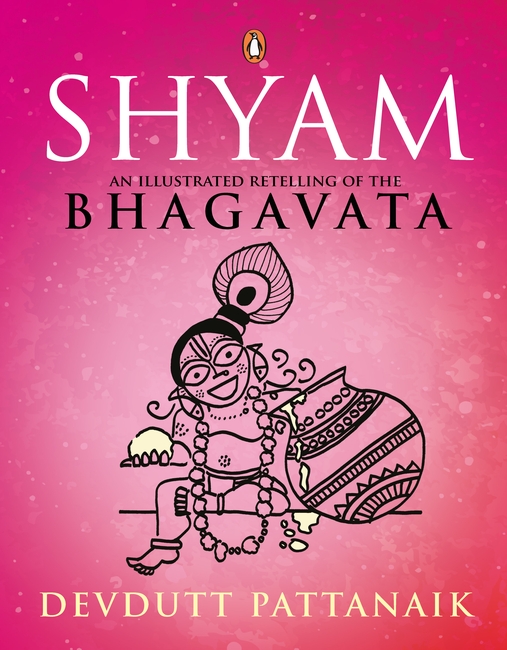
The Bhagavata is the story of Krishna, known as Shyam to those who find beauty, wisdom and love in his dark complexion. It is the third great Hindu epic after the Mahabharata and the Ramayana. However, this narration was composed in fragments over thousands of years, first as the Harivamsa, then as the Bhagavata Purana, and finally as the passionate songs of poet-sages in various regional languages.
This book seamlessly weaves the story from Krishna’s birth to his death, or rather from his descent to the butter-smeared world of happy women to his ascent from the blood-soaked world of angry men.
The Lord and Master of Gujarat
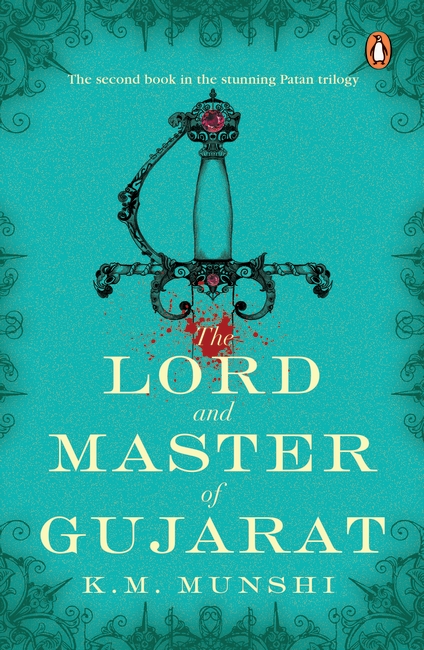
The kingdom of Patan is under attack from the army of Avanti. People have fled their villages to seek refuge in the city. Amidst the mounting panic, the arrival of Kaak, a young warrior from Laat, sets in motion a frantic chain of events.
The Lord and Master of Gujarat is set four years after The Glory of Patan, and unfolds at dizzying speed, abounding in conspiracies, heroism and romance. From the spectacular rise of Siddhraj Jaysinh to the intrigues surrounding the consolidation of Gujarat, from the growing romance between Kaak and Manjari to the escalating tension between Munjal Mehta and Kirtidev over the future of the kingdom, this is an epic novel in the grand tradition of Alexandre Dumas. Arguably K.M. Munshi’s best-known work, it deftly weaves state politics and battles with personal trials and tribulations into one glorious tapestry.
Moong over Microchips
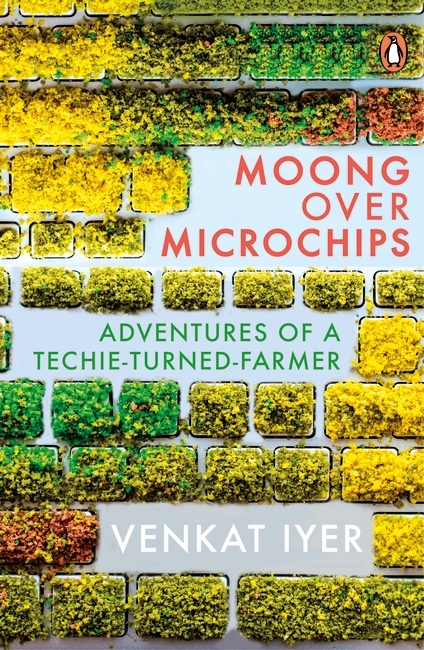
Venkat Iyer was living a fast-paced life in the IT world in Mumbai when he decided to stop and take a long, hard look at where he was headed. Disheartened by his stressful existence in the city, he decided to give it all up and take up organic farming in a small village near Mumbai. But it wasn’t easy. With no experience in agriculture, his journey was fraught with uncertainty. He soon went from negotiating tough clients, strict deadlines and traffic to looking forward to his first bumper crop of moong. As he battled erratic weather conditions and stubborn farm animals, he discovered a world with fresh air and organic food, one where he could lead a more wholesome existence. At times hilarious, and other times profound, this book follows his extraordinary story.
Dancing with Swans: A Book of Quotes
Words have the power to move and motivate;
to inspire as well as compel one to rethink their
life choices. And often, a very short phrase is enough to set one on the right path. When you read and reread every word of Dancing with Swans, each quote opens up pathways within, helping you to lead your day-to-day life in the most spiritual manner. These are not just quotes-they carry the energy and the presence of The Master and embrace you with the light of the Divine, ferrying you to the shores of your own self-realization. They shall help you give each moment your Divine Best and empower you to go through whatever is in store for you gracefully.
Read a quote a day and reflect on it, meditate on it. The words will reveal the wisdom of the universe and the self.
Supreme Whispers
In 1980, a brilliant young American scholar, George H. Gadbois, Jr., met five judges of the Supreme Court of India. The judges gave him astonishing details: about what they actually thought of their colleagues, about the inner workings and politics of the court, their interactions with the government and the judicial appointments process, among many other things. This was only the beginning. Over the course of that decade, Gadbois visited India on two more occasions and conducted over 116 interviews with more than sixty-six judges of the Supreme Court of India (nineteen of whom held the post of chief justice of India),
and others such as senior lawyers, politicians, relatives of deceased judges, and court staff. During each meeting, Gadbois diligently took down handwritten notes, which he later typed up on his typewriter, recording nearly every detail of what the judges had told him, sometimes to a fault.
Relying on these typewritten interviews, Abhinav Chandrachud sheds light on a decade of politics, decision-making and legal culture in the Supreme Court of India. This book yields a fascinating glimpse into the secluded world of the judges of the Supreme Court in the 1980s and earlier.
A Murder on Malabar Hill
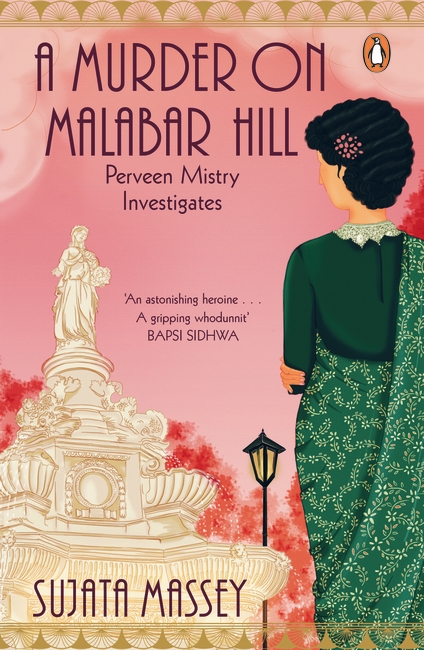
Bombay, 1921. Intrepid and intelligent, young Perveen Mistry joins her father’s prestigious law firm to become one of India’s first female lawyers. Her tumultuous past also makes her especially devoted to championing and protecting women’s rights.
When Mistry Law is appointed to execute the will of Omar Farid, a wealthy mill owner, Perveen’s suspicions are aroused by a curious provision which could disinherit Farid’s three widows and leave them vulnerable. Are the Farid widows–who live in strict seclusion, never leaving the women’s quarters or speaking to men–being duped by an unscrupulous guardian?
Perveen decides to investigate, but when tensions escalate to murder, it becomes clear that her own life is in mortal peril and she will need to use everything in her power to outwit a dangerous criminal.
A Cage of Desires
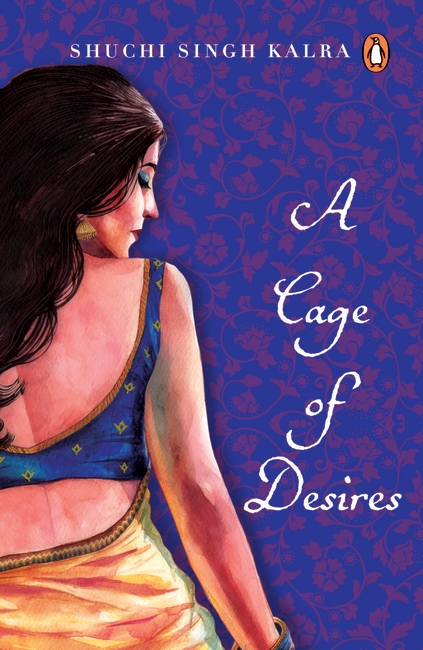
‘There’s a kind of love that makes you go down on one knee, and there’s the kind that brings you down on both. You don’t need the latter, because no matter what you do, you cannot make anyone love you back.’
Renu had always craved love and security, and her boring marriage, mundane existence somehow leads her to believe that, maybe, this is what love is all about. Maya, on the other hand, is a successful author who is infamous for her bold, romantic books.
What do these two women have in common? How are their lives intertwined?
Renu’s thirst for love and longing takes her on a poignant journey of self-exploration. The answers come to her when she finds the courage to stand up for herself, to fight her inner demons and free herself from the cage of desires . . .
The Unseeing Idol of Light

One fateful day, Deepti vanishes mysteriously. Baffled by her disappearance and consumed with grief, Prakash, her husband, loses his eyesight. For Prakash, the inexplicable loss of his wife is doubly painful because she was pregnant with their child. And no amount of consolation can bring him solace in the years that ensue.
Into this void steps Rajani, a woman with a tormented past. Despite her initial disdain of Prakash, she steadily finds herself drawn to him. And although an intense desire brings them together, Prakash is unable to give Rajani the love she craves just as he is powerless to dispel the luminous memory of Deepti. But where will this grave obsession lead?
The Unseeing Idol of Light is a haunting tale that explores love and loss, blindness and sight, obsession and suffering-and the poignant interconnections between them.