



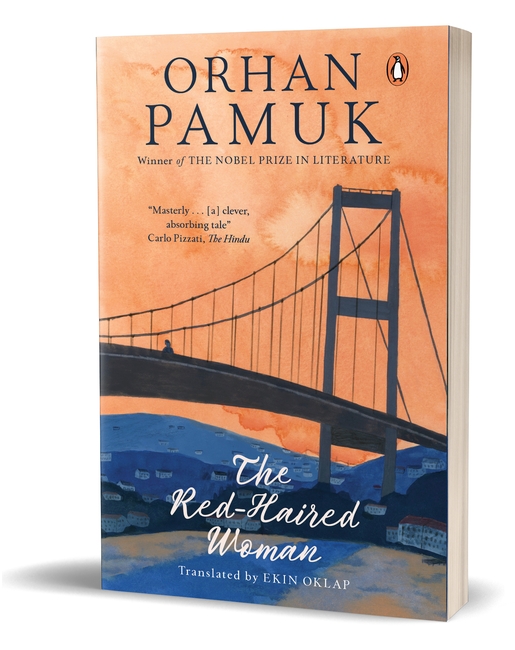
From the Nobel Prize winner and bestselling author of Snow and My Name Is Red, a fable of fathers and sons and the desires that come between them.
On the outskirts of a town thirty miles from Istanbul, a master well digger and his young apprentice are hired to find water on a barren plain. As they struggle in the summer heat, excavating without luck meter by meter, the two will develop a filial bond neither has known before–not the poor middle-aged bachelor nor the middle-class boy whose father disappeared after being arrested for politically subversive activities. The pair will come to depend on each other and exchange stories reflecting disparate views of the world. But in the nearby town, where they buy provisions and take their evening break, the boy will find an irresistible diversion. The Red-Haired Woman, an alluring member of a travelling theatre company, catches his eye and seems as fascinated by him as he is by her. The young man’s wildest dream will be realized, but, when in his distraction a horrible accident befalls the well digger, the boy will flee, returning to Istanbul. Only years later will he discover whether he was in fact responsible for his master’s death and who the red-headed enchantress was.
A beguiling mystery tale of family and romance, of east and west, tradition and modernity, by one of the great storytellers of our time.
Archives: Books
Feminist Rani
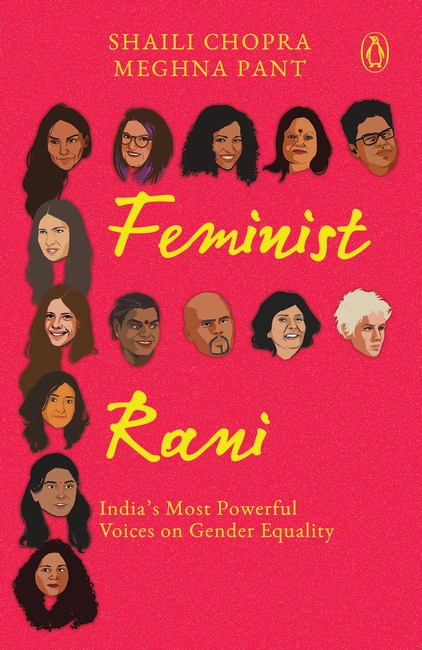
Feminist Rani is a collection of interviews with path-breaking and fascinating opinion leaders–Kalki Koechlin, Tanmay Bhatt, Gul Panag, Aditi Mittal, Gauri Sawant, and many more. These are women and men who have advocated gender equality and women’s rights through their work. These compelling conversations provide a perspective on the evolving concept of feminism in an age when women are taking charge and leading the way.
India and the World
What is the earliest evidence of human history in India and how does that compare with other parts of the world? What was happening in India when the pyramids were being built in Egypt? What was different about Ashoka’s inscriptions when compared with the public inscriptions of other emperors? How have different civilizations pictured the divine? How did rulers promote themselves through grand court art and aesthetics? What have been the routes of civilizational exchange over land and sea that make India a part of the world? And have those exchanges always been peaceful? How have different countries and communities articulated their quest for freedom in recent history? Does everyone in the world perceive history and time in the same way?
Objects-be they coins, sculptures, documents or paintings-tell rich stories. India & the World accompanies a collaborative exhibition that creates dialogues between the world and India through a fascinating array of artefacts. On the one hand they reveal how different people have responded to situations in their own way, and on the other, they provide an understanding of the complex panorama of a deeply interconnected global history.
Chasing The Monk’s Shadow
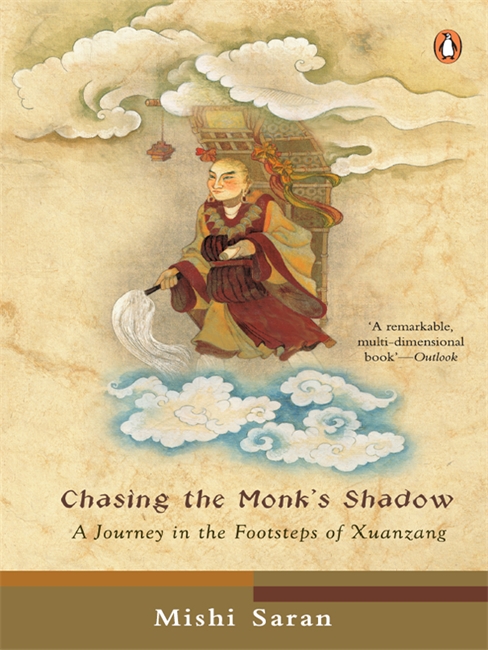
An Indian woman with a China craze retraces the footsteps of a Chinese monk with an Indian obsession
In the seventh century AD, the Chinese monk Xuanzang (earlier spelt as Hiuen Tsang or Hsuan Tsang) set off on an epic journey to India to study Buddhist philosophy from the Indian masters. Travelling along the Silk Road, through the desolate wastes of the Gobi desert and the icy passes of Central Asia, braving brigands and blizzards, Xuanzang finally reached India, where his spiritual quest took him to Buddhist holy places and monasteries throughout the subcontinent. By the time he returned to China eighteen years later, carrying with him nearly 600 scriptures which he translated from Sanskrit into Chinese, Xuanzang had covered an astonishing 10,000 miles. He also left a detailed record of his journey, which remains a valuable source of historical information on the regions he traversed. Fourteen hundred years later, Mishi Saran follows in Xuanzang’s footsteps to the fabled oasis cities of China and Central Asia, and the Buddhist sites and now-vanished kingdoms in India, Pakistan and Afghanistan that Xuanzang wrote about. Travelling seamlessly back and forth in time between the seventh century and the twenty-first, Saran uncovers the past with consummate skill even as she brings alive the present through her vivid and engaging descriptions of people and places. Her gripping chronicle includes an extraordinary eyewitness account of Kabul under the Taliban regime, just one month before 9/11. Running parallel to the account of her travels is the moving story of the author’s inner journey towards a new understanding of her roots and her identity. With its riveting mix of lively reportage, high adventure, historical inquiry and personal memoir, this delightfully written book is a path-breaking travelogue.
Stories on the Village by Premchand
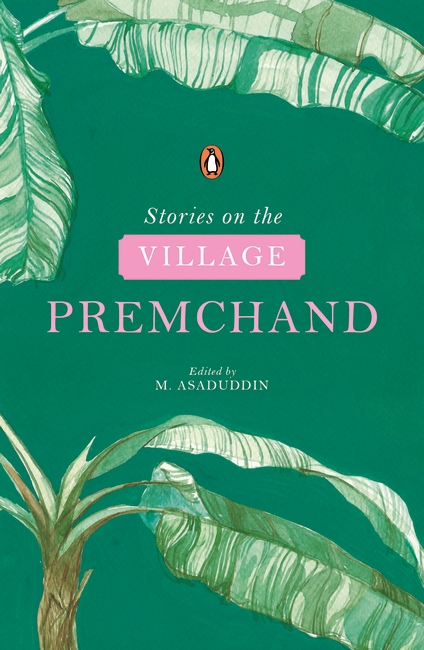
Munshi Premchand is one of the most important writers of the Hindi-Urdu canon in India. His prolific writing contributed largely to shape the genre of short stories as we know it in India. His range and diversity were limitless as he tackled themes of romance and satire, gender politics and social inequality, with unmatched skill and compassion.
Premchand’s love for the countryside is evident in his fictional and non-fictional writings. Yet, he understood that the seeming idyllic village life was ridden with its own issues. This carefully curated collection brings together some of his best short stories about the Indian village life, which Premchand used as an opportunity to critique social issues such as moral bankruptcy, caste injustices, money woes, blind faith and much more.
Stories on the City by Premchand
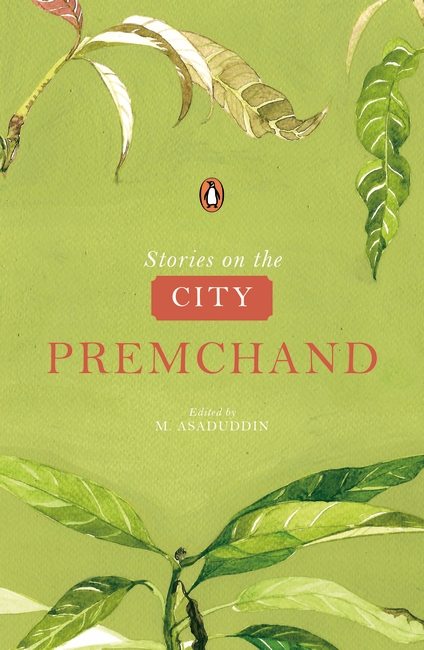
Munshi Premchand is one of the most important writers of the Hindi-Urdu canon in India. His prolific writing contributed largely to shape the genre of short stories as we know it in India. His range and diversity were limitless as he tackled themes of romance and satire, gender politics and social inequality, with unmatched skill and compassion.
Premchand’s wrote prolifically about life in the city in the India of his time . In fact, his fictional corpus, if read uncritically, would lend itself to an easy binary between country life and city life. This collection attempts to break away from the misconceptions to bring to light the nuance in his understanding of city life.
Stories on Animals by Premchand
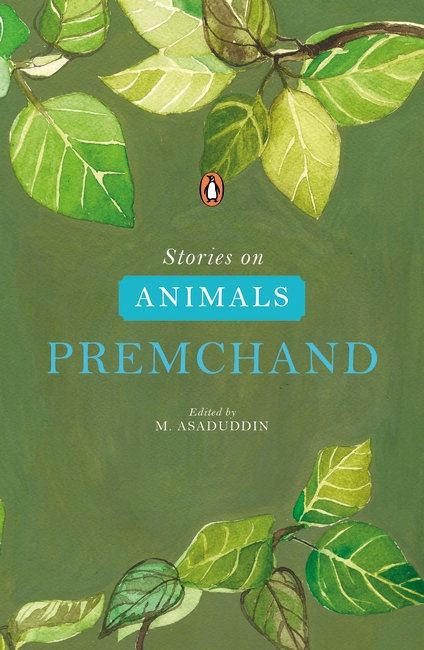
Munshi Premchand is one of the most important writers of the Hindi-Urdu canon in India. His prolific writing contributed largely to shape the genre of short stories as we know it in India. His range and diversity were limitless as he tackled themes of romance and satire, gender politics and social inequality, with unmatched skill and compassion.
Premchand’s writing often showed his deep interest in the lives of the simple Indian peasant and this concern often extended to animals, particularly their cattle. He was very sympathetic of the cruelty that was often meted out to the animals. Very few writers have depicted such an intimate bond between animals and human beings.
Stories on Women by Premchand
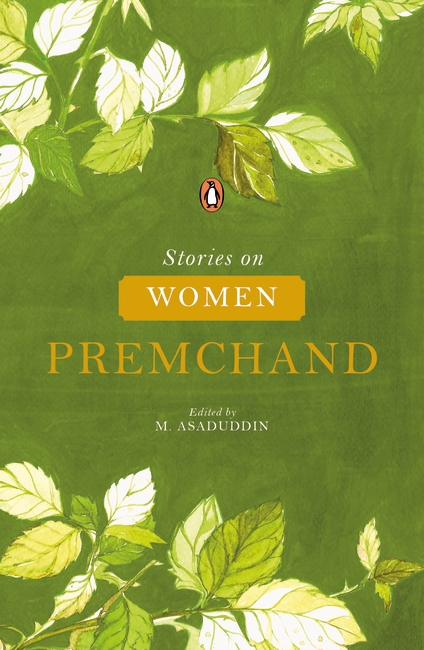
Munshi Premchand is one of the most important writers of the Hindi-Urdu canon. His prolific writing contributed largely to shape the genre the short story as we know it in India. His range and diversity were limitless as he tackled themes of romance and satire, gender politics and social inequality, with unmatched skill and compassion.
In a time when women virtually had no agency, Premchand wrote stories that helped to shed light on their plight within a patriarchal society. Although his female characters are sometimes considered conservative by modern standards, the fact that he used his works to highlight the difficult place that they occupied in his time is significant in itself.
Stories on Caste by Premchand
Munshi Premchand is one of the most important writers of the Hindi-Urdu canon in India. His prolific writing contributed largely to shape the genre of short stories as we know it in India. His range and diversity were limitless as he tackled themes of romance and satire, gender politics and social inequality, with unmatched skill and compassion.
Premchand felt a deep affinity with the common man. No writer before him in Urdu or Hindi, and possibly other Indian literatures, had depicted the lives of the underdogs, the untouchables and the marginalised with such depth and empathy. His deepest critique was reserved for caste injustice that condemned certain sections of society to live a life of indignity and humiliation.
Seek
If I don’t crack this job, how will I repay my education loan?
If I join an IT company, will I be able to shift to banking after two years?
These questions seem very familiar, don’t they? Every student has similar concerns about which career path they should tread. Seek provides insights into the various fields and industries-Consulting, IT, Media, Oil and Gas, and others-by delving into stories of successful IIM-Bangalore alumni like Arun Balakrishnan, Malavika Harita, and Apurva Purohit who have made a dent in their respective professions and fields. Rakesh Godhwani offers smart, practical advice on following your passion and finding your dream job.