The Mahabharata is one of the greatest stories ever told. Though the basic plot is widely known, there is much more to the epic than the dispute between the Kouravas and the Pandavas that led to the battle in Kurukshetra. It has innumerable sub-plots that accommodate fascinating meanderings and digressions, and it has rarely been translated in full, given itsformidable length of 80,000 shlokas or couplets. This magnificent 10-volume unabridged translation of the epic is based on the Critical Edition compiled at the Bhandarkar Oriental Research Institute.
With the ninth volume, the magnificent epic approaches its end. The war is over and Yudhishthira is crowned. Bhishma’s teachings that began in the eighth volume continue past the Shanti Parva into the Anushasana Parva.
Every conceivable human emotion figures in the Mahabharata, the reason why the epic continues to hold sway over our imagination. In this lucid, nuanced and confident translation, Bibek Debroy makes the Mahabharata marvellously accessible to contemporary readers.

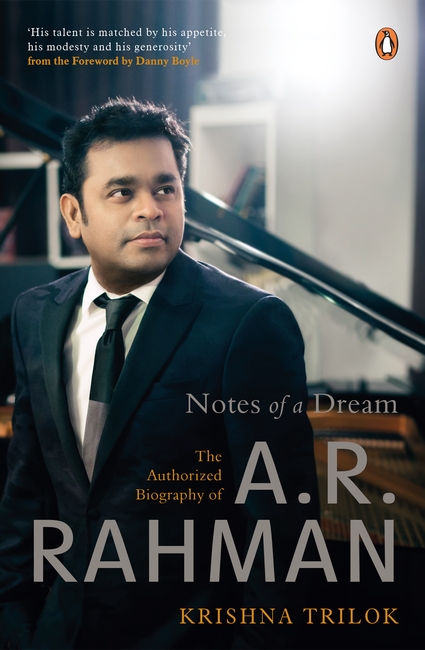
Who really is A.R. Rahman? We know the music. But do we know the man? For the first time, a nation’s pride-–winner of National Film awards, Oscars, Grammys and hearts-–opens up about his philosophies: hope, perseverance, positivity and love. From his early days as a composer of advertisement jingles to his first big break in feature films, from his keenness to integrate new technology with good old-fashioned music scores to the founding of his music school, from his resounding entry on to the international stage to his directorial debut, from his philanthropy to his inner life, Notes of a Dream captures Rahman’s extraordinary success story with all the rhythm and melody, the highs and lows, of a terrific soundtrack by the man himself.
Featuring intimate interviews with the soft-spoken virtuoso, as well as insights and anecdotes from key people in his life, this balanced, uplifting and affectionate book is the definitive biography of A.R. Rahman—the man behind the music and the music that made the man.
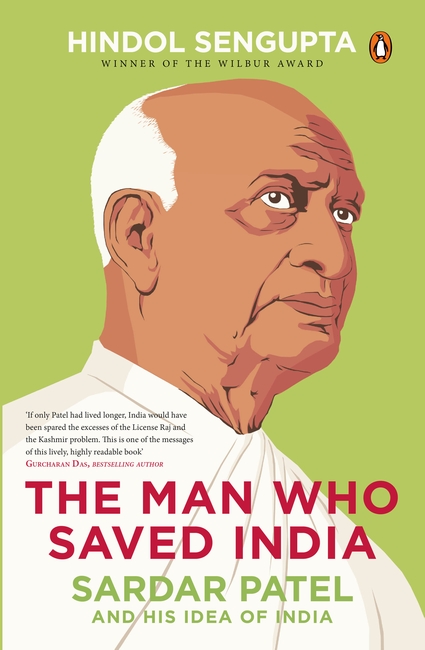
There is perhaps no political figure in modern history who did more to secure and protect the Indian nation than Sardar Vallabhbhai Patel. But, ironically, seventy years after Patel brought together piece by piece the map of India by fusing the princely states with British India to create a new democratic, independent nation, little is understood or appreciated about Patel’s enormous contribution to the making of India. Caricatured in political debate, all the nuances of Patel’s difficult life and the daring choices he made are often lost, or worse, used as mere polemic. If Mahatma Gandhi was the spiritual core of India’s freedom struggle and Jawaharlal Nehru its romantic idealism, it was Sardar Patel who brought in the vital pragmatism which held together the national movement and the first ideas of independent India. A naturally stoic man, Patel, unlike Gandhi or Nehru, wrote no personal history. He famously argued that its was better to create history than write it. This is why even his deepest misgivings and quarrels have been easily buried. But every warning that Patel left for India – from the dangers of allowing groups to create private militias to his thoughtful criticism on India’s approach to Kashmir, Pakistan and China – are all dangerously relevant today. It is impossible to read about Patel, who died in 1950, and not feel that had he lived on, India might have been a different country. It is also impossible to ignore Patel and understand not only what the idea of India is but also what it could have been, and might be in the future.
The Man Who Saved India is a sweeping, magisterial retelling of Sardar Patel’s story. With fiercely detailed and pugnacious anecdotes, multiple award-winning, best-selling writer Hindol Sengupta brings alive Patel’s determined life of struggle and his furious commitment to keep India safe. This book brings alive all the arguments, quarrels and clashes between some of the most determined people in Indian history and their battle to carve out an independent nation. Through ravages of a failing body broken by decades of abuse in and outside prison, Patel stands out in this book as the man who, even on his death bed, worked to save India. Hindol Sengupta’s The Man Who Saved India is destined to define Patel’s legacy for future generations.
of The Occult have no discernible plots, their terrains are unidentifiable,
the characters that inhabit them have no names. Houses possess
domains where you are overcome with fear or desire without knowing why.
A lone dark cloud that brings sudden rain traverses the interpenetrating
landscape of the five stories. Time passes swiftly in some locations and is
knotted thickly at others. An exquisitely made artefact could either be the
model for a palace or a memorial of it. Has the woman fleeing managed
to escape once again or has she drowned in the fast-flowing river? A
narrative thread from one story may be taken up and twisted in another.
Together the stories create a shimmering maze where meaning is elusive
but from which the enchanted reader never wants to exit.

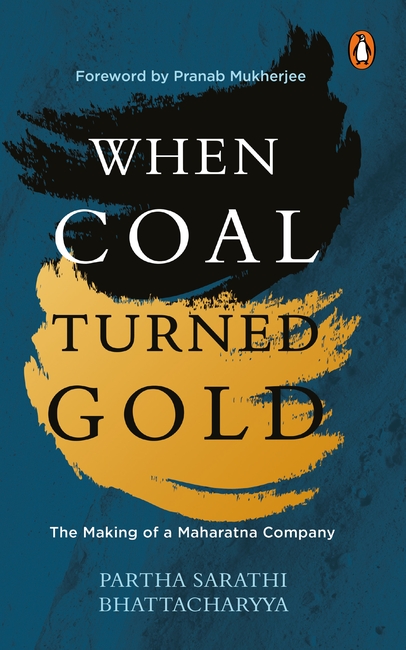
Coal India Limited (CIL) contributes to about 82 per cent of India’s coal production. In When Coal Turned Gold, former CIL chairman and managing director Partha Sarathi Bhattacharyya tells the story, warts and all, of how he tackled the Dhanbad coal mafia, changed the way the industry was perceived, dealt with the trade unions and the government and, most importantly, scripted one of the greatest success stories the country has ever seen.
Blurb:
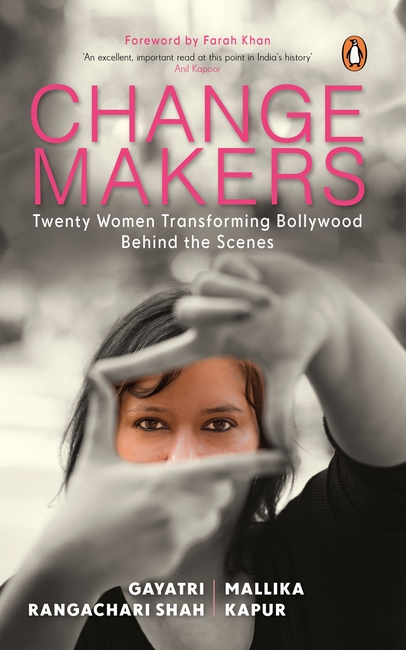
Since Bollywood’s earliest days, women have played a part in its success, both in front of the camera and away from it. Yet it has taken more than half a century for women to assert their presence in significant numbers in Bollywood. Today, Hindi cinema relies on a record number of women who work tirelessly, sometimes invisibly, to keep the world’s largest dream factory buzzing.
This book tells the story of twenty incredible women, many with no prior connections in the industry, who have carved successful careers despite significant challenges. They often work away from the public gaze-as studio heads, producers, directors, make-up artists, stylists, script writers, lyricists,editors, choreographers, stunt artists, set designers, and in the many other jobs that support the making of a movie. These women deserve to be applauded and their journeys acknowledged, as they transform Bollywood and in the process, create a new India.
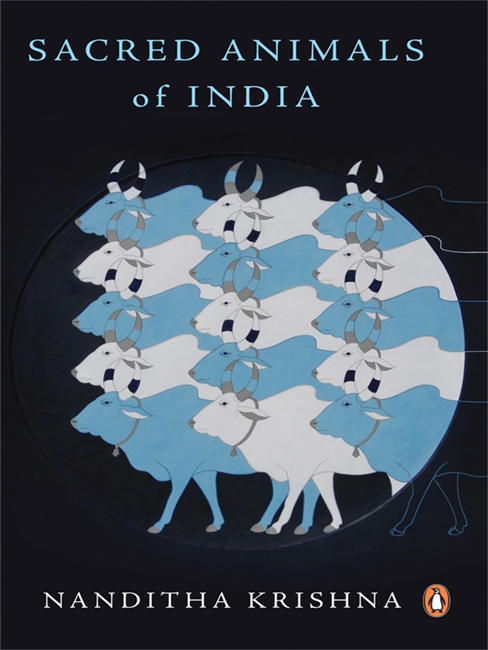
Animals in India are worshipped in myriad ways: as deities, like the elephant (god Ganesha) and the monkey (god Hanuman); as avatars, like Vishnu’s fish, tortoise and boar forms; and as vahanas, or vehicles, of major deities-the swan, bull, lion and tiger. While some animals, like the snake, are worshipped out of fear, some birds, such as the crow, are associated with the abode of the dead, or the souls of ancestors, and the cow’s sanctity perhaps derives from its economic value. There are also hero-animals, such as the vanaras, and the totemic symbols of tribes later assimilated into Vedic Hinduism.
Sacred Animals of India draws on India’s ancient religions-Hinduism, Buddhism and Jainism-to explore the customs and practices that led to the worship and protection of animals. This book is also a necessary reminder of the role animals play in earth’s biodiversity.
‘A good read’-Mail Today
‘Treats the complex subject with the confidence that is born out of meticulous and thorough research and strong convictions’-Book Review Literary Trust
‘Each and every animal, however insignificant in other eyes, attracts the attention of a devout Hindu’-Dawn
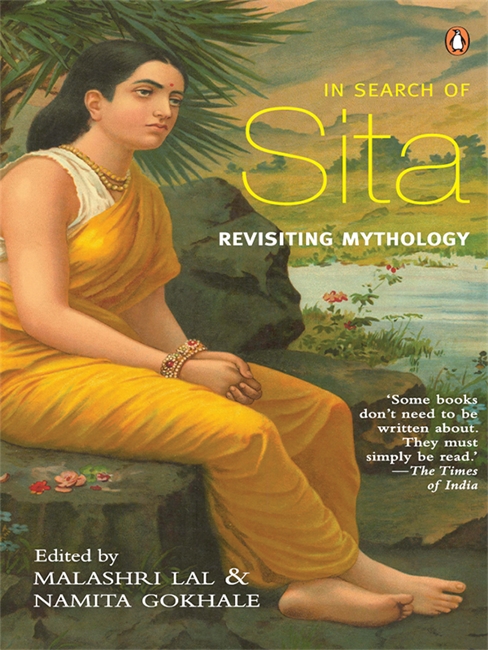
Sita is one of the defining figures of Indian womanhood, yet there is no single version of her story. Different accounts coexist in myth, literature and folktale. Canonical texts deify Sita while regional variations humanize her. Folk songs and ballads connect her timeless predicament to the daily lives of rural women. Modern-day women continue to see themselves reflected in films, serials and soap operas based on Sita’s narrative. Sacrifice, self-denial and unquestioning loyalty are some of the ideals associated with popular perceptions of Sita. But the Janaki who symbolized strength, who could lift Shiva’s mighty bow, who courageously chose to accompany Rama into exile and who refused to follow him back after a second trial, is often forgotten. However she is remembered, revered or written about, Sita continues to exert a powerful influence on the collective Indian psyche. In Search of Sita presents essays, conversations and commentaries that explore different aspects of her life. It revisits mythology, reopening the debate on her birth, her days in exile, her abduction, the test by fire, the birth of her sons and, finally, her return to the earth-offering fresh interpretations of this enigmatic figure and her indelible impact on our everyday lives.

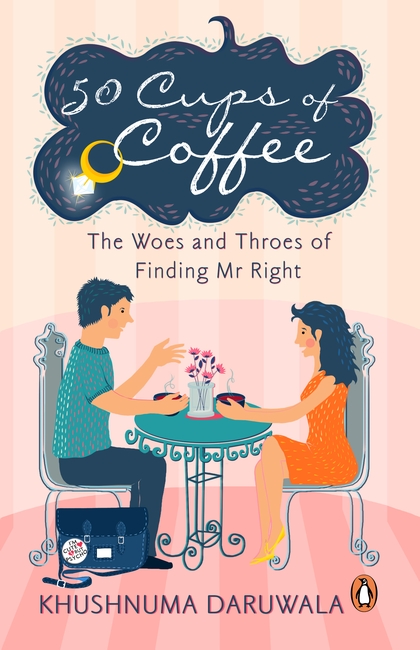
Dating is an undeniably daunting task, especially when you’re done with casual flings and are looking for the real deal to settle down with. When a 30-something woman signs up on a dating website for people looking to get married, she realizes just how delightful, vexing, amusing and befuddling trying to find the perfect husband can be. Based on real experiences, this book is not a guide to dating, but rather a delightful collection of episodes about meeting potential partners, epiphanies about them and soul-searching questions that will make you see relationships without the rose-tinted glasses.
Especially pertinent to this age of online dating, this delicious-as-a-cappuccino book is for all those in love, looking for love or in between. With advice as sage (gained the hard way) as that in He’s Just Not That Into You and scenarios as funny and outrageous as those in Sex and the City, 50 Cups of Coffee is a hilarious, honest and witty book, perfect to curl up with when a suitable beau or bae is not available.

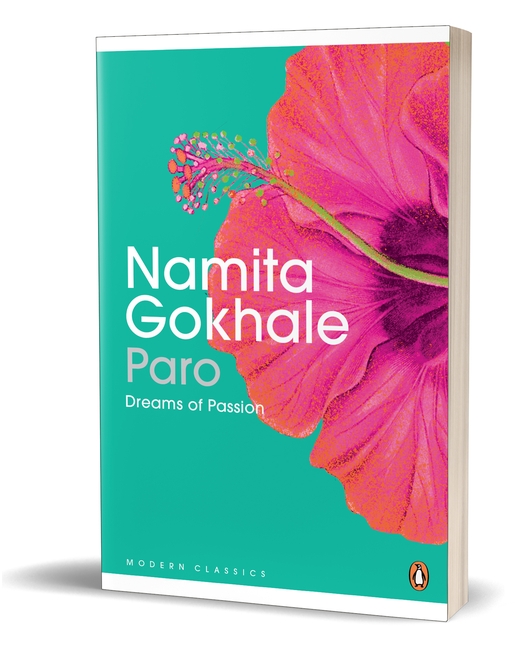
First published in 1984, to both notoriety
and critical acclaim, Paro remains a social
comedy without parallel in contemporary
Indian writing.
Paro, heroic temptress, glides like an exotic
bird of prey through the world of privilege
and Scotch that the rich of Bombay
and Delhi inhabit. She is observed closely
by the acid Priya, voyeur and obsessive
diarist, who lost her heart to the sewingmachine
magnate BR, and then BR
to Paro. But he is merely one among
a string of admirers. Paro has seduced
many: Lenin, the Marxist son of a cabinet
minister; the fat and sinister Shambhu
Nath Mishra, Congress Party éminence
grise; Bucky Bhandpur, test cricketer
and scion of a princely family; Loukas
Leoras, a homosexual Greek film director;
and, very nearly, Suresh, the lawyer on
the make whom Priya has married . . .