



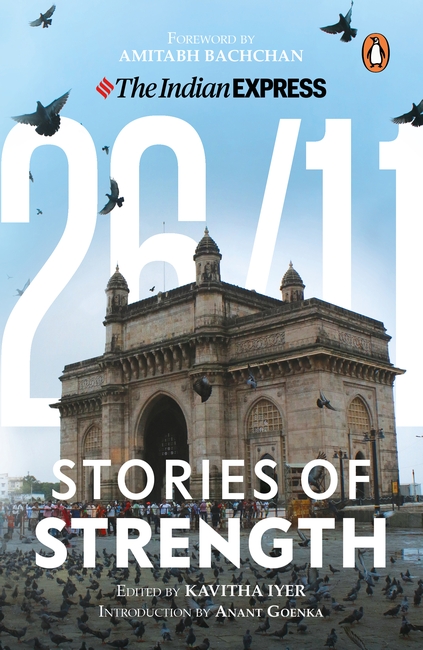
The iconic dome of the Taj, charred on the first night of the siege, is long rebuilt, the bloodstains in the concourse of the railway terminus washed clean. But across the country, a few hundred people still bear the scars of 26/11, having lost loved ones in Mumbai’s worst ever terror attack. The pain hasn’t dimmed even after a decade but survivors have grown in courage and resilience.
In 26/11 Stories of Strength, The Indian Express dips into ten years of reportage on Mumbai’s terror survivors to find that single mothers have attended night school to get an education, children who lost a parent have dared to dream big, those who lost sons have learnt to find new purpose in living.
Many have dug deep within to joust with anger, fear, the desire for retribution. And hearteningly, have emerged to tell stories of their triumph over senseless violence, through lives lived with honour and compassion.
Archives: Books
The Asthma Cure

The number of people being diagnosed with asthma is increasing but it remains one of the most misunderstood diseases of our times. Given the levels of pollution in many metropolitan cities and states in India, most of us are able to identify the impact on our lungs. But did you know that many a times the medicines and bronchodilators prescribed to asthmatics to temporarily relieve the symptoms actually weaken the lungs over a period of time?
Using authentic remedies and principles from Ayurveda and macrobiotics, The Asthma Cure is a step-by-step practical guide with natural remedies, easy-to-follow wholesome recipes and daily food plans to help a person heal bronchial asthma, wheezing and other lung-related conditions naturally.
From outlining the relationship between food and inflammation to the role digestion plays in healing asthma, and the foods that strengthen and heal the lungs, this is the most comprehensive and solution-oriented book on the subject yet.
Tryst with Prosperity
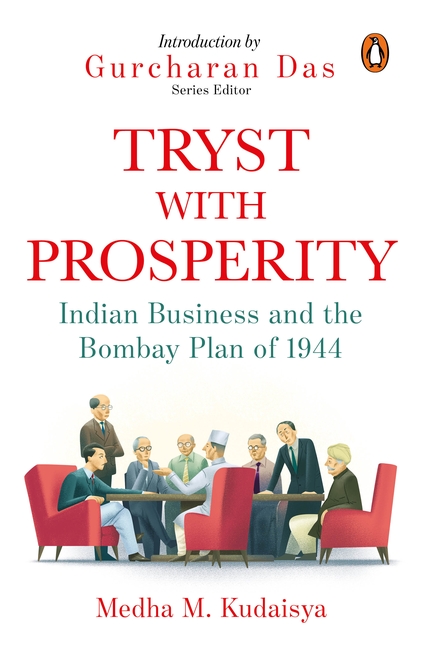
The story of Indian business remains incomplete without the Bombay Plan
The Tryst with Prosperity is the story of the Bombay Plan which was initiated in 1944. Eight remarkable individuals from the world of industry, like J.R.D. Tata, Lala Shri Ram and G.D. Birla, came together and drafted this plan.
The Bombay Plan, an economic blueprint, promised to double India’s per capita income in fifteen years; envisaged a 130 per cent rise in agriculture output; a 500 per cent increase in manufacturing; and a minimum standard of living for every individual. This plan held out the promise of partnership between the Indian state and private enterprise. Yet, ironically, a decade later, these captains of industry fell out with the Nehruvian establishment. Nonetheless, the indelible imprint of the Bombay Plan was manifest in the national Five Year Plans and in the economic trajectory of India.
Seventy-five years later, the Bombay Plan’s legacy continues to be unmistakable in the economic life of contemporary India. Rivetingly told, business historian Medha M. Kudaisya, narrates an important chapter from the story of Indian business.
Crash
While many people talk about the path to the top of organizations, very few are honest about how difficult it is to stay at that position. R. Gopalakrishnan analyses the ‘software’ challenges, which leaders confront every day, and shares the insights he has gained developing, managing, investing in and supervising a variety of companies. The author shows that great leaders continue to excel not just because of their skills and intelligence but also by connecting with others using emotional competencies like empathy and self-awareness.
Filled with anecdotes, analysis of various situations CEOs may find themselves in and unconventional advice to help them, Crash: Lessons from the Entry and Exit of CEOs is for veteran leaders as well as for those who aspire to start their own ventures.
Invisible Men
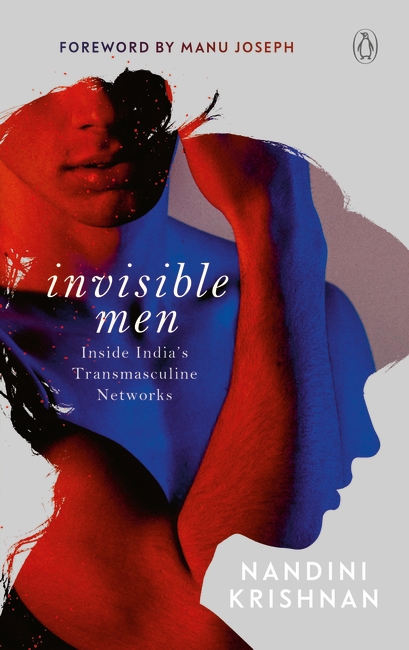
Female-to-male transgender people, or transmasculine people as they are called, are just beginning to form their networks in India. But their struggles are not visible to a gender-normative society that barely notices, much less acknowledges, them. While transwomen have gained recognition through the extraordinary efforts of activists and feminists, the brotherhood, as the transmasculine network often refers to itself, remains imponderable, diminished even within the transgender community. For all intents and purposes, they do not exist. In a country in which parents wish their daughters were sons, they exile the daughters who do become sons.
In this remarkable, intimate book, Nandini Krishnan burrows deep into the prejudices encountered by India’s transmen, the complexities of hormonal transitions and sex reassignment surgery, issues of social and family estrangement, and whether socioeconomic privilege makes a difference. With frank, poignant, often idiosyncratic interviews that braid the personal with the political, the informative with the offhand, she makes a powerful case for inclusivity and a non-binary approach to gender.
Above all, she asks the question: what does manhood really mean?
The Man who Wasn’t There
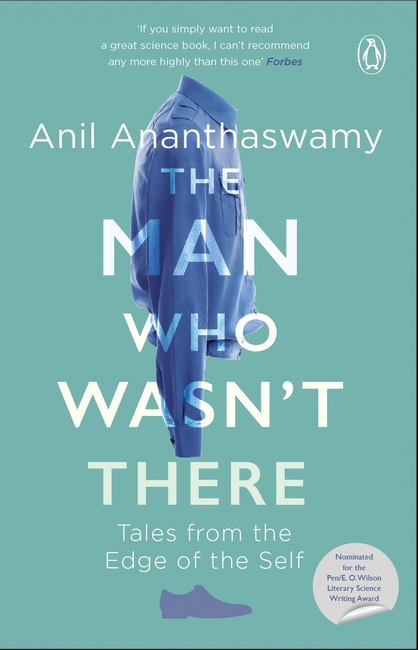
Anil Ananthaswamy offers an intimate look at the latest neuroscience of schizophrenia, autism, Alzheimer’s disease, and Cotard’s syndrome among others to reveal the awesome power of the human sense of self. Extensive in-depth interviews venture into the lives of individuals who offer remarkable, sometimes heart-wrenching insights. One man cut off his own leg. Another became one with the universe. Where in the brain, or mind, or body is the self actually located? As Ananthaswamy elegantly reports, neuroscientists themselves now see that the elusive sense of self is both everywhere and nowhere in the brain. The Man Who Wasn’t There takes readers on an emotional, scientific, and intellectual journey, arriving at a new visceral understanding of something we have wondered about since humans existed.
Through two doors at once
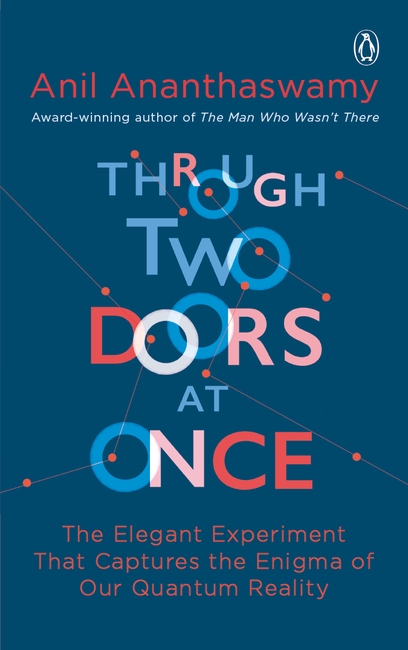
Many great scientific minds have grappled with the ‘double slit’ experiment. Thomas Young devised it in the early 1800s to show that light behaves like a wave, and in doing so opposed Isaac Newton’s view that light is made of particles. But then Albert Einstein showed that light comes in quanta, or particles. Thus, quantum mechanics was born. This led to a fierce debate between Einstein and Niels Bohr over the nature of reality-subatomic bits of matter and its interaction with light-as revealed by the double slit experiment. Richard Feynman held that it embodies the central mystery of the quantum world. Decade after decade, hypothesis after hypothesis, scientists have returned to this ingenious experiment to help them answer deeper and deeper questions about the fabric of the universe.
How can a single particle behave both like a particle and a wave? Does a particle, or indeed reality, exist before we look at it, or does looking create reality, as the textbook ‘Copenhagen interpretation’ of quantum mechanics seems to suggest? How can particles influence each other faster than the speed of light? Is there a place where the quantum world ends and the familiar classical world of our daily lives begins, and if so, can we find it? And if there’s no such place, then does the universe split into two each time a particle goes through the double slit?
With his extraordinarily gifted eloquence, Anil Ananthaswamy travels around the world and through history, down to the smallest scales of physical reality we have fathomed. It is the most fantastic voyage you can take.
Why I Am a Liberal
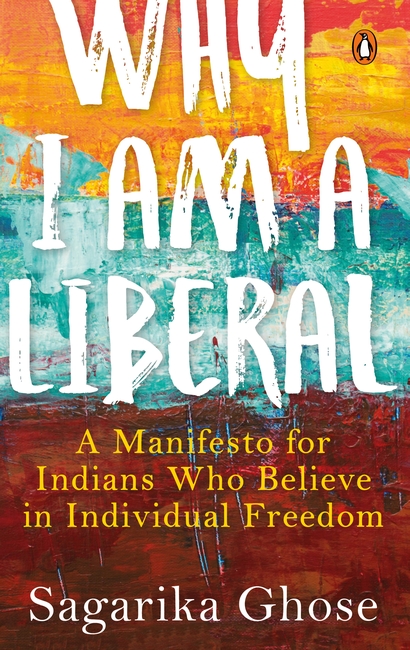
The stamping out of difference, the quelling of diversity and the burial of argument is, in fact, most un-Indian. Anyone who seeks to end that dialogue process is ignoring Indianness and patriotism. The liberal Indian argues for the rights of the marginalized in the tradition of Gandhi for trust, mutual understanding and bridge-building. Real patriotism lies in old-fashioned ideas of accommodation, friendship and generosity; not in force, muscle flexing and dominance. Why I Am a Liberal is Sagarika Ghose’s impassioned meditation on why India needs to be liberal.
Hitched
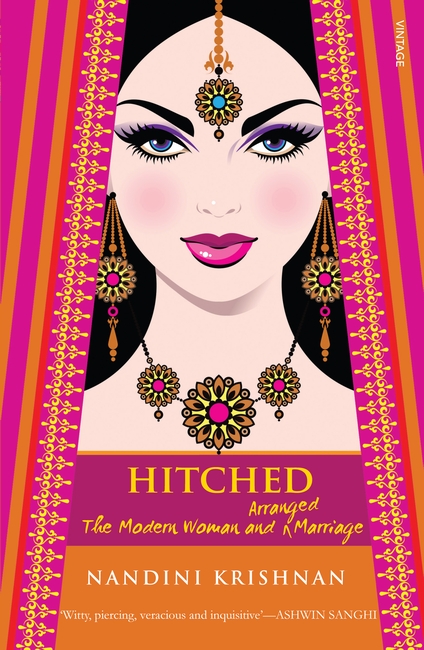
If you’re an Indian woman and old enough to legally bear children, chances are that an overweight relative has asked you, while fondly stroking their pot belly, ‘When am I going to eat at your wedding?’
The modern Indian woman’s attitude to marriage?and especially to arranged marriage?is a confused one. As traditional matchmaking methods and internet chat rooms come together to build matrimonial websites, our parameters have changed, but the time-honoured practice of arranged marriage sticks.
Hitched explores in depth the considerations matrimony should involve, and the issues that can crop up at different stages of an arranged marriage. A cross-section of women?those who married young, married late, married the first man their parents parked before them, or married out of caste in an arranged setup?open up about experiences ranging from the frightening to the hilarious and the awww-inspiring.
If You See Me, Don’t Say Hi
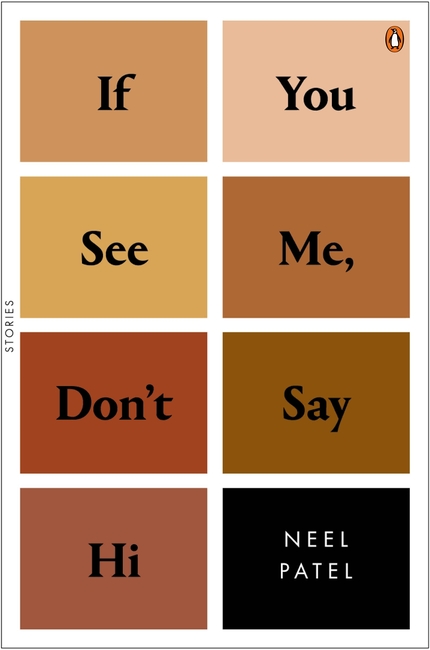
In eleven sharp, surprising stories, Neel Patel gives voice to our most deeply held stereotypes and then slowly undermines them. His characters, almost all of whom are first-generation Indian Americans, subvert our expectations that they will sit quietly by. We meet two brothers caught in an elaborate web of envy and loathing; a young gay man who becomes involved with an older man whose secret he could never guess; three women who almost gleefully throw off the pleasant agreeability society asks of them; and, in the final pair of linked stories, a young couple struggling against the devastating force of community gossip.
If You See Me, Don’t Say Hi examines the collisions of old world and new world, small town and big city, traditional beliefs (like arranged marriages) and modern rituals (like Facebook stalking). Ranging across the country, Patel’s stories-empathetic, provocative, twisting, and wryly funny-introduce a bold new literary voice, one that feels timelier than ever.