If you’re an Indian woman and old enough to legally bear children, chances are that an overweight relative has asked you, while fondly stroking their pot belly, ‘When am I going to eat at your wedding?’
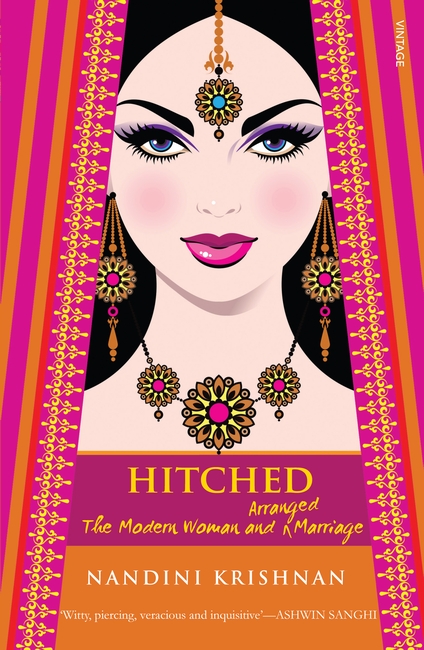
The modern Indian woman’s attitude to marriage?and especially to arranged marriage?is a confused one. As traditional matchmaking methods and internet chat rooms come together to build matrimonial websites, our parameters have changed, but the time-honoured practice of arranged marriage sticks.
Hitched explores in depth the considerations matrimony should involve, and the issues that can crop up at different stages of an arranged marriage. A cross-section of women?those who married young, married late, married the first man their parents parked before them, or married out of caste in an arranged setup?open up about experiences ranging from the frightening to the hilarious and the awww-inspiring.

In eleven sharp, surprising stories, Neel Patel gives voice to our most deeply held stereotypes and then slowly undermines them. His characters, almost all of whom are first-generation Indian Americans, subvert our expectations that they will sit quietly by. We meet two brothers caught in an elaborate web of envy and loathing; a young gay man who becomes involved with an older man whose secret he could never guess; three women who almost gleefully throw off the pleasant agreeability society asks of them; and, in the final pair of linked stories, a young couple struggling against the devastating force of community gossip.
If You See Me, Don’t Say Hi examines the collisions of old world and new world, small town and big city, traditional beliefs (like arranged marriages) and modern rituals (like Facebook stalking). Ranging across the country, Patel’s stories-empathetic, provocative, twisting, and wryly funny-introduce a bold new literary voice, one that feels timelier than ever.

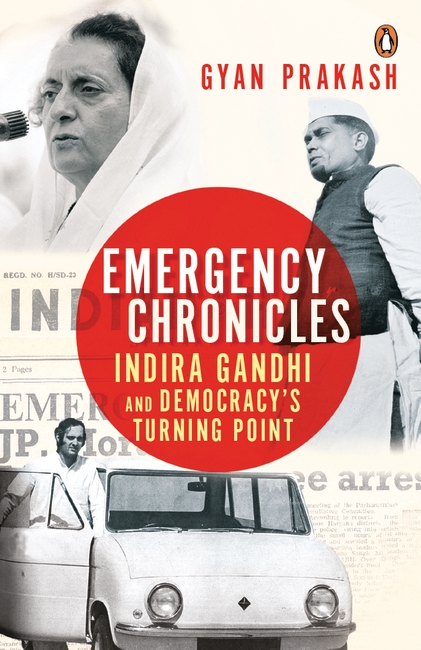
As the world once again confronts an eruption of authoritarianism, Gyan Prakash’s Emergency Chronicles takes us back to the moment of India’s independence to offer a comprehensive historical account of Indira Gandhi’s Emergency of 1975-77. Stripping away the myth that this was a sudden event brought on solely by the Prime Minister’s desire to cling to power, it argues that the Emergency was as much Indira’s doing as it was the product of Indian democracy’s troubled relationship with popular politics, and a turning point in its history.
Prakash delves into the chronicles of the preceding years to reveal how the fine balance between state power and civil rights was upset by the unfulfilled promise of democratic transformation. He explains how growing popular unrest disturbed Indira’s regime, prompting her to take recourse to the law to suspend lawful rights, wounding the political system further and opening the door for caste politics and Hindu nationalism.

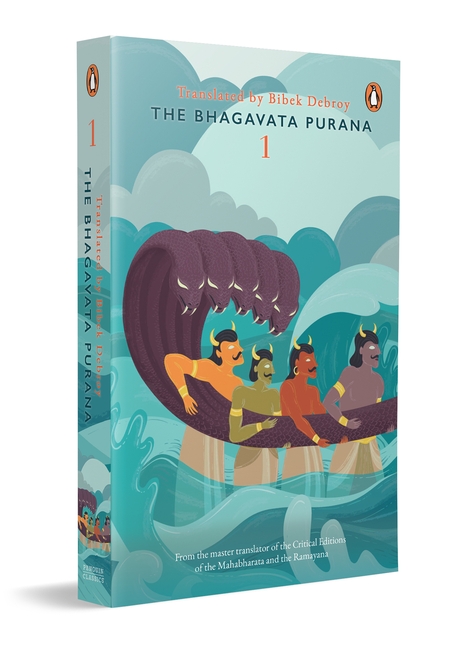
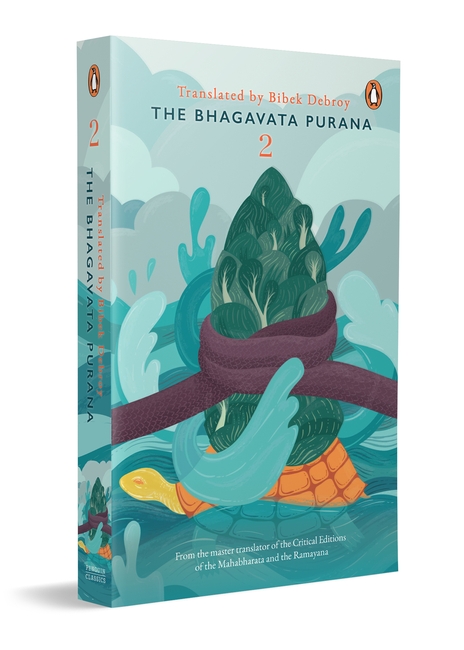
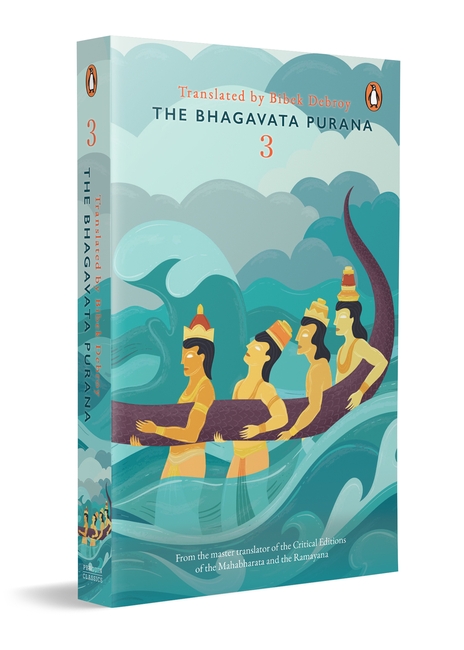
A seamless blend of fable and philosophy, the Bhagavata Purana is perhaps the most revered text in the Vaishnava tradition. It brings to life the legends of gods, asuras, sages and kings-all the while articulating the crucial ethical and philosophical tenets that underpin Hindu spiritualism.
The narrative unfolds through a series of conversations and interconnected stories. We are told how the sage Vyasa was inspired by Narada to compose the Bhagavata Purana as a means to illumine the path to a spiritual life. We learn of the devotion of Prahlada, the austerity of Dhruva, and the blinding conceit of Daksha. Also recounted are tales of the many incarnations of Vishnu, especially Krishna, whom we see grow from a beloved and playful child to a fierce protector of the faithful.
A seamless blend of fable and philosophy, the Bhagavata Purana is perhaps the most revered text in the Vaishnava tradition. It brings to life the legends of gods, asuras, sages and kings-all the while articulating the crucial ethical and philosophical tenets that underpin Hindu spiritualism.
The narrative unfolds through a series of conversations and interconnected stories. We are told how the sage Vyasa was inspired by Narada to compose the Bhagavata Purana as a means to illumine the path to a spiritual life. We learn of the devotion of Prahlada, the austerity of Dhruva, and the blinding conceit of Daksha. Also recounted are tales of the many incarnations of Vishnu, especially Krishna, whom we see grow from a beloved and playful child to a fierce protector of the faithful.
A seamless blend of fable and philosophy, the Bhagavata Purana is perhaps the most revered text in the Vaishnava tradition. It brings to life the legends of gods, asuras, sages and kings-all the while articulating the crucial ethical and philosophical tenets that underpin Hindu spiritualism.
The narrative unfolds through a series of conversations and interconnected stories. We are told how the sage Vyasa was inspired by Narada to compose the Bhagavata Purana as a means to illumine the path to a spiritual life. We learn of the devotion of Prahlada, the austerity of Dhruva, and the blinding conceit of Daksha. Also recounted are tales of the many incarnations of Vishnu, especially Krishna, whom we see grow from a beloved and playful child to a fierce protector of the faithful.
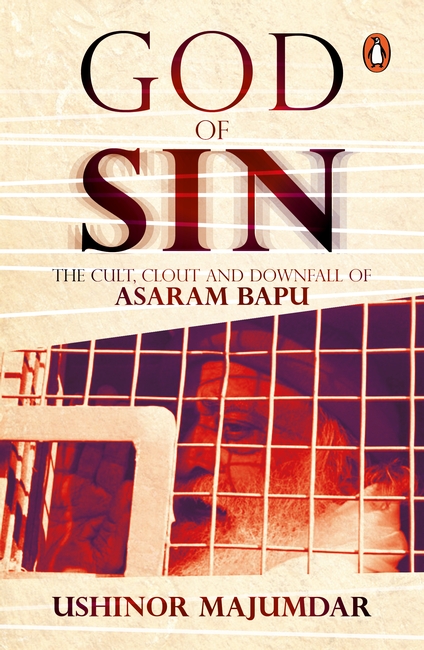
For decades, Asaram Bapu presided over a politically influential empire built on blind faith. Along with his son and heir, Narayan Sai, he has now become an example of everything that is wrong with self-styled godmen and the cults they spawn. The two stand accused of sexual assaults on vulnerable devotees, land grabbing, money laundering, intimidation, exploitative black magic rituals and the horrific murder of witnesses who testified against them. Politically, Asaram Bapu held significant boroughs of influence across north India and the Hindi belt, and there are photos of him with almost every known political leader throughout the 1990s and 2000s, till his arrest in a sexual assault case in 2013.
Asaram originated the business model of branding goods and selling them to followers, using faith as a marketing tool-which other godmen emulated to great success. His commercial empire, now being investigated by economic offences agencies, was built on unaccounted donations, loans given on hefty rates of interest, investments in dubious companies, money laundering and dodgy real estate deals.
God of Sin pieces together Asaram’s journey to spiritual godhood, his fall from grace and the long and arduous road to bring him to justice.

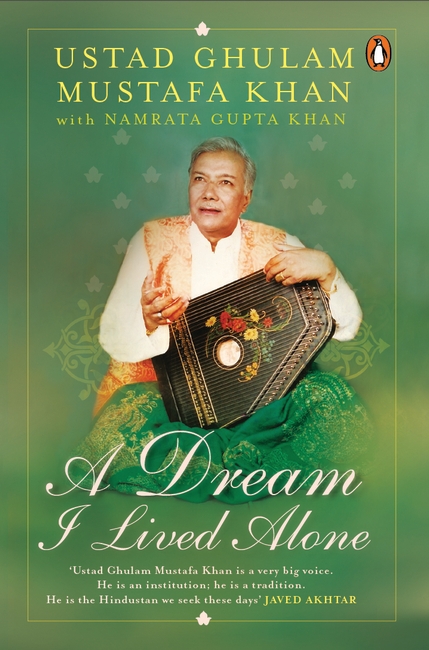
Padma Vibhushan-awardee Ustad Ghulam Mustafa Khan narrates his life’s story-from practicing music in a graveyard as a young boy to teaching stalwarts of the music industry, his journey is as lyrical as his songs.
The octogenarian has nourished his family with love and care, even in his absence. Guru to Shaan, Sonu Nigam, Lata Mangeshkar, and many others, he is modest even about his own achievements. Captured in its essence by Namrata Gupta Khan, his daughter-in-law, A Dream I Lived Alone is a heart-warming story of love, riyaz, dedication and the maestro of music, Ustad Ghulam Mustafa Khan.

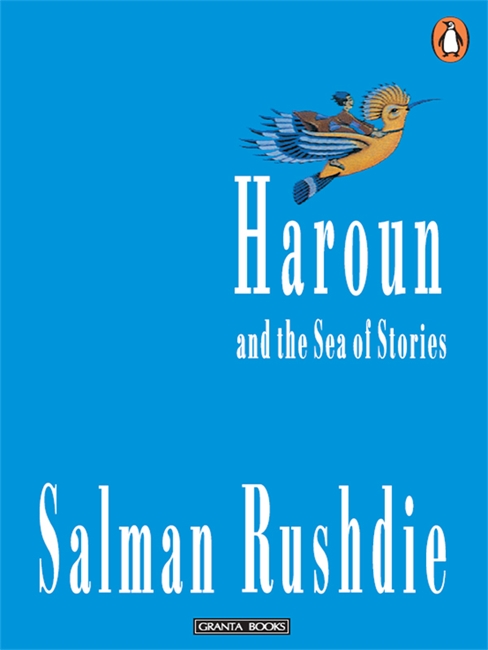
In a sad city, the saddest of cities, a city so ruinously sad that it had forgotten its name, lived a professional storyteller named Rashid and his son Haroun.’ Thus begins Rushdie’s magical and delightful book, which is comprised of hundreds of stories, funny and sad, all of them juggled at once, together with sorcery and love, wicked uncles and fat aunts, and mustachioed gangsters in yellow check pants.

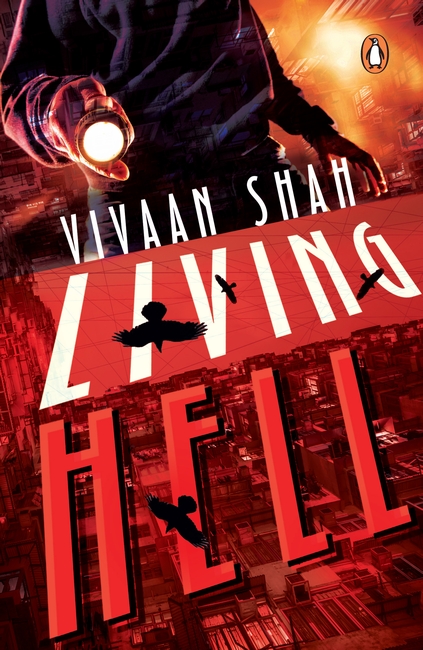
All Nadeem Sayed Khatib, aka Nadeem Chipkali, wants to do is stay in his apartment all day, watch some TV and ignore his mounting worries. He is not in the best shape, cash-wise and otherwise, but let’s be honest: people seriously have it out for him. Sometimes, dangerous people.
Things change when his landlord hauls him up for not paying the rent and practically blackmails him into extracting money from another tenant-Makhija-in the building. Nadeem grumbles his way to Makhija’s apartment, expecting protests and other minor annoyances. What he does not expect is to find him dead-murdered-in the bathroom, a discovery which turns Nadeem’s already messed up on life on its head and lands him deep in the heart of a heinous conspiracy.
As he races against time, a particularly unhelpful police force, the dead man’s bereaved and unusually attractive ex-wife, and the Bombay underworld, Nadeem relies on his wits and an unexpected motley crew of people who, sometimes, want him dead too.
Set against the backdrop of a low-life Bombay that comes alive at night, Living Hell is a fast-paced noir murder mystery with dark humour and an accidental hero.