Chaturvedi Badrinath is known for his authoritative work on the Mahabharata, and on the central place of dharma in Indian thought. His Swami Vivekananda: The Living Vedanta continues to inspire readers with a fresh perspective on the man who was the living embodiment of the Vedanta he preached.
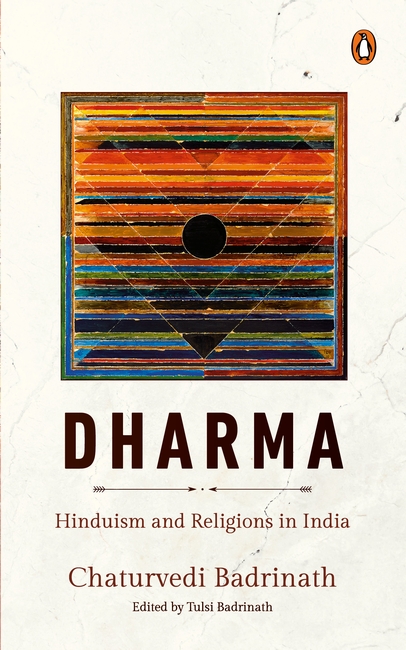
In Dharma: Hinduism and Religions in India, Badrinath argues that the Indian civilization is a ‘Dharmic’ one, founded as it is on the principle of dharma. Dharma has always been translated, wrongly, as ‘religion’.
The concerns of Indian philosophy are the concerns of human life everywhere. Badrinath talks about the history of the words ‘Hindu’ and ‘Hinduism’, Islam in relation with Hinduism, the issues that arose from the spread of Christianity in India, Jainism and Buddhism as part of dharma and darshana, and explains why organized violence in the service of religious fundamentalism is the very negation of religion with its reverence for life.
Thought provoking, perceptive and challenging many long-held notions, Dharma is a must-read for anyone who is interested in India, the interaction of different religions over centuries in this land, and the underlying unity of all life.

Will a series of brutal killings destroy the very foundation of Parsuvarta, an ancient kingdom?
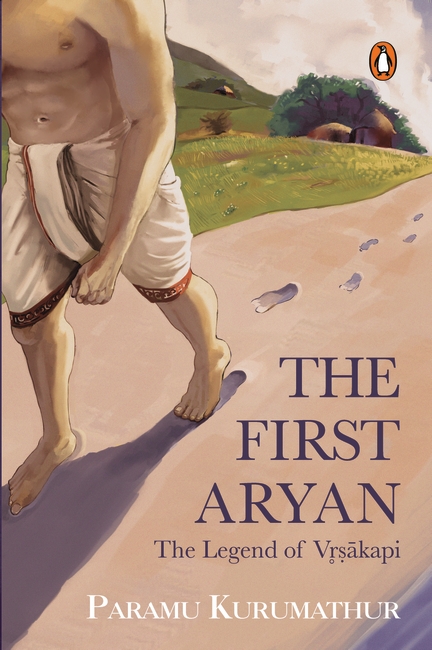
A series of murders have taken place in Parsupur, the capital city of Parsuvarta. Kasyapa and Agastya, two students training to become priests, are asked by their guru to investigate the deaths. Around the same time, there is great turmoil brewing in the city-a palace coup and a battle for supremacy between the traditional Indra worshipers and the new sect of Varuna followers.
It is an age when Vedic gods are worshiped, religious sacrifices are performed regularly, commerce flourishes and kings are guided by their loyal head priests. But beneath this façade of order lie prejudices and political rivalries, jealousy and power games. This is why the murders, which at first seem to be unconnected, soon lead in the same direction. It is now up to Kasyapa and Agastya to find out the common thread and identify the killer.
The First Aryan is a one-of-its-kind murder mystery set in the Vedic times.

More people have embarked on a quest for the sacred in India than anywhere else.
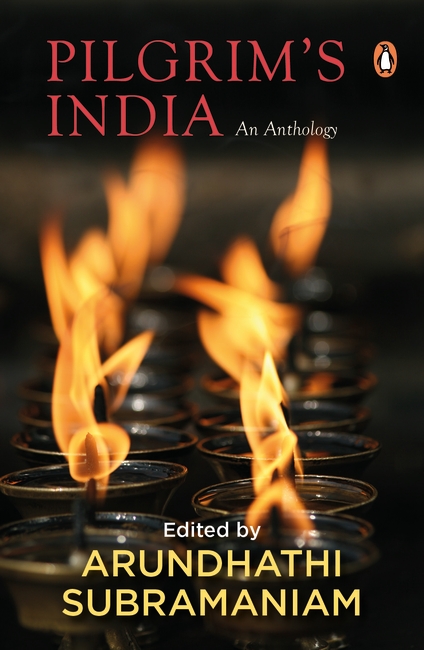
Pilgrim’s India is about all journeys impelled by the idea of the sacred. It brings together essays and poems-from the Katha Upanishad, Fa-Hien, Basavanna and Kabir to Paul Brunton, Richard Lannoy, Amit Chaudhuri, Arun Kolatkar and others-about various aspects of trips undertaken in the name of God. Readers will encounter the watchful reserve of a British journalist in southern India, the vigorous prose of a contemporary Sikh pilgrim, a French author-adventurer’s appraisal of the Ellora caves, a modern-day Zoroastrian’s reflections on Udvada and a woman’s impression of what it means to be Muslim in India.
Mystics, witnesses and wanderers write about the Supreme Being, about journeys and destination, false starts, bottlenecks and blind alleys, about humour, rage and revelation-all of which make this anthology a deeply absorbing and idiosyncratic take on pilgrims and pilgrim trails in India.
SHORTLISTED FOR THE BOOKER PRIZE 2019
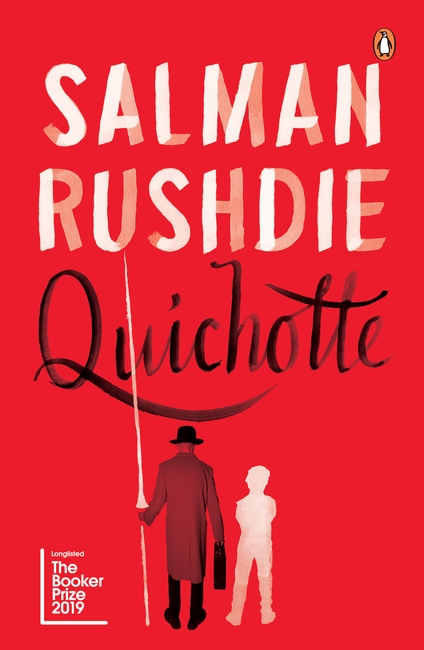
In a tour-de-force that is both an homage to an immortal work of literature and a modern masterpiece about the quest for love and family, Booker Prize-winning, internationally bestselling author Salman Rushdie has created a dazzling Don Quixote for the modern age.
Inspired by the Cervantes classic, Sam DuChamp, mediocre writer of spy thrillers, creates Quichotte, an ageing travelling salesman who falls in impossible love with a TV star. Together with his imaginary son Sancho, Quichotte sets off on a picaresque quest across America to prove worthy of her hand. Meanwhile his creator, in a midlife crisis, has equally urgent challenges of his own.
Just as Cervantes wrote Don Quixote to satirise the culture of his time, Rushdie takes the reader on a wild ride through a country on the verge of moral and spiritual collapse. And with the kind of storytelling magic that is the hallmark of his work, the fully realised lives of DuChamp and Quichotte intertwine in a profoundly human quest for love and a wickedly entertaining portrait of an age in which fact is so often indiscernible from fiction.

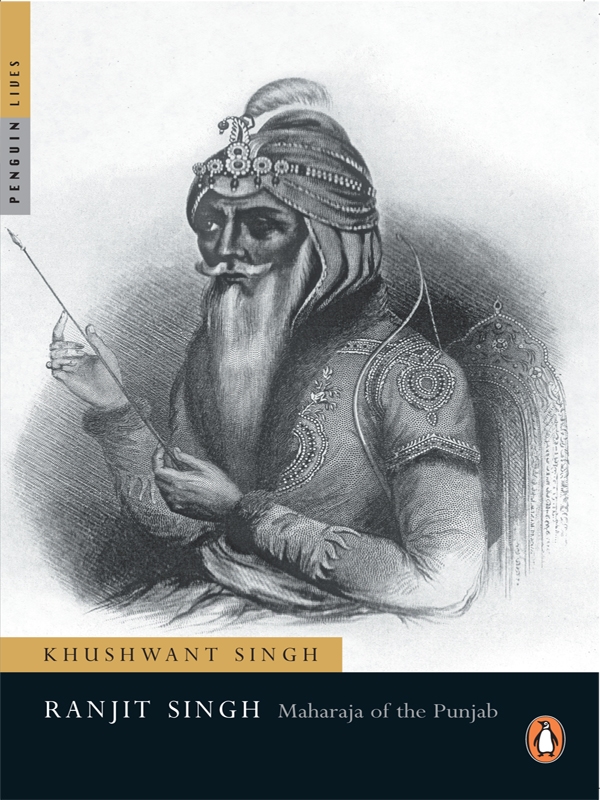
The classic biography of one of India’s greatest rulers
From being a petty chieftain to becoming the most powerful Indian ruler of his time, Ranjit Singh’s empire extended from Tibet to the deserts of Sindh and from the Khyber Pass to the Sutlej. His army was one of the most powerful of the time in Asia and was the first Indian force in a thousand years to stem the tides of invasion from the north-west frontiers of Hindustan.
In this first detailed biography of the first and only Sikh ruler of the Punjab, Khushwant Singh presents Ranjit Singh as he really was. Based on Persian, Punjabi and English sources, and drawing upon the diaries and accounts of European travellers, this is a memorable account of the pageantry and brilliance of the Sikh kingdom at the height of its power, and a lively portrait of one of the most colourful characters in Indian history.

An illustrated edition containing selected hymns of the ten Sikh Gurus, from Guru Nanak to Guru Gobing Singh, translated by Khushwant Singh. Sacred hymns from the Guru Gibind Singh.
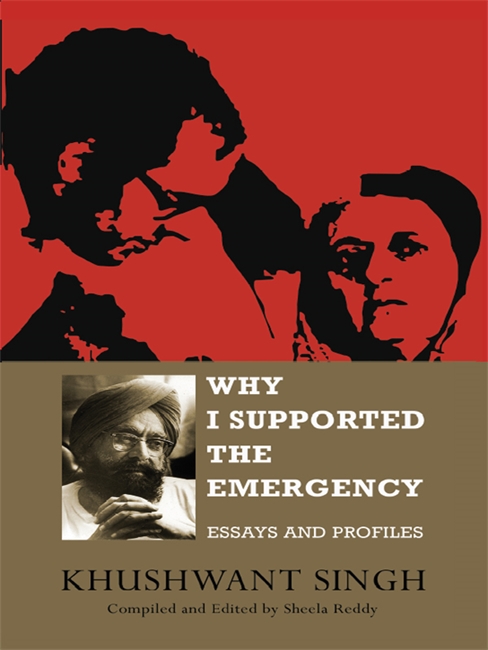
The Emergency Has Become A Synonym For Obscenity. Even Men And Women Who Were Pillars Of Emergency Rule And Misused Their Positions To Harass Innocent People Against Whom They Had Personal Grudges Try To Distance Themselves From Their Past In The Hope That It Will Fade Out Of Public Memory Forever. We Must Not Allow Them To Get Away With It,&Rsquo; Says Khushwant Singh, While Fearlessly Stating His Own Reasons For Championing The Emergency. This Bold And Thought-Provoking Collection Includes Essays On Indira Gandhi&Rsquo;S Government, The Nanavati Commission&Rsquo;S Report On The 1984 Riots And The Riots Themselves, As Well As Captivating Pieces On The Art Of Kissing And The Importance Of Bathing. Alongside These Are Portraits Of Historical Figures Such As Bahadur Shah Zafar, General Dyer, Ghalib And Maharaja Ranjit Singh As Well As Candid Profiles Of The Famous Personalities He Has Known Over The Years, Revealing Intimate Details About Their Lives And Characters. From His Reflections On Amrita Sher-Gil&Rsquo;S Alleged Promiscuity To The Experience Of Watching A Pornographic Film With A Stoic R.K. Narayan, This Is Khushwant Singh At His Controversial And Iconoclastic Best.
Selected And Edited By Sheela Reddy, Why I Supported The Emergency: Essays And Profiles Covers Three Quarters Of A Century. Straight From The Heart, This Is Unadulterated Khushwant Singh.

After Nehru, Victor Jai Bhagwan is Mahatma Gandhi’s favourite Indian-a brilliant young man with the temperament of a leader and fiercely committed to his country. Though Victor adores and respects Gandhi, he disagrees with the Mahatma’s vision for the future of India. He returns from university in England determined to bring the benefits of modern industry to the subcontinent, and within a few years of India’s independence, becomes the country’s biggest tycoon. But this is not the only ideal of Gandhi’s that he defies: facing a midlife crisis, he falls passionately in love with a tantric god-woman (who keeps a tiger as her pet and has a dubious past). She introduces him to the pleasures of unbridled sexuality, but also becomes the reason for his downfall.
Comic, tender and erotic by turns, Burial at Sea is vintage Khushwant Singh.

It is the summer of 1947. But Partition does not mean much to the Sikhs and Muslims of Mano Majra, a village on the border of India and Pakistan. Then, a local money-lender is murdered, and suspicion falls upon Juggut Singh, the village gangster who is in love with a Muslim girl. When a train arrives, carrying the bodies of dead Sikhs, the village is transformed into a battlefield, and neither the magistrate nor the police are able to stem the rising tide of violence. Amidst conflicting loyalties, it is left to Juggut Singh to redeem himself and reclaim peace for his village. First published in 1956, Train to Pakistan is a classic of modern Indian fiction.

I return to Delhi as I return to my mistress Bhagmati when I have had my fill of whoring in foreign lands . . .’ Thus begins Khushwant Singh’s vast, erotic magnum opus on the city of Delhi. The principal narrator of the saga, which extends over six hundred years, is a bawdy, ageing reprobate who loves Delhi as much as he does the hijda Bhagmati, half-man, half-woman, with sexual inventiveness and energy of both the sexes. Travelling through time, space and history to ‘discover’ his beloved city, the narrator meets a myriad of people-poets and princes, saints and sultans, temptresses and traitors, emperors and eunuchs-who have shaped and endowed Delhi with its very special mystique. And as we accompany the narrator on his epic journey we find the city of emperors transformed and immortalized in our minds forever.