



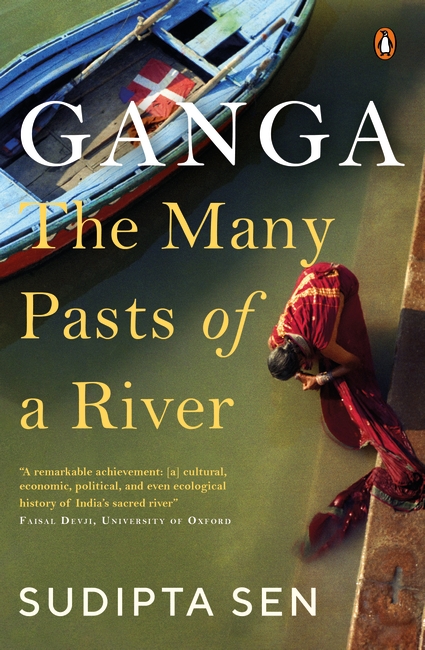
The Ganga enjoys a special place in the hearts of millions. In this unprecedented work, historian Sudipta Sen tells the fascinating story of the world’s third-largest river from prehistoric times to the present.
Sen begins his chronicle with the river’s first settlers, its myths of origin in Hinduism and its significance in popular Buddhism. He traces the communities that arose on its banks, the merchants that navigated its waters and the many empires that shaped the river’s identity. Seamlessly weaving together geography, ecology and religious history, this lavishly illustrated volume paints a remarkable portrait of India’s most sacred and beloved river.
Archives: Books
Shivaji Maharaj (Junior Lives)
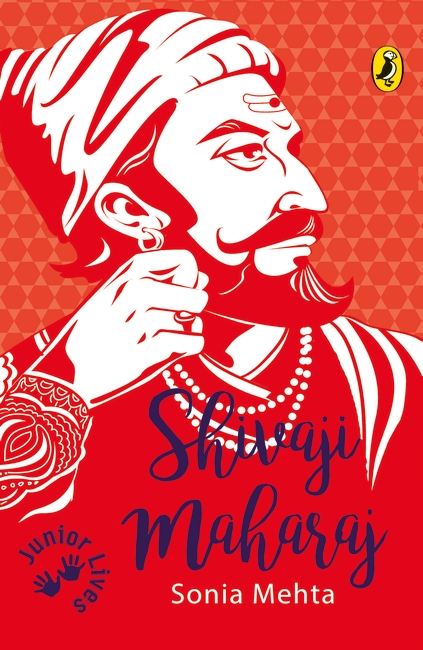
Meet the heroes who changed the world!
In the land of the Marathas, there was once a fearless young ruler called Shivaji. He was known for his bravery and effective war strategies. This young man went on to become Chhattrapati Shivaji Maharaj-one of India’s greatest kings, and a thorn in the side of the mighty Mughal Empire. The Maratha Empire that he established changed the course of India’s history, becoming a major military power.
Fifth in a series of illustrated books created for young readers to get to know our world heroes betters, this engaging biography, peppered with little-known facts, takes the reader through the awe-inspiring journey of Shivaji, built on his determination and valour as well as his exemplary victories.
The Age of Awakening
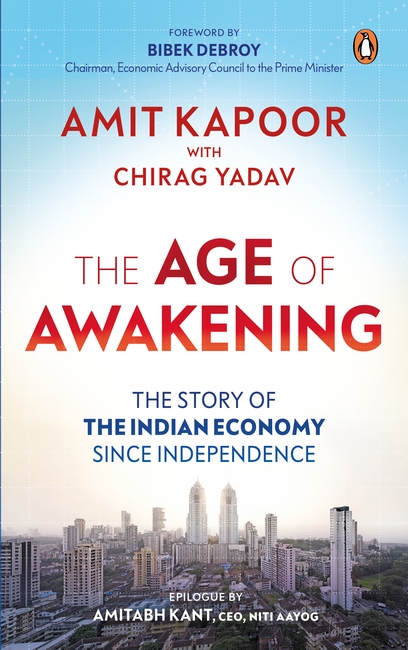
Indian leaders at the time of Independence had their tasks cut out. The nation that was marred by an ugly Partition, had to be prevented from coming apart at the seams. A Constitution had to be framed for a complex society. An election system had to be designed for an electorate that was mostly illiterate. An economic policy had to be shaped for a widely impoverished population.
Among these aspects, the success of India’s economic policy has been debatable. The economic path that India chose at that time is often questioned and criticised. It led to lacklustre growth outcomes which eventually ended in a full-blown crisis in 1991. Since then India has shifted gears. The economy has become more welcoming of the outside world and grown at a pace that has never been witnessed in its history.
But why did India make these choices? What was the role of our political leaders? Where did they falter and where did they succeed?
The Age of Awakening tells India’s economic story since the country gained independence. It unfolds a tale of titanic figures, colossal failures, triumphant breakthroughs and great moral shortcomings. Weaving together vivid history and economic analysis, this book makes for a gripping narrative.
The Girl From Nongrim Hills

Bok, a guitar player with a Shillong band, has a lot on his mind. His elder brother Kitdor has lost 50 lakh rupees on a trip to Nagaland to purchase arms for a group of militants. Kitdor is given a week to repay the money, and the only person he can turn to is his laidback younger brother. Bok is helpless until a chance encounter with a beautiful woman provides him with a desperate solution. But fate can’t be cheated and soon the hapless musician is tangled in her web of lies. He must outmanoeuvre her and the trail of politicians, militants and cops she leaves in her wake, and find the 50 lakh in time if he is to save his brother.
Dark, atmospheric and utterly gripping, The Girl from Nongrim Hills is a superb thriller and a great Shillong novel.
Dead Meat
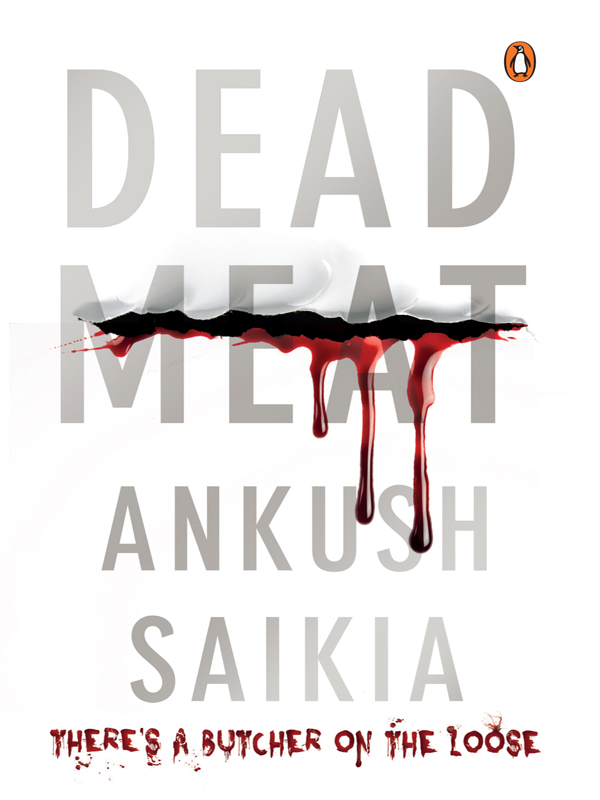
A chopped-up body recovered from a tandoor oven A quiet young accountant missing with a suitcase full of cash Match-fixing and illegal betting in a city in the grip of T20 ever
A lonely detective with a conscience …
Private eye Arjun Arora works the streets of Delhi dealing with the shady underbelly of the capital city. Hired to track down a missing person, Arjun stumbles upon a gruesome murder where the suspects seem to be linked to something larger and more sinister.
Part noir thriller and part detective story, Dead Meat introduces us to an unforgettable character-Arjun Arora, a man with a troubled past-who takes us on a dark and
memorable journey through the greed and grime of today’s urban India.
Part noir thriller and part detective story, Dead Meat
introduces us to an unforgettable character-Arjun Arora,
a man with a bad marriage, a drinking habit, and a troubled
past-who takes us on a dark and dangerous journey
through the grime of today’s urban India.
The Begum
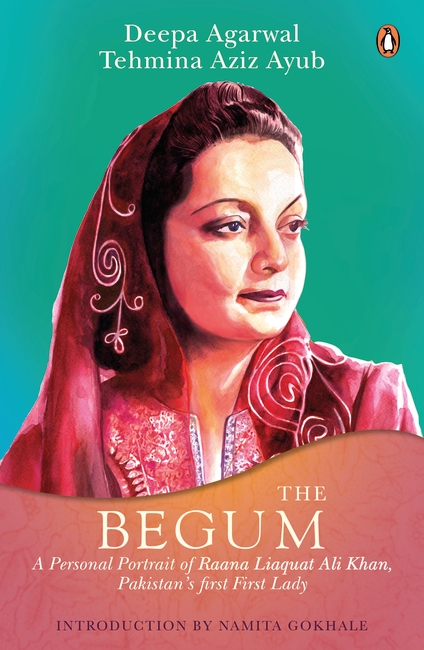
Begum Ra’ana Liaquat Ali Khan was the wife of Pakistan’s first prime minister. She was born
Irene Margaret Pant in Kumaon in the early twentieth century. A generation earlier, her family
had converted to Christianity, and Irene grew up in the shadow of the Brahmin community’s still
active outrage. Always intelligent, outgoing and independent, she was teaching economics in a
Delhi college when she met the dashing Nawazada Liaquat Ali Khan, a rising politician in the Muslim
League and an ardent champion of the cause for Pakistan.
She was immediately inspired by both the man and the idea; they married in 1933 and Irene Pant
became Ra’ana Liaquat Ali Khan. In August 1947 they left for Pakistan-led by Liaquat’s mentor
and friend, Mohammad Ali Jinnah. Ra’ana threw herself into the work of nation building, but in
1951 Liaquat Ali Khan was assassinated, and the reasons for his murder are still shrouded in mystery.
Ra’ana continued to be active in public life-and her contribution to women’s empowerment in
Pakistan is felt to this day.
Ra’ana’s life story embodies all the major tropes of the Indian subcontinent’s recent history.
Three religions-Hinduism, Christianity and Islam-had an immense impact on her life,
and she participated actively in all the major movements of her time-the freedom struggle,
the Pakistani movement and the fight for women’s empowerment. She could see clearly what went
wrong after 1947 and wasn’t afraid to say so. She spoke out openly against the rise of religious
conservatism in Pakistan and the growing role of corruption. She occasionally met with opposition,
but she never gave up. It is this spirit that The Begum captures.
More Bodies Will Fall
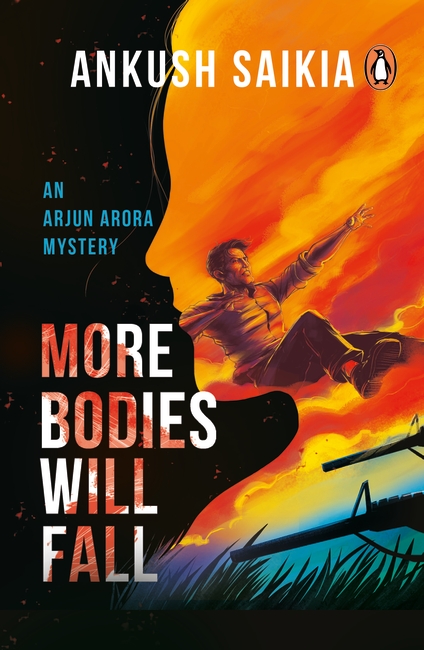
A girl from north-east India is murdered in Delhi. The main suspect is her ‘Indian’ boyfriend, but there isn’t enough evidence to prove his guilt. Amid a growing outcry about police neglect and racial injustice, detective Arjun Arora reluctantly takes on this case. Immediately, he finds himself propelled into a tangled investigation that leads him beyond the hills of Nagaland and Manipur to the Indo-Myanmar border with new suspects emerging at every turn, including an American working at the US Embassy who may or may not be a CIA spy.
The search for answers embroils him in the dangerous new realities of the North-east–riven with strife and suffering–and also brings him face-to-face with an old enemy, culminating in an unexpected climax.
Remember Death
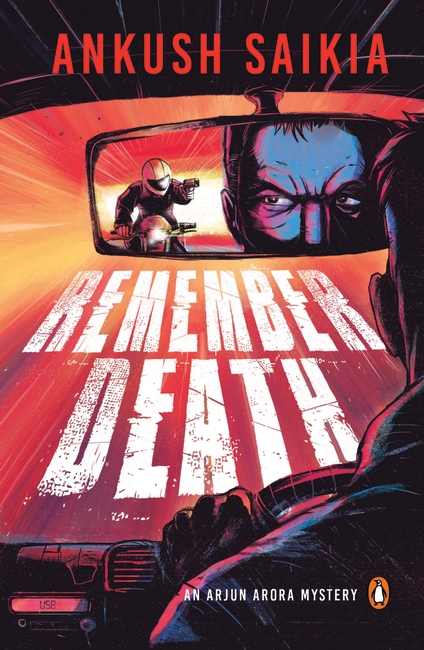
Detective Arjun Arora is summoned to Mumbai to track down an airhostess who has allegedly killed a bar dancer and vanished with a large sum of money. The search for Agnes Pereira leads Arjun on a nationwide hunt. But when their paths finally cross, everything spirals out of control.
From being hunted by a hitman to uncovering a deadly secret that implicates Delhi’s rich and powerful, Arjun’s life becomes an endless nightmare. Haunted by his personal demons and aware of his growing attraction to the beautiful, mysterious Agnes, Arjun realizes that sins from the past always cast their shadow over the present. But the closer he gets to the truth, the more terrifying the threat becomes to both of them.
One Day in the Season of Rain
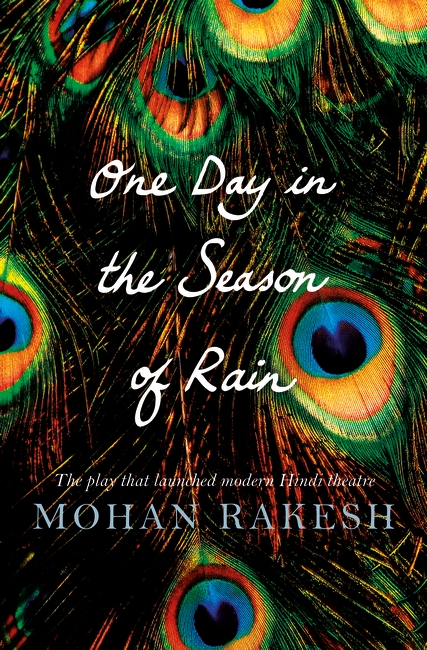
In a remote village in the foothills of the Himalayas, a gifted but unknown poet named Kalidas nurtures an unconventional romance with his youthful muse, Mallika. When the royal palace at Ujjayini offers him the position of court poet, Kalidas hesitates, but Mallika persuades him to leave for the distant city so that his talent may find recognition. Convinced that he will send for her, she waits. He returns years later, a broken man trying to reconnect with his past, only to discover that time has passed him by.
A classic of postcolonial theatre, Mohan Rakesh’s Hindi play is both an unforgettable love story and a modernist reimagining of the life of India’s greatest classical poet. It comes alive again in Aparna and Vinay Dharwadker’s new English translation, authorized by the author’s estate. This literary rendering is designed for performance on the contemporary cosmopolitan stage, and it is enriched by extensive commentary on the play’s contexts, legacy, themes and dramaturgy.
The Great March of Democracy
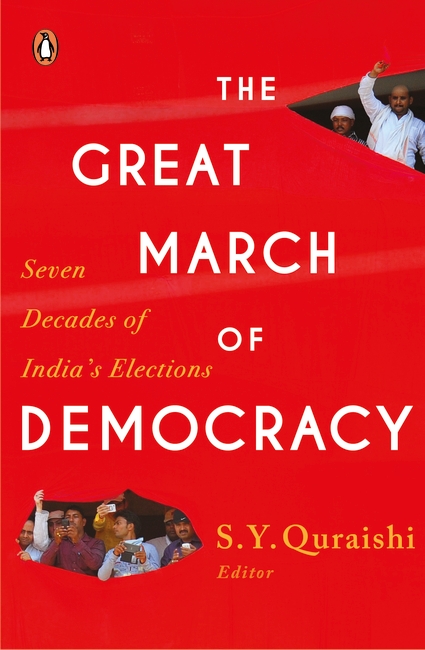
As India gears for its seventeenth Lok Sabha elections in 2019, the Election Commission of India, guardian of the world’s grandest electoral experiment, marks the beginning of its seventieth year. This book celebrates seven decades of India’s vibrant democracy and the Election Commission’s excellence and rigour, with a remarkable collection of essays written by those who have studied India’s unique experiment in electoral democracy, as well as analysts, politicians, social workers, activists, businesspersons and public servants.
The essays in this book cover a range of subjects, from the evolution of the Election Commission, the exciting story of the first electoral roll, election laws, the deepening of democratic institutions over the decades to the participation revolution ushered in by the Election Commission’s untiring and targeted efforts at voter education. Contemporary issues, such as the corrupting influence of money and the creeping criminalization in politics, have been addressed, as have been the electoral reforms proposed by experts on these subjects. There is a peek into how India’s experience with elections has inspired its neighbours Nepal and Bhutan and impacted observers who have had a chance to witness, first-hand, the mammoth exercise held in the largest democracy on the planet.
The diversity of perspectives from keen observers of India’s democracy makes this volume an enthralling read.