



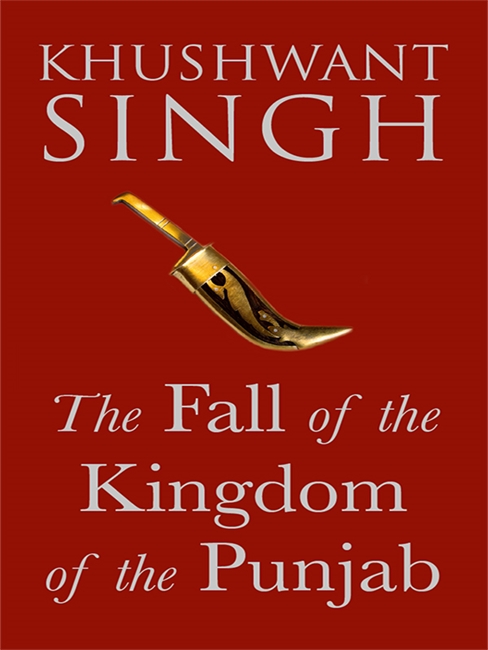
A forgotten classic from India’s favourite storyteller
This riveting historical narrative is more full of drama than any fiction. With the death of Maharaja Ranjit Singh, the great Punjab empire he had built was riven by intrigues, betrayals, assassinations and wars until the British finally annexed it, seizing the Kohinoor diamond and sending the young Maharaja Duleep Singh into exile in Britain. Khushwant Singh brings this turbulent period to vivid life in this page-turning account of the collapse of a once-mighty kingdom.
Archives: Books
Ranjit Singh
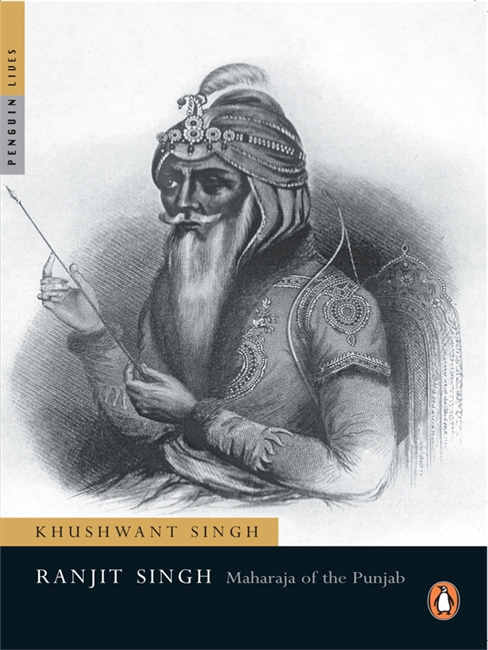
From being a petty chieftain to becoming the most powerful Indian ruler of his time, Ranjit Singh’s empire extended from Tibet to the deserts of Sindh and from the Khyber Pass to the Sutlej. His army was one of the most powerful of the time in Asia and was the first Indian force in a thousand years to stem the tides of invasion from the north-west frontiers of Hindustan.
In this first detailed biography of the first and only Sikh ruler of the Punjab, Khushwant Singh presents Ranjit Singh as he really was. Based on Persian, Punjabi and English sources, and drawing upon the diaries and accounts of European travellers, this is a memorable account of the pageantry and brilliance of the Sikh kingdom at the height of its power, and a lively portrait of one of the most colourful characters in Indian history.
Not A Nice Man To Know
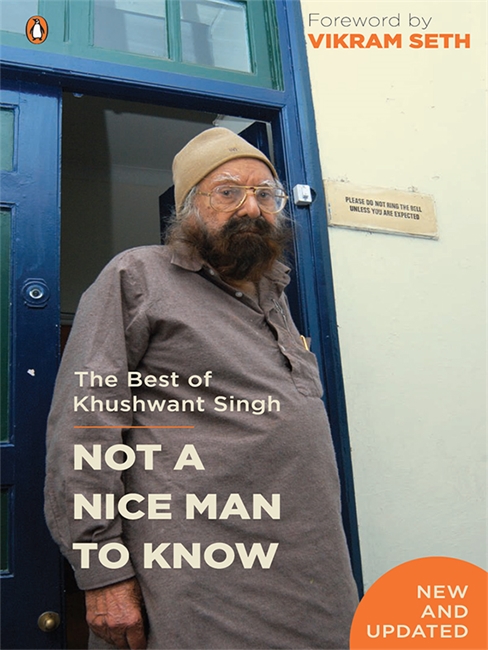
In an essay in this anthology, Khushwant Singh claims that he is not a nice man to know. Whatever the truth of that assertion, there is little question about his skill as a witty, eloquent and entertaining writer. This book collects the best of over three decades of the author’s prose, including his finest journalistic pieces, short stories, translations, jokes, plays as well as excerpts from his non-fiction books and novels. Taken together, the pieces in this selection (some of which have never been published before) show just why Khushwant Singh is the country’s most widely read columnist and one of its most celebrated authors.
Absolute Khushwant
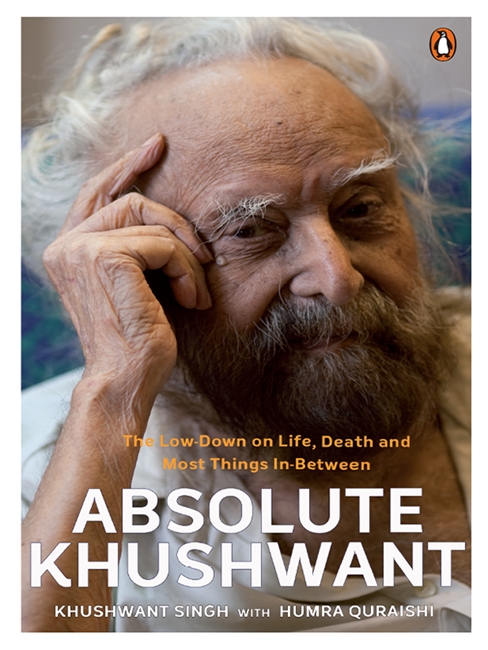
I would like to be remembered as someone who made people smile.’ One of the great icons of our time, Khushwant Singh, 95, is a man of contradictions. An agnostic who’s well-versed in the holy scriptures; a vocal champion of free speech who supported the Emergency; a ‘dirty old man’ who sees ‘the world in a grain of sand and beauty in a wild flower’. Born in 1915 in pre-Partition Punjab, Khushwant Singh has been witness to almost all the major events in modern Indian history and has known most of the figures who have shaped it. In a career spanning over six decades as writer, editor and journalist, his views have been provocative and controversial, but they have also been profound, deeply perceptive and always compelling. Khushwant Singh has never been less than honest. In Absolute Khushwant, India’s grand old man of letters tells us about his life, his loves and his work. He writes on happiness, faith and honesty. And, for the first time, about his successes and failures, his strengths and weaknesses, his highs and lows. He tells us what makes him tick and the secret of his longevity; he confesses his deepest fears and what he holds dear. He writes about sex, marriage, worship and death; the people he’s admired and detested. With personal anecdotes and rare photographs, Absolute Khushwant is uncompromising, moving, and straight from the heart.
Truth, Love & A Little Malice
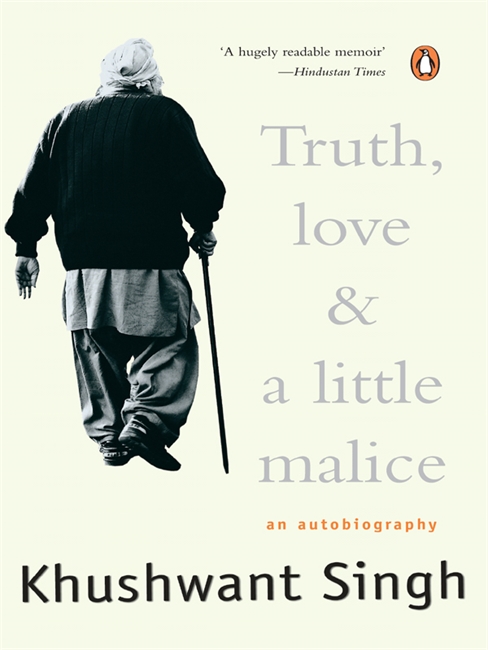
Born in 1915 in pre-Partition Punjab, Khushwant Singh, perhaps India’s most widely read and controversial writer has been witness to most of the major events in modern Indian history from Independence and Partition to the Emergency and Operation Blue Star and has known many of the figures who have shaped it. With clarity and candour, he writes of leaders like Jawaharlal Nehru and Indira Gandhi, the terrorist Jarnail Singh Bhindranwale, the talented and scandalous painter Amrita Shergil, and everyday people who became butchers during Partition.
Writing of his own life, too, Khushwant Singh remains unflinchingly forthright. He records his professional triumphs and failures as a lawyer, journalist, writer and Member of Parliament; the comforts and disappointments in his marriage of over sixty years; his first, awkward sexual encounter; his phobia of ghosts and his fascination with death; the friends who betrayed him, and also those whom he failed.
The Yogini
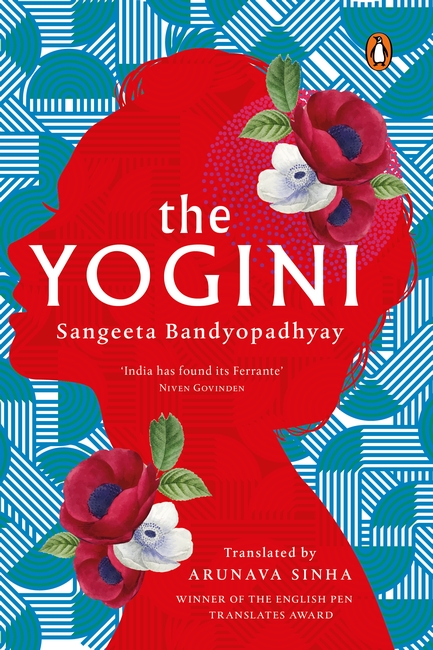
With her days split between a passionate marriage and a high-octane television studio job, Homi is a thoroughly modern young woman-until one day she is approached by a yogi on the street. This mysterious figure begins to follow her everywhere, visible only to Homi, who finds him both frightening and inexplicably arousing.
Convinced that the yogi is a manifestation of fate, Homi embarks on a series of increasingly desperate attempts to prove that her life is ruled by her own free will, much to the alarm of her no-nonsense husband and cattily snobbish mother. Her middle-class Kolkata life, and the relationships that define her identity, are disturbed to the point of disintegration.
Following the inexorable pull of tradition, the mystic forces that run beneath the shallow surface of our modern existence like red earth beneath the pavements, Homi ends up in Benaras, the holy city on the banks of the Ganga, where her final battle with fate plays out.
Sources of Indian Traditions
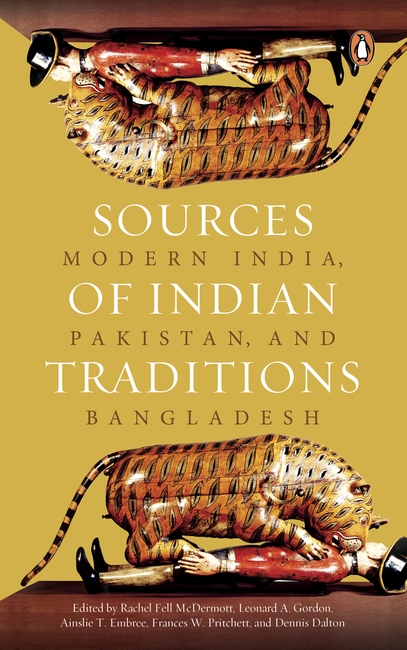
An accessible yet thorough introduction to Indian civilizations
Sources of Indian Traditions is an indispensable and essential selection of primary readings on the social, intellectual, and religious history of India from the decline of Mughal rule in the eighteenth century to today. It details the advent of the East India Company, British colonization, the struggle for liberation, the partition of 1947, and the creation of Pakistan, Bangladesh, and contemporary India.
Divided thematically, it begins with a chapter on eighteenth-century intellectual and religious trends that set the stage for India’s modern development. Nineteenth-century debates over social reform, featuring the leaders of reform and revival movements, follow. Chapters on Gandhi and his reception both nationally and abroad, and different perspectives on and approaches to partition, precede a section devoted to the drafting of the Indian constitution, the rise of nationalism, the influence of Western thought, the conflict in Kashmir, nuclear proliferation, minority religions, secularism, and the role of the Indian political left. The last two sections portray Pakistan and its struggle for national identity, and Bangladesh and the controversies over the fruits of freedom.
The Cousins Thackeray
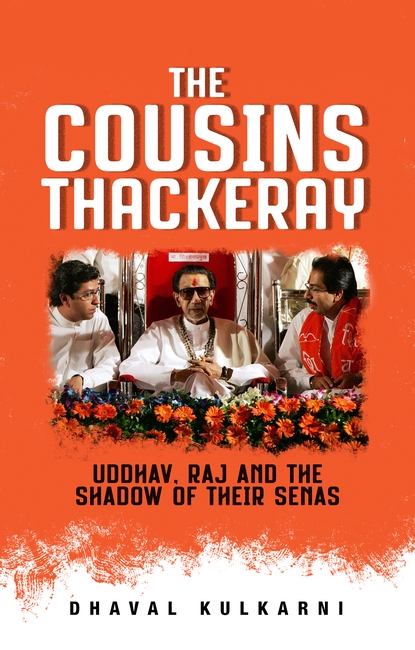
They are first cousins twice over, but have had widely divergent political trajectories. One, an abrasive, fire-breathing demagogue, was seen as his uncle’s political heir whose behavioural traits he cultivated. The other, an introvert, is at his best when plotting strategies on the drawing board rather than the rough-and-tumble of street-corner politics that his party is known for in India’s financial capital.
Starting out as brothers-in-arms, they had a bitter falling out over inheriting the party mantle. The younger cousin branched out on his own, hijacked the populist, ethno-centric plank of his parent party, putting his cousin-turned-political foe on the defensive. A series of miscalculations later, the boot seems to be on the other foot. The elder cousin has managed to keep his flock together and cemented his position as his late father Bal Thackeray’s political heir, while the other, one of the most popular crowd-pullers in Maharashtra, is itching for an electoral comeback.
The Cousins Thackeray evaluates the political careers of Shiv Sena president Uddhav Thackeray and Maharashtra Navnirman Sena (MNS) chief Raj Thackeray. It also examines questions about identity politics, and the social, cultural and economic matrix that catalysed the formation of the Shiv Sena and the MNS from it. Above all, it is a look at what makes the Thackeray cousins so integral to the politics of India, Maharashtra and Mumbai.
The Daughter from a Wishing Tree
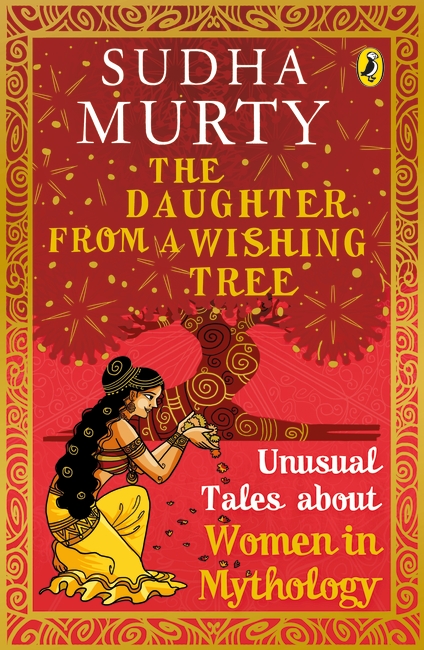
Did you know that the Trinity often turned to goddesses to defeat the asuras?
Did you know that the first clone in the world was created by a woman?
The women in Indian mythology might be fewer in number, but their stories of strength and mystery in the pages of ancient texts and epics are many. They slayed demons and protected their devotees fiercely. From Parvati to Ashokasundari and from Bhamati to Mandodari, this collection features enchanting and fearless women who frequently led wars on behalf of the gods, were the backbone of their families and makers of their own destinies.
India’s much-loved and bestselling author Sudha Murty takes you on an empowering journey
-through the yarns forgotten in time-abounding with remarkable women who will remind you of the strong female influences in your life.
The Shooting Star

Shivya Nath quit her corporate job at age twenty-three to travel the world. She gave up her home and the need for a permanent address, sold most of her possessions and embarked on a nomadic journey that has taken her everywhere from remote Himalayan villages to the Amazon rainforests of Ecuador. Along the way, she lived with an indigenous Mayan community in Guatemala, hiked alone in the Ecuadorian Andes, got mugged in Costa Rica, swam across the border from Costa Rica to Panama, slept under a meteor shower in the cracked salt desert of Gujarat and learnt to conquer her deepest fears.
With its vivid descriptions, cinematic landscapes, moving encounters and uplifting adventures, The Shooting Star is a travel memoir that maps not just the world but the human spirit.