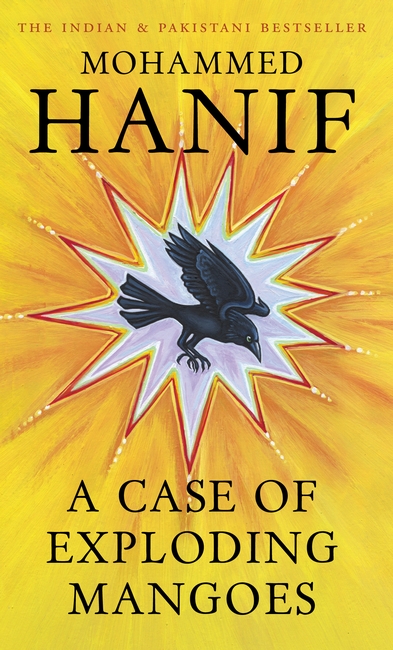
In August 1988, Zia gets into the presidential plane, Pak One, which explodes midway. Who killed him? The army generals growing old waiting for their promotions, the CIA, the ISI, RAW, or Ali Shigri, a junior officer at the military academy whose father, a whisky-swilling jihadi colonel, was murdered by the army?
A Case of Exploding Mangoes is sharp, black, inventive, and utterly gripping. It marks the debut of a brilliant new writer

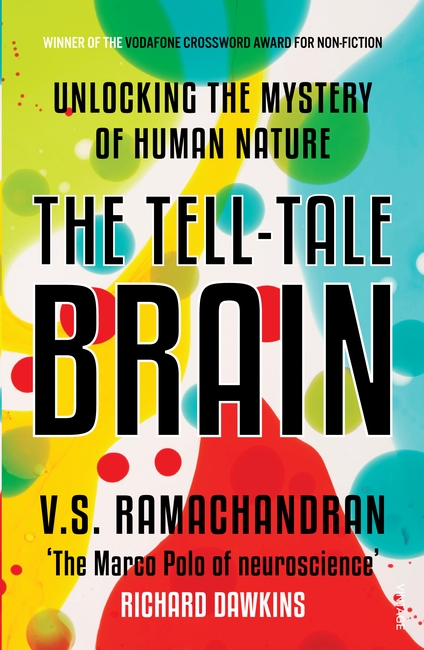
The brain remains a mystery to us. How can a three-pound mass of jelly that can fit in our palm imagine angels, contemplate the meaning of infinity, and even question its own place in the cosmos? Renowned neuroscientist Prof. V.S. Ramachandran takes us on a fascinating journey into the human brain by studying patients who exhibit bizarre symptoms and using them to understand the functions of a normal brain. Along the way he asks big questions: How did abstract thinking evolve? What is art? Why do we laugh? How are these hardwired into the neural mechanisms of the human brain, and why did they evolve? Brilliant, lucid, and utterly compelling, The Tell-Tale Brain is a path-breaking book from one of the leading neuroscientist

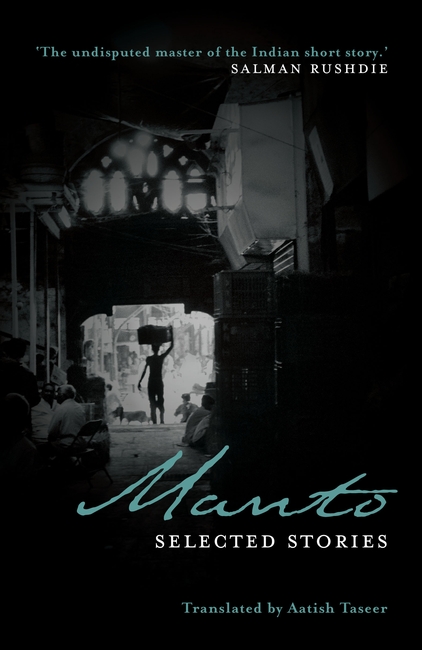
The gentle dhobi who transforms into a killer, a prostitute who is more child than woman, the cocky, young coachman who falls in love at first sight, a father convinced that his son will die before his first birthday. Saadat Hasan Manto’s stories are vivid, dangerous and troubling and they slice into the everyday world to reveal its sombre, dark heart. These stories were written from the mid 30s on, many under the shadow of Partition. No Indian writer since has quite managed to capture the underbelly of Indian life with as much sympathy and colour. In a new translation that for the first time captures the richness of Manto’s prose and its combination of high emotion and taut narrative, this is a classic collection from the master of the Indian short story.
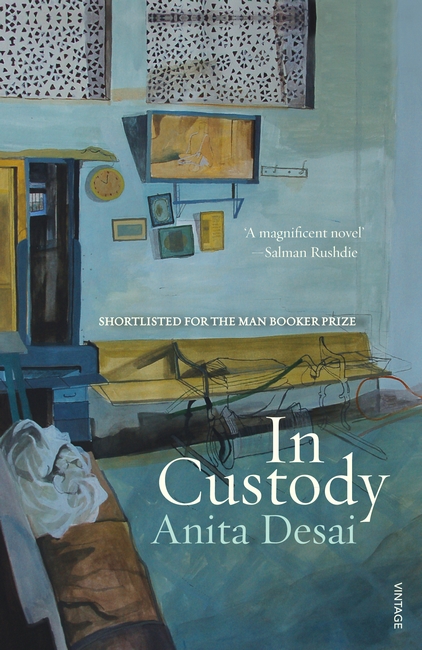
In this sensitive portrayal of human nature, Anita Desai, one of India’s foremost writers, paints an intimate portrait of lives impacted by the quest for identity and purpose. Deven, a Hindi lecturer in small-town Mirpore, lives a humdrum existence. A chance to interview Nur—India’s greatest living Urdu poet—offers him an escape from his dreary life. But the Nur he meets is an enfeebled man, surrounded by clashing wives and preying sycophants. Deven’s decision to be the custodian of Nur’s verse gives birth to an unusual alliance between the two. Stimulating and thought provoking, In Custody is a brilliant parable lamenting the gradual corrosion of culture and tradition in the face of modernity, and a dazzling study of the complexity of human relationships.

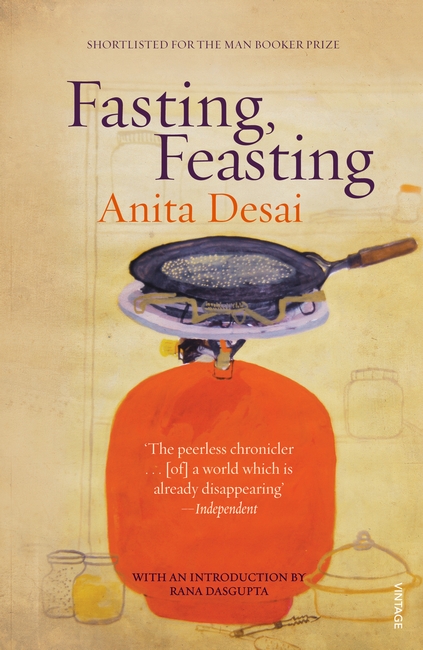
Plain, unmarriageable Uma has failed to outgrow her childhood home, with its bittersweet treats of puri-alu and barfi. Overprotected and starved for a life, she is smothered by her overbearing parents, successful sister Aruna, and Arun, the family’s disappointment of a son. Across the world in Massachusetts, where Arun has gone as a student, family life in an American suburb is bewilderingly different. The Pattons, who he lives with, appear strange and terrible. The women don’t appear to cook at all, though they stuff their shopping carts; the men barbecue huge chunks of meat; their daughter binges on innumerable candy bars. Increasingly, Mrs Patton is desperate to be a vegetarian, like Arun. But what Arun wants most is to be invisible. Moving from a traditional Indian household to an American one, Fasting, Feasting is a powerful exploration of hunger and plenty, and one of Anita Desai’s most socially acute novels.

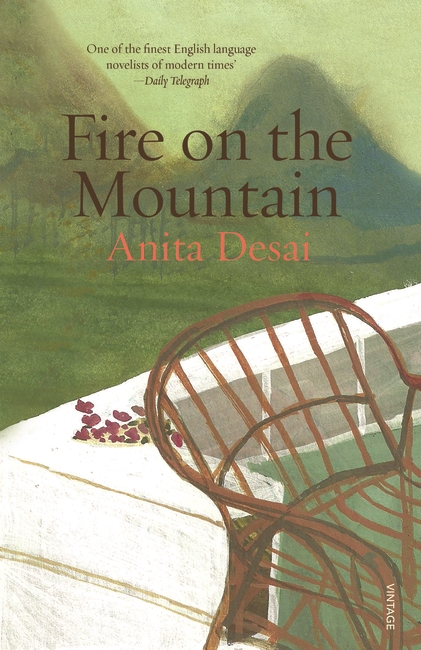
Gone are the days when Nanda Kaul watched over her family and played the part of Vice-Chancellor’s wife. Leaving her children behind in the real world, the busier world, she has chosen to spend her last years alone in the mountains in Kasauli, in a secluded bungalow called Carignano. Until one summer her great-granddaughter Raka is dispatched to Kasauli – and everything changes. Nanda is at first dismayed at this break in her preciously acquired solitude. Fiercely taciturn, Raka is, like her, quite untamed. The girl prefers the company of apricot trees and animals to her great-grandmother’s, and spends her afternoons rambling over the mountainside. But the two are more alike than they know. Throughout the hot, long summer, Nanda’s old, hidden dependencies and wounds come to the surface, ending, inevitably, in tragedy. Marvellous yet restrained, Fire on the Mountain speaks of the past and its unshakable hold over the present.

Freshly arrived in 1930s Bombay, Manto saw the city like no one else, an ethnic melting pot that became ever more varied as migrant workers flooded in. It was to be Manto’s favourite city. His edgy, moving stories, often peopled with prostitutes and criminals, remain startling and provocative even a hundred years after his birth – in searching out those forgotten by humanity, Manto wrote about what it means to be human. At his centenary, Bombay Stories brings together Manto’s work from his years in that city for the first time. Matt Reeck and Aftab Ahmad’s contemporary, nuanced translation captures the idiom and the essence of Urdu’s most celebrated short-story writer’s work.
Censored, banned, demonized and ostracized: Saadat Hasan Manto’s short stories were considered obscene and downright dangerous during his lifetime and for years after. They still haven’t lost their power to shock and enthrall.
While their parents went to parties at Delhi’s Roshanara Club, the children of the Das family brought themselves up, reading Byron, listening to the gramophone, and watching over sad, alcoholic Mira masi. Many years later, the youngest, Tara—now a mother of two—has returned from America to the scene of her unusual, lonesome childhood.
Here, as always, is her sister Bim, doggedly single college-lecturer and caretaker of all. In her presence, Tara sinks into the blissful torpor of home, at once her dreamy old self but careful as ever around her older sister. For at the heart of this reunion are numerous tensions: Tara feels the persistent guilt of having, like the others, abandoned Bim; their autistic brother Baba is increasingly unquiet; and Bim has not spoken to their other brother, Raja, for years and refuses to go to his daughter’s wedding.
Clear Light of Day is vintage Anita Desai, a novel as wonderfully contemplative as a cup of afternoon tea.

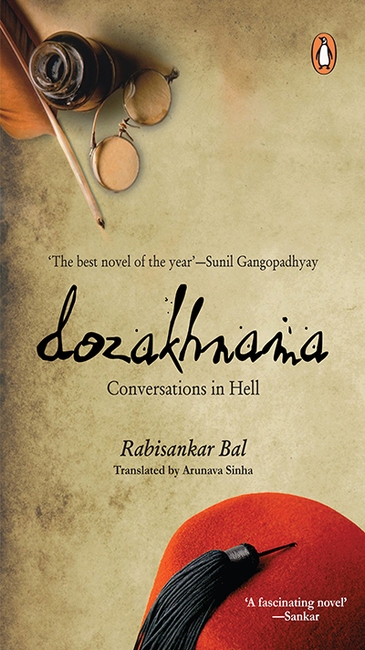
Dozakhnama: Conversations in Hell is an extraordinary novel, a biography of Manto and Ghalib
and a history of Indian culture rolled into one.
Exhumed from dust, Manto’s unpublished novel surfaces in Lucknow. Is it real or is it a fake? In this dastan, Manto and Ghalib converse, entwining their lives in shared dreams. The result is an intellectual journey that takes us into the people and events that shape us as a culture. As one writer describes it, ‘I discovered Rabisankar Bal like a torch in the darkness of the history of this subcontinent. This is the real story of two centuries of our own country.’
Rabisankar Bal’s audacious novel, told by reflections in a mirror and forged in the fires of hell, is both an oral tale and a shield against oblivion. An echo of distant screams. Inscribed by the devil’s quill, Dozakhnama is an outstanding performance of subterranean memory.

• Rita, the young bahu, avoids buying personal products from the family grocer.
• Sonu’s breakfast table on a Sunday represents global cuisines. Do you know how it is possible?
• Where do big corporates and MNC retailers fumble, and what helps simple DMart get its model right?
• What is Ching’s Sercret that is not Knorr’s, Maggi’s, or Yippie’s?
Supermarketwala, Damodar Mall’s intriguing and revelatory debut book, answers these questions and much more. Damodar, in Supermarketwala, provides the very basics for the growth of modern retail and consumerism in India, through interesting and carefully studied consumer behaviour, an art that few in his domain possess.
Supermarketwala, is intended to be the go-to book for all consumer business enthusiasts and readers alike, who wish to understand how and why we as consumers behave in a certain manner at different places. These insights, which are the analyses of the sector so far, could become the pillars for shaping successful consumer products and retail businesses in the huge consumer economy that India will soon be.