



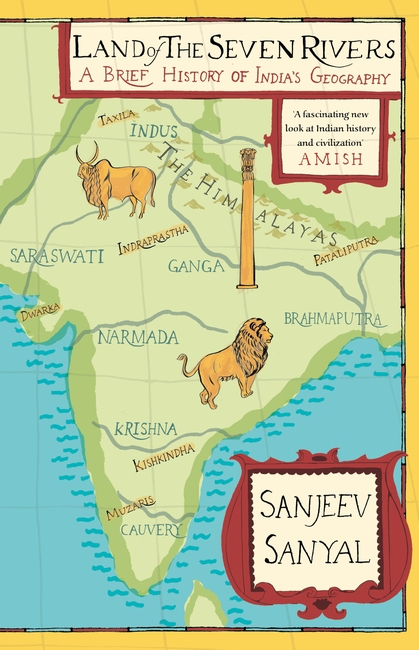
DID THE GREAT FLOOD OF INDIAN LEGEND ACTUALLY HAPPEN?
WHY DID THE BUDDHA WALK TO SARNATH TO GIVE HIS FIRST SERMON?
HOW DID THE EUROPEANS MAP INDIA?
The history of any country begins with its geography. With sparkling wit and intelligence, Sanjeev Sanyal sets off to explore India and look at how the country’s history was shaped by, among other things, its rivers, mountains and cities. Traversing remote mountain passes, visiting ancient archaeological sites, crossing rivers in shaky boats and immersing himself in old records and manuscripts, he considers questions about Indian history that we rarely ask: Why do Indians call their country Bharat? How did the British build the railways across the subcontinent? Why was the world’s highest mountain named after George Everest?
Moving from the geological beginnings of the subcontinent to present-day Gurgaon, Land of the Seven Rivers is riveting, wry and full of surprises. It is the most entertaining history of India you will ever read.
Archives: Books
No More Questions
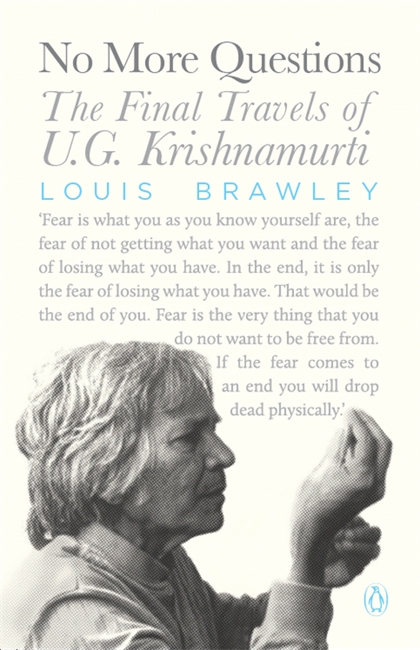
The way he lived, his living quarters and his mode of expression were one continuous movement, a three dimensional, living book of teaching.’
Louis Brawley met U.G. Krishnamurti or UG in 2002 and spent the following five years travelling with him in the USA, India and Europe. He soon became the foil to UG’s bizarre interactions with his friends and audience and, as UG’s health deteriorated, his informal caregiver. No More Questions chronicles Louis’s life with this remarkable ‘non-teacher’.
As much a story of Louis’s own struggles and shortcomings as that of sage and devoted follower, the book describes how his ideas about life, love and enlightenment were tossed around and demolished by UG. Out of this churning a layered portrait emerges of the man who gave up everything for truth but delighted in ridiculous fabrications; one who mocked do-gooders but was deeply kind, who decried the supernatural, yet strange coincidences happened around him.
Flora’s Empire
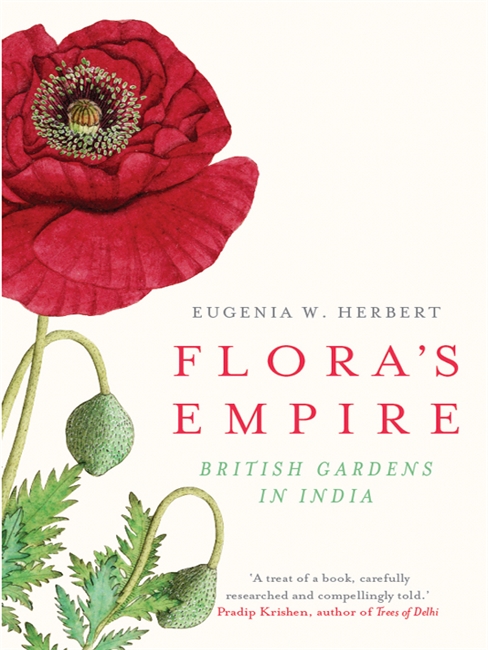
The British created gardens in India not just out of simple nostalgia or homesickness, but also to put a visible stamp of ‘civilization’ on an alien, untamed land. Colonial gardens changed over time, from the ‘garden houses’ of the East India Company’s nabobs modelled on English country estates, and hill station cottages where English flowers could be coaxed into bloom, to the neat flowerbeds,
gravel walks, well-trimmed lawns and hedges of the Victorian sahibs. Every Government House, Civil Lines bungalow and cantonment was carefully landscaped to reflect current ideals of an ordered society. The British also made India part of the global network of botanical exploration and plant-collecting, and developed tea gardens and opium-poppy plantations to fill the coffers of the Empire.
More than sixty years after the British left, their garden legacy still lives on, reflected in the design of municipal parks and IT campuses, and in the tastes and practices of countless Indian home gardeners
who take pride in their green lawns and flowerbeds full of English flowers.
Priya
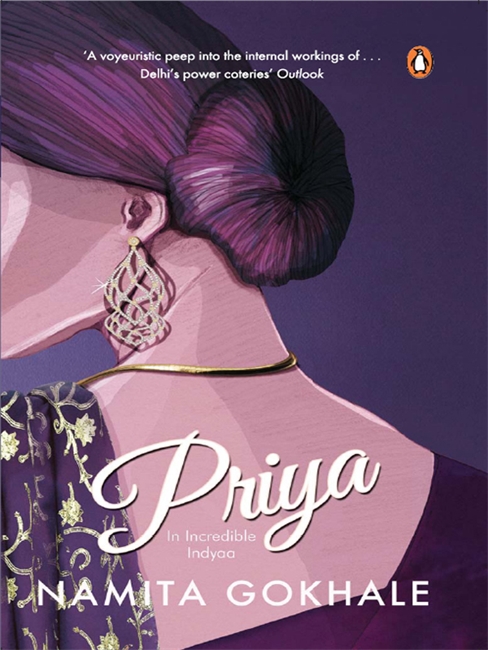
India is shining, and Suresh Kaushal, the stout lawyer -of sober habits’, has propelled himself up the political ladder to become Minister of State for Food Processing, Animal Husbandry, Fisheries and Canneries. His wife Priya can’t believe their luck and, determined to ensure it doesn’t run out, struggles valiantly with -social vertigo’, infidelity and menopause. Along the way she also learns vital lessons on survival, as she watches her glamorous new friend Pooonam chase status, sex and Jimmy Choo shoes, and her radical old friend Lenin ride a donkey and lose his bearings. In this wickedly funny, occasionally tender, book, Namita Gokhale resurrects some unforgettable characters from her 1984 cult bestseller Paro, and plunges them neck-deep into Delhi’s toxic waste of power, money and greed.
Stringer

Stringer is an account of a year and a half that Sundaram spent in the country working for the Associated Press. It was an intense period that would take him deep into the shadowy city of Kinshasa, the dense rainforests that still evoke Conrad’s vision, and the heart of Africa’s great war, culminating in the historic and violent multiparty elections of 2006. Along the way he would go on a joyride with Kinshasa’s feral children, fend off its women desperate for an escape route, and travel with an Indian businessman hunting for his fortune.
Written with startling beauty and acuity, Stringer is a superb piece of reportage. It marks the debut of a breathtaking new talent.
Zen
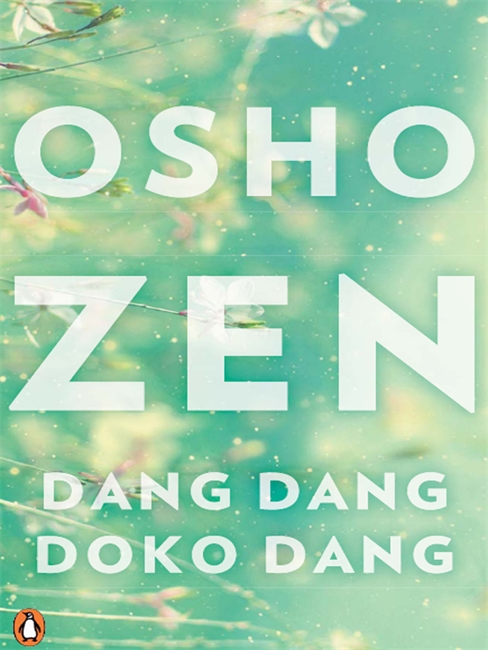
Learn how to free your mind
In these lectures on Zen, Osho shows the way to self-realization without believing in any God. He argues that the mind is increasingly our barrier to happiness and truth and that Zen teaches you how to detach yourself from it. By doing so, you have the chance to truly experience yourself and to connect with your own being. This is the heart of Zen thought and Osho calls it the religion of the future-a vision that goes beyond organized religion to an individual ‘religiousness’.
Lucid and profound, and told with great simplicity, Zen: Dang Dang Doko Dang is an utterly inspiring book from one of our great spiritual masters. It will transform the way you live and perceive the world.
The Rainbow Troops

Ikal is one of the ten students of the Muhamaddiyah School, the oldest and poorest school in the Indonesian tin-mining island of Belitong. Like him, his classmates are from the most downtrodden families in the region. But the school has two weapons-its teacher Bu Mus, a slight fifteen-year-old girl with burning courage and a passion for education, and Lintang, the boy genius who inspires his classmates to dream and fight their destiny. Soon the island’s underdogs become its champions.
Incredibly moving and full of hope, The Rainbow Troops swept Indonesia off its feet, selling over five million copies and becoming the highest-selling book in its history. It will sweep you away too.
You Stole My Song
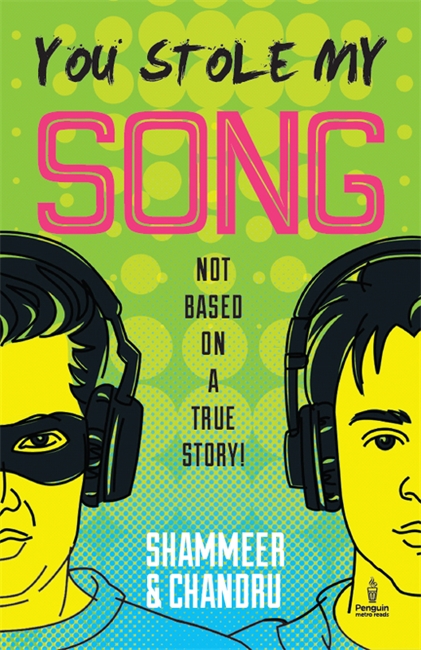
Nitin is thrilled to join the No. 1 Bollywood music composer Sunil Kumar. And it looks as though the love of his life, Aditi, has feelings for him too. He is feeling on top of the world.
But all his dreams come crashing down one after another. Aditi breaks up with him. Sunil steals Nitin’s song Zero fikar and passes it off as his own. It goes viral-two million hits in two days!
At this point, the only person who is willing to help Nitin is his friend Govinda, whose aim in life is to win Baddies on YTV and get a girlfriend of his own. Things certainly don’t look good for Nitin!
WILL HE BE ABLE TO GET BACK AT SUNIL?
CAN HE EXPOSE THE PLAGIARISM RAMPANT IN THE
BOLLYWOOD MUSIC SCENE? WILL HE BE ABLE
TO WIN BACK THE GIRL OF HIS DREAMS?
Vanished
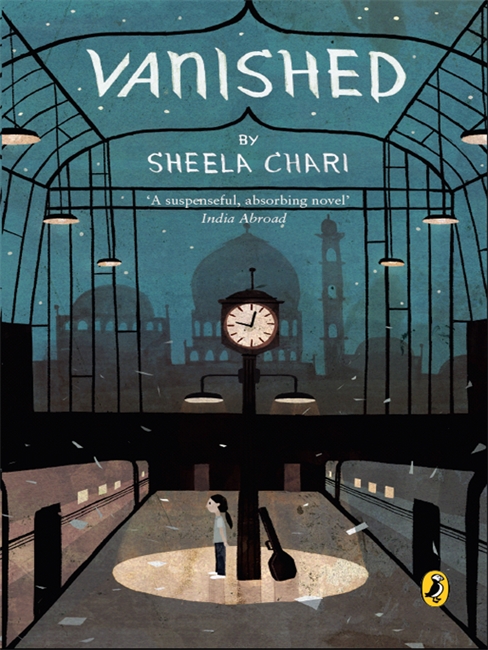
The veena had vanished . . . again? There are no coincidences.
Eleven-year-old Neela dreams of being a famous musician-until her instrument goes missing. It was a gift from her grandmother, an antique veena, intricately carved with a mysterious dragon.What Neela soon discovers is that the veena’s vanishing is no accident but part of a chain of disappearances involving a dead musician, a new girl at school, and an age-old curse. On a journey that takes her from Harvard Square to Chennai, Neela sets out to find her precious veena, learn the truth behind the curse, and discover what it means to be a true musician.
Will Neela be able to track down her family heirloom and stop it from disappearing again?
Real Time
Amit Chaudhuri’s stories range from a divorcée about to enter into an arranged marriage to a teenaged poet who develops a relationship with a lonely widower, from a singing teacher struggling to make a living out of the boredom of his students to a gauche teenager desperate to hurdle past his adolescence. Ripe with subtlety, elegance and deep feeling, this is vintage Chaudhuri.