




The first of the three extraordinary plays written by Gurcharan Das in his twenties is Larins Sahib, a historical play set in the 1840s — a confused period after the death of Ranjit Singh when the British first arrived in the Punjab. The second play is Mira, which explores what it means for a human being to become a saint through the story of Mirabai, the sixteenth-century Rajput princess-poet. 9 Jakhoo Hill, the third play in this volume, is set in the autumn of 1962 in Simla. It examines a number of themes, including the changing social order with the rise of a new middle class (while the old class foolishly clings on to spent dreams), the hold of Indian mothers on their sons, and the eventual betrayal of sexual hurt. This trio of unusual plays will fascinate readers and theatre buffs alike.
Archives: Books
A Fine Family
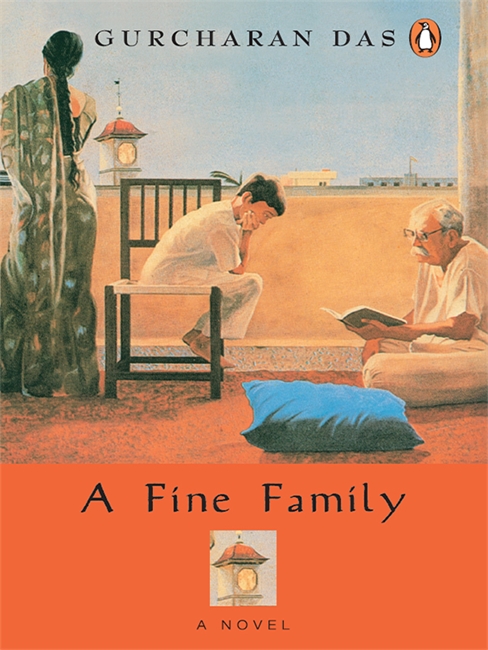
This majestic novel by the author of India Unbound is the extraordinary chronicle, rich in passion and incident, of a Punjabi family that is uprooted from its settled existence in Lyallpur by the violence of Partition and forced to flee to India. Everything is lost in the transition, but when a son is born into the family, hopes revive of rebuilding the family’s fortunes, the efforts towards which mirror those of India itself as it struggles to build itself anew.
The First Sikh
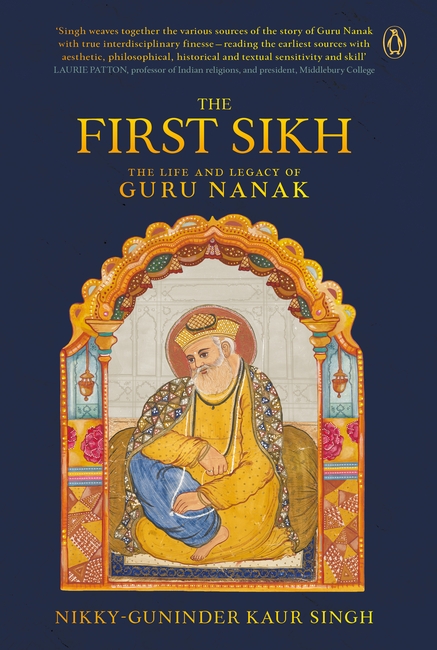
In this highly accessible and comprehensive biography, Nikky-Guninder Kaur Singh deftly mines the available sources to construct a vivid and complex account of Guru Nanak’s life and legacy, his personality and background, the pluralistic world he lived in, his teachings and philosophy, and even the manner in which he has been understood by believers and scholars over time. What emerges is a majestic and magisterial portrait of a great enlightener who not only founded one of the world’s major religions but whose singular message of unity and hope has endured centuries after he first walked the earth.
The First Sikh unites rigorous scholarship with a deep love for the subject, offering fascinating insights into Guru Nanak’s life and times even as it explores key facets of Sikhism. Moreover, it shows us how Guru Nanak continues to remain relevant in a twenty-first-century reality.
Govinda
For generations, the Firstborn dynasty of scholar-sages, descendants of Vasishta Varuni and protectors of the Divine Order on earth, has dominated here. For just as long, the Angirasa family of Firewrights, weapon-makers to the kings and master inventors, has defied them. In the aftermath of the centuries-long conflict between the two orders, the once-united empire of Aryavarta lies splintered, a shadow of its former glorious self.
Now, the last Secret Keeper of the Firewrights is dead, killed by an unknown hand, and the battle for supreme power in the empire is about to begin. As mighty powers hurtle towards a bloody conflict, Govinda Shauri, cowherd-turned-prince and now Commander of the armies of Dwaraka, must use all his cunning to counter deception and treachery if he is to protect his people and those whom he loves.
But who holds the key to the fantastic and startling knowledge of the Firewrights, which in the wrong hands will bring doom upon the empire? And does Govinda have it in him to confront the dark secrets of his past and discover the true meaning of being Arya, of being noble?
Here, There and Everywhere
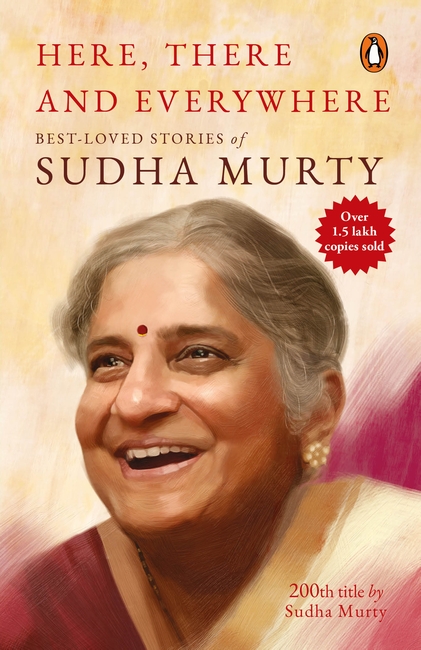
Wearer of many hats-philanthropist, entrepreneur, computer scientist, engineer, teacher-Sudha Murty has above all always been a storyteller extraordinaire. Winner of the R.K. Narayan Award for Literature, the Padma Shri, the Attimabbe Award from the government of Karnataka for excellence in Kannada literature, and the Raymond Crossword Lifetime Achievement Award, her repertoire includes adult non-fiction, adult fiction, children’s books, travelogues and technical books. Here, There and Everywhere is a celebration of her literary journey and is her 200th title across genres and languages. Bringing together her best-loved stories from various collections alongside some new ones and a thoughtful introduction, here is a book that is, in every sense, as multifaceted as its author.
Shehnaz
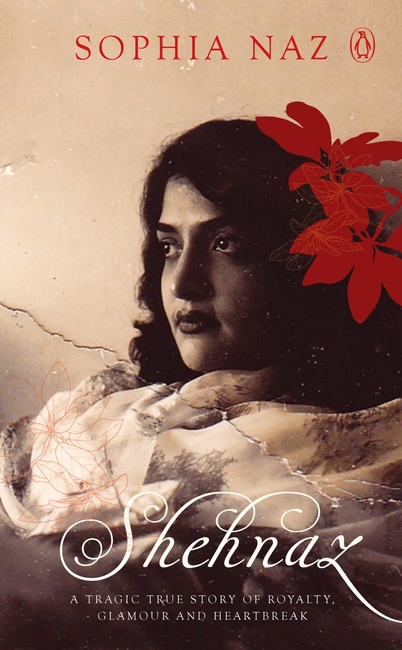
Shehnaz was a beautiful, erudite woman from the royal family of Bhopal, who was almost cast to play Anarkali in K. Asif’s Mughal-e-Azam. Her daughter Sophia Naz tells her story as she heard it from her-about her childhood as part of the royal household in Bhopal, where she led a revolt among the women for their right to be educated before being married, her glamorous life in Mumbai that hid the reality of an abusive first marriage that left her emotionally and physically traumatized, her divorce during which she lost custody of both her children to her husband, her second marriage to an army doctor in Pakistan, and her life thereafter.
As a child, the author accompanied her mother every year to Mumbai, where she would try to find some trace of her children in vain. Though remarried and with a new family, Shehnaz pined for her older children all her life, the pain lending a near-permanent patina of grief to her life. She finally met her children after twenty-one years, in the US. Her son refused to recognize her, saying he had no memory of her. Her daughter did remember her, though their reunion was brief, with the father exerting his will and threatening to disown the children if they had anything to do with their mother. When Shehnaz passed away, it was with her older daughter’s name on her lips.
Bombay Before Mumbai
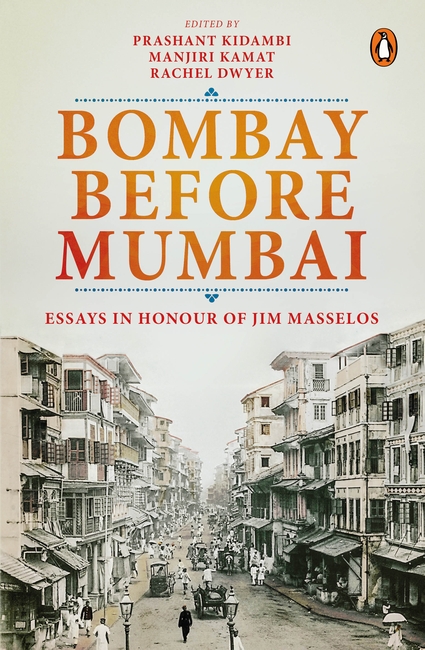
‘City of Gold’, ‘Urbs Prima in Indis’, ‘Maximum City’: no Indian metropolis has captivated the public imagination quite like Mumbai. The past decade has seen an explosion of historical writing on the city that was once Bombay. This book, featuring new essays by its finest historians, presents a rich sample of Bombay’s palimpsestic pasts. It considers the making of urban communities and spaces, the workings of power and the nationalist makeover of the colonial city. In addressing these themes, the contributors to this volume engage critically with the scholarship of a distinguished historian of this frenetic metropolis. For over five decades, Jim Masselos has brought to life with skill and empathy Bombay’s hidden histories. His books and essays have traversed an extraordinarily diverse range of subjects, from the doings of the city’s elites to the struggles of its most humble denizens. His pioneering research has opened up new perspectives and inspired those who have followed in his wake. Bombay Before Mumbai is a fitting tribute to Masselos’ enduring contribution to South Asian urban history.
Pather Panchali
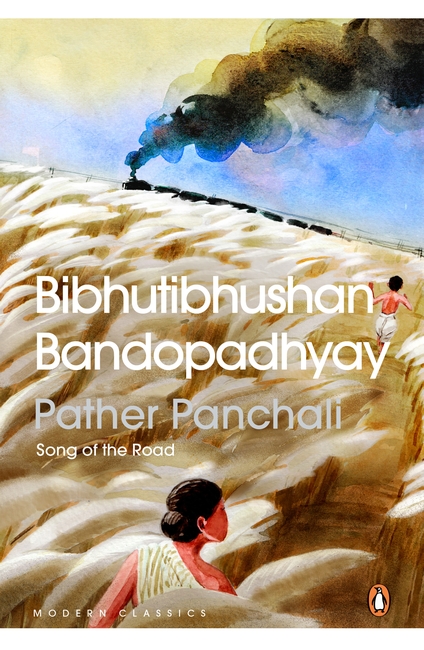
In the idyllic village of the Abode of Contentment, Durga and her little brother, Opu, grow up in a world of woods, orchards and adventure. Nurtured on their aunt’s songs and stories, they dream of secret magical lands, forbidden gardens and the distant railroad. The grown-up world of debts, resentment and bone-deep poverty barely touches them. Their parents, Shorbojoya and Horihor, also dream of the railroad, though as the gateway to lands with a better future. But can distance really change destiny? Will the railroad augur a triumphant future for the Roys, or a ballad of fates drastically altered?
A powerful testament to the indomitable human will to prevail, this timeless novel comes alive in an incandescent new translation.
The Chronicle
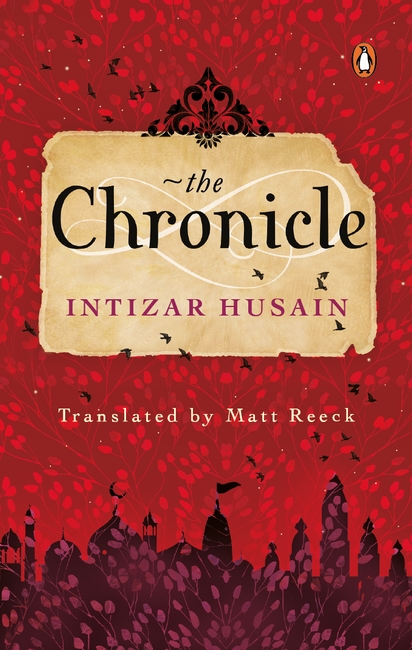
Set in the terrifying times of Zia-ul-Haq’s rule, The Chronicle tells the epic story of a family and its illustrious homes. As Ikhlaq, the main character, struggles to build a home in Lahore, the reader is introduced to a darkly comedic and dramatic chain of events.
These events are interspersed closely with Ikhlaq’s exploration of the tazkirah, a family chronicle, which inspires him to write its last chapter-the story of his life and times.
The Chronicle is an abiding tale of Ikhlaq’s ever-changing life, and the document that chronicles his family’s long history going back to Persia serves as the imaginative soundboard of his life.
Mixing the narrative styles of Buddhist, Hindu and Islamic myth and legend with fast-paced contemporary prose, Husain proves once again his mastery of diverse narrative forms.
Midnight’s Machines
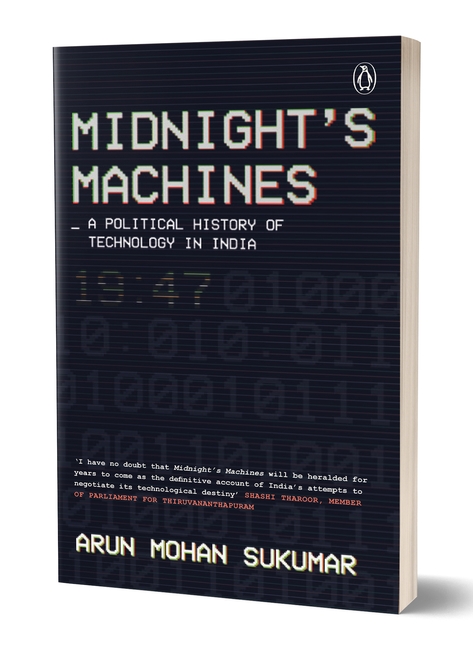
Named among “The Best Books of 2020” by Bloomberg
Shortlisted for New India Foundation’s Kamaladevi Chattopadhyay Book Prize 2020
Every Prime Minister of Independent India has guided, if not personally overseen, one prized portfolio: technology. If, in the early years, Nehru and his scientist-advisors retained an iron grip on it, subsequent governments created a bureaucracy that managed everything from the country’s crown jewels – its nuclear and space programmes – to solar stoves and mechanized bullock carts.
But a lesser-known political project began on 15 August 1947: the Indian state’s undertaking to influence what the citizens thought about technology and its place in society. Beneath its soaring rhetoric on the virtues or vices of technology, the state buried a grim reality: India’s inability to develop it at home. The political class sent contradictory signals to the general public. On the one hand, they were asked to develop a scientific temper, on the other, to be wary of becoming enslaved to technology; to be thrilled by the spectacle of a space launch while embracing jugaad, frugal innovation, and the art of ‘thinking small’. To mask its failure at building computers, the Indian state decried them in the seventies as expensive, job-guzzling machines. When it urged citizens to welcome them the next decade, the government was, unsurprisingly, met with fierce resistance. From Jawaharlal Nehru to Narendra Modi, India’s political leadership has tried its best to modernize the nation through technology, but on its own terms and with little success.
In this engaging and panoramic history spanning the arc of modern India from the post-War years to present day, Arun Mohan Sukumar gives us the long view with a reasoned, occasionally provocative standpoint, using a lens that’s wide enough for the frame it encompasses. With compelling arguments drawn from archival public records and open-source reportage, he unearths the reasons why India embraced or rejected new technologies, giving us a new way to understand and appreciate the individual moments that brought the country into the twenty-first century.