Never upon a time, there was nothing.
Then once came along and the stories never stopped.
What you hold is a collection of some of the finest tiny tales from over 100 writers. Each written in 140 characters or fewer, waiting to stir a world inside you.
Squeeze it between your favourite titles, gift it to someone really special or simply take it with you wherever you go. This one’s for keeps, on a tiny shelf in your heart. Promise.
Terribly Tiny Tales, the Internet’s most loved micro-fiction platform, and Penguin come together for the first time on the same page.

For more than twenty years Mark Tully was the BBC Chief of Bureau in Delhi and his name and his voice became synonymous with the country he had made his home. For years he sent back dispatches interpreting the subcontinent to the outside world, but the ‘truth’ of India is remarkably resistant to reportage. Imbued with his love for the country and informed by his vast experience, Mark Tully has woven together a series of extraordinary stories. All the stories are set in Uttar Pradesh and tell of very different lives. Of a barren wife who visits a holy man and subsequently conceives-but is it a miracle or something more worldly? Of a son’s carefully laid plot to take revenge against his father’s murderer, with a surprising twist when his case comes to court. Of a daughter, persuaded by her friends to spurn an arranged marriage, whose romance ends in blackmail. Of a man’s inability to overcome the conventions of caste and go into business, which leads to his wife breaking purdah and taking control of the family. In these and in other stories, Mark Tully delicately probes the nuances of life in India.

To best understand and address the inequality in India today, Arundhati Roy insists we must examine both the political development and influence of M.K. Gandhi and why B.R. Ambedkar’s brilliant challenge to his near-divine status was suppressed by India’s elite. In Roy’s analysis, we see that Ambedkar’s fight for justice was systematically sidelined in favor of policies that reinforced caste, resulting in the current nation of India: independent of British rule, globally powerful, and marked to this day by the caste system.
This book situates Ambedkar’s arguments in their vital historical context-namely, as an extended public political debate with Mohandas Gandhi. ‘For more than half a century-throughout his adult life-[Gandhi’s] pronouncements on the inherent qualities of black Africans, untouchables and the laboring classes remained consistently insulting,’ writes Roy. ‘His refusal to allow working-class people and untouchables to create their own political organizations and elect their own representatives remained consistent too.’
In The Doctor and the Saint, Roy exposes some uncomfortable, controversial, and even surprising truths about the political thought and career of India’s most famous and most revered figure. In doing so she makes the case for why Ambedkar’s revolutionary intellectual achievements must be resurrected, not only in India but throughout the world.

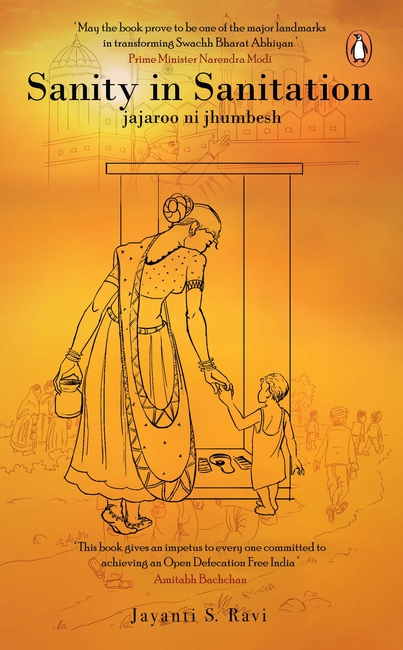
On Mahatma Gandhi’s birth anniversary in October 2014, Prime Minister Narendra Modi declared his vision for an Open-Defecation-Free India.
This book talks about the journey of an IAS officer who understood and leveraged the potential of
the government, community and citizens through cleanliness. The true meaning of Swachh Bharat was seen as village after village transformed into a cleaner hub. Citizens took ownership to keep their village Open Defecation Free (ODF) through activities such as ‘Triggering’ and ‘Gandhigiri’. The struggles and triumphs in fulfilling the dream of ODF Gujarat are passionately narrated here. The book relates the tale of a renewed satyagraha through Swachhagraha.
As we see a mother leading her toddler to squat on the toilet, we are sure the ‘luxury’ of toilet will
become a ‘necessity’.

There was one partition of the land in 1947. Harsh Mander believes that another partition is underway in our hearts and minds.
How much of this culpability lies with ordinary people? What are the responsibilities of a secular government, of a civil society, and of a progressive majority? In Partitions of the Heart: Unmaking the Idea of India, human rights and peace worker Harsh Mander takes stock of whether the republic has upheld the values it set out to achieve and offers painful, unsparing insight into the contours of hate violence. Through vivid stories from his own work, Mander shows that hate speech, communal propaganda and vigilante violence are mounting a fearsome climate of dread, that targeted crime is systematically fracturing our community, and that the damage to the country’s social fabric may be irreparable. At the same time, he argues that hate can indeed be fought, but only with solidarity, reconciliation and love, and when all of these are founded on fairness.
Ultimately, this meticulously researched social critique is a rallying cry for public compassion, conscience and justice, and a paean to the resilience of humanity.
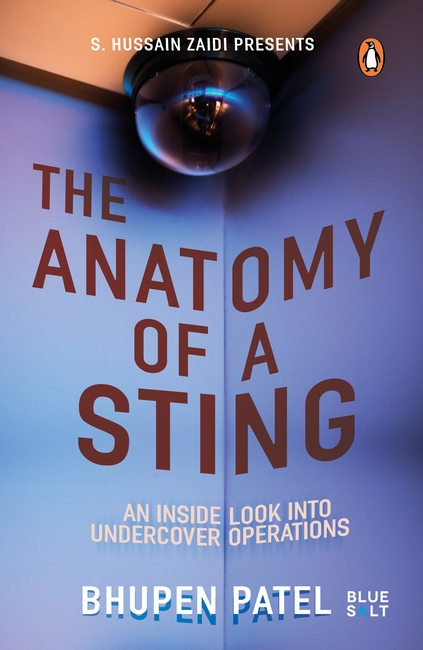
Bhupen Patel has conducted many undercover operations over the course of his career. He’s exposed all sorts of rackets, from mental asylums admitting patients without proper medical examinations to discovering an illegal network of agents that arrange ‘temporary’ wives for Arab men looking to have a short fling. This book recounts in detail some of his most dramatic and hard-hitting stings.
Patel takes us through the entire process of a sting and reveals the amount of hard work it takes to not just uncover a story that requires further discreet investigation but also gather enough evidence to bring it to the notice of the public and authorities concerned. Each account will keep you on the edge of your seat and allow a glimpse into the life of an investigative journalist.
Besharam is a book on young Indian women and how to be one, written from the author’s personal experience in several countries. It dissects the many things that were never explained to us and the immense expectations placed on us. It breaks down the taboos around sex and love and dating in a world that’s changing with extraordinary rapidity. It tackles everything, from identity questions like what should our culture mean to us? to who are we supposed to be on social media? Are we entitled to loiter in public spaces like men do? Why do we have so many euphemisms for menstruation? Like an encyclopedia, or a really good big sister, Besharam teaches young Indian women something that they almost never hear: it’s okay to put ourselves first and not feel guilty for it.
Part memoir, part manual, Besharam serves up ambitious feminism for the modern Indian woman.

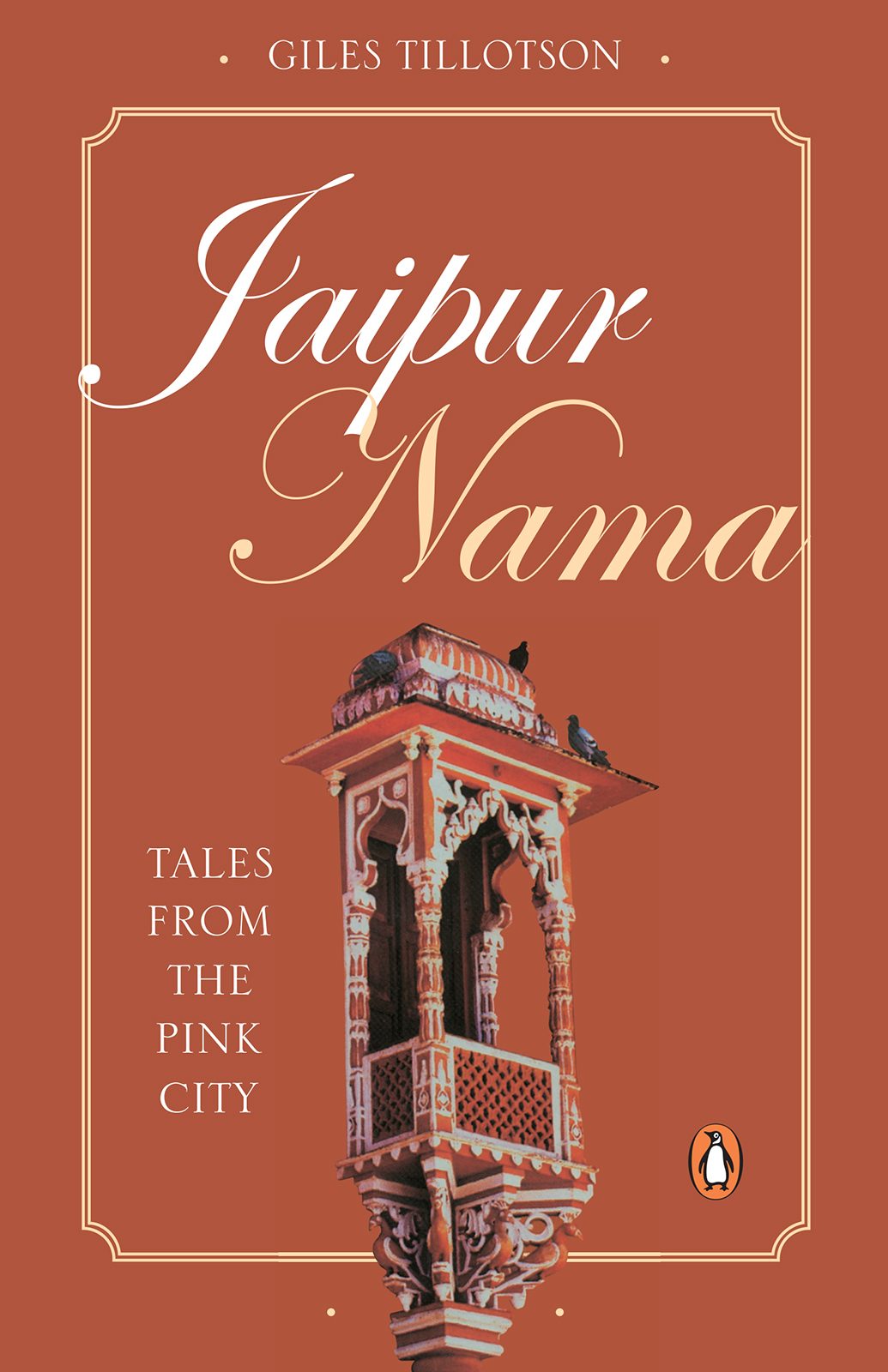
Jaipur Nama is the story of one of India’s most fascinating cities, as seen through the eyes of both its residents and its visitors, who witnessed and recorded different moments in Jaipur’s history between the 18th and 20th centuries.
The triumph, follies and foibles of its rulers, the passions and drama of palace intrigues, the splendor of royal rites and entertainments, and the bustle and energy of tis bazaars and ateliers, all come to life through the vivid and detailed accounts of chroniclers as diverse as an Austrian Jesuit, a French naturalist, a court priest, a city merchant and a pilgrim from Banaras. Many of these accounts are here translated into English for the first time. Each reflects a different aspect of Jaipur, together creating a captivating, kaleidoscopic portrait of the Pink City.
Linking these narratives are the observations, experiences and perceptions of the author, Giles Tillotson, who skillfully weaves the past into the present as he writes about the personalities who shaped the character of the city, the wonders of its architectures, and the development of its superb arts and crafts.
Entertaining as well as scholarly, Jaipur Nama will appeal to a wide readership. For those who know Jaipur or plan to go there, this book will sharpen and enrich their experience of the city, while armchair travelers will find it a delightfully witty and knowledgeable companion.

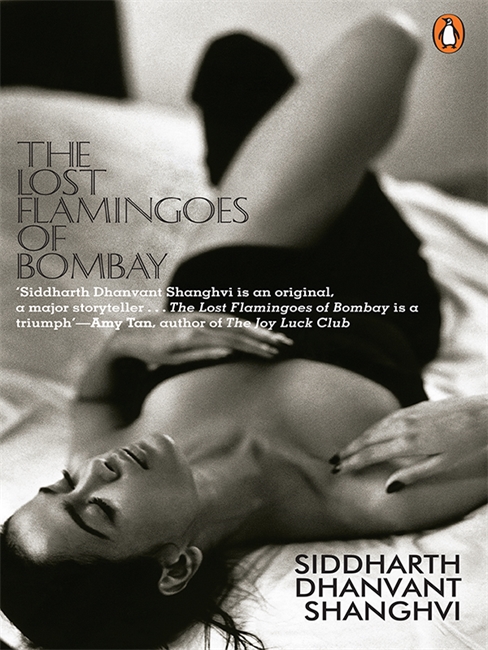
Star photographer Karan Seth is in Bombay to immortalize the city in a unique photo-record of its hidden faces until tragedy strikes and he is drawn into a Fitzgeraldian world of sex, crime and politics. Utterly disenchanted, he abandons the camera and Bombay and heads to England. Yet, like the flamingoes of Sewri, who unfailingly give in to the strange, haunting pull of the great metropolis, Karan too knows that he must return to his old loves. The Lost Flamingoes of Bombay is at once a razor-sharp depiction of contemporary urban society and an affecting tale about love’s betrayals and the redemptive powers of friendship.
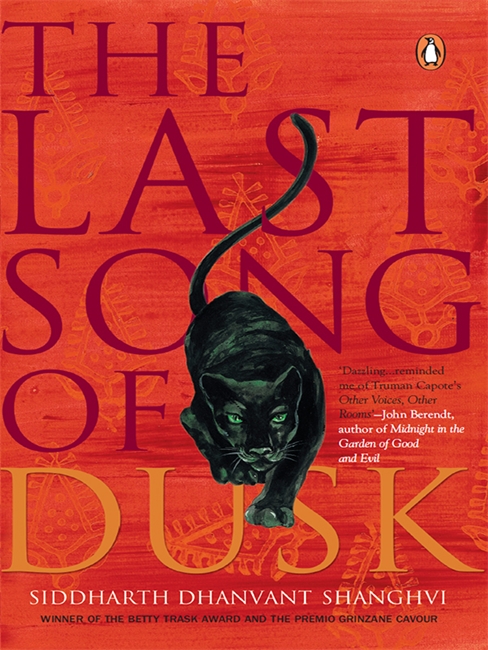
Siddharth Dhanvant Shanghvi’s stunning debut tells the story of four extraordinary lives. Anuradha Gandharva, gifted with astonishing beauty and magical songs; her husband, Vardhmaan, struggling with secret losses; Nandini, a deviously alluring artist with a penchant for panthers and walking on water; and Shloka, the Gandharvas’ delicate, disturbingly silent child. As their fates unravel in an old villa in 1920s’ Bombay, they learn to navigate the ever-changing landscape of love. Told with tenderness and dazzling wit, The Last Song of Dusk will haunt you long after you have turned the final page.