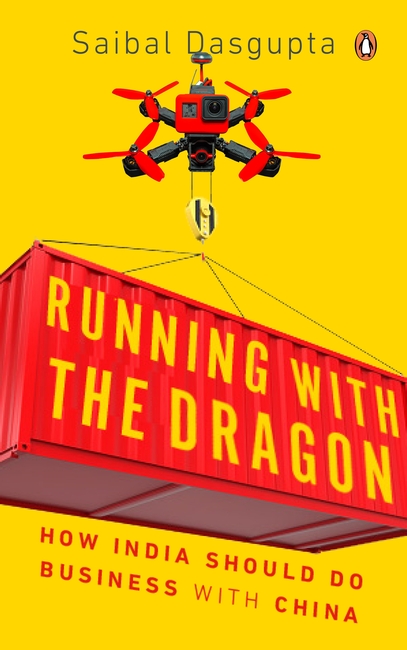
Are there lessons to learn from the manner Chinese companies have grown tenfold or more in their home markets, and pushed away competitors of all hues in the US, Europe, Asia and Africa? What drives China’s international trade surplus, which was $351 billion in 2018, while India ended the 2018-19 financial year with trade deficit of $103 billion? Are we in India ready to learn and seize new opportunities as part of the overall objective to become a $5-trillion economy?
The Chinese invest hugely in understanding foreign cultures and markets while basking in the knowledge that their competitors and would-be allies are unlikely to make sufficient effort to understand them. This is one reason why Chinese manufacturers have broken into the Indian market, making brands like Xiaomi, Haier, Huawei, ZTE, and Lenovo household names in major cities. Hardly any Indian product, with the exception of Tata Motors’ Jaguar, seen primarily as a British brand, has gained a foothold in China.
However, huge opportunities exist and it is possible to both compete and collaborate with the Chinese on our own terms. Entrepreneurs like Rajendra S. Pawar, chairman of NIIT, have shown the way, spending years learning the Chinese way of doing business, going on to establish IT teaching facilities in nearly a hundred universities and institutions in China. Some Indian pharmaceutical companies are also making their mark in China.
Running with the Dragon seeks answers about what Chinese companies are likely to do next to expand in the Indian market under different scenarios. Things are likely to change as the government is keen on removing stumbling blocks for Chinese investments amidst a decelerating economy. Indian businesses in different sectors will have to decide if they want to fight the new competition or collaborate with rivals. The book reflects the experience of over forty Indian and Chinese businesspeople, officials and experts besides the author’s own analysis.

Can you really forget your first love?
Rehaan is a hard-working and down-to-earth kind of guy. When he moves to London, he is hopeful to meet his childhood love, Zynah, whom he hasn’t been able to forget even after all these years.
It turns out that Zynah is just the same, just as he remembers her-fun-loving, adventurous and beautiful.
However, there is just one small difference-she is getting married.
What will Rehaan do-risk ruining their friendship and tell her he loves her or let her marry the man she has chosen?

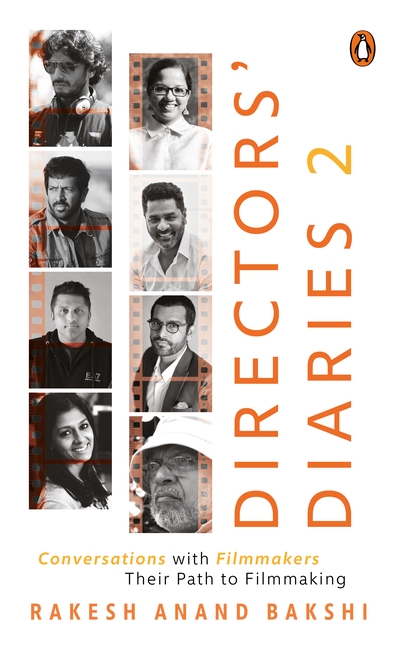
With Directors’ Diaries 2, Rakesh Anand Bakshi adds yet another volume to his ongoing series of conversations with Hindi cinema’s most iconic voices. This time he shares with us his conversations with some of the industry’s most eminent film-makers-Shyam Benegal, Tanuja Chandra, Kabir Khan, Abhishek Chaubey, Nandita Das, Shakun Batra, Prabhu Deva and Mohit Suri-as well as significant but often overlooked behind-the-scenes crew such as spot boy Salim Shaikh, make-up artist Vikram Gaikwad and sound designer Rakesh Ranjan.
From the moment they were first drawn to the craft of film-making and how they got that elusive first break as a film-maker to films that left a deep impression on them and what they have learnt from other film-makers they admire, Directors’ Diaries 2 is an invaluable collection of stories for aspiring directors and cinema fans alike.

Constant and consistent innovation is the only sure-fire way to profitability; but many organizations are limited by the lack of an innovation culture. Innovate! 90 Days to Transform Your Business is the answer to this problem; allowing you to build a culture of innovation which embraces everyone from the doorman to the chairman. A daily implementation schedule, Innovate! will give you step-by-step ideas for yourself; your team; your department; and your organization. Start today and see the difference you can make.This 90-day plan will help you create a climate which empowers everyone in the company to achieve their full potential, launch an initiative which will invigorate the whole organization, build young, proactive commando teams and innovation spirals trained to think outside the box, inspire team leaders to transform their departments and the organization through their youthful proactive ideas, and develop a daily plan to institutionalize innovation and establish long-term culture change. A practical do-it-yourself toolkit, Innovate! should be required reading for everyone in your organization. Be inspired, innovate!

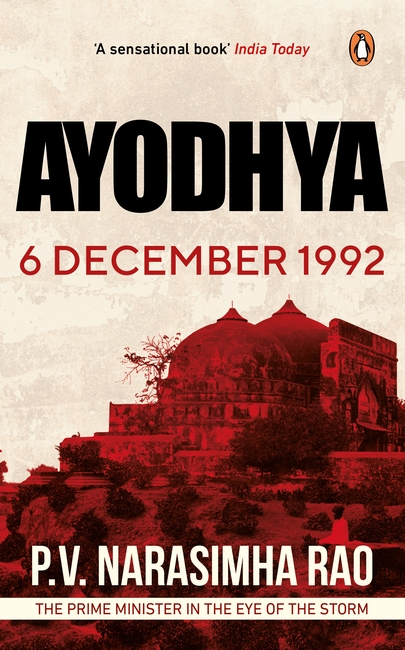
‘A sensational book’ India Today
A shocking exposé of the event that changed Indian politics forever
P.V. Narasimha Rao was the prime minister of India when, on 6 December 1992, thousands of kar sevaks stormed into the site of the Babri Masjid in Ayodhya. The nation watched in horror as the centuries-old mosque was razed to the ground, in the presence of paramilitary forces and senior political leaders, marking a turning point in post-Independence Indian history.
Many hold Rao responsible for not preventing the demolition, while others accuse him of being a co-conspirator. In this tell-all account, Rao reveals what really transpired in the run-up to that fateful day. Drawing on the Supreme Court order, parliamentary proceedings, eyewitness reports and his own insights, he presents a comprehensive view of the machinations that led to the demolition of the Babri Masjid.
Nearly three decades after the event, Ayodhya: 6 December 1992 remains a valuable resource to understanding the political manoeuvres behind the Ram Mandir issue and the dangers of exploiting religious sentiments for narrow electoral gains.

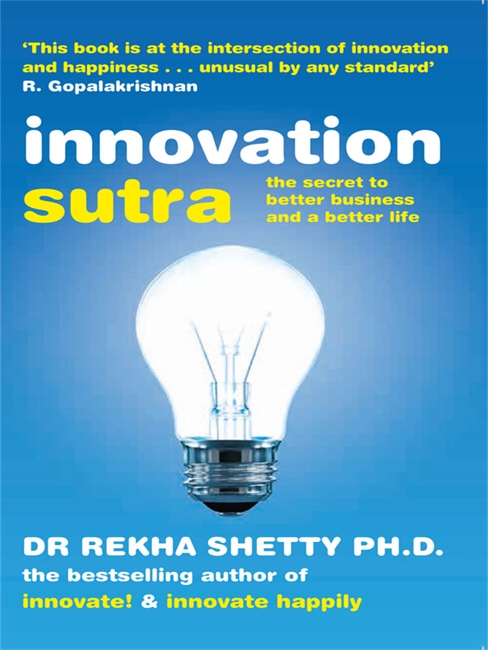
Dharam is a young, immensely successful investment banker in Manhattan. He thinks he rules the world, till one day the world comes crashing down around him. Accompanied by the enterprising Kunal (who sells fake Indian antiques to Americans) and the uncorrupted Supriya, Dharam undertakes a journey along the Buddhist pilgrim trail, from Lumbini, Kapilavastu and Bodh Gaya to Sarnath, Rajgir, Nalanda, Vaishali, Kaushambi and Kushinagar. As he absorbs timeless Buddhist teachings, he finds a new purpose to life, and develops the idea for an ethical yet profitable business: The Buddhist Footprint. Bestselling innovation guru Rekha Shetty’s new book reveals how true entrepreneurial energy can arise from a better understanding of life. Innovation Sutra is a book that will make a tangible difference to anyone who is willing to think out of the box and learn from India’s ancient secrets of work-life balance.
It is 2002 and young Pablo, a city boy who has mostly lived a sheltered and privileged life in Guwahati, is visiting his ancestral village for his aunt’s wedding. This is his second time in Mayong, in rural Assam, since 1998, when he had come for a few days to attend his father’s best friend’s funeral. As the wedding preparations gather pace, Pablo is amused as well as disturbed by squabbling aunts, dying grandmothers, cousins planning to elope for love and hysterical gossips. And on this heady theatre of tradition and modernity hovers the sinister shadow of insurgency and the army’s brutal measures to quell militancy. In the days leading up to the wedding, which ends in an unspeakable tragedy, Pablo finds first love, discovers family intrigues and goes through an extraordinary rite of passage. Written with clinical precision, this gripping first novel announces the arrival of one of the most original voices from India’s North-East.

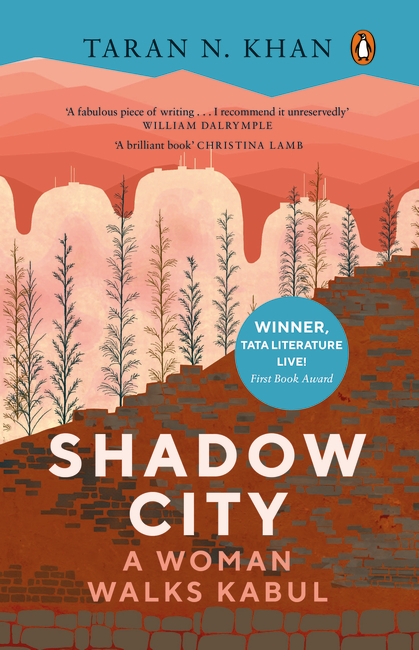
WINNER,STANFORD DOLMAN TRAVEL BOOK OF THE YEAR
WINNER, TATA LITERATURE LIVE! FIRST BOOK AWARD 2020 – NON-FICTION
‘A fabulous piece of writing . . . I recommend it unreservedly’ – William Dalrymple
‘A brilliant book’ – Christina Lamb
When Taran N. Khan first arrived in Kabul in the spring of 2006-five years after the Taliban government was overthrown-she found a city both familiar and unknown. Falling in with poets, archaeologists and film-makers, she begins to explore the city and, over the course of several returns, discovers a Kabul quite different from the one she had expected.
Shadow City is an account of these expeditions, a personal and meditative portrait of a city we know primarily in terms of conflict. With Khan as our guide, we move from the glitter of wedding halls to the imperilled beauty of a Buddhist monastery, slip inside a beauty salon and wander through book markets. But as these walks take us deeper into the city, it becomes clear that to talk of Kabul’s various wars in the past tense is a mistake.
Part reportage and part reflection, Shadow City is an elegiac prose map of Kabul’s hidden spaces-and the cities that we carry within us.

How did Margaret Marcus of Larchmont become Maryam Jameelah of Lahore?
What drives a young woman raised in a postwar New York City suburb to convert to Islam, abandon her country and Jewish faith, and embrace a life of exile in Pakistan? The Convert tells the story of how Margaret Marcus of Larchmont became Maryam Jameelah of Lahore, one of the most trenchant and celebrated voices of Islam’s argument with the West.
A cache of Maryam’s letters to her parents in the archives of The New York Public Library sends acclaimed biographer Deborah Baker on her own odyssey into the labyrinthine heart of 20th century Islam. Casting a shadow over these letters is the enigmatic figure of Mawlana Abul Ala Mawdudi, both Maryam’s adoptive father and mentor, and the man who laid the intellectual foundations for militant political Islam.
As she assembles the pieces of a singularly perplexing life, Baker finds herself captive to the larger questions raised by Maryam’s journey. How, exactly, did the cold war devolve into the war on terror? Is the argument between Islam and the West a metaphysical one or a historical one? Is Maryam’s story just another bleak chapter in the so-called clash of civilizations? Or does it signify something else entirely? And then there’s this: is the life depicted in Maryam’s letters home and in her books an honest reflection of the one she lived? Like many compelling and true tales, The Convert is stranger than fiction. It is both a gripping story of a life lived on the radical edge and a profound meditation on the roots of terror in our age of dread.

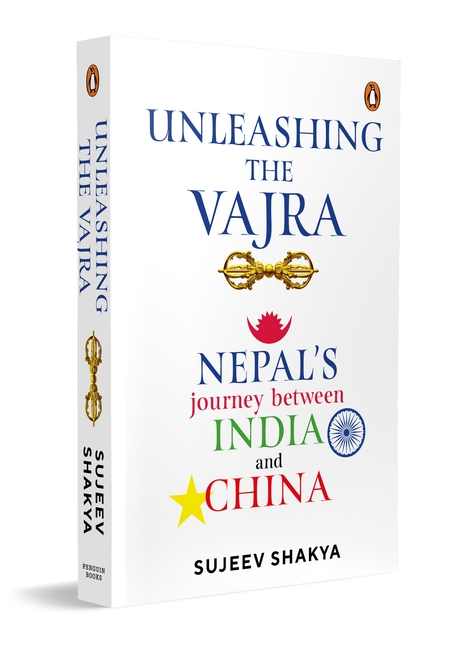
Nepal’s great advantage is its location between India and China, particularly now as these two Asian giants are set to be the world’s leading economies in 2050. Nepal has historically been at its most prosperous when it has leveraged this geographical position. Today, this opportunity emerges again-and in order to take advantage of the growth of India and China, Nepal needs to hitch its wagon to the fast-moving engines to its north and south.
Sujeev Shakya argues that it is imperative to understand history and learn from it to shape events for a better future. He analyses the social, political and cultural aspects underlying the current state of Nepal to strategize the recalibrations required to capitalize on its location. Economic transformations cannot be realized through money and management skills alone; they have to be driven by societal transformation. Unleashing the Vajra outlines the factors that will determine Nepal’s destiny in the years to come.