



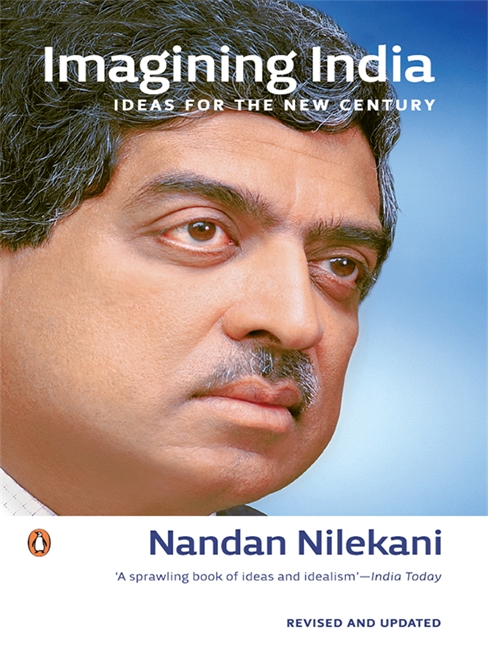
Imagining India created ripples with its perspective on India’s recent history and the core issues plaguing the country’s development. Cogently argued and packed with Nilekani’s own experiences and interactions with hundreds of opinion leaders, it offers a comprehensive blueprint for India in the twenty-first century.
Archives: Books
Step Up
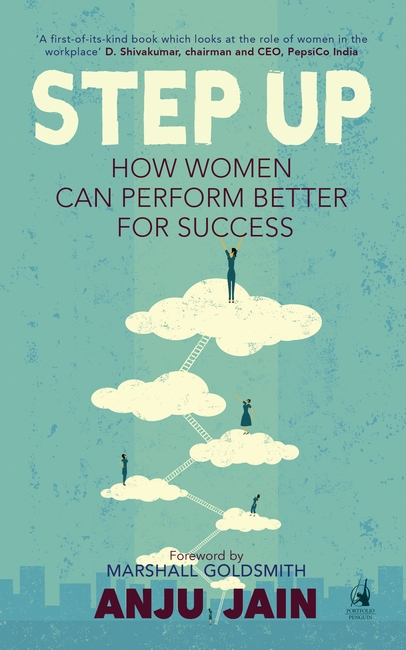
The Only Book You Need to Succeed both at Work and at Home
In this engaging, witty and conversational book, Anju Jain explains why women have been discriminated against, both at home and at work, and how this can be changed. With insights gained from extensive research and experience, she presents practical techniques in a simple matrix for women to use to become successful.
This book will help you to:
1.Increase your productivity
2. Create work-life balance
3. Get support from those who matter
4. Build your own brand at work
5. Reach your goals and succeed
There are also interviews with key leaders-both women and men-who talk about the challenges they faced, and the solutions which worked for them. Among those featured are Kiran Mazumdar Shaw (Biocon), Sonia Singh (NDTV), Devyani Rana (Caterpillar), Geetu Verma (Unilever), Ipsita Dasgupta (GE), Sunita Maheshwari (RxDx and Teleradiology Solutions), Vaishali Kasture (Deloitte Consulting), Divya Suri (Lalit Suri Resorts), Kumud Srinivasan (Intel), Gwen Ryan (EY), N.V. Tyagarajan (Genpact), Mohandas Pai (Manipal Global Education) and Raj Nayak (Colors TV). Full of interesting anecdotes and great advice, Step Up will both entertain and guide women towards personal and professional growth.
Burnout
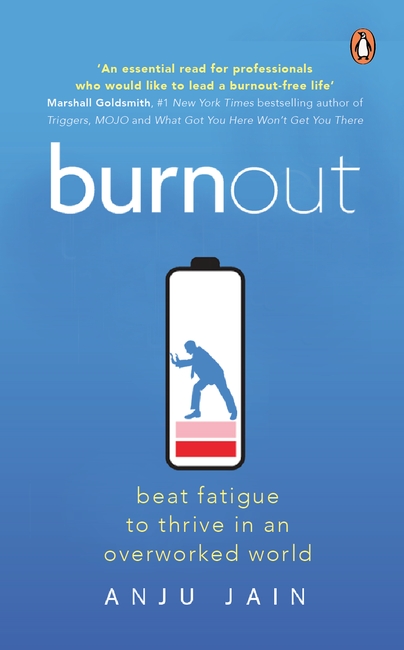
Do you feel like you never have enough time or energy to get things done?
Are you stressed and exhausted just thinking about work?
Are you getting to the point where you dread Monday mornings?
These are some of the telltale signs of burnout which, if not addressed, can wreck careers and relationships. Senior psychologist and business leader Anju Jain, PhD, finds out what makes some people tenacious and energetic while others suffer from fatigue and fall by the wayside. This book offers a framework and principles to ensure that you continue to have a hard-working and productive life without getting burned out.
Innovate Happily
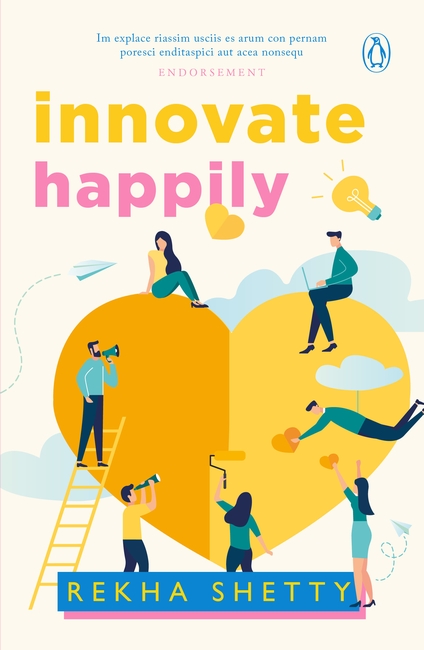
Studies show that happy people are the most innovative and more productive. The Happiness Quotient is therefore integral to a successful corporate strategy. In Innovate Happily, bestselling innovation guru Rekha Shetty’s new book, Junie, a bright young executive, meets Rags, a wise, hi-tech coach. Together they discover the secrets that create progressive and happy communities during a visit to Bhutan, the modern day Shangri-La, a land that actually measures its Gross National Happiness. Through a series of analytical and self-actualization exercises, Innovate Happily shows you innovative ways to increase your Happiness Quotient and take it to your own town and organization.
City Improbable
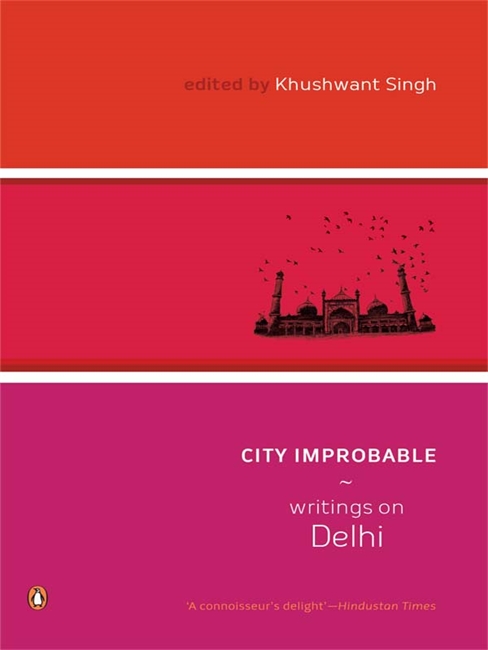
Witness to the rise and fall of several empires, Delhi has often been compared to the phoenix that rises from the ashes of its previous self. Three thousand years of eventful history have made it one of the greatest capitals of the world-also an old-young city full of contradictions that inspire as much love as loathing.
This anthology brings together writings on Delhi by residents, refugees, travellers and invaders who have engaged with the city at various moments in its long history. Amir Khusrau, Ibn Battuta, Samsam-ud-Daula and Niccolao Manucci record the glories and follies of prominent kings and emperors, from Anangpal Tomar to Shah Jahan. Timur Lane tells the story of his own bloody invasion of the city, Khushwant Singh of an untouchable in the time of Aurangzeb, William Dalrymple of the first intrepid Englishmen in Delhi, and Ghalib and Hodson of the war of 1857. There are also vignettes of everyday life-a Jat household in the nineteenth century; vendors and housewives in Ballimaran during the Second World War; lovers and joggers in Lodi Garden; happy parties at the discos.
The contemporary pieces, most of them specially commissioned for the collection, constitute a bitter-sweet ode to modern Delhi. Ruskin Bond, Manjula Padmanabhan, Anees Jung, Mrinal Pande, Dhiren Bhagat, and Rukmini Bhaya Nair, among others, write on subjects as diverse as Punjabi joint families, the dying cuisine of Delhi, the infuriating bureaucracy, the Sufi legacy, the anti-Sikh riots of 1984, and the benighted citizens of a capital city gone wrong.
Edited by Khushwant Singh, City Improbable is a collection as varied and lively-sometimes serious, sometimes richly humorous-as Delhi itself.
She Walks, She Leads
Nita Ambani launched the Indian Super League, on the lines of FIFA, to boost football in India. Sudha Murty gave her savings to her husband, Narayana Murthy, to help start Infosys. Naina Lal Kidwai was the first Indian woman to graduate from Harvard Business School. Kiran Mazumdar-Shaw started Biocon with a seed capital of Rs 10,000. At the age of sixteen, Sania Mirza became the youngest and the first Indian woman to win a Grand Slam.
These are some snippets from She Walks, She Leads which profiles twenty-six iconic women in modern India. These leaders tell their stories, up close and personal. Their relentless ambition to shatter the glass ceiling, their pursuit for excellence and the challenges that came their way, all of this is captured vividly in this exclusive anthology. Each chapter is based on extensive research and has never-seen-before photographs of these luminaries. The chapters are followed by interviews with their companions and close confidants who have seen them grow over the years. The women leaders profiled in the book come from different fields like banking, media, cinema, sports, fashion, philanthropy and industry.
Nepal Nexus, The
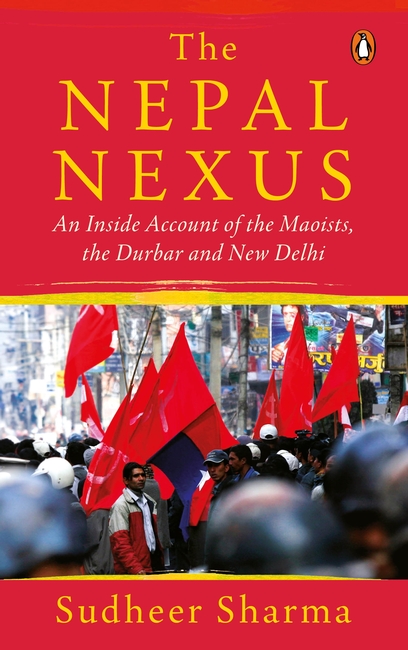
This fast-paced and comprehensive account of Nepal today traces the recent past and the present of Nepali politics and geopolitics from the vantage point of an insider who had a ringside view of the developments of the last two decades. This was a turbulent, eventful era which had a transformative impact on the country. In this short span, Nepal experienced the Maoist revolt, the palace massacre, the state of emergency, the royal coup, the people’s movement, the republic, the Madhes uprising, the Constituent Assembly, federalism and the new Constitution.
Looking back at these developments, Sudheer Sharma argues that poverty, unemployment and oppression drove the Maoist revolt, and despite its ultimate failure, it played a decisive role in the socio-political transformation of Nepal. Furthermore, the relationship between the Maoists, the monarchy (Durbar) and the Indian establishment (Delhi) is absolutely critical to the understanding of the trajectory of the changes. The Nepal Nexus examines the impact of each of these three strands and tracks the complex interplay between them.
Vichhoda
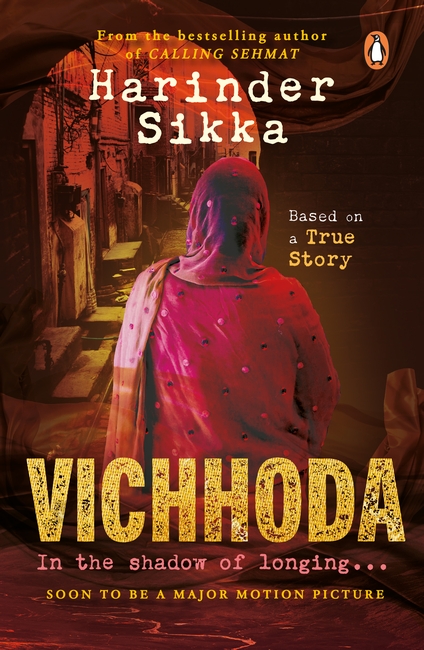
The year is 1950; the Liaquat-Nehru Pact has been signed between India and Pakistan; she doesn’t know it will change her life forever; it will also make her stronger
Bibi Amrit Kaur’s life is literally torn apart in the 1947 riots. She’s now in a different country with a different identity. She accepts this new life gracefully and begins a new chapter. She gets married and has two children. Life, however, has something else in store for her. It breaks her apart. Again.
This time the pain is unbearable.
But the hope that she will reunite with her children and be whole again keeps her alive. And she doesn’t let the bitterness cloud her days, becoming a beacon of hope and courage for all.
From the bestselling author of Calling Sehmat comes another hitherto untold story of strength, sacrifice and resilience.
A must read.
1971
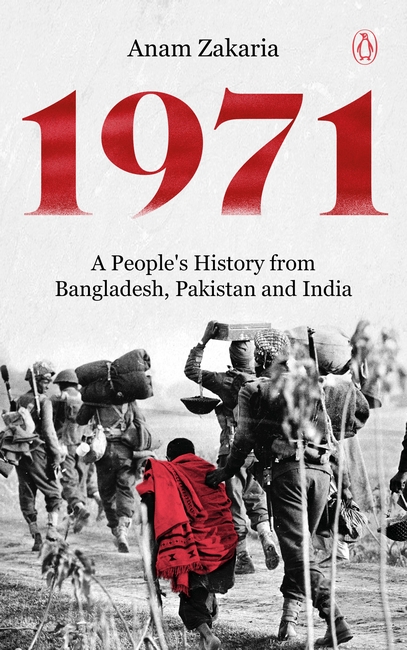
The year 1971 exists everywhere in Bangladesh-on its roads, in sculptures, in its museums and oral history projects, in its curriculum, in people’s homes and their stories, and in political discourse. It marks the birth of the nation, it’s liberation. More than 1000 miles away, in Pakistan too, 1971 marks a watershed moment, its memories sitting uncomfortably in public imagination. It is remembered as the ‘Fall of Dacca’, the dismemberment of Pakistan or the third Indo-Pak war. In India, 1971 represents something else-the story of humanitarian intervention, of triumph and valour that paved the way for India’s rise as a military power, the beginning of its journey to becoming a regional superpower.
Navigating the widely varied terrain that is 1971 across Pakistan, Bangladesh and India, Anam Zakaria sifts through three distinct state narratives, and studies the institutionalization of the memory of the year and its events. Through a personal journey, she juxtaposes state narratives with people’s history on the ground, bringing forth the nuanced experiences of those who lived through the war. Using intergenerational interviews, textbook analyses, visits to schools and travels to museums and sites commemorating 1971, Zakaria explores the ways in which 1971 is remembered and forgotten across countries, generations and communities.
The Incredible Adventures of Mr Cheeks
‘Bunneez cannot seeng,’ the goat said.
‘Not posibaal. Ze nightingales already booked!’
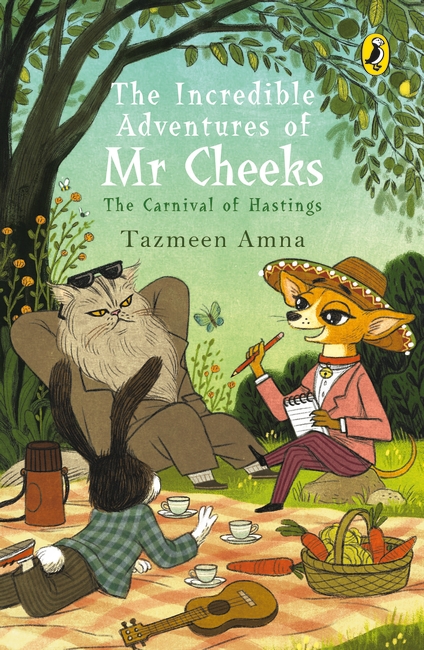
The Annual Carnival of Hastings is fast approaching and Mr Cheeks, a dapper tap-dancing chihuahua; Mr Grey,
a grumpy Persian cat who paints; and Hopper, an anxious rabbit who sings, are super excited! All geared up to show their uniqueness, they set out to sign up for the talent shows. But little do they know that in Hastings, everyone has their set roles: only nightingales are allowed to sing and only peacocks can dance. But is that fair? Seeking to bring about a change, the oddballs hatch a risky yet brilliant plan to teach Hastings about free will and the joy of not fitting in. An exciting journey ensues, where the three friends face the challenge of following their heart -even when it isn’t the easiest thing to do.