



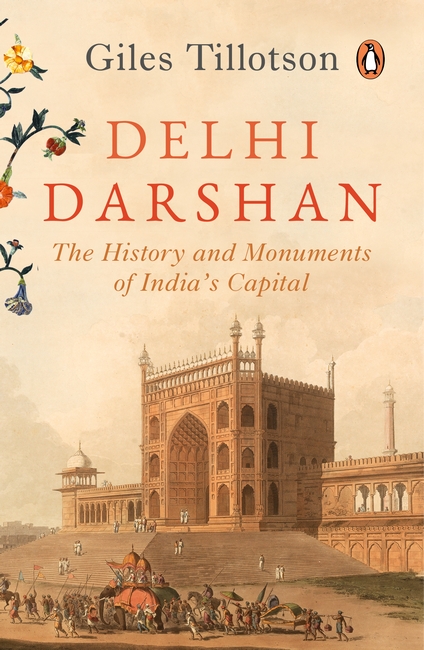
Giles Tillotson provides a fascinating account of Delhi’s built heritage, from the traces of the earliest settlements at Indraprastha, through the grand legacies of the Delhi Sultans and the great Mughals to the ordered symmetries of Lutyens’ Delhi and the towering skyscrapers of Gurgaon. Filled with quirky details and original insights, as well as a section on important monuments, this is a lively and informed account of the many fascinating twists and turns in the national capital’s built history and an original reflection on the many transformations of its urban landscape.
Archives: Books
Awakening Bharat Mata
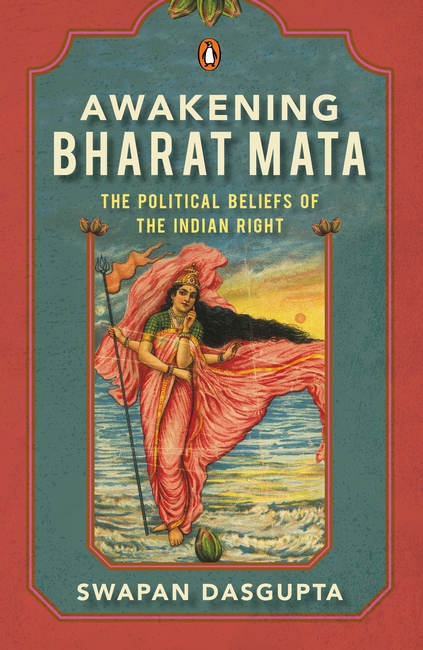
The rise of the Bharatiya Janata Party (BJP) was much more than an ordinary electoral phenomenon: it brought to the fore two contrasting views of nationhood: between those who saw modern India in terms of secular republicanism and on the other hand were those who sought to blend technological modernity with the country’s Hindu inheritance. The Right’s ascendancy and the debates that accompanied it, anticipated many of the concerns that find reflection today in the United States and Europe.
The phenomenon of Hindu nationalism was also a profound intellectual challenge to the loose Left-liberal consensus that had prevailed in India since Jawaharlal Nehru became Prime Minister in 1947. The idea of Hindutva and the political character of the BJP have been closely scrutinised by scholars, and the impulse has been to view India’s Right-wing politics as either a variant of fascism or merely a collection of sectarian prejudices.
In fact, the inspiration for the Right in India has come from multiple and often contradictory sources, including the influence of individuals such as Sarvarkar, Bankim Chandra Chatterjee, Swami Vivekananda and Sri Aurobindo, not to mention the Arya Samaj movement.
This collection is an attempt to showcase the phenomenon of Hindu nationalism in terms of how it perceives itself. Many of the concerns that drive the Indian Right are located in the country’s nationalist culture. In trying to locate some of the ideas, attitudes and beliefs that define the Indian Right, Awakening Bharat Mata also seeks to identify the nature of Indian conservatism and identify its similarities and differences with political thought in the West.
This book is not about Hindu nationalism in power but as a social and political movement and its aim is to encourage a more informed understanding of an idea that will remain relevant in Indian life far beyond victories and defeats in elections.
Shrilok Homeless: The Ultimate Adventures Volume 2
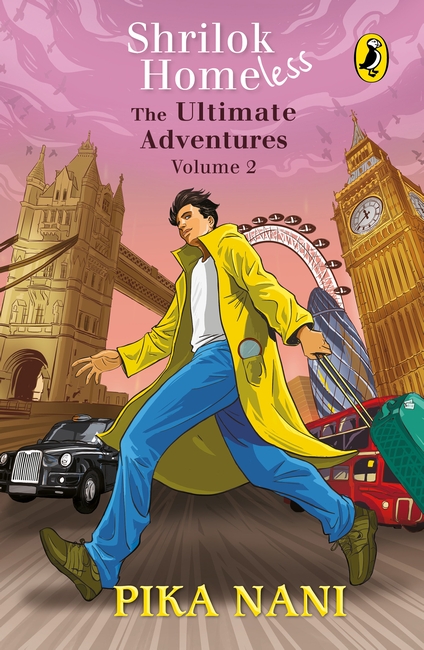
India’s favourite teen detective is back!
After taking Mumbai by storm, Shrilok and his best friend, Rohan, are now chasing criminals far and wide, even landing up in London. The stakes are high for the chaiwala-turned-super-sleuth, with murder mysteries, secret codes, museum robberies, an exam-paper racket and a terrorist from the past. Will our desi Sherlock rise to the challenge?
Immortal
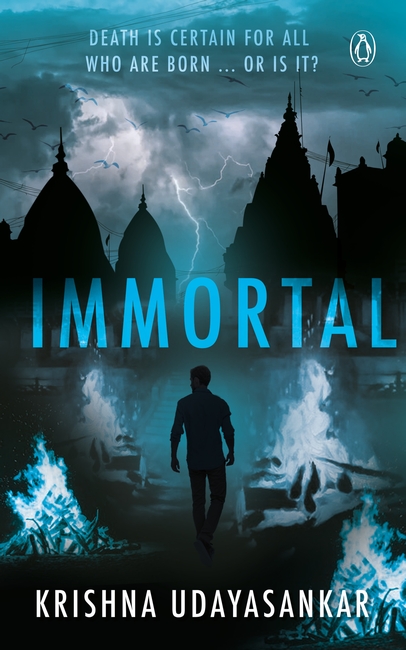
Professor Bharadvaj is more than just another whisky-loving, gun-toting historian-for-hire. Behind the assumed identity of a cynical academic is a man who has walked the earth for scores of years. He is Asvatthama-the cursed immortal, the man who cannot die.
When Professor Bharadvaj is approached by the enigmatic Maya Jervois to search for a historical artefact unlike any other, he is reluctant to pursue it. The object in question, the Vajra, is rumoured to possess incredible alchemical powers, but the Professor does not believe it exists. After all, he has spent many lifetimes-and identities-searching for it, in a bid to unearth the secret to his unending life.
Yet, as the evidence of the Vajra’s existence becomes increasingly compelling, the professor is plunged into an adrenaline-fuelled adventure that takes him from the labyrinthine passages beneath the Somnath temple to the legendary home of the siddhas in the Nilgiris, and finally into the deserts of Pakistan to solve a confounding puzzle left behind by the ancients.
But who is behind the dangerous mercenaries trying to thwart his discoveries at every step? And is the professor-a legendary warrior in a long-ago life-cursed to walk the path of death and bloodshed forever?
The Verdict (Hindi): Bhartiya Janadesh
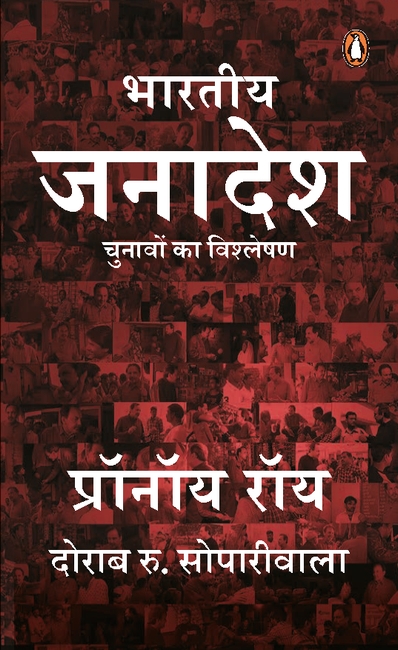
What are the key factors that win or lose elections in India? What does, or does not, make India’s democracy tick? Is this the end of anti-incumbency? Are opinion polls and exit polls reliable? How pervasive is the ‘fear factor’? Does the Indian woman’s vote matter? Does the selection of candidates impact results? Are elections becoming more democratic or less so? Can electronic voting machines (EVMs) be fiddled with? Can Indian elections be called ‘a jugaad system’?
Published on the eve of India’s next general elections, The Verdict uses rigorous psephology, original research and as-yet-undisclosed facts to talk about the entire span of India’s electoral history from the first elections in 1952. Crucially, for 2019, it provides pointers to look out for, to see if the incumbent government will win or lose.
Written by Prannoy Roy, renowned for his knack of demystifying electoral politics, and Dorab R. Sopariwala, this book is compulsory reading for anyone interested in politics and elections in India.
3
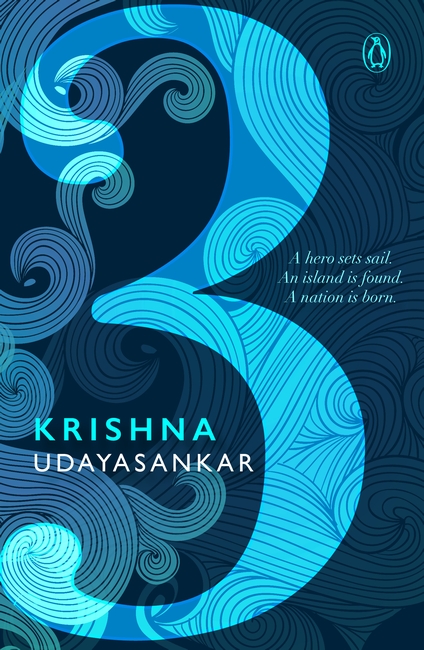
Early thirteenth century CE. The Srivijaya Empire, considered to be one of the world’s greatest maritime forces, has been abruptly left powerless in a swift political exchange.
With nothing but a meaningless crown, a once-lauded navy and the will to keep alive the name of Srivijaya against the endless onslaughts of old enemies and ambitious neighbours, Emperor Prabhu Dharmasena and his kin leave behind their island realm to traverse the seas, desperate and homeless. Sailing amongst them is Dharmasena’s youngest son, Nila Utama, for whom loyalty and honour have ceased to have meaning since he saw his father forsake their beloved land.
Now, all that is left to do is survive…
Or so Nila thinks, till a voyage across turbulent seas brings him to a fishing village, where the headstrong prince, so far insistent on keeping to the shadows, is forced to step up to his responsibility, face his old demons and discover what it truly means to be a king.
Based on the founding legend of the island of Singapore, also known as Singapura or the Lion City, 3 is an engrossing tale – told in an exquisitely rich voice – of love, self-realization and adventure on the high seas.
A Human’s Guide to Machine Intelligence

Through the technology embedded in almost every major tech platform and every web-enabled device, algorithms and the artificial intelligence that underlies them make a staggering number of everyday choices for us: from what products we buy to where we decide to eat, from how we consume our news to whom we date and how we find a job. We’ve even delegated life-and-death decisions to algorithms-judgments once made by doctors, pilots, and judges. In A Human’s Guide to Machine Intelligence, Kartik Hosanagar surveys the brave new world of algorithmic decision making and reveals the potentially dangerous biases to which they can give rise as they increasingly run our lives. He makes the compelling case that we need to arm ourselves with a better, deeper, more nuanced understanding of the phenomenon of algorithmic thinking. The way to achieving that is understanding that algorithms often think a lot like their creators-that is, like you and me.
Hosanagar draws on his own experiences designing algorithms professionally, as well as on examples from history, computer science, and psychology, to explore how algorithms work and why they occasionally go rogue, what drives our trust in them, and the many ramifications of algorithmic decision making. He examines episodes like the fatal accidents of self-driving cars; Microsoft’s chatbot Tay, which was designed to converse on social media like a teenage girl, but instead turned sexist and racist; and even our own common, and often frustrating, experiences on services like Netflix and Amazon. A Human’s Guide to Machine Intelligence is an entertaining and provocative look at one of the most important developments of our time and is a practical user’s guide to this first wave of practical artificial intelligence.
Burning Bright Irom Sharmila
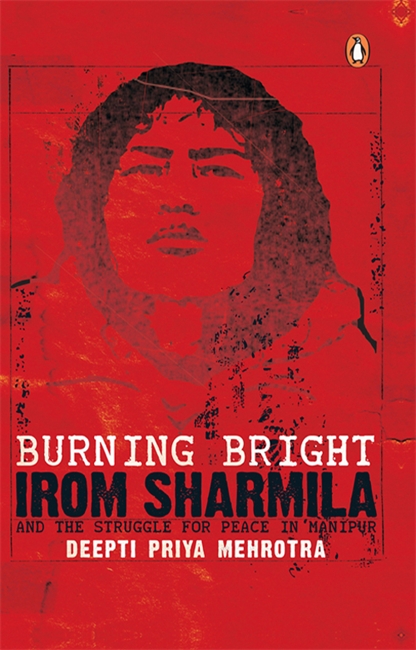
Ten innocent people were mowed down by security forces in Malom, a village near Imphal, in November 2000. The perpetrators were not punished, protected under the Armed Forces Special Powers Act which empowers military and para-military personnel to arrest, shoot, even kill, anyone on the grounds of mere suspicion. In response to this tragedy-one among many such atrocities-Irom Sharmila, a young Manipuri, began an indefinite hunger strike. The government arrested her and force-fed her through nasal tubes. She was released and re-arrested innumerable times, but she stood by her demand. In July 2016, Irom brought her sixteen years of hunger strike to an end, and decided to contest the elections.
Burning Bright is a hard-hitting account of a people caught between the crossfire of militants and security forces; of a once-sovereign kingdom whose culture has been brutally violated; of the many voices of dissent-from underground groups to the Meira Paibis, a women’s movement opposed to all forms of violence whether by the state or insurgents and a moving portrait of ‘the Iron Lady of Manipur’.
The Old Man And His God
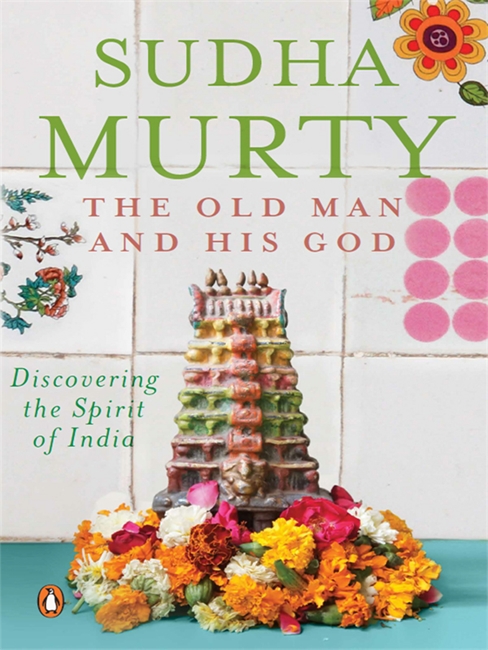
As she goes about her work with the villagers, slum dwellers and the common men and women of India, Sudha Murty-writer, social worker and teacher-listens to them and records what they have to say. Their accounts of the struggles and hardships which they have at times overcome, and at other times been overwhelmed by, are put together in this book.There are stories about people’s generosity-and selfishness-in times of natural disasters like the tsunami; women struggling to speak out in a world that refuses to listen to them; and tales of young professionals trying to find their feet as they climb up the corporate ladder.Told simply and directly from the heart, The Old Man and His God is a collection of snapshots of the varied facets of human nature and a mirror to the souls of the people of India.
Mahashweta
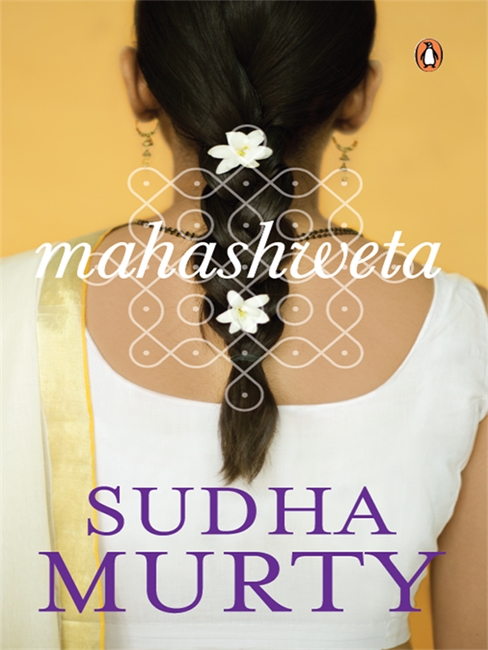
Anupama looked into the mirror and shivered with shock. A small white patch had now appeared on her arm.’ Anupama’s fairytale marriage to Anand falls apart when she discovers a white patch on her foot and learns that she has leukoderma. Abandoned by her uncaring in-laws and insensitive husband, she is forced to return to her father’s home in the village. The social stigma of a married woman living with her parents, her steother’s continual barbs and the ostracism that accompanies her skin condition force her to contemplate suicide. Determined to rebuild her life against all odds, Anupama goes to Bombay where she finds success, respect and the promise of an enduring friendship. Mahashweta is an inspiring story of courage and resilience in a world marred by illusions and betrayals. This poignant tale offers hope and solace to the victims of the prejudices that govern society even today.