



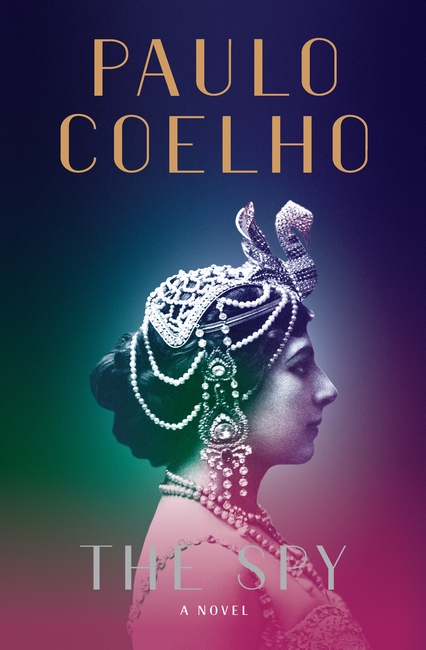
When Mata Hari arrived in Paris she was penniless. Within months she was the most celebrated woman in the city.
As a dancer, she shocked and delighted audiences; as a courtesan, she bewitched the era’s richest and most powerful men.
But as paranoia consumed a country at war, Mata Hari’s lifestyle brought her under suspicion. In 1917, she was arrested in her hotel room on the Champs Elysees, and accused of espionage.
Told in Mata Hari’s voice through her final letter, The Spy is the unforgettable story of a woman who dared to defy convention and paid the ultimate price.
Archives: Books
Breath of Gold

Fights, action, music, romance, secret trysts-renowned classical musician Pandit Hariprasad Chaurasia’s life reads almost like a film script. Wrestler in the morning, student during the daytime and flute player in secret, he lived more than a double life through his early years, till he broke away from his wrestler father’s watchful eye to join All India Radio as a flautist.
His marriage, relocation to Bombay and his foray into films were events rich in drama. As were his meetings with other musical greats, including Pandit Shiv Kumar Sharma, his dearest friend and music partner, with whom he composed the music for films like Silsila, Lamhe and Chandni. His reminiscences about his journey as a student of the reclusive Annapurna Devi, daughter of the famed Allauddin Khan of Maihar, give deep insights into his nature as well as that of his guruma.
Hariprasad Chaurasia has also been a guru to innumerable students in his Mumbai and Bhubaneswar gurukuls, and at the World Music Department, Rotterdam Music Conservatory, the Netherlands, where he is artistic director. His mesmerizing flute can be heard in some of Hindi cinema’s most popular songs, in a composition by the former Beatle George Harrison, as well as in recordings with renowned musicians from across the world.
A plethora of awards, including the Padma Vibhushan, sits lightly on the man, who has taken the humble flute to international renown as an instrument that can hold its own. Hariprasad Chaurasia and his Breath of Gold will inspire and amaze everyone who reads the life story of this much-loved flautist.
A Chequered Brilliance
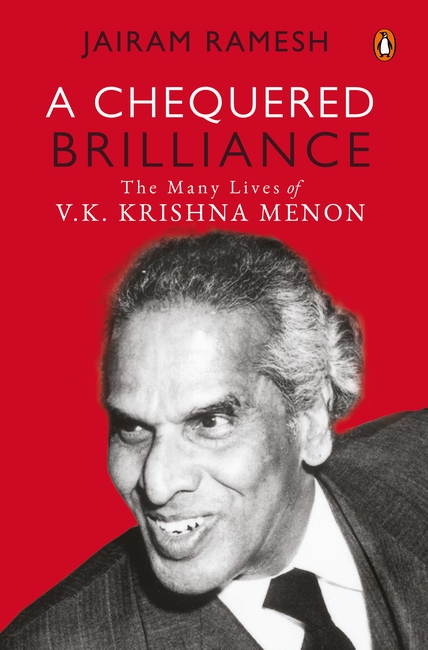
This is a compelling biography of one of India’s most controversial and consequential public figures. V.K. Krishna Menon continues to command our attention not just because he was Jawaharlal Nehru’s confidant and soulmate but also for many of his own political and literary accomplishments. A relentless crusader for Indian independence in the UK in the 1930s and 1940s, he was a global star at the United Nations in the 1950s before he was forced to resign as defence minister in the wake of the India-China war of 1962.
Meticulously researched and based entirely on new archival material, this book reveals Krishna Menon in all his capabilities and contradictions. It is also a rich history of the tumultuous times in which he lived and which he did so much to shape.
India’s War
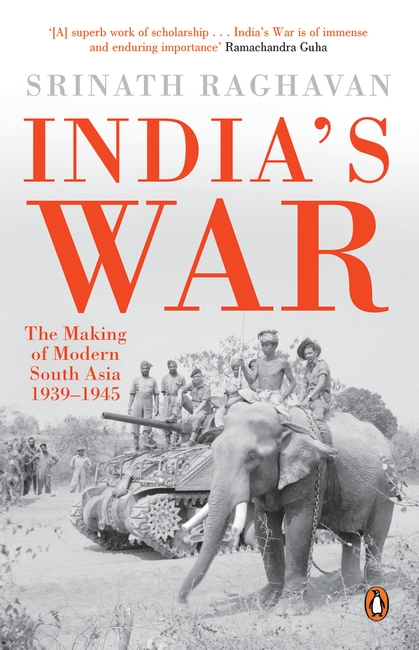
Between 1939 and 1945 India underwent extraordinary and irreversible change. Hundreds of thousands of Indians suddenly found themselves in uniform, fighting in the Middle East, North and East Africa, Europe and-something simply never imagined-against a Japanese army poised to invade eastern India. By the war’s end, the Indian Army had become the largest volunteer force in the conflict, consisting of 2.5 million men, while many millions more had offered their industrial, agricultural and military labour.
In India’s War, historian Srinath Raghavan paints a compelling picture of battles abroad and of life on the home front, arguing that World War II is crucial to explaining how and why colonial rule ended in South Asia. The war forever altered the country’s social landscape, and when the dust settled, India had emerged as a major Asian power with her feet set firmly on the path toward Independence.
From Gandhi’s early support of Britain’s war efforts to the crucial Burma Campaign, Raghavan’s authoritative and vivid account shows how India’s economy, politics and people were forever transformed, laying the groundwork for the emergence of modern South Asia.
Come Home to Yourself
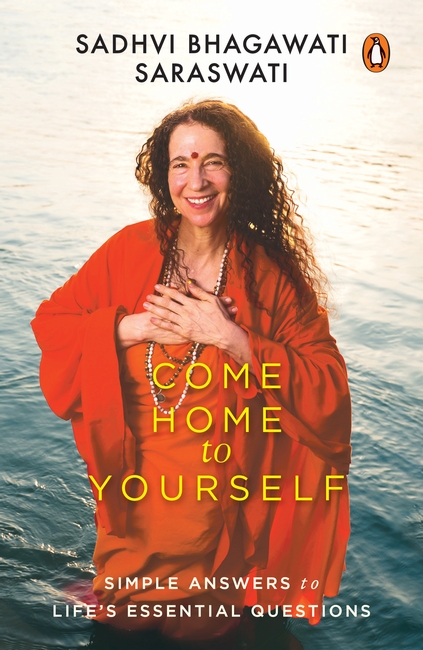
Written in a beautiful, simple and conversational style, Sadhviji covers the most pertinent issues affecting all of us-how to discover inner peace, find love, let go of anger, know your purpose, and connect with God, regardless of your religion. Born and educated in the US, Sadhviji has a PhD in psychology. She came to India approximately twenty-five years ago and has since lived at the Parmarth Niketan Ashram in Rishikesh, on the banks of the Ganga.
This book emerged from the satsangs held each evening after the sacred Ganga aarti at the Ashram, and will resonate deeply with everyone, whether you are old or young, rich or poor, religious or not, traditional or modern. It will touch you deeply, awaken your spirituality and connect you to your true self, allowing you to become the best version you can be.
Why do I think so negatively? How can I break out of negative patterns?
Negative thinking is a tragic pattern that many of us fall prey to. Sadly we do it because we’ve been programmed to do it. One part of it stems from our basic culture of education and discipline, which is a system based on punishments rather than rewards. The children who do well and behave are ignored, and the kids who cause problems are the ones who get all the attention. We constantly hear, ‘You’re stupid, you’re bad, you’re this, you’re that,’ and we internalize it.
The other part of it comes from the rest of the culture-media, politics, etc.-that is rooted in and founded upon convincing us that we are lacking something in our lives that they are going to fulfil. This is called marketing. If you already have everything, how am I going to sell you something? If you’re already satisfied, you’re not a very good customer, especially if what I’m selling is not something you need. I need you to feel that there is something missing in you, which my product is going to solve. Either you are too dark or too fair, your hair is too straight or too curly, you’re too fat or too thin, you’re wearing last year’s model of jeans. This is how advertising works…
I feel anxiety in many situations. Is anxiety a bad thing?
First of all, it’s important to remember that nothing we experience is bad. The only bad thing is thinking that what we feel is wrong, because then we end up separating ourselves from ourselves. We want to be good, we want to think and act in good ways, so the minute we label something inside of us as ‘bad’, we’ve cut ourselves off from it.
So when we examine anxiety, it is not ‘bad’ per se. However, what does it do? It makes our heart race. When we feel stressed and anxious, our heart rate rushes, our blood pressure goes up, all of our energy literally rushes to the extremities. It’s our fight-or-flight response. We are biologically primed and ready in that moment to either fight or flee.
That response would be very useful if we were living in a cave and had to protect ourselves from tigers or bears or warring tribes, but it’s not very helpful in the world we live in. We need that rush of adrenaline to be able to outrun a threat or to climb a tree. But we cannot live in a state of openness and expansion while simultaneously running or fighting. Either the world is something to be afraid of, or the world is something to be one with, but it can’t be both.
Every minute that we feel anxiety, what our body is telling us on a physiological level is that this situation is dangerous. And that’s not a healthy way to live. The question then becomes-how do we stop feeling anxious?
Every time you feel anxious, ask yourself: Is this really a situation where I want to separate myself from the world? And if not, then ask yourself how you can expand the way you think of yourself. Ground yourself in your breath. Try to experience a state of oneness with the people around you, rather than a sense of separation, because where there’s oneness, there’s no fear. Where there’s fear, you feel separation. Anxiety takes us away from the truth of who we are. And on a spiritual path, we want to be closer to who we are.
What is meditation?
Meditation is a noun, not a verb. It is more who we are than just what we do seated on a cushion for a few minutes or hours each day. It is knowing and living as the True Self. It is not a complex, esoteric skill that only experts can perform, such as feats of gymnastics or long division without using paper.
Meditation is what gets us back in touch with who we really are, but without judgement or analysis. Meditation creates stillness in the mind so that we’re able to genuinely live and experience the Truth of who we are. Our problems are not outside; they’re inside. Our minds run around and repeat stories to us-stories that we’ve taken in from our culture, our life. Stories that we’re too much of this, not enough of that, that we should be like this and not like that, and so on. It’s that judging, commentating voice. We internalize that voice, and most of us hear it all day long on repeat. If we listened to our thoughts intently, we would notice that the vast majority of them are utterly useless and make little sense.
Then there comes in thoughts about who others are, who they should be, what they’re doing, what they should be doing, and all of the judgement, yearning,longing, wishing and aversion that clog our minds. It’s not who we are, it’s just what our thinking mind has been habituated to doing mechanically.
Meditation gives us the experience of what it would be like if this weren’t going on all the time. It’s not a very complex skill, but the lack of complexity doesn’t mean it’s easy. This is because of the games that the mind plays. Don’t think that unless you’ve got lots of free time to learn meditation, you won’t succeed. If you’re able to just breathe it out as it comes-whatever ‘it’ is that comes-and bring your awareness back to the breath, you are meditating, and it will ground you back in the truth of who you are.
Meditation brings us back into a place of real awareness-awareness without judgement and analysis, open-eyed witnessing of who we are and what’s there when we remove the non-self from our identification. Through meditation, we are able to peel back layer after layer.
Vision for a Nation
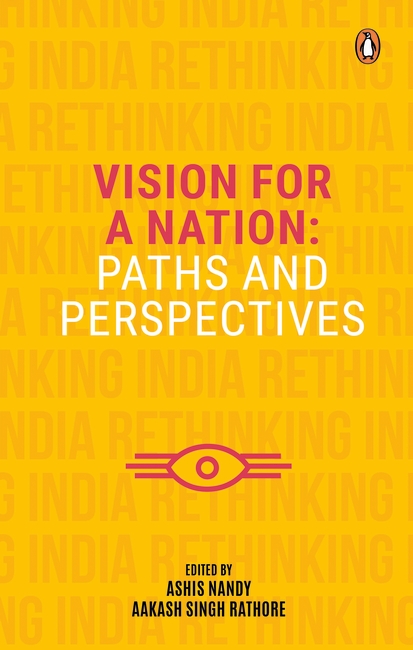
What is the nation? What is the idea of India? Whose India is it, anyway?
This inaugural volume in the series titled Rethinking India aims to kickstart a national dialogue on the key questions of our times. It brings together India’s foremost intellectuals, academics, activists, technocrats, professionals and policymakers to offer an in-depth exploration of these issues, deriving from their long-standing work, experience and unflinching commitment to the collective idea of India, of who we can and ought to be. Vision for a Nation: Paths and Perspectives champions a plural, inclusive, just, equitable and prosperous India, committed to individual dignity as the foundation of the unity and vibrancy of the nation.
In order to further disseminate these ideas-the vision for the nation as aspirationally reflected in the Constitution-this book provides a positive counter-narrative to reclaim the centrality of a progressive, deeply plural and forward-looking and inclusive India. It serves as a fresh reminder of our shared and shareable overlapping values and principles, and collective heritage and resources. The essays in the book are meaningful to anyone with an interest in contemporary Indian politics, South Asian studies, modern Indian history, law, sociology, media and journalism.
Excellence Has No Borders
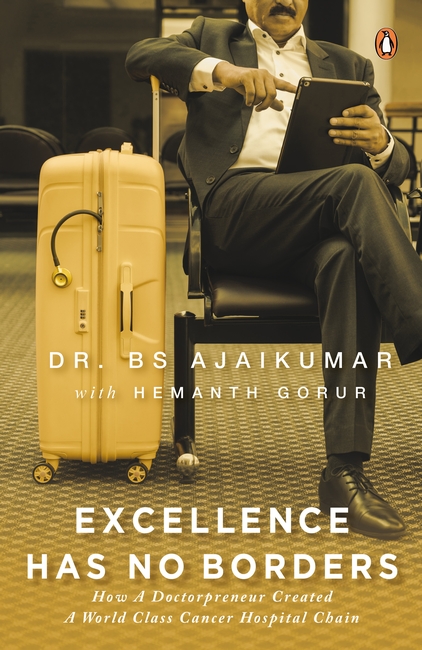
As a fledgling doctor, what would you choose: practising medicine in rural India or going abroad in search of financial security?
How would you face the people who depend on you if your wealth is wiped out in the stock market?
How would you pursue a dream project, knowing the many challenges that lie ahead?
In Excellence Has No Borders, Dr B.S. Ajaikumar, an oncologist, answers these questions in an inspiring and fascinating narrative. He details how he has made cancer treatment accessible to all and created a chain of world-class cancer hospitals across India. Providing a captivating account of his entrepreneurial journey, Dr Ajaikumar recounts the challenges and successes on the path to becoming a doctorpreneur. The book, containing lessons from his life, shows how tenacity, hard work and self-confidence can go a long way in achieving the unimaginable. It is a must-read for anyone looking for inspiration.
Ib’s Endless Search for Satisfaction
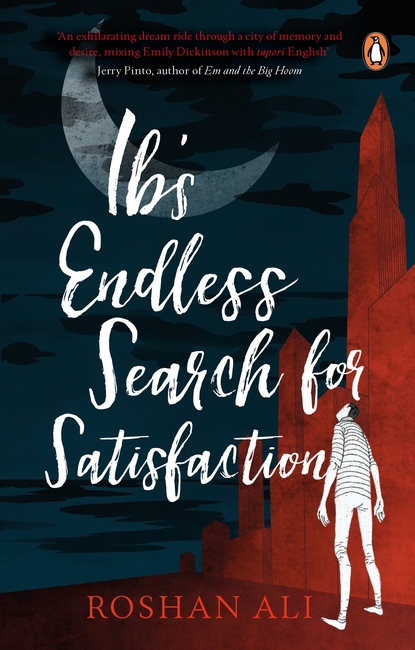
SHORTLISTED FOR THE JCB PRIZE FOR LITERATURE 2019
SHORTLISTED FOR THE SHAKTI BHATT PRIZE 2019
‘And then finally I felt sadness, aided perhaps by those futile notes, by the dust that keeps thickening, by the untouchable past, the inevitable future, and by everything else that pushes us around.’
Ib lives with his schizophrenic father and his ‘nice’ mother negotiating life, not knowing what to do, steered by uncaring winds and pushy people. From his slimy, unmiraculous birth to the tragic death of a loved one, Ib wanders the city, from one thing to another, confused, lost and alone, all the while reflecting on his predicament. He is searching for something-what he does not know-and must overcome many obstacles: family, religion, love and, finally, death. Will he be defeated by ‘this wreckage of modern life?’ Will a mysterious woman lift him out of the ‘cement’ in his soul?
In this journey of sadness and self-reflection, Ib tranforms into an ordinary man from an ordinary boy and along the way, tries to figure out life and understand himself.
In this audacious debut that is insightful, original and deeply disturbing, Roshan Ali’s play of language is nothing less than masterful.
A Bagful of History
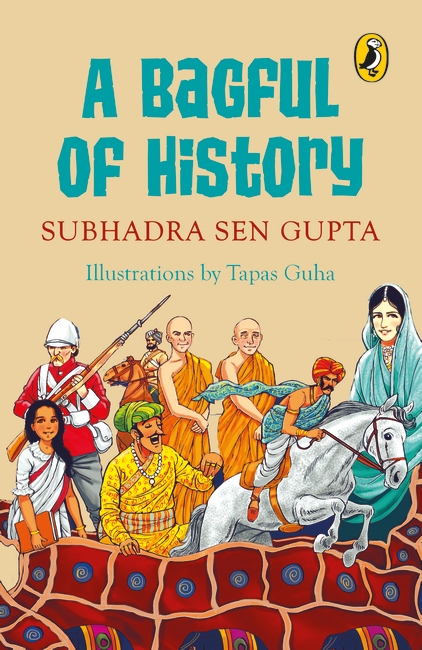
Let’s take a walk through history
And as you travel back in time . . .
~ Dine with Mughal princess Jahanara Begum
~ Have a jugalbandi with Miyan Tansen
~ Compete with the nawabs of Chandni Chowk in a kite-flying duel
~ Be a part of Raja Ram Mohan Roy’s fight for the education of the girl child
~ Revolt with Indian sepoys in the Mutiny of 1857
. . . and witness many more exciting events!
Peppered with stunning illustrations and unusual trivia, this is a fascinating read about the unforgettable events and people from Indian history.
The Indian Pantry
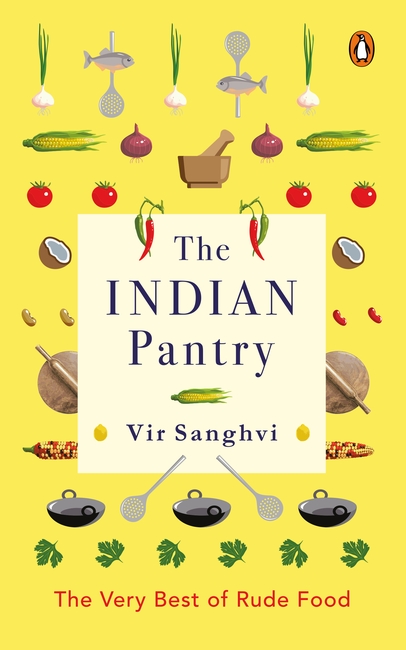
WINNER OF THE GOURMAND WORLD COOKBOOK AWARD 2019
The way we look at our food has changed a lot in the last few years. With a slow-growing awareness about what we eat and where our food is coming from, we all wish there was an expert who could tell us everything we need to know. Why is haldi suddenly so popular around the world? Do avocados live up to the craze? Which fruit and vegetables are indigenous to India?
From food columnist and star journalist Vir Sanghvi comes a collection of insightful, witty and myth-busting pieces about the ingredients in our kitchens.
In his distinctive, no-holds-barred style, Sanghvi introduces the reader to not only the Indian pantry but also the culture, history and unique experiences that make Indian food so popular the world over.