WISDEN INDIA BOOK OF THE YEAR 2019
WINNER OF SPORTS BOOK AWARD OF THE YEAR AT EKAMRA SPORTS LITERATURE FESTIVAL 2019
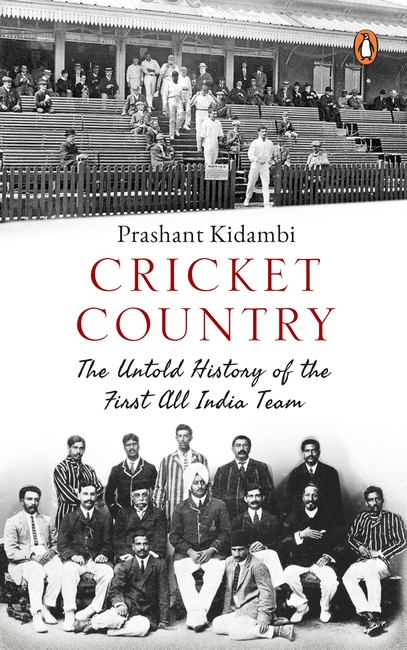
On the morning of 6 May 1911, a large crowd gathered at Bombay’s Ballard Pier. They were there to bid farewell to a motley group of sixteen Indian men who were about to undertake a historic voyage to London. The persons whom the crowd cheered that sultry Saturday morning were members of the first All-India cricket team.
Conceived by an unlikely coalition of imperial and Indian elites, it took twelve years and three failed attempts before an ‘Indian’ cricket team made its debut on the playing fields of imperial Britain in the blazing coronation summer of 1911.
This is a capacious tale with an improbable cast of characters set against the backdrop of revolutionary protest and princely intrigue. The captain of the Indian team was nineteen-year-old Bhupinder Singh, the embattled Maharaja of Patiala. The other cricketers were selected on the basis of their religious identity. Most remarkable, for the day, was the presence in the side of two Dalits: the Palwankar brothers, Baloo and Shivram.
Drawing on an unparalleled range of original archival sources, Cricket Country is the untold story of how the idea of India was fashioned on the cricket pitch in the high noon of empire.

SHORTLISTED FOR GOODREADS CHOICE AWARD 2019
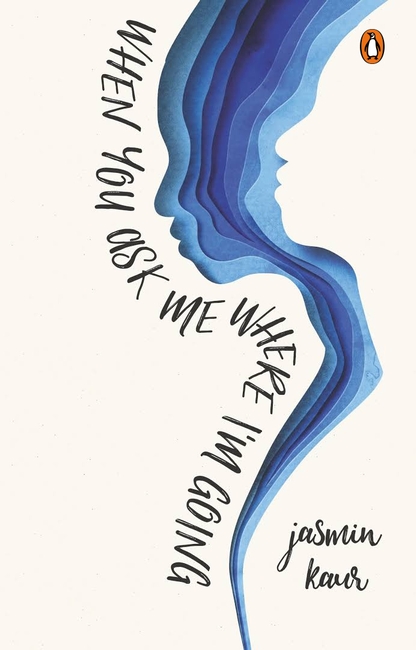
scream
so that one day
a hundred years from now
another sister will not have to
dry her tears wondering
where in history
she lost her voice
The six sections of the book explore what it means to be a young woman living in a world that doesn’t always hear her and tell the story of Kiran as she flees a history of trauma and raises her daughter, Sahaara, while living undocumented in North America.
Delving into current cultural conversations including sexual assault, mental health, feminism, and immigration, this narrative of resilience, healing, empowerment, and love will galvanize readers to fight for what is right in their world.

In this collection of satirical essays in her deft, inimitable style, Naomi Datta tells you how to survive various situations-from how to befriend tiger moms to how not to get a pink slip- simply by being ‘ordinary’. This is a book which celebrates conformity and tells you how to be perfectly regular, to blend in and be largely forgettable. It is a fine art-moderation. This book will hold up a mirror to all of us, and we may not like what we see.

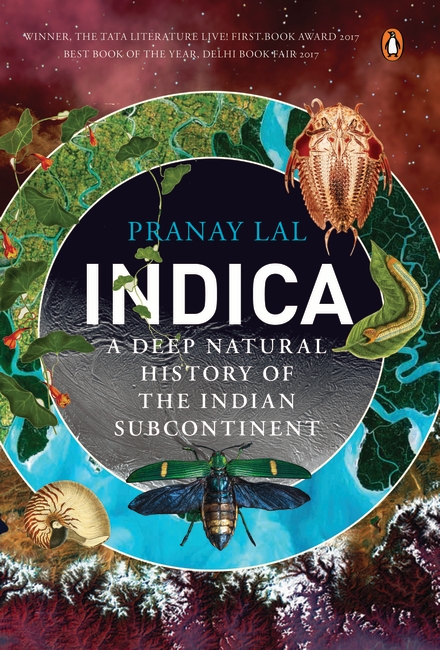
Did you know that the exquisite caves of Ellora were hewn from rock formed in the greatest lava floods the world has known-eruptions so enormous that they may well have obliterated dinosaurs? Or that Bengaluru owes its unique climate to a tectonic event that took place 88 million years ago? That the Ganga and Brahmaputra sequester nearly 20 per cent of global carbon, and their sediments over millions of years have etched submarine canyons in the Bay of Bengal that are larger than the Grand Canyon?Ever heard of Rajasaurus, an Indian dinosaur which was perhaps more ferocious than T rex? Many such amazing facts and discoveries-from 70-million-year-old crocodile eggs in Mumbai to the nesting ground of dinosaurs near Ahmedabad-are a part of Indica: A Deep Natural History of the Indian Subcontinent.
Researching across wide-ranging scientific disciplines and travelling with scientists all over the country, biochemist Pranay Lal has woven together the first compelling narrative of India’s deep natural history filled with fierce reptiles, fantastic dinosaurs, gargantuan mammals and amazing plants. This story, which includes a rare collection of images, illustrations and maps, starts at the very beginning-from the time when a galactic swirl of dust coalesced to become our life-giving planet-and ends with the arrival of our ancestors on the banks of the Indus. Pranay Lal tells this story with verve, lucidity and an infectious enthusiasm that comes from his deep, abiding love of nature.
Indica won the award for the best non-fiction debut award at the Tata Lit Fest in Mumbai in 2017, the best book award at the Delhi Book Fair 2017, and was named among the top 10 memorable books of the year by Amazon and The Hindu‘s non-fiction list of 2017

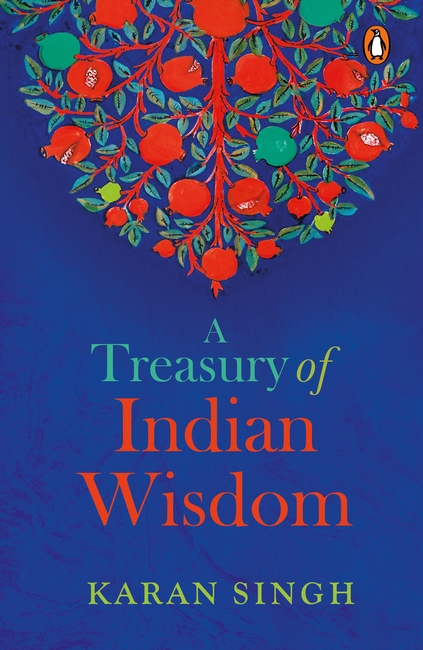
The civilization of the Indian subcontinent is by far the world’s oldest living civilization. A Treasury of Indian Wisdom traces its intellectual and spiritual history over 5000 years.
The anthology begins with Vedic hymns, journeys into the heart of Vedantic philosophy through the Upanishads, and discusses the fundamental truths offered by Buddhist and Jain monks. Presenting the beauty and devotion in the verses of the Bhakti, Sufi and Sikh gurus, it finally evolves into the contemporary ideologies of the moderns like Jawaharlal Nehru, J. Krishnamurti and Osho. In keeping with the spirit of pluralism, the book puts together the wide-ranging wisdom of saints and scholars, thinkers and reformers, poets and leaders.
At a time of great turmoil and transition, Dr Karan Singh’s selections come as a reminder of our timeless secular heritage for a generation seeking its place in the world.

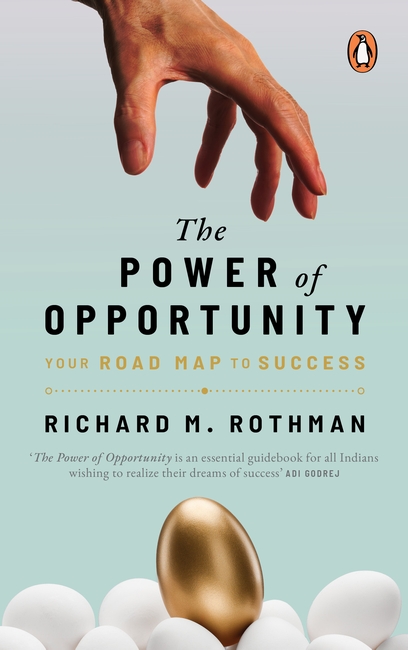
Opportunities are free, abundant, and available to all-including you. Better yet, golden opportunities are like powerful magnets that attract all the resources you need to succeed. People who started with nothing-like Dhirubhai Ambani, Steve Jobs, Jeff Bezos, Sunil Mittal and Bill Gates-all leveraged the power of golden opportunities to make it big.
But there’s a catch. Because golden opportunities are golden on the inside, not on the outside, people usually miss them. For the first time, Richard M. Rothman provides you with a simple and proven process to see and choose golden opportunities. Based on over three decades of research, The Power of Opportunity is your roadmap to achieve the kind of success that you’ve never dreamed possible.

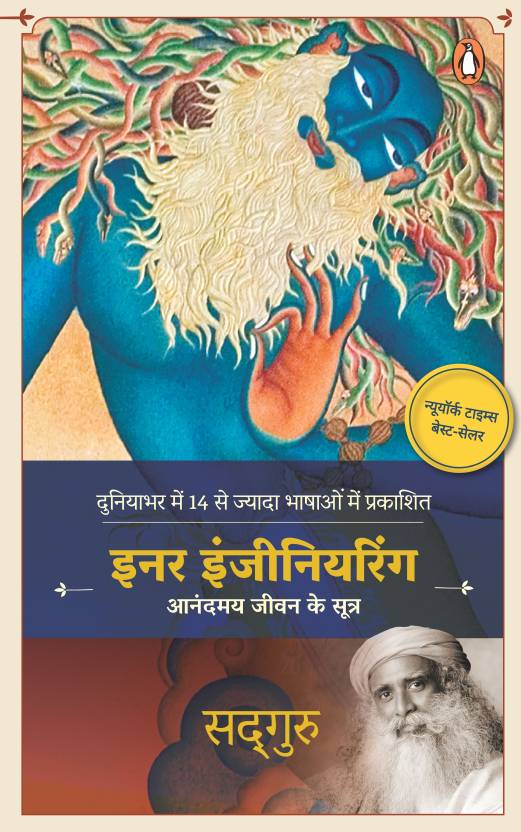
इनर इंजीनियरिंग युगद्रष्टा एवं योगी सद्गुरु के अंतर्ज्ञान और उपदेशों से परिपूर्ण एक रोचक पुस्तक है। यह व्यक्ति की आंतरिक बुद्धिमत्ता को जगाने का बेहतरीन साधन है। इसमें जीवन और जगत का वह परम ज्ञान प्रस्तुत किया गया है, जिसमें ब्रह्मांड की प्रज्ञा प्रतिबिंबित होती है। अपनी इस पुस्तक में सद्गुरु योग और अध्यात्म के अपने अनुभवों का निचोड़ प्रस्तुत करते हुए आत्म-नवनिर्माण यानी इनर इंजीनियरिंग की अवधारणा स्पष्ट करते हैं।
‘The first literary manifesto to point to an Indian way of appropriating the English language’
-Guardian
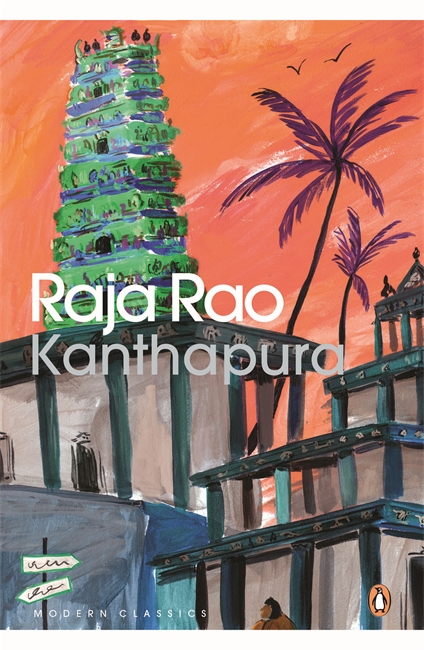
Regarded as the first major Indian novel in English, Kanthapura is the story of how Gandhi’s struggle for Independence came to a casteist south Indian village. Young Moorthy, back from the city, brimming with new ideas, seeks to cut across ancient barriers and unite the villagers in non-violent action. The story emerges through the eyes of a delightful old woman, who comments on the villagers’ actions with sharp-eyed wisdom, evoking the spirit of India’s traditional folk epics.
‘The finest novel to come out of India in recent years’
-E.M. Forster
‘Lyrical, fluid, colloquial’—The New York Times
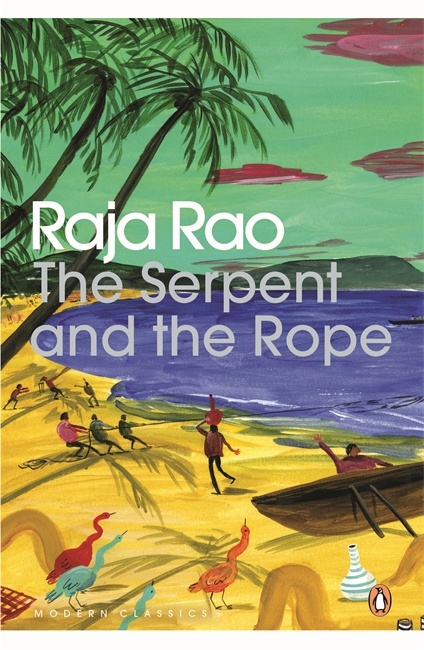
Rama, a young scholar, meets Madeleine at a university in France. Though they seem to be made for each other, both alike in temperament and character, at times they are divided, a huge gulf separating them. Rama’s trip back to India for his father’s illness forcibly reminds him of the underlying contrasts between India and Europe, and of a certain conflict between them in himself. When he returns to France, Rama and Madeleine must face the problems in their marriage. Can they preserve their identities, or must one sacrifice one’s inheritance to make the relationship a success?
‘More than any other writer of his generation [Rao] established the status of Indian literature in English’—The Hindu
‘A teasing comedy of manners exploring metaphysical themes’—Telegraph
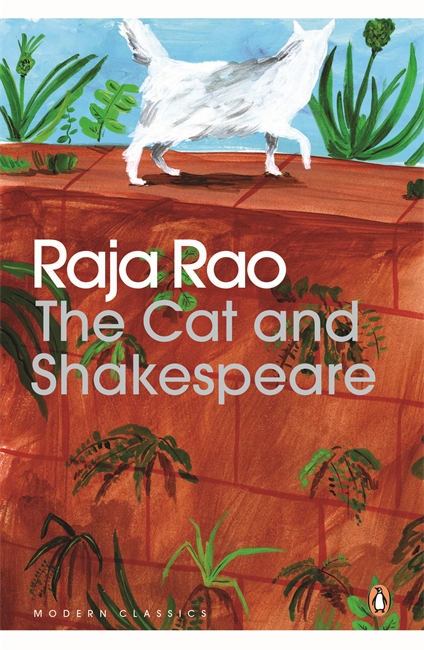
The Cat and Shakespeare is a gentle, almost teasing fable of two friends. Govindan Nair, an astute, down-to-earth philosopher and clerk, tackles the problems of routine living with extraordinary common sense and gusto, and his refreshing and unorthodox conclusions continually panic Ramakrishna Pai, Nair’s friend, neighbour and narrator of the story. This evocative novel brings alive the raw texture of Indian life, and delights in its humour.
‘[A] pathbreaker of Indian writing in English’—Guardian