



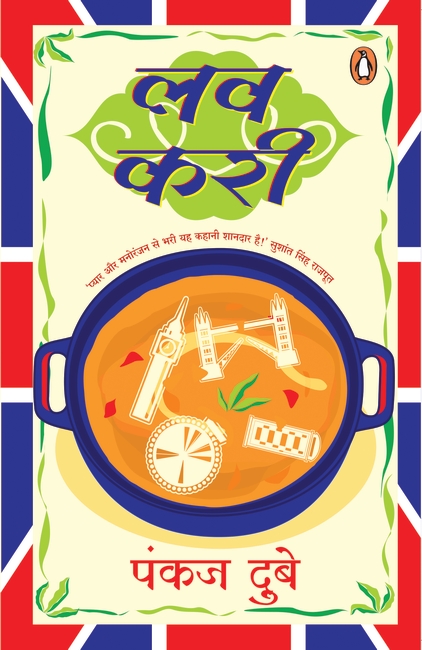
Three flatmates in London begin to see how different their lives are and at the same time how similar their backgrounds. And when life begins to deal its rough cards, how easy things become when they are all together!
Ali is a Pakistani chef with the dream of setting up his own nihari restaurant. Shehzad is a cool tattoo artist from Bangladesh with a broken past, and Rishi is an Indian with nondescript skills.
They all make one mistake: that of falling in love with the same girl. They become arch-rivals. But when their worlds turn topsy-turvy, they have no one but each other to turn to, learning that love is as much about letting go as it is about possessing.
Archives: Books
Ice With Very Unusual Spirits
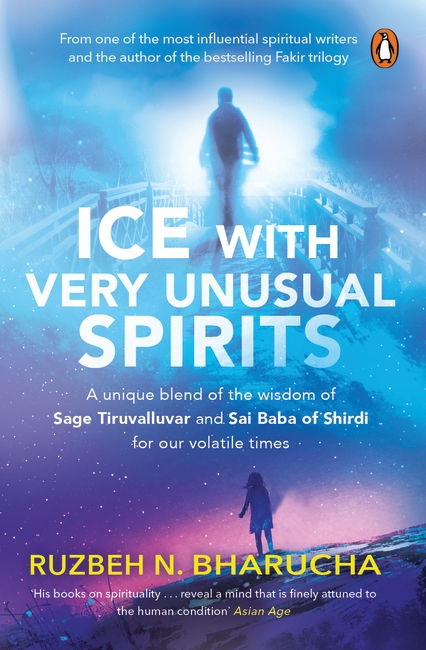
‘He is a nonconformist, someone for whom spirituality is as freewheeling as breathing and who sees God as benevolent and non-threatening’ Life Positive
Distraught and angry after the death of his young children, Irashaw Cawas Engineer (Ice), a world-renowned painter of Divinity, turns his back on his Master and spirituality.
Around the same time, he develops a strong bond with a little girl next door, who might not survive her heart condition. Ice is willing to give up his life to save hers even if it means seeking the same God he turned away from. Baba Sai agrees to help him provided Ice allows Sage Tiruvalluvar to speak through him to help souls understand the essence of life.
Derived from the sages, this powerful spiritual read is about the wisdom of life and living, and understanding, accepting and seeking a higher purpose.
Love Curry

Three flatmates in London begin to see how different their lives are and at the same time how similar their backgrounds. And when life begins to deal its rough cards, how easy things become when they are all together!
Ali is a Pakistani chef with the dream of setting up his own nihari restaurant. Shehzad is a cool tattoo artist from Bangladesh with a broken past, and Rishi is an Indian with nondescript skills.
They all make one mistake: that of falling in love with the same girl. They become arch-rivals. But when their worlds turn topsy-turvy, they have no one but each other to turn to, learning that love is as much about letting go as it is about possessing.
So All Is Peace
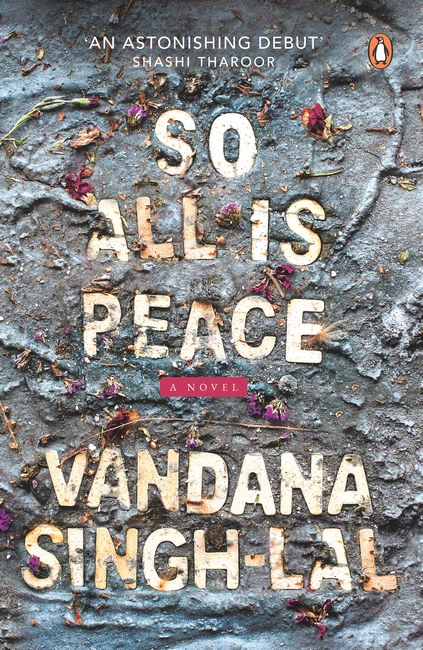
But sit down, breathe deep, and ask a woman. Any woman. They are there.
When twin sisters Layla and Tanya are found starving in their upmarket apartment, there is frenzy in the media. How often does one find two striking, twenty-something women, one half-dead, the other not speaking, living in a state of disrepair and chaos, for no apparent reason? Theories about them are rampant, but disillusioned journalist Raman is loath to follow the story. That is, until Tanya begins to talk to him, and the darker truth behind the sisters’ lives starts to unravel.
A richly atmospheric, deeply claustrophobic story with a stunning denouement, of two women confronting the everyday realities of their city and country, So all is Peace provides an unflinching insight into love, lust, fear, grief, and the decisions we make, through a cast of sharply drawn characters brought together by an unspoken wrong.
Sixteen Stormy Days
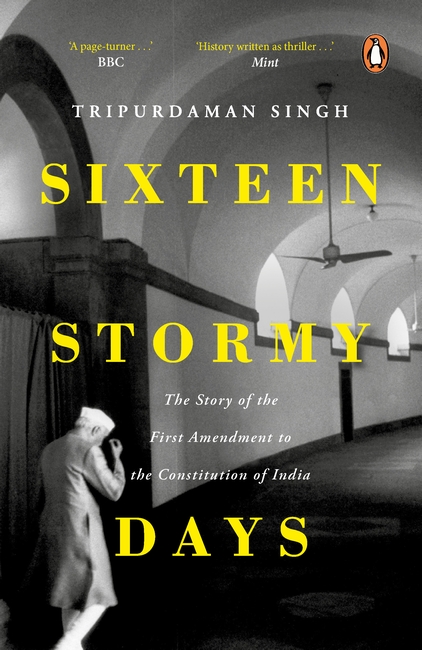
Sixteen Stormy Days narrates the riveting story of the First Amendment to the Constitution of India-one of the pivotal events in Indian political and constitutional history, and its first great battle of ideas. Passed in June 1951 in the face of tremendous opposition within and outside Parliament, the subject of some of independent India’s fiercest parliamentary debates, the First Amendment drastically curbed freedom of speech; enabled caste-based reservation by restricting freedom against discrimination; circumscribed the right to property and validated abolition of the zamindari system; and fashioned a special schedule of unconstitutional laws immune to judicial challenge. Enacted months before India’s inaugural election, the amendment represents the most profound changes that the Constitution has ever seen. Faced with an expansively liberal Constitution that stood in the way of nearly every major socio-economic plan in the Congress party’s manifesto, a judiciary vigorously upholding civil liberties, and a press fiercely resisting his attempt to control public discourse, Prime Minister Jawaharlal Nehru reasserted executive supremacy, creating the constitutional architecture for repression and coercion.
What extraordinary set of events led the prime minister-who had championed the Constitution when it was passed in 1950 after three years of deliberation-to radically amend it after a mere sixteen days of debate in 1951?
Drawing on parliamentary debates, press reports, judicial pronouncements, official correspondence and existing scholarship, Sixteen Stormy Days challenges conventional wisdom on iconic figures such as Jawaharlal Nehru, B.R. Ambedkar, Rajendra Prasad, Sardar Patel and Shyama Prasad Mookerji, and lays bare the vast gulf between the liberal promise of India’s Constitution and the authoritarian impulses of her first government.
Cobalt Blue
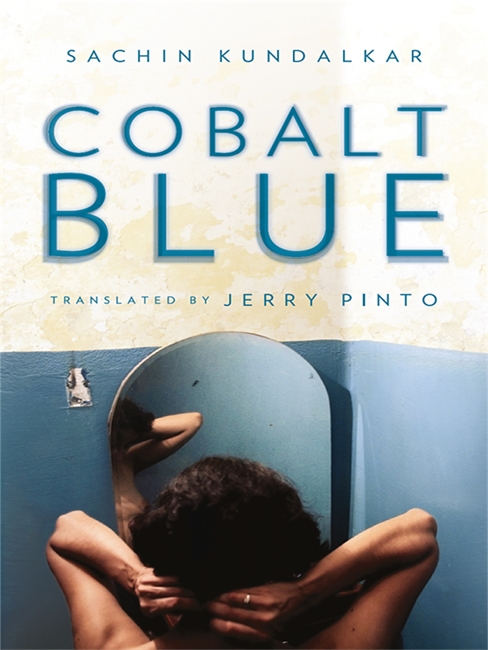
A paying guest seems like a win-win proposition to the Joshi family. He’s ready with the rent, he’s willing to lend a hand when he can and he’s happy to listen to Mrs Joshi on the imminent collapse of our culture.
But he’s also a man of mystery. He has no last name. He has no family, no friends, no history and no plans for the future.
The siblings Tanay and Anuja are smitten by him. He overturns their lives. And when he vanishes, he breaks their hearts.
Elegantly wrought and exquisitely spare, Cobalt Blue is a tale of rapturous love and fierce heartbreak told with tenderness and unsparing clarity.
Helen: The Life and Times of A Bollywood H-Bomb
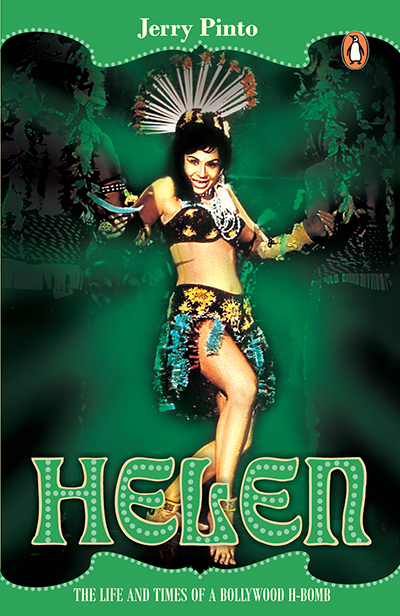
It is now over two decades since the Hindi-film heroine drove the vamp into extinction, and even longer since the silver screen was ignited by the true Bollywood version of a cabaret. Yet, Helen – nicknamed ‘H-Bomb’ at the height of her career – continues to rule the popular imagination. Improbably, for a dancer and a vamp she has become an icon.
Jerry Pinto’s gloriously readable book is a study of the phenomenon that was Helen: Why did a refugee of French-Burmese parentage succeed as wildly as she did in mainstream Indian cinema? How could otherwise conservative families sit through, and even enjoy, her ‘cabarets’? What made Helen ‘the desire that you need not be embarrassed about feeling’? How did she manage the unimaginable: vamp three generations of men on screen?
Equally, the book is a brilliantly witty and provocative examination of middle-class Indian morality; the politics of religion, gender and sexuality in popular culture; and the importance of the song, the item number and the wayward woman in Hindi cinema.
Dawn: The Warrior Princess of Kashmir
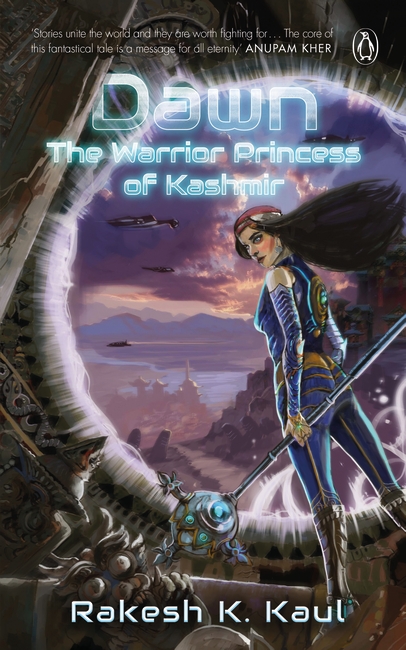
It is AD 3000. Hiding from the world in a cave in Mount Kailash, Dawn encounters two strange beings on her sixteenth birthday. They urge the long-lost princess of Kashmir to fulfil the prophecy of fighting the Troika. This nefarious trinity-the merciless leader Arman, the AI war machine AIman and their supreme, omniscient overlord Dushita-is a vicious manipulator of stories, minds and histories. With an army of weaponized AIs and mind-controlled automatons based in Kashmir, they rule over a deadly world where men have lost their souls and women have been slain-all heading to Sarvanash, the Great Apocalypse.
With a motley group of five outlaw boys, Dawn sets upon a tumultuous journey across Time and Space to battle the most technologically lethal empire known to humanity. Her only hope is to seek out secrets hidden in the Niti folk tales of Kashmir and unlock the powers within her to become the ultimate warrior.
As the only female left in the world, Dawn will decide the fate of the Universe. But can she unleash her body, mind and spirit and ignite the fiery cosmic power of all the women who have ever lived?
A sci-fi saga that reveals eternal truths as it traverses the terrains of the Kashmir Valley-the birthplace of the greatest stories ever.
Hymns For The Drowning
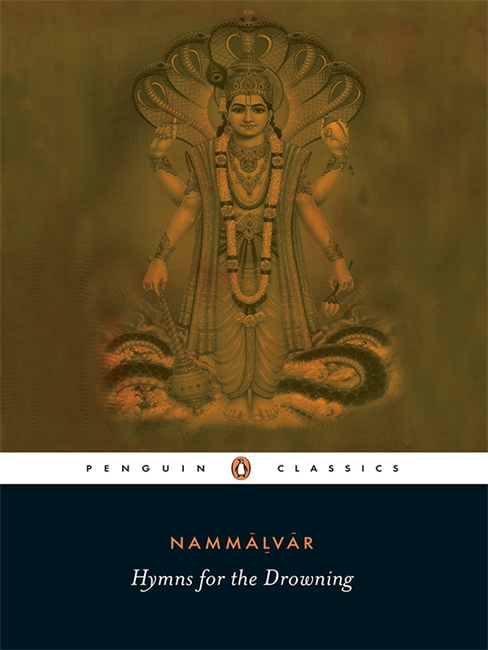
The poems in this book are some of the earliest about Visnu, one of the Hindu Trinity, also known as Tirumal, the Dark One. Tradition recognizes twelve alvars, saint-poets devoted to Visnu, who lived between the sixth and ninth century in the Tamil-speaking region of south India. These devotees of Visnu and their counterparts, the devotees of Siva (nayanmar), changed and revitalized Hinduism and their devotional hymns addressed to Visnu are among the earliest bhakti (devotional) texts in any Indian language. In this selection from Nammalvar’s works, the translations like the originals reflect the alternations of philosophic hymns and love poems, through recurring voices, roles and places. They also enact a progression”from wonder at the Lord’s works, to the experience of loving him and watching others love him, to moods of questioning and despair and finally to the experience of being devoured and possessed by him.
A Taste Of Life
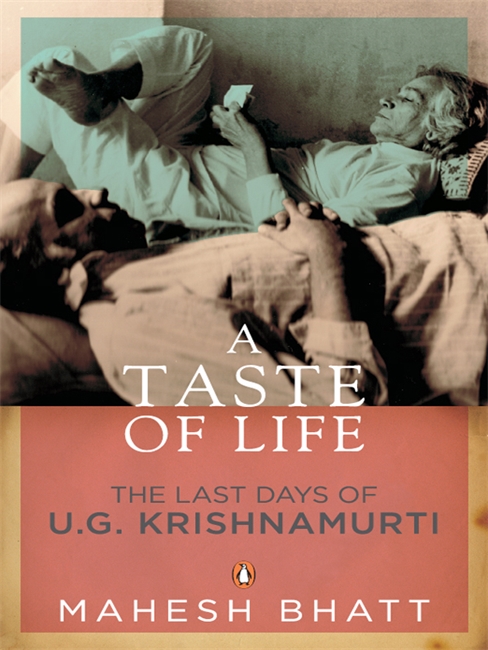
U.G. Krishnamurti famously described enlightenment as a neurobiological state of being with no religious, psychological or mystical implications. He did not lecture, did not set up organizations, held no gatherings and professed to have no message for mankind.
Known as the ‘anti-guru’, the ‘raging sage’ and the ‘thinker who shuns thought’, U.G. spent his life destroying accepted beliefs in science, god, mind, soul, religion, love and relationships—all the props man uses to live life. Having taken away all support systems from those who came to him, he refused to replace them with those of his own; always insisting that each must find his own truth.
And when U.G. knew that it was time for him go, he refused all attempts to prolong life with medical help. He let nature, and his body, take their course.
On the afternoon of 22 March 2007, U.G. Krishnamurti passed away in Vallecrosia, Italy.