As he steps into his ninety-first year, the prolific Ruskin Bond brings nine decades of wisdom to his readers, encapsulated in a book that draws from the author’s most personal experiences.
Reflecting on childhood and old age, people and places and Mother Nature—an inseparable part of his life—the writer ponders over the fleeting nature of human ambition, the sanctity of dreams (for he still dreams) and the endless generosity of our planet.
Fresh and witty, the text puts forth profound learnings with a candour that is uniquely his. Featuring life lessons, musings and memorable quotes, this book is a tribute to life’s magical moments. Because when life fades, it’s words and memories that live on.

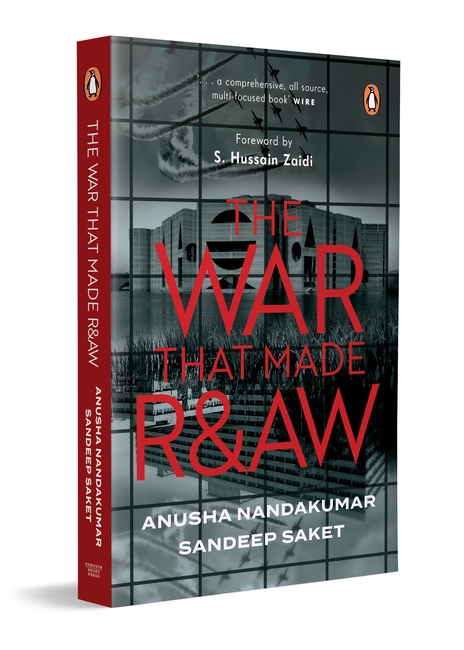
Two events in the 1960s underlined the urgent need to restructure and revitalise India’s Intelligence system: the 1962 war against China, and the one against Pakistan in 1965, both shocking instances of failures in information gathering. The officer who would be given charge of this task was R.N. Kao—someone as unlike romanticised ideals of spies in films and novels as possible.
The founder-chief of India’s Research and Analysis Wing lived and operated from the shadows. Understated and gentlemanly, he may not have looked the part, but Kao undoubtedly put Indian Intelligence on the world map.
In this riveting book, authors Anusha Nandakumar and Sandeep Saket trace the roots of modern Indian espionage and describe the newly formed R&AW’s integral role in the liberation of Bangladesh. Kao had one goal, to build an Intelligence-gathering agency that would ensure the security and integrity of India. And eventually, the legend of the ‘Kaoboys’—the nickname given to the team he built—would spread far and wide. This is the compelling tale of how it started; of covert operations, courage and quick thinking; and of how wars are won as much off the battlefield as on it.
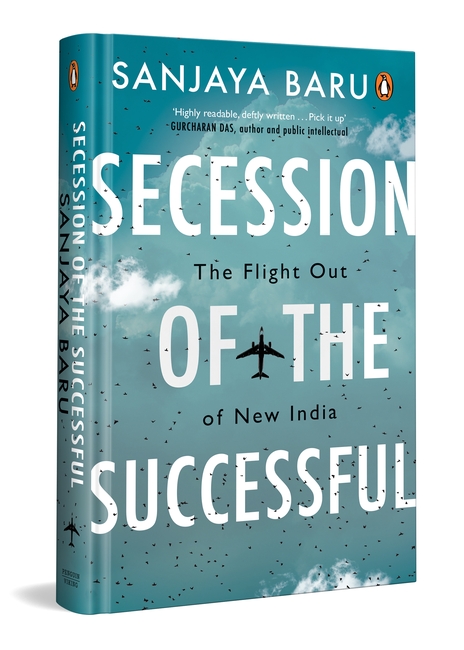
Why are so many of our fellow citizens disentangling from the political and economic future of India to invest in the destiny of other nations? Are Non-Resident Indians turning irreversibly into Non-Returning Indians? Is enhancing soft power a fair trade off for losing priceless human capital? And, perhaps most pertinently, is India becoming, after Russia and China, the constricting land of intolerance and authoritarianism from which the elites flee in droves, seeking greener and more liberal pastures—not to forget tax havens.
Marshalling his magisterial scholarship into highly readable prose, Sanjaya Baru raises all these questions and more in Secession of the Successful: The Flight Out of New India, which more than being a tome is a wakeup call we had better heed.

Clarice Aranxa has come to Bougainvillea House to die. But there will be no peace here, nor quiet surrender, as long-forgotten memories are brutally revived. And even as Clarice grows weaker by the day from the ravages of motor neuron disease, her violent past is mirrored in a series of unexplained deaths.

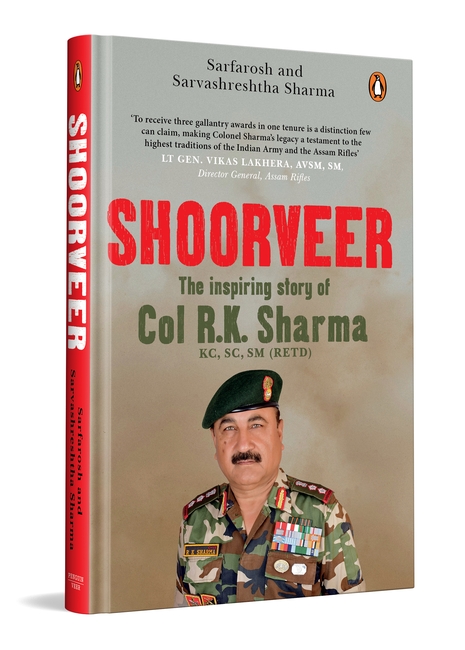
The only person to be decorated with the Kirti Chakra and the Shaurya Chakra in the same investiture ceremony, Col. RK Sharma’s army career is what legends are made of.
Serving in the Kargil War, where he won back Point 5465 for his battalion and for the country; the volatile North East, where his tenure was marked by extraordinary successes in counter-insurgency operations as well as in redefining the relationship of Assam Rifles with the local people; and in the Congo as a peacekeeper under the UN flag, Raj’s career stands out for his humility, his daredevil attitude, and raising the prestige of the army wherever he served.
But it was not all so easy.
Going beyond stereotypical narratives about soldiers fighting their way through everything, Shoorveer is the story of a man who embraced the challenges life threw at him and overcame them with sheer determination and grit. This is a story of valour on the battlefield and courage in everything else life has to offer. An intimate look at what it means to serve as a soldier and lead as an officer, this is the story of every army personnel out there.
Yoga has emerged as one of the biggest safety kit to surviving the new digital lifestyle we have. However, people are still confused about what works and what doesn’t. Instead of adopting long routines, small things done everyday help in starting a day well, quelling anxiety, feeling energetic during the day and then getting a sound, peaceful sleep at night.
This book by well-known yogini Juhi Kapoor brings together a dincharya or a daily routine that puts you on the path of yogic healing. From waking up stretches to kriyas for detoxification, exercises to bring down the strain in your eyes and ears; from surya namaskars with vedic chants to balancing both sides of the brain and bringing harmony in your mind, body and breath, 21 habits, tells you how exactly to incorporate yoga in your day-to day life and bring about that sea change you have been aspiring for.
Parenting is a journey of self-discovery as much as it is about raising children. In this book, psychotherapist Riri G. Trivedi and parent coach Anagha Nagpal draw on years of expertise in psychotherapy and positive parenting to provide valuable insights and much-needed support for Indian parents across the globe to balance cultural nuances with modern challenges like screen time, social media, teen relationships, and joint family dynamics.
Rich with global research and real-life stories, this book offers a framework for positive parenting in the Indian cultural context and presents timely, age-appropriate strategies to handle every stage of your child’s life—from toddlerhood to teenage.
Learn how to heal from your childhood trauma and break free from negative patterns through self-reflection exercises. Discover self-regulation techniques to respond calmly to stress, setting a positive example for your children. Pave a healthier way for your child to develop a positive mindset and emotional resilience to handle the ups and downs of growing up.
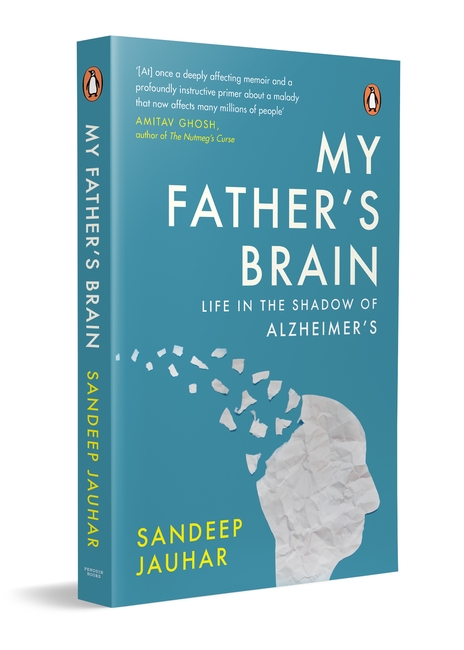
There may be up to 10 million Indians living with Alzheimer’s disease or related dementias, and that number is expected to increase dramatically in the next few decades. What is it like to live with and amid this increasingly prevalent condition-an affliction that some fear more than death? In My Father’s Brain, the distinguished physician and author Sandeep Jauhar sets his father’s descent into Alzheimer’s alongside his own journey toward understanding this disease and how it might best be coped with, if not cured.
In an intimate memoir rich with humour and heartbreak, Jauhar relates how his immigrant father and extended family felt, quarrelled, and found their way through the dissolution of a cherished life. Along the way, he lucidly exposes what happens in the brain as we age and our memory falters and explores everything from the history of ancient Greece to the most cutting-edge neurological-and bioethical-research. Throughout, My Father’s Brain confronts the moral and psychological concerns that arise when family members must become caregivers, when children’s and parents’ roles reverse, and when we must accept unforeseen turns in our closest relationships-and in our understanding of what it is to have a self. The result is a work of essential insight into dementia, and into how scientists, caregivers, and all of us in an aging society are reckoning with the fallout.
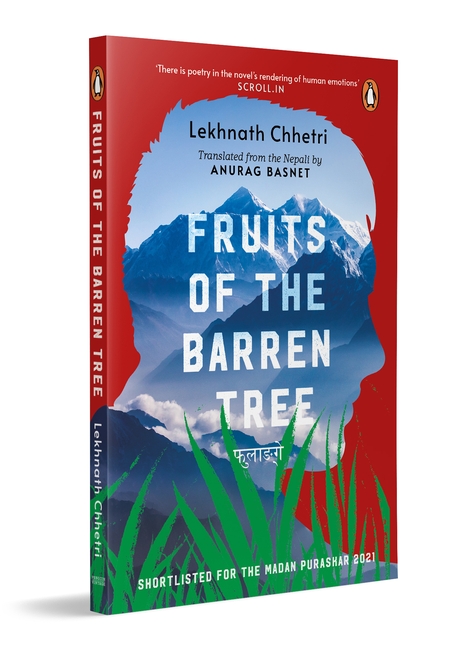
Darjeeling, late 1980s. The demand for a separate state of Gorkhaland has taken a violent turn. The Green Party is at war with the Red Party-and with the state’s security forces. Murder, loot, terror and arson beset the Himalayan foothills.
Fruits of the Barren Tree is a story of that time, and of Relling, a small village near Darjeeling. In Relling there’s Basnet, the village shaman, and his wife; there’s Jhuppay, their son-incorrigible thief, truant and amateur drunk; and also Nimma, Jhuppay’s great love, whose only desire in life is that he take the path of virtue. There’s Chyaatar too, former army man, now a militia commander in the Green Party, who rules the village with an iron hand. Ever the miscreant, nothing Jhuppay does can win Nimma’s heart. But when the Red Party hires his loudspeaker for a meeting-the first innocent, honest job of his life-it sets Jhuppay, Nimma and Chyaatar on a murderous course that fate itself cannot derail.
Originally published in Nepali as Phoolange, this sharp, evocative novel is the story of a failed movement and a cautionary tale of how easily the contagion of violence can infect a community. Intensely visual and imbued with a strong sense of place, it is equally a compelling portrait of Darjeeling away from the brochures and the postcards.

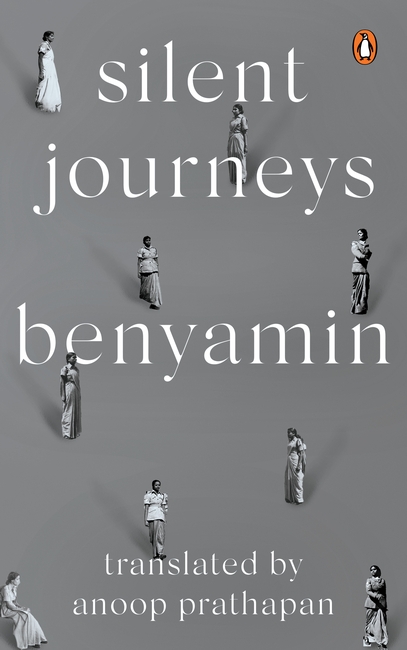
What of the many travels undertaken through history by men and women, in war and peace, that have been unrecorded, invisible, and forgotten?
In Benyamin’s Silent Journeys, we trace the voyage of Mariamma, a young nurse from Kerala who travelled from her hometown in Manthalir all the way across the world. Nothing was known of her journey until many decades later, when a curious great grandson began his investigations only to stumble across a tale of great adventure, hardship, resilience, and love.
The novel reflects upon terrific stories of unaccompanied and courageous journeys that many valiant women, primarily nurses, have made through history, reaching the coldest places in the Arctic, Canada, remote tribal locations in the desert, the interiors of the dark continent, and almost everywhere in Europe