



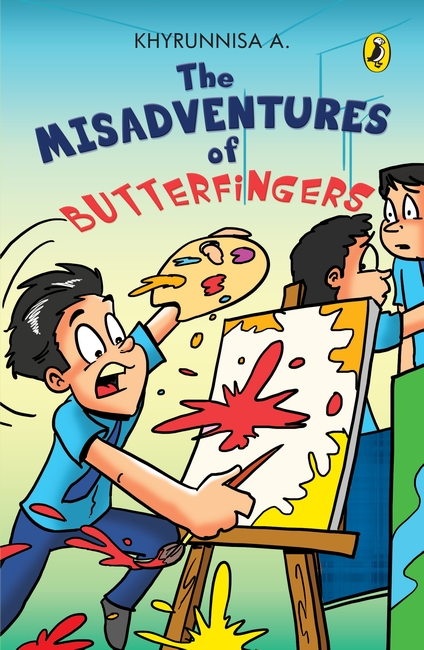
Fun-and-disaster alert-Butterfingers is here again!
Amar Kishen is not called Butterfingers for nothing. Wherever he goes, disaster hurtles along-and this time’s no different. You’ve seen him set fire to his hair, head-butt a teacher, score an own goal, send his chicken-curry-soaked bat flying . . . Can things get any crazier?
With Amar, they can!
Now watch him tackle ghosts, pounce on his principal, knock a thief unconscious, stop time and get his life chased out of him by a nasty Doberman. Join Amar on his adventures as he whips up a tornado of trouble!
Archives: Books
Run, It’s Butterfingers Again!
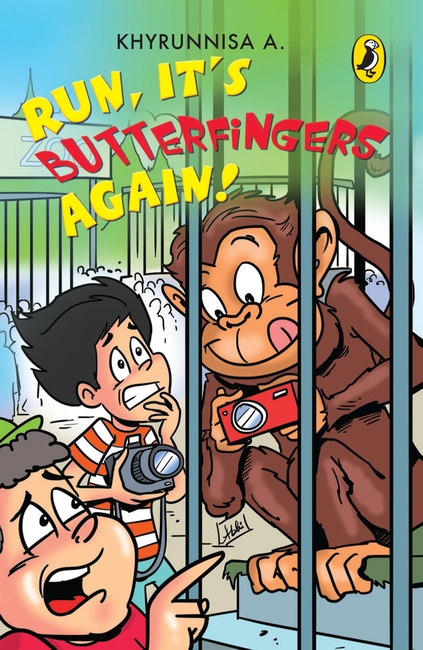
Crash! THUD! Oops!
Butterfingers returns . . . with a fun medley of thrills, spills, chills and giggles
Everyone’s favourite klutz, Amar Kishen, aka Butterfingers, has no problem getting into trouble . . . and that’s the problem!
Follow his mad escapades as he becomes a human cannonball, rides a runaway horse, takes up karate, acts as a Martian, oversees the great fall of china, tumbles into a river and tries his hand at fencing, with hilarious consequences, of course!
This second collection of stories about the eternally endearing Butterfingers promises to be as rib-tickling-ly funny as the first.
The Best Baker in the World (My First Matinee)
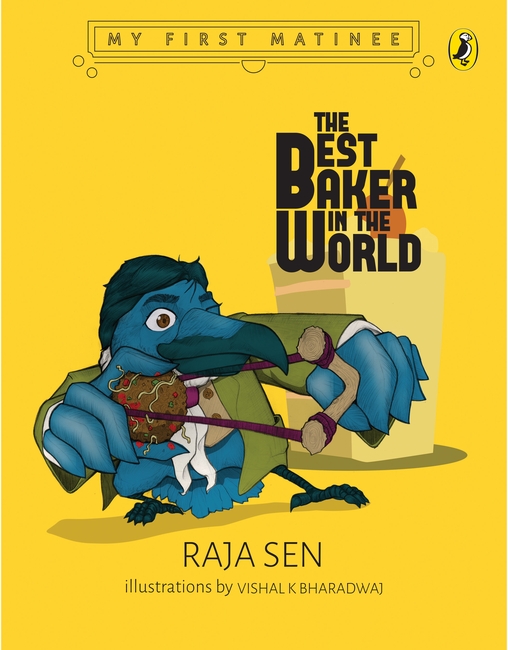
He’ll make you a cake you can’t refuse . . .
Everyone adores Don Cannoli. His pastry is the stuff of legend, and people wait in line for hours for a bite of his cakes. One day, something dramatic- and bright orange-happens, and this means big trouble. Now it’s up to the Don’s children to save the day. With the big Cake-Off competition around the corner, can the kids rally around in time to uphold the family name?
And who can possibly fit into the Don’s oversized apron?
Written entirely in limericks, The Best Baker in the World is a wild and whimsical tale that takes on one of the greatest films ever made-The Godfather.
The Nation As Mother
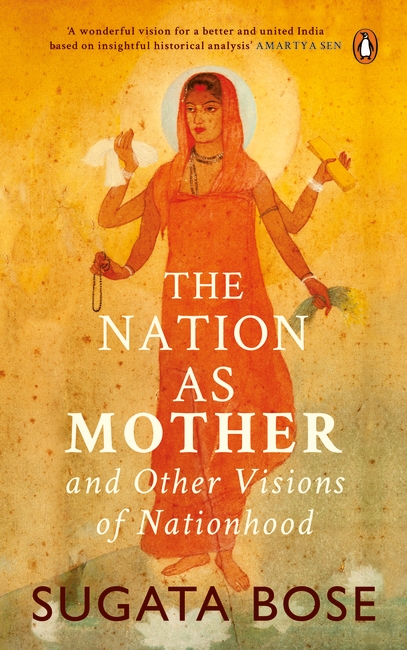
‘History matters in contemporary debates on nationalism,’ Sugata Bose contends in The Nation as Mother. In this interconnected set of deeply researched and powerfully argued essays and speeches Bose explores the relationship between nation, reason and religion in Indian political thought and practice. Offering a subtle interpretation of the ways of imagining the nation as mother, the book illuminates different visions of India as a free and flexible federal union that have acquired renewed salience today.
Breaking out of the false dichotomy between secular nationalism and religious communalism, the author provides incisive analyses of the political legacies of Tagore and Gandhi, Nehru and Bose, Aurobindo and Jinnah, and a range of other thinkers and leaders of the anti-colonial movement. The essays question assumptions about any necessary contradiction between cosmopolitanism and patriotism and the tendency among religious majoritarians and secularists alike to confuse uniformity with unity. The speeches in Parliament draw on a rich historical repertoire to offer valuable lessons in political ethics.
In arguing against the dangers of an intolerant religious majoritarianism, this book makes a case for concepts of layered and shared sovereignty that might enable an overarching sense of Indian nationhood to coexist with multiple identities of the country’s diverse populace. The Nation as Mother delves into history on the occasion of the seventieth anniversary of freedom to evoke an alternative future of a new India based on cultural intimacy among its different communities.
Pink and Blue
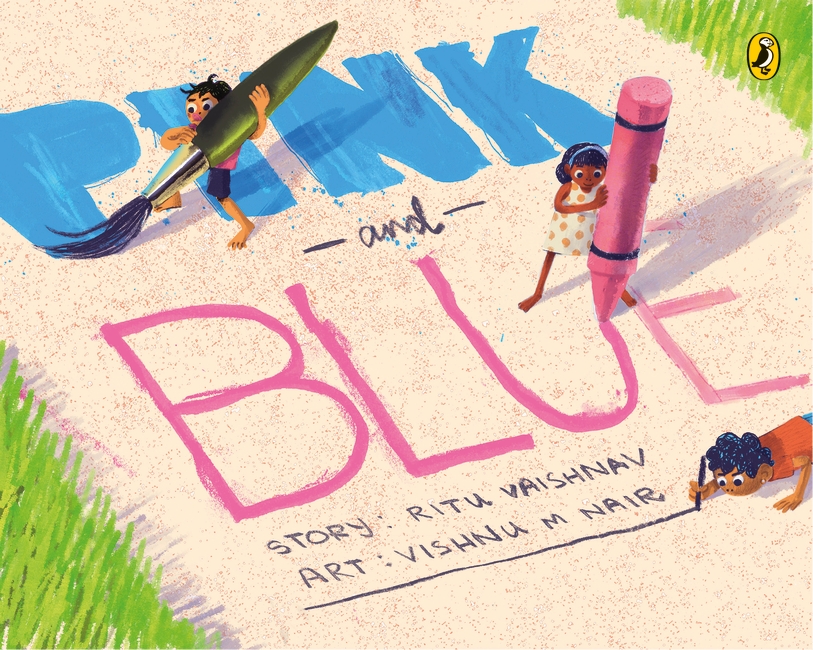
Pink is for girls Blue is for boys
Girls play house Boys play cricket
Cry like a girl Kick like a boy
Sometimes grown-ups can say silly things that just aren’t true–not for all kids anyway!
This book is an attempt by a mum to start a conversation with her little one about gender stereotypes. It encourages kids to question these notions before they begin to shape their thinking and offers adults an opportunity to initiate this very necessary discussion.
Our Moon Has Blood Clots
SPECIAL LIMITED EDITION
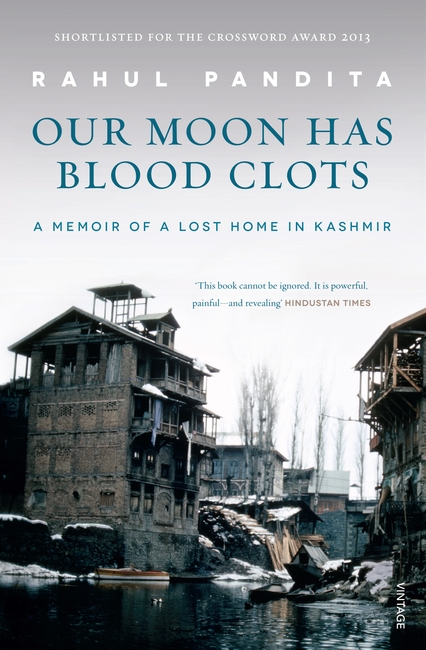
Rahul Pandita was fourteen years old in 1990 when he was forced to leave his home in Srinagar along with his family, who were Kashmiri Pandits: the Hindu minority within a Muslim-majority Kashmir that was becoming increasingly agitated with the cries of ‘Azadi’ from India.
The heartbreaking story of Kashmir has so far been told through the prism of the brutality of the Indian state, and the pro-independence demands of separatists. But there is another part of the story that has remained unrecorded and buried.
Our Moon Has Blood Clots is the unspoken chapter in the story of Kashmir, in which it was purged of the Kashmiri Pandit community in a violent ethnic cleansing backed by Islamist militants. Hundreds of people were tortured and killed, and about 3,50,000 Kashmiri Pandits were forced to leave their homes and spend the rest of their lives in exile in their own country.
Rahul Pandita has written a deeply personal, powerful and unforgettable story of history, home and loss.
Godsong
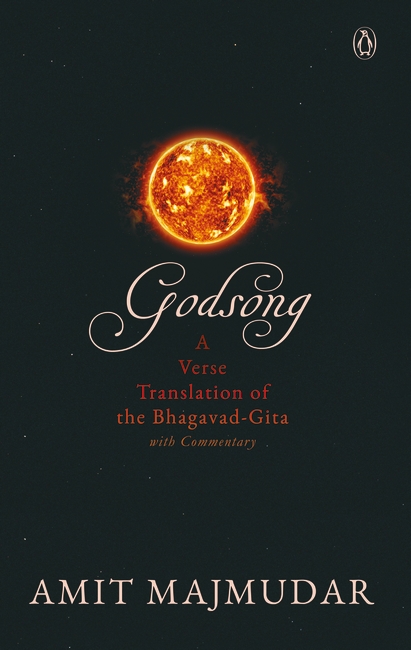
Born in the United States into a secularized Hindu family, Amit Majmudar puzzled over the many religious traditions on offer and found that the Bhagavad-Gita had much to teach him with its “song of multiplicities.” Chief among them is that “its own assertions aren’t as important as the relationships between its characters . . . The Gita imagined a relationship in which the soul and God are equals.” It is, he believes, “the greatest poem of friendship . . . in any language.” His verse translation captures the many tones and strategies Krishna uses with Arjuna-strict and berating, detached and philosophical, tender and personable.
The listener’s guides to each section expand on the main text and what is happening between the lines in accessible terms. Godsong is an instant classic in the field, from a poet of skill, fine intellect, and-perhaps most important-devotion.
Of Counsel
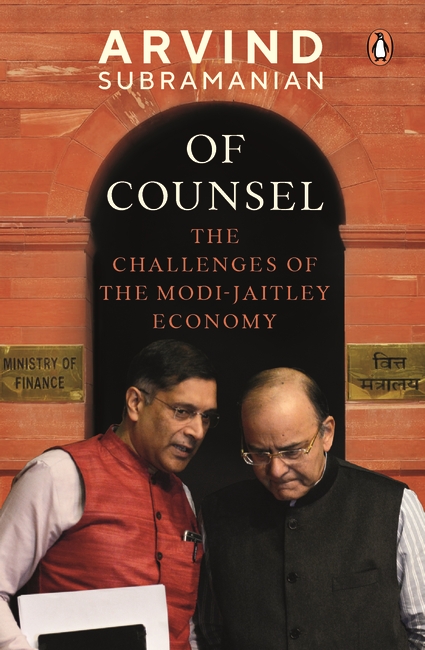
For nearly four years, Arvind Subramanian stood at the centre of economic policymaking in India. Through the communication of big ideas and the publication of accessible Economic Surveys, he gained a reputation as an innovator. Through honest pronouncements that avoided spin, he became a figure of public trust. What does it entail to serve at the helm of the world’s fastest-growing economy, where decision-making affects a population of more than a billion people?
In Of Counsel: The Challenges of the Modi-Jaitley Economy, Arvind Subramanian provides an inside account of his rollercoaster journey as the chief economic advisor to the Government of India from 2014-18, succeeding Raghuram Rajan as captain of the ship. With an illustrious cast of characters, Subramanian’s part-memoir, part-analytical writings candidly reveal the numerous triumphs and challenges of policymaking at the zenith, while appraising India’s economic potential, health and future through comprehensive research and original hypotheses.
Charged with the task to restructure an insecure and fragile economy, Subramanian’s trusteeship has seen the country through one of the most hotly contested and turbulent periods of economic governance and policymaking in recent decades-from the controversial recall of 85 per cent of circulated currency during demonetization to a complete overhaul in taxation with the introduction of the GST. Subramanian also addresses the overleveraging of public-sector banks, the fraught links between the state and private sector (‘stigmatized capitalism’), the changing relationship between the state and the individual, and the ever-pervasive, life-threatening issues surrounding climate change.
Recognized as one of the Top 100 Global Thinkers according to Foreign Policy magazine, Arvind Subramanian’s Of Counsel: The Challenges of the Modi-Jaitley Economy is a deep-dive into the man, the moments, the measures and the means.
Sitayana
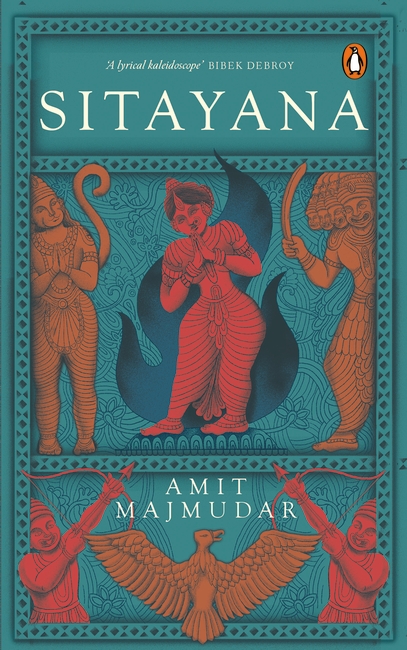
Countless retellings, translations, and reworkings of the Ramayana’s captivating story exist-but none are as vivid, ingenious and powerful as Amit Majmudar’s Sitayana.
Majmudar tells the story of one of the world’s most popular epics through multiple perspectives, presented in rapid sequence-from Hanuman and Ravana, down to even the squirrel helping Rama’s army build the bridge.
However, above all, Majmudar focuses on the fierce resistance of Sita, letting us hear her voice as we have never heard it before.
Of Course It’s Butterfingers!
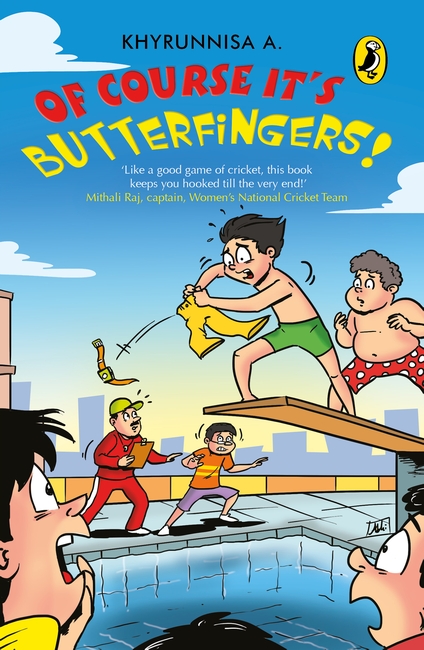
Bang! Thump! Crash! Who’s the wizard of the woeful, the foremost lord of the foul-up, the bumbling baron of blunders? Of course it’s Butterfingers!
Even when Amar Kishen-better known as Butterfingers-isn’t stumbling through misadventures, he sure has disaster tailing him every step of the way.
And now that he’s back, his ‘brilliant’ ideas land him in trouble (as usual), whether it’s messing around with an Egyptian mummy, playing cricket with an all-girls team, dropping a watch in a swimming pool or saving a rock star’s life!
Join the irrepressible Butterfingers in this exciting new instalment of side-splitting short stories.