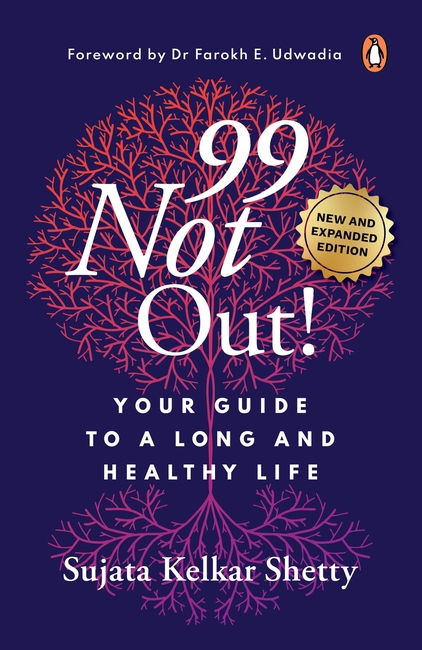
We live in unprecedented times, and it has become startlingly clear that our health and the well-being of our loved ones matter more than anything else in the world. There is much we can do to help ourselves, and our loved ones, build mental and physical immunity. There are evidence-based wellness practices that can fortify our mind and body’s natural immunity, which can otherwise wear thin in times of crisis.
99 Not Out! shares over twenty such practices from the field of Ayurveda and Western medicine. If just a handful of these are consciously woven into our day, they can strengthen the very fabric of our lives.
This new and expanded edition of 99 Not Out! has an additional chapter on managing stress and building resilience.

Express yourself clearly and forcefully!
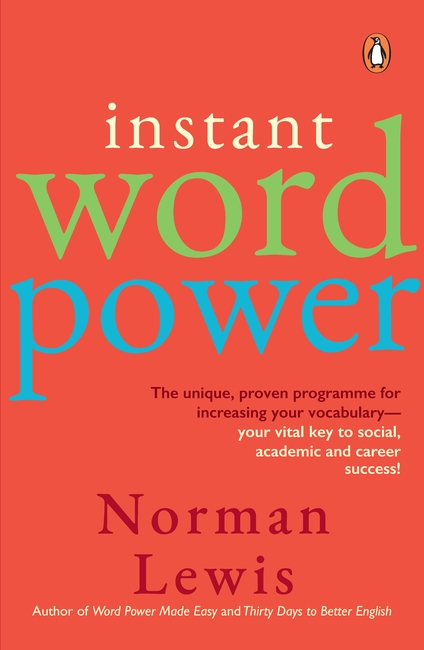
This surefire method of building a better vocabulary was created by bestselling author Norman Lewis, whose unique and effective programme has taught countless people how to make word power work for them. With the aid of easy-to-follow, step-by-step instruction, you will:
Learn the Latin and Greek roots, prefixes and suffixes that unlock the meanings of thousands of words
Master spelling, pronunciation and grammar skills
Convey your ideas more clearly and convincingly
Become a confident speaker, comfortable in both social and business situations
Never be embarrassed by using a word incorrectly

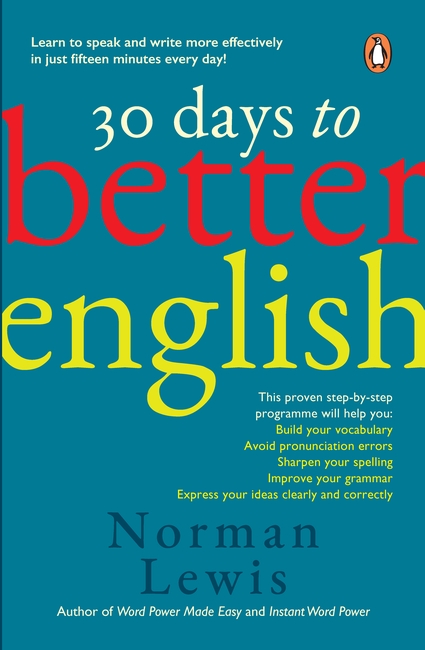
Does your English work for you or against you?
What you say is important, but so is how you say it.
If you find yourself using the same words over and over again . . . making embarrassing mistakes in grammar . . . misspelling and mispronouncing words of average difficulty . . . you may be hurting your chances of success in school or on the job without even knowing it!
If you’re not satisfied with what your English says about you, test your problem areas with this popular, remarkably effective handbook. Each of the thirty short chapters zeroes in on a different aspect of grammar, usage, spelling and pronunciation, with challenging and often amusing exercises to help you monitor your daily progress. Your vital communication skills can improve with Thirty Days to Better English.

In this explosive book, Suraj Yengde, a first-generation Dalit scholar educated across continents, challenges deep-seated beliefs about caste and unpacks its many layers. He describes his gut-wrenching experiences of growing up in a Dalit basti, the multiple humiliations suffered by Dalits on a daily basis, and their incredible resilience enabled by love and humour. As he brings to light the immovable glass ceiling that exists for Dalits even in politics, bureaucracy and judiciary, Yengde provides an unflinchingly honest account of divisions within the Dalit community itself-from their internal caste divisions to the conduct of elite Dalits and their tokenized forms of modern-day untouchability-all operating under the inescapable influences of Brahminical doctrines.
This path-breaking book reveals how caste crushes human creativity and is disturbingly similar to other forms of oppression, such as race, class and gender. At once a reflection on inequality and a call to arms, Caste Matters argues that until Dalits lay claim to power and Brahmins join hands against Brahminism to effect real transformation, caste will continue to matter.

AN EXPLOSIVE NEW NOVEL THAT ASKS DIFFICULT QUESTIONS ABOUT MODERN IDENTITY IN A WORLD ON FIRE
Anita Rose lives in a concrete block in one of Karachi’s biggest slums, languishing in poverty with her mother and older brother. Determined to escape her stifling circumstances, she struggles to educate herself, scribbling down English words-gleaned from watching TV or taught by her elderly neighbour-in her most prized possession: a glossy red notebook. All the while she is aware that a larger destiny awaits her.
On the other side of Karachi lives Monty, whose father owns half the city. But Monty wants more than fast cars and easy girls. When the rebellious Layla joins his school, he knows his life will never be the same again.
And far away in Portsmouth, Sunny fits in nowhere. It is only when he meets his charismatic, suntanned cousin Oz-whose smile makes Sunny feel found-that that he realizes his true purpose.
These three disparate lives will cross paths in the middle of a desert, a place where life and death walk hand-in-hand, and where their closely guarded secrets will force them to make a terrible choice.

Enjoy this collection of six Nicky-Noni books that show children how having values is so cool!
Nicky and Noni are just like you. They’re funny, they’re crazy and they love to have fun. But sometimes, just sometimes, they can be very naughty indeed. That’s when they get into trouble. Along the way, they learn something important–that having good values helps them become good people. And that being good isn’t boring, but lots of fun.
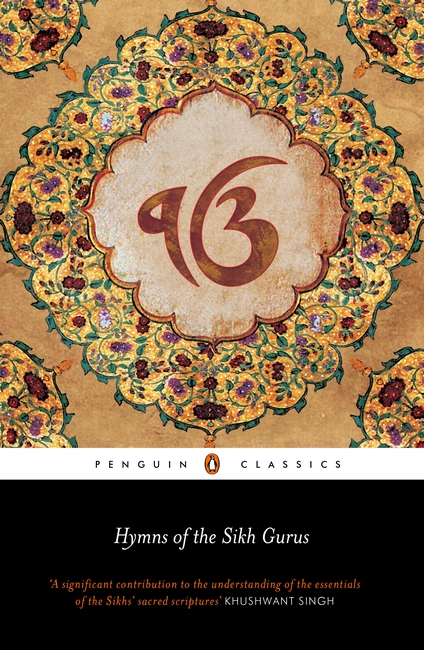
The vision of Guru Nanak, the fifteenth-century founder of the Sikh faith, celebrated the oneness of the Divine that both dwells within and transcends the endless diversity of life. Guru Nanak’s immaculate vision inspired the rich and inclusive philosophy of Sikhism, which is reflected in this exquisite and highly acclaimed translation of poems from the religion’s most sacred texts: the Guru Granth Sahib, the principal sacred text of the Sikh religion, which consists of poems and hymns by Guru Nanak, his successors and Hindu and Islamic saints; and the Dasam Granth, a collection of devotional verses composed by the tenth Sikh Guru.
Poetry from these highly revered texts is heard daily and at rites of passage and celebration in Sikh homes and gurudwaras, carrying forward the Sikh belief in the oneness and equality of all humanity.

Tatalog: Eight Modern Stories from A Timeless Institution provides readers with an insider glimpse of the challenges faced by Tata companies and how they rose above them all and carved a name for themselves. The book vividly brings forth never-before-heard-of actual cases.
Beyond the Last Blue Mountain: Written with J.R.D. Tata’s cooperation, this superb biography tells the JRD story from his birth to his death in 1993 in Switzerland. Divided into four parts, the book explores JRD’s life-from his birth in France to his accession to the chairmanship of the Tata Group-his passion for aviation, his half-century-long stint as the outstanding personality of Indian industry and glimpses of his friendships with personalities like Jawaharlal Nehru, Mahatma Gandhi and Indira Gandhi, among others.
For the Love of India: The Life and Times of Jamsetji Tata provides an account of the unerring instinct of Jamsetji Nusserwanji Tata, a man who knew what it would take to restore the pride of a subjugated nation and help it prepare for a place among the leading nations of the world once it came into its own. The book draws upon fresh material from the India Office Library in London and other archives, as also Jamsetji’s letters, to portray the man and his age. It is an absorbing account that makes clear how remarkable Jamsetji’s achievement truly was, and why, even now, one hundred years after his death, he seems like a man well ahead of his time.

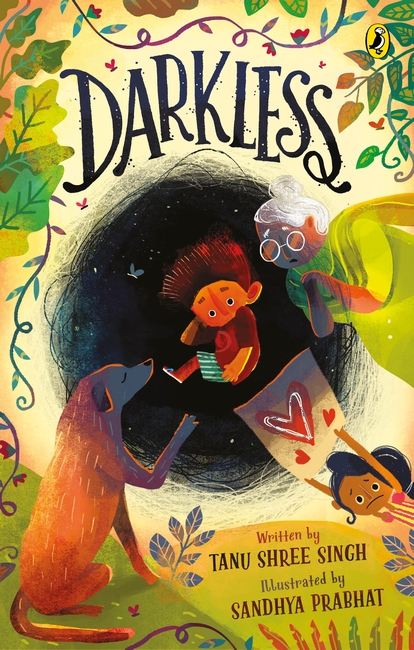
On a night when the moon shone and the little specks of light danced on the ceiling, Ani lay awake. ‘It’s dark,’ he said.
Everything has turned dark in Ani’s life. Dobby, Nani, friends – he has them all by his side. But he pulls away from them.
Will Ani ever find his way out of the darkness?
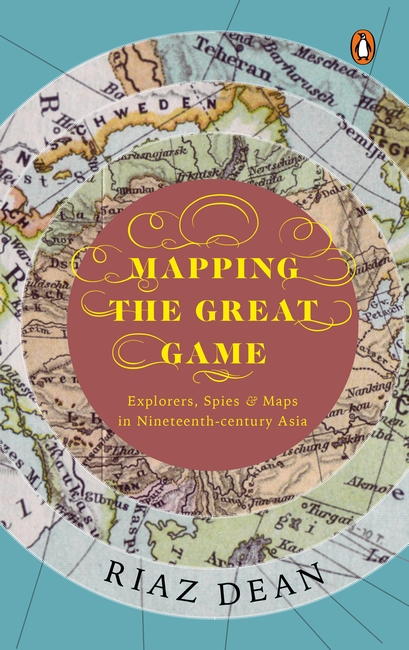
The Great Game raged through the wilds of Central Asia during the nineteenth century, as Imperial Russia and Great Britain jostled for power. Tsarist armies gobbled up large tracts of Turkestan, advancing inexorably towards their ultimate prize, India. These rivals understood well that the first need of an army in a strange land is a reliable map, prompting desperate efforts to explore and chart out uncharted regions. Two distinct groups would rise to this challenge: a band of army officers, who would become the classic Great Game players; and an obscure group of natives employed by the Survey of India, known as the Pundits.
While ‘the game’ played out, a self-educated cartographer named William Lambton began mapping the Great Arc, attempting to measure the actual shape of the Indian subcontinent. It was completed four decades later by a fellow officer working for the Survey of India, George Everest, who would have a special mountain named in his honour. The Great Arc would then lauded as ‘one of the most stupendous works in the whole history of science’. Meanwhile, the Pundits, travelling entirely on foot and with meagre resources, would be among the first to enter Tibet and reveal the mysteries of its forbidden capital, Lhasa.
Featuring forgotten, enthralling episodes of derring-do combined, and of the most sincere efforts to map India’s boundaries, Mapping the Great Game is the thrilling story of espionage and cartography which shrouded the Great Game and helped map a large part of Asia as we know it today.