



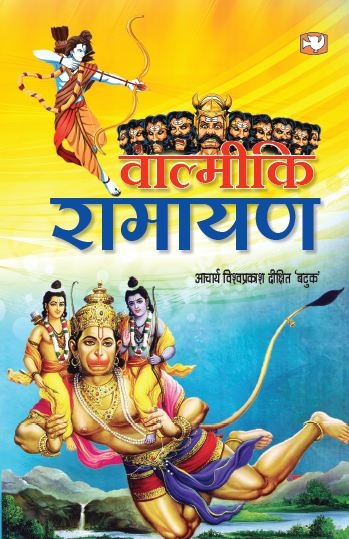
Maharishi Valmiki penned the story of a figure that has come to be known as the very picture of humility, success, charm and morality-the one and only Lord Rama. His was a life that was not only lived morally but also while making the best of times when the means were limited. It was thus that he was dubbed as ‘maryadapurushottam’. This is one of the closest and best translations of this story of his remarkable life.
Archives: Books
The Mughal World
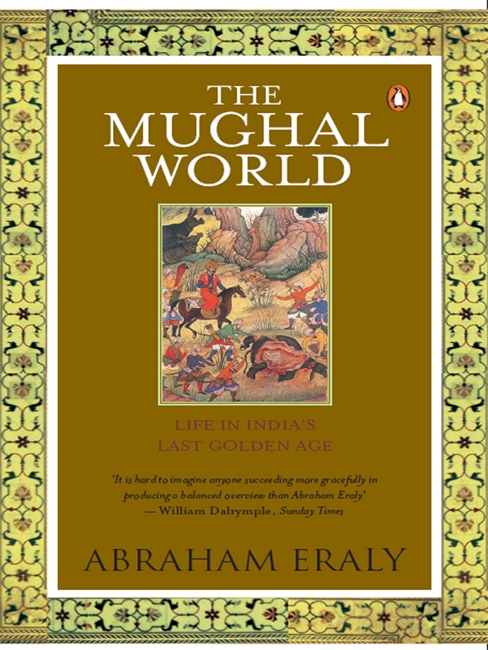
‘It is hard to imagine anyone succeeding more gracefully in producing a balanced overview than Abraham Eraly’ —William Dalrymple, Sunday Times, London
In The Mughal PBI – World Abraham Eraly continues his fascinating chronicle of the grand saga of the Mughal Empire. In Emperors of the Peacock Throne he gave us the story of the lives and achievements of the great Mughal emperors; in this book, he looks beyond the momentous historical events to portray, in precise and vivid detail, the agony and ecstasy of life in Mughal PBI – India.
Combining scholarly objectivity with artful storytelling the author presents a lively panorama of the Mughal PBI – World—emperors and nobles at work and play; harem life; the profligacy and extravagance of the ruling class juxtaposed with the stark wretchedness of the common people.
Meticulously researched and lucidly narrated The Mughal PBI – World offers rare insights into the state of the empire’s economy, religious policies, the Mughal army and its tactics, and the glories of Mughal art, architecture, literature and music.
No Onions Nor Garlic
Amandeep, Murugesh, Rufus and Sundar are bucks who talk dirty for the same reason that they remove the mufflers from their motorcycle exhausts-it makes them feel like men. Like libertines.
To their hormonal despair, when Professor Ram stages his remake of A Midsummer Night’s Dream at their college fest, he casts these four as fairies. The farce that follows gradually takes over the lives of the rest of the characters in this achingly funny novel about the pratfalls that accompany caste pride.
On and off the campus of Chennai University, you will encounter onion-and-garlic-free TamBrahms who rewrite Shakespeare to uphold the Hindu order, smug NRIs who call the shots in matrimonials, visiting Canadians who are aghast at the plight of Dalits (pronounced ‘daylights’) and, at the apex of the whole tumbling structure, a bibulous builder who invokes the gods even as he defrauds his clients.
Tailing the characters around this plot is an unseen but all-seeing spectator. You may never guess who that is, but will laugh all the way to the answer.
Panna
Dive into the enchanting and exciting underwater PBI – World of Fish King and Fish Queen with Panna!
Panna lives on the seaside with her brother Moti, a fisherman. One day, while waiting for Moti to return from the high seas with his catch of fish, Panna falls asleep. When she wakes up, she finds she has magically reached the land under the sea. And what a wonderful land it is, with its pearl-lined streets, coral houses and green moving sky! Here she meets the funny Fish King and Fish Queen, the Wind monster that is kept chained up, and sees many marvellous sights. But what becomes of poor Moti when he returns from the sea and finds his beloved sister gone?
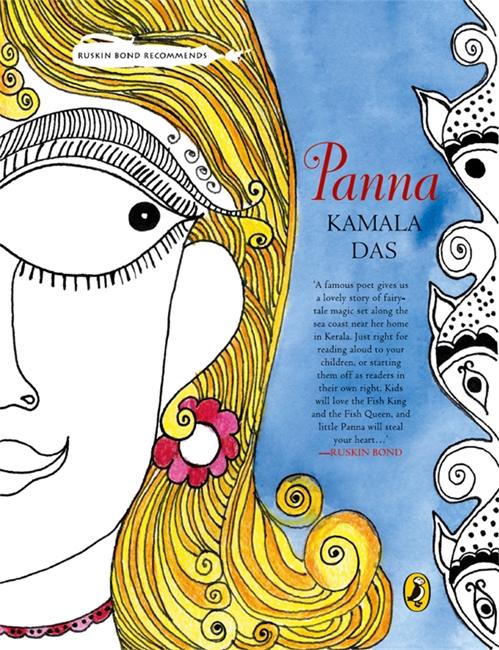
Writer and poet Kamala Das’s beautiful tale of love and fantasy returns to captivate young readers again, with traditional Madhubani folk art illustrations as fresh and delicate as Panna.
This book is recommended by Ruskin Bond and carries this quote by him on the cover:
‘A famous poet gives us a lovely story of fairy-tale magic set along the sea coast near her home in Kerala. Just right for reading aloud to your children, or starting them off as readers in their own right. Kids will love the Fish King and the Fish Queen, and little Panna will steal your heart . . . ’—Ruskin Bond
To The Blue King’s Castle
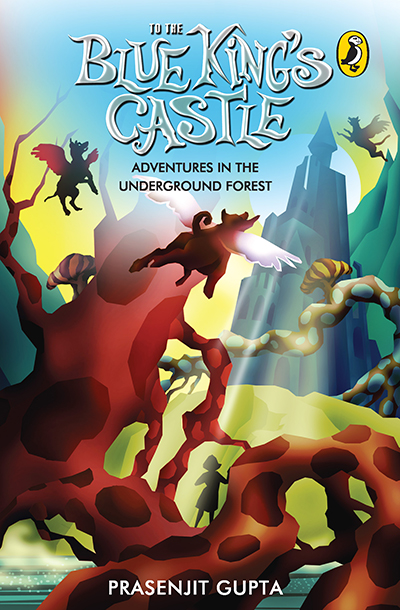
When Ritu goes shopping in an ordinary mall in an ordinary city on an ordinary day and takes a perfectly ordinary escalator to the lowest floor, the last thing she expects is to step out into the Underground Forest.
Trapped in this gloomy Forest, Ritu meets the Resident Magician, Serendipitous, and his assistant, Blanc-Noir. They need her help to go to the Blue King’s Castle, for within the castle, locked away in Dodgson’s Box, lies the spirit of Happiness. But the journey is long and the perils many. The road to the Castle leads through the Outcasts’ Village, past Girnewala Falls, through Mediapolis, through the Bureaucrats’ Maze. There are liars and philosopher-robbers, rabid-seeming dogs with wings, and cars that run only on high-octane emotions. And Ritu discovers, nothing is ordinary in this most extraordinary of adventure lands.
This novel’s epic sweep, its humour and charm, its references to classic works like The Wizard of Oz and Alice in Wonderland, make it pure pleasure for those who enjoy language and wordplay, invention and adventure.
Moral Materialism
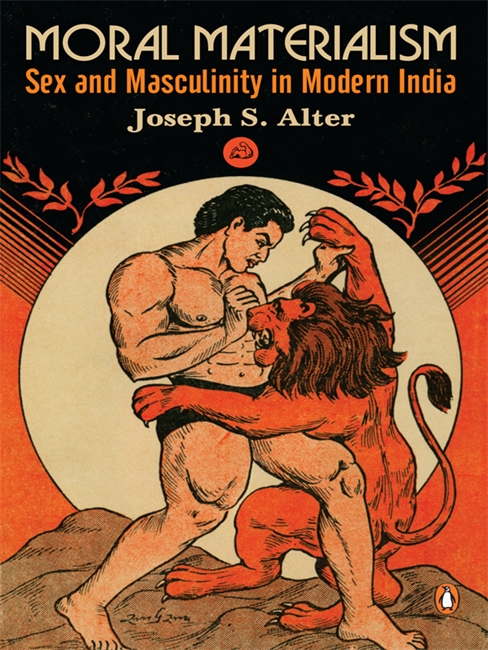
‘Masculine’ is most commonly defined in direct contrast to ‘feminine’. Masculinity is thus often seen as an antithesis of femininity, the two ideas apparently locked in a tussle over the allocation of characteristics. Joseph Alter bypasses this opposition altogether in his original exploration of the concept of masculinity in modern India. He offers a strikingly new interpretation of Indian ‘maleness’, one that refers to itself, and not to an ‘other’. Through the distinct yet interrelated lenses of nationalism, yoga, wrestling, the concept of brahmacharya and male chastity, Alter examines the moral, material and biological roots of Indian masculinity. Unusually, it is the ideal of the celibate male that is the basis for this exploration. Moral Materialism: Sex and Masculinity in Modern India offers an elegant and inventive perspective on the multiple meanings of Indian masculinity.
A Tribute to Ghalib
Mirza Asadullah Khan Ghalib (1797-1869) lived at a time of historic change in India, a period when the British conquest of India was in its ascendancy and the Mughal empire was coming to an end. He was witness to the ravaging of Delhi and its courtly culture, culminating in the uprising of 1857. This trauma, accompanied by his personal losses, informs his poetry, evidenced in Divan-E-Ghalib, containing 235 Urdu ghazals redolent with a sense of loss, grief and a plangent longing for a vanished way of life. Yet, what sets his poetry apart is an irrepressible sense of humour, energy and linguistic delight that drive his darkest lamentations.
In A Tribute to Ghalib, Azra Raza and Sara Suleri Goodyear select twenty-one ghazals that illustrate the astonishing range of Ghalib’s many voices and the ideas that populate his poetry. Every ghazal is accompanied by an introduction, a literal translation and a detailed commentary, shedding light on the complexities of the individual sher as well as the ghazal as a whole. This book will be invaluable not only to the Ghalib aficionado but also the lay reader.
I Saw Myself
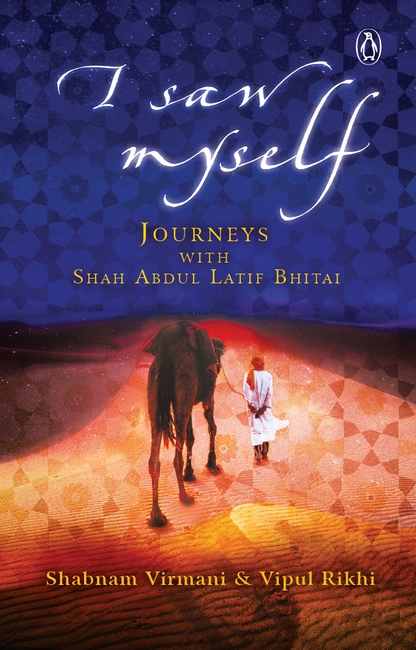
I saw myself
I was the Beloved
I made the world
I myself seek it
Travelling into the stark deserts of Kutch, I Saw Myself explores the contemporary presence of epic love legends of the region, such as Sohini-Mehar and Sasui-Punhu, brought to throbbing verse by the powerful eighteenth-century Sufi poet Shah Abdul Latif Bhitai. As the authors travel to villages to meet folk singers and lovers of Latif’s poetry, immersing in sessions that stretch into the night, they unearth a unique, thriving love-soaked ethos in which the call to oneness rings out like a defiant manifesto for our divisive times.
Retelling epics along with other tales and historical events that created the field of experience from which Shah Latif’s poems sprang, I Saw Myself brings into English a selection of his finest poems. A spell is cast, of story and song, of metaphor and meaning. The insights that emerge are subtle, even startling, radical at times, solace-giving at others, but always deeply meaningful.
The Magic Rolling Pin
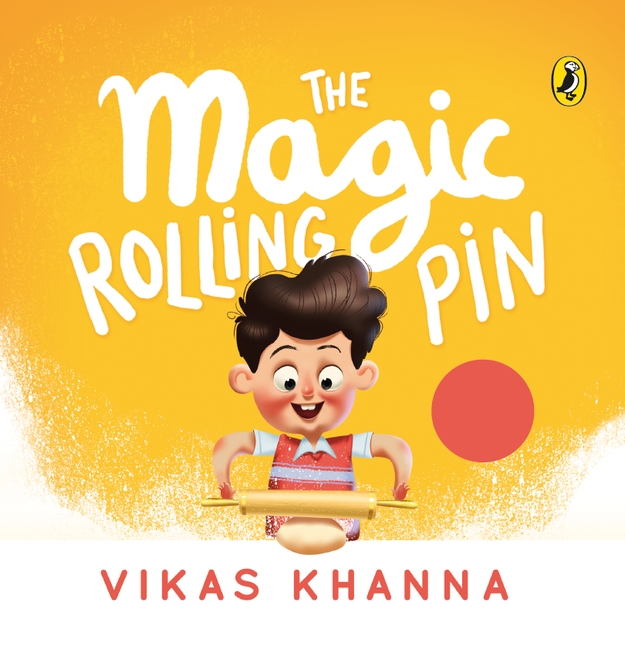
Jugnu loves to cook. In the kitchen, he’s in charge of the world. With his golden belan he makes round rotis. He becomes famous for his perfect rotis. But one day, he can’t find the belan. How will he make rotis for the langar? This heartwarming story gently shows that the true source of courage and confidence lies inside you.
The Milk Moustache
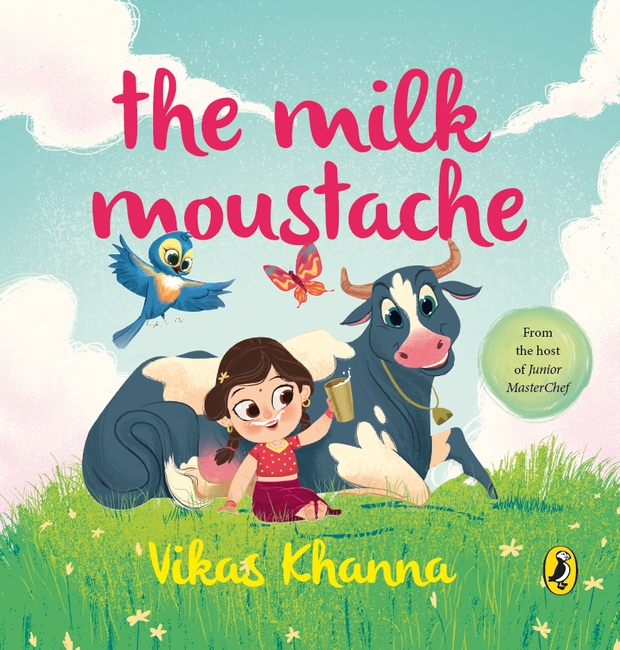
When the children of the village refuse to drink milk one day, it makes Kali the cow very sad indeed. And it is up to Jassi, the local milkman’s daughter and Kali’s best friend, to find a way to end the milk strike and lift Kali’s spirits again. Sumptuously illustrated and simply told, this heart-warming tale of goodwill and friendship is chock-full of Vikas Khanna’s trademark charm.