‘Magnificent . . . Ashk writes with a clear hand and is served well by Daisy Rockwell as she recreates a compelling narrative’-Dawn
Unfolding over the course of a single day, Ashk’s sweeping sequel to Falling Walls explores the inner struggles of Chetan, an aspiring young writer, as he roams the labyrinthine streets of 1930s’ Jalandhar, haunted by his thwarted ambitions but intent on fulfilling his dreams.
Married to a woman he does not love while pining for another man’s wife, Chetan must also face the prospect of taking up a dead-end job in the wake of his recent failures in Lahore and Shimla. And as he trudges around Jalandhar, constantly running into people he’d rather avoid, he finds himself confronting the tangled memories, frailties and fears that assail him.
Intensely poignant and vividly evocative, In the City a Mirror Wandering is an exploration of not only a dynamic, bustling city but also the rich tapestry of human emotion that consumes us all.

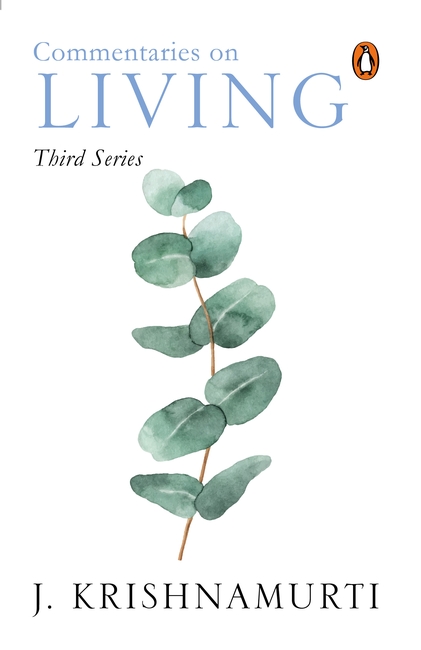
The essential message of J. Krishnamurti, revered philosopher and spiritual teacher, challenges the limits of ordinary thought. In talks to audiences worldwide, he pointed out the tangled net of ideas, organizational beliefs and psychological mindsets in which humanity is caught, and that truth-the understanding of what is-not effort is the key factor of human liberation.
Commentaries on Living, a three-volume series, records Krishnamurti’s meetings with individual seekers of truth from all walks of life. In these dialogues, he reveals the thought-centred roots of human sorrow and comments on the struggles and issues common to those who strive to break the boundaries of personality and self-limitation. In over fifty essays in each volume, Krishnamurti explores topics as diverse as knowledge, truth, fulfillment, meditation, love, effort, seeking life and death and education.
The series invites readers to take a ‘voyage on an unchartered sea’ with Krishnamurti in his exploration of the conditioning of the mind and its freedom.

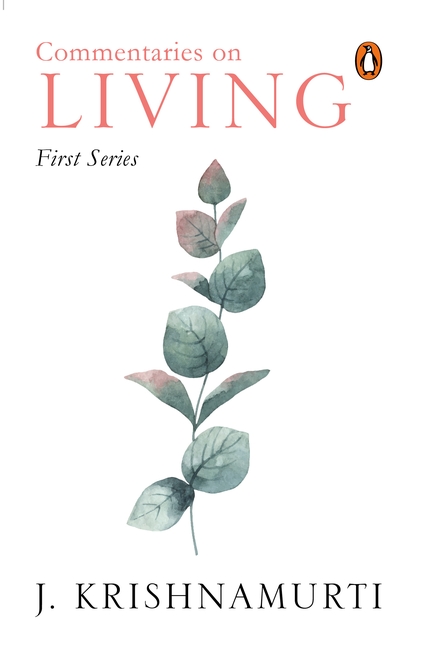
The essential message of J. Krishnamurti, revered philosopher and spiritual teacher, challenges the limits of ordinary thought. In talks to audiences worldwide, he pointed out the tangled net of ideas, organizational beliefs and psychological mindsets in which humanity is caught, and that truth-the understanding of what is-not effort is the key factor of human liberation.
Commentaries on Living, a three-volume series, records Krishnamurti’s meetings with individual seekers of truth from all walks of life. In these dialogues, he reveals the thought-centred roots of human sorrow and comments on the struggles and issues common to those who strive to break the boundaries of personality and self-limitation. In over fifty essays in each volume, Krishnamurti explores topics as diverse as knowledge, truth, fulfillment, meditation, love, effort, seeking life and death and education.
The series invites readers to take a ‘voyage on an uncharterd sea’ with Krishnamurti in his exploration of the conditioning of the mind and its freedom.

The essential message of J. Krishnamurti, revered philosopher and spiritual teacher, challenges the limits of ordinary thought. In talks to audiences worldwide, he pointed out the tangled net of ideas, organizational beliefs and psychological mindsets in which humanity is caught, and that truth-the understanding of what is-not effort is the key factor of human liberation.
Commentaries on Living, a three-volume series, records Krishnamurti’s meetings with individual seekers of truth from all walks of life. In these dialogues, he reveals the thought-centred roots of human sorrow and comments on the struggles and issues common to those who strive to break the boundaries of personality and self-limitation. In over fifty essays in each volume, Krishnamurti explores topics as diverse as knowledge, truth, fulfillment, meditation, love, effort, seeking life and death and education.
The series invites readers to take a ‘voyage on an unchartered sea’ with Krishnamurti in his exploration of the conditioning of the mind and its freedom.

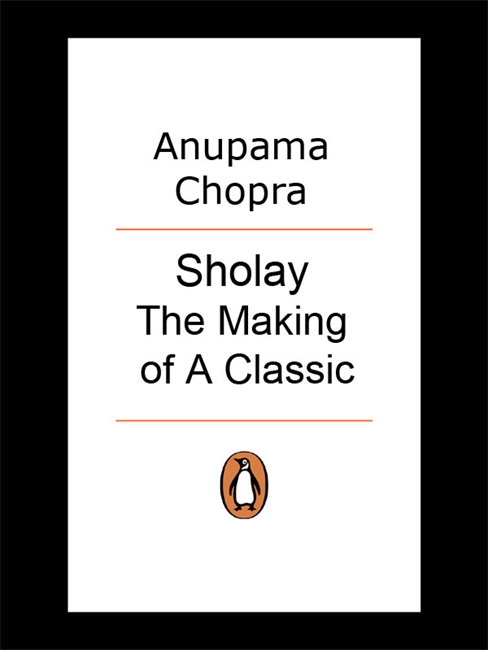
National Award Winner: ‘Best Book On Film’ Year 2000.
Film Journalist Anupama Chopra Tells The Fascinating Story Of How A Four-Line Idea Grew To Become The Greatest Blockbuster Of Indian Cinema. Starting With The Tricky Process Of Casting, Moving On To The Actual Filming Over Two Years In A Barren, Rocky Landscape, And Finally The First Weeks After The Film’S Release When The Audience Stayed Away And The Trade Declared It A Flop, This Is A Story As Dramatic And Entertaining As Sholay Itself. With The Skill Of A Consummate Storyteller, Anupama Chopra Describes Amitabh Bachchan’S Struggle To Convince The Sippys To Choose Him, An Actor With Ten Flops Behind Him, Over The Flamboyant Shatrughan Sinha; The Last-Minute Confusion Over Dates That Led To Danny Dengzongpa’S Exit From The Fim, Handing The Role Of Gabbar Singh To Amjad Khan; And The Budding Romance Between Hema Malini And Dharmendra During The Shooting That Made The Spot Boys Some Extra Money And Almost Killed Amitabh.

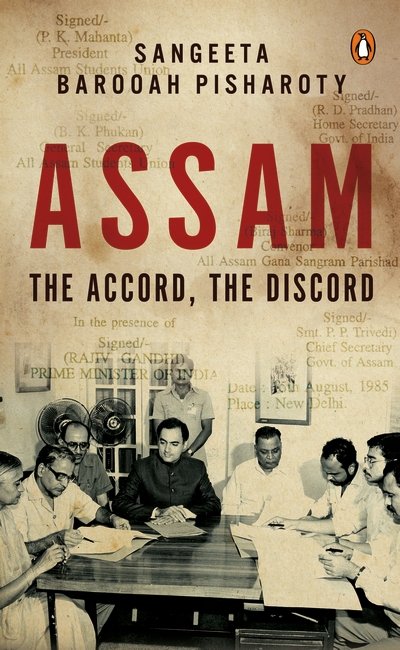
The Assam Accord, which sought to end a six-year-long agitation against illegal immigrants in Assam, was signed between members of the All Assam Students Union (AASU), and state and central governments just a few hours before Rajiv Gandhi was to deliver the Independence Day address in 1985. Immediately afterwards, the student leaders were catapulted from their hostel rooms into the corridors of power. Their party, the Asom Gana Parishad (AGP), was voted to power the same year, with Prafulla Kumar Mahanta becoming the youngest ever chief minister of an Indian state.
Key clauses of the Assam Accord remained unimplemented during Mahanta’s often controversial tenures (1985-1990, 1996-2001), and through three terms of Congress rule, which ended with the BJP’s victory in the state in 2016. Central to the Accord was deportation of those who could not prove their roots in India prior to 24 March 1971. In 2015, the process of updating the National Register of Citizens (NRC) based on the 1971 cut-off of the Accord began. The first list was released in December 2017, and did not include 14 million names.
Assam: The Accord, The Discord looks at the making of the Assam Accord and its long shadow on the state, through political gamesmanship between principle players, periods of ULFA and Bodo militancies, and right-wing propaganda that has split the state along communal lines.
‘An excellent account of the Vedic wedding […] Amrutur Srinivasan has written a fine book.’ – Prof. Subhash Kak, Louisiana State University
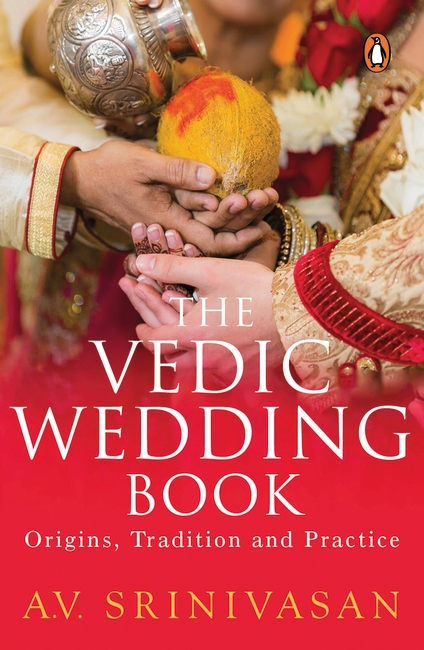
An immensely accessible guide, The Vedic Wedding will take you to the roots of the Hindu wedding ceremony, on a journey of its evolution from the Rig Vedic times to the present day. A.V. Srinivasan brings the best of his experiential wisdom as a Hindu priest and scholar in the US in uniquely accessible explanations of each ritual of the traditional ceremony, along with a wealth of knowledge about their origin, variations and significance. One of its kind, this book will help you understand and appreciate, as well as execute, the traditional Vedic wedding ceremony and get a flavour of India’s wedding culture, its true meaning and significance.
A god with a powerful weapon. An immortal sorcerer. An inevitable showdown.
Successful in deciphering Krishna’s puzzles and retrieving the Kaustubha locket, Anirudh finally accepts his destiny as Kalki–the tenth avatar of Vishnu. However, with the ever-perilous world moving too fast for him to keep up with, he is taken under the wing of an esoteric society created for his protection.
As ancient allies watch over him from the Himalayas, Anirudh moves to find the greatest weapon in the universe hidden in the fabled submerged palace of Dwarka. However, the Demon of Time, Kalarakshasa, yearns to possess it as well. In an ultimate showdown, the cloaked sorcerer faces the last avatar of Vishnu on the battlefield.
Will it be long before Kali, the Lord of Evil, takes up the reins of the mortal world? And will the darkness brought upon by the Kali yuga soon eclipse the earth?

Every reporter knows the first rule of journalism: never betray your source. But what if your source turns out to be unworthy of your silence? What if it’s your source who betrays you?
The Messenger tells the story of an unlikely friendship between two men looking to change the world: a repentant jihadist and an idealistic journalist. This troubling real-life thriller takes us from their first meeting in a spartan flat in the rough suburbs of Manchester, to a bombing in Pakistan, a dramatic arrest and Malik’s reporting career on the brink of ruin.
Ten years later, Malik returns to this extraordinary tale. He asks where we can place our trust — in reams of evidence, in a government we believe is on our side, in a terrorist who swears he’s changed, in a friend who has no one else to turn to. Malik explores the uncomfortable questions about why he, as well as the wider media and the nation, surrendered to fear so easily. And he reveals how the age of terror laid the groundwork for an era of fake news and demagogues.
This is investigative journalism and storytelling of the highest order.

A general perception exists that ancient Indian literature on economic matters is fatalistic and an admixture of sacred and secular thoughts. Economic Sutra provides a comprehensive perspective on the elements of Indian economic thought leading up to and after the Arthashastra. Economic Sutra is a perception-correction initiative to distil the Indian mind in the realm of economic thoughts and behaviour as brought out by the ancient Indian authors. It highlights the broader spread of economic ideas both prior to and sometime after Kautilya, giving insights into the purpose, actions and vision of our forefathers.




![Kali’s Retribution [The Kalki Chronicles]](https://cdn.penguin.co.in/wp-content/uploads/2021/12/9780143442356.jpg)