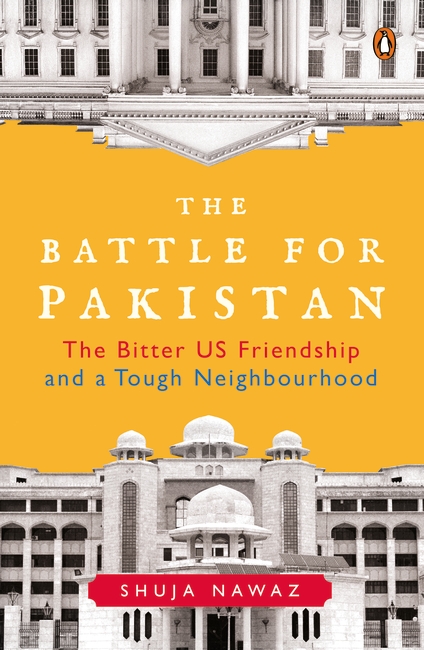
The Battle for Pakistan showcases a marriage of convenience between unequal partners. The relationship between Pakistan and the United States since the early 1950s has been nothing less than a whiplash-inducing rollercoaster ride. Today, surrounded by hostile neighbours, with Afghanistan increasingly under Indian influence, Pakistan does not wish to break ties with the US. Nor does it want to become a vassal of China and get caught in the vice of a US-China rivalry, or the Arab-Iran conflict.
Internally, massive economic and demographic challenges as well as the existential threat of armed militancy pose huge obstacles to Pakistan’s development and growth. Could its short-run political miscalculations in the Obama years prove too costly? Can the Trump administration help salvage this relationship?
Based on extensive travel in the region, frequent policy interactions and many on-the-record interviews with key leaders, The Battle for Pakistan untangles the complex US relationship in the past decade. Shuja Nawaz identifies the path forward, provided US and Pakistani leaders make the right choices for the longer term.

The sex workers of Kotha No. 300 raise their children, cook for their lovers, visit temples, shrines and mosques, complain about pimps and brothel owners, listen to film songs, and solicit and entertain customers.
By following the daily lives of the denizens of one kotha, Mayank Austen Soofi paints an intimate portrait of women for whom sex is work-a way to make a living.
With precise details and haunting photographs, Soofi delicately and carefully etches the everyday world of those who inhabit the peripheries of society.
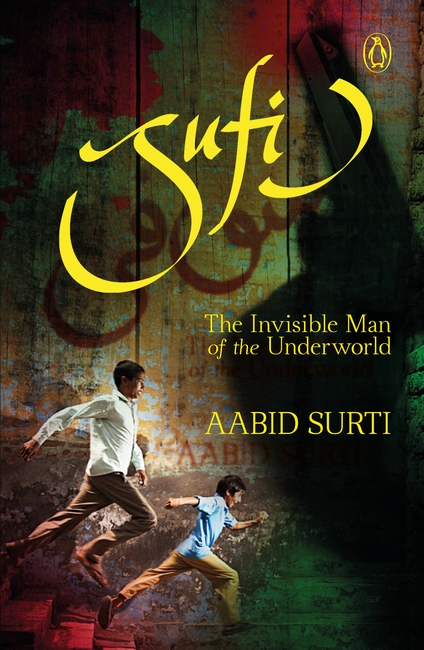
Sufi is the story of two boys who grew up in Dongri, Mumbai.
One of them, Iqbal Rupani, aided and abetted by a corrupt policeman, is drawn towards criminal activities in his teens. As he becomes powerful and influential as a racketeer and smuggler, he creates a puritan code of conduct for himself: no drinking, no smoking and no murders. He comes to be known as ‘Sufi’ because of his principles and philosophical manner of speaking.
The other boy, Aabid Surti, grows up to become a famous author.
How did the lives of these two boys, which began on such a similar note, diverge so drastically? This book presents an astonishing real-life story, with the sweep and scale of Kane and Abel, told by one of India’s most beloved storytellers.
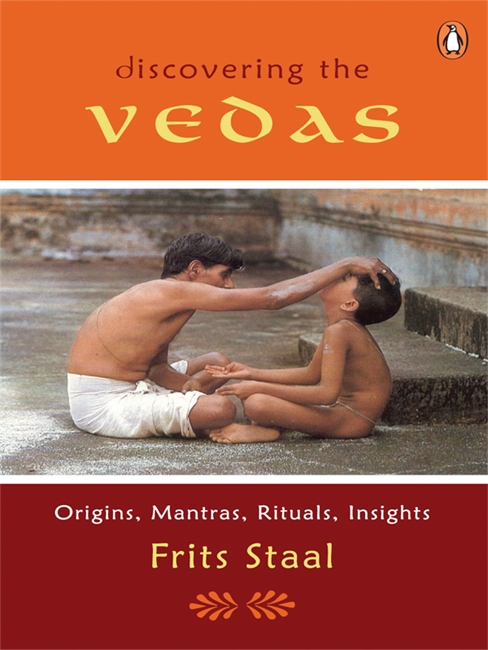
In this unprecedented guide to the Vedas, celebrated author Frits Staal examines almost every aspect of these ancient sources of Indic civilization. Staal extracts concrete information from the oral tradition and archaeology about the Vedic people and their language, what they thought and did, and where they went and when. Using selections and translations, he sheds light on the mantras and rituals that contributed to Hindu thought.
Drawing comparisons with other Indic philosophies and religions, Staal unravels the Vedas and their meanings layer by layer. He reveals the original forms of the Vedic sciences, as well as the perceptive wisdom of the texts for the modern reader. Accessible and finely argued, Discovering the Vedas contains a wealth of information about one of the most fascinating texts in the world.

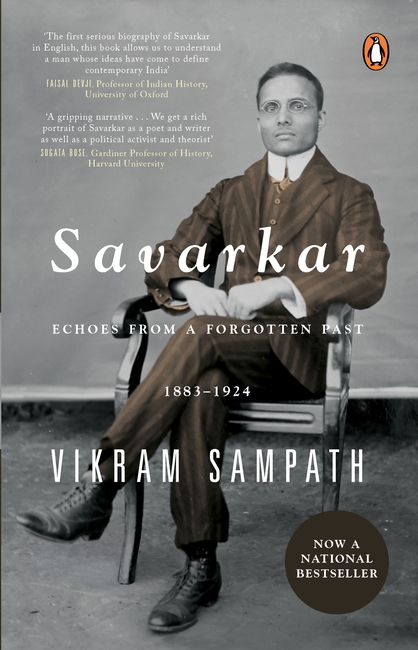
As the intellectual fountainhead of the ideology of Hindutva, which is in political ascendancy in India today, Vinayak Damodar Savarkar is undoubtedly one of the most contentious political thinkers and leaders of the twentieth century. Accounts of his eventful and stormy life have oscillated from eulogizing hagiographies to disparaging demonization. The truth, as always, lies somewhere in between and has unfortunately never been brought to light. Savarkar and his ideology stood as one of the strongest and most virulent opponents of Gandhi, his pacifist philosophy and the Indian National Congress.
An alleged atheist and a staunch rationalist who opposed orthodox Hindu beliefs, encouraged inter-caste marriage and dining, and dismissed cow worship as mere superstition, Savarkar was, arguably, the most vocal political voice for the Hindu community through the entire course of India’s freedom struggle. From the heady days of revolution and generating international support for the cause of India’s freedom as a law student in London, Savarkar found himself arrested, unfairly tried for sedition, transported and incarcerated at the Cellular Jail, in the Andamans, for over a decade, where he underwent unimaginable torture.
From being an optimistic advocate of Hindu-Muslim unity in his treatise on the 1857 War of Independence, what was it that transformed him in the Cellular Jail to a proponent of ‘Hindutva’, which viewed Muslims with suspicion?
Drawing from a vast range of original archival documents across India and abroad, this biography in two parts-the first focusing on the years leading up to his incarceration and eventual release from the Kalapani-puts Savarkar, his life and philosophy in a new perspective and looks at the man with all his achievements and failings.
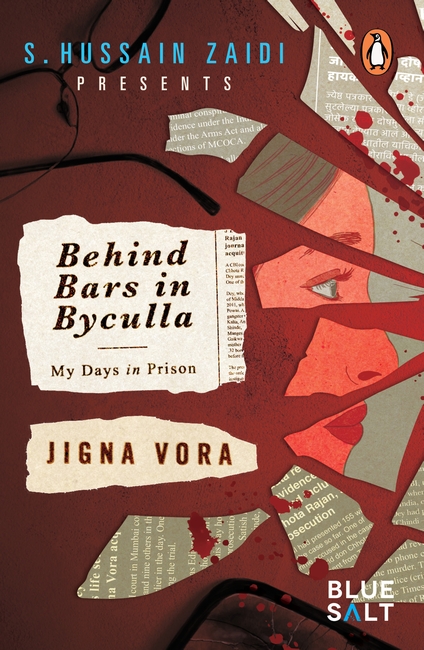
Renowned journalist Jyotirmoy Dey-fondly known as J, Dey-was murdered by members of the Chhota Rajan gang in 2011. A few months later, a fellow journalist and crime reporter Jigna Vora was arrested in connection with the murder. Seven years later, some of which were spent in prison, Jigna was acquitted of all charges. This is her story in her own words, of the time in prison, the court hearings and her years as a crime reporter of breaking many front-page stories.
Jigna’s work brought her in contact with people like Himanshu Roy, the former additional director general of police of Maharashtra, while her time in jail put her in the company of inmates such as Pragya Thakur. Behind Bars in Byculla traces the intricate web of power dynamics that govern the inmates of a prison and what it takes to survive behind bars.

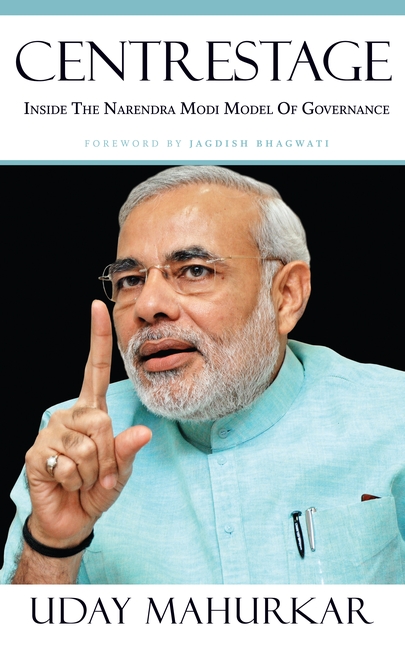
Is Narendra Modi’s government innovative and free of vote-bank politics? How did Narendra Modi bring 24-hour, three-phase domestic power supply to 18,000 villages in Gujarat? How did Modi turn the forlorn Kutch into a top tourist destination?
One of the most hotly debated topics in the general elections has been the development and governance of Narendra Modi’s government in Gujarat. In Centrestage, Uday Mahurkar tries to present a balanced assessment of Narendra Modi’s government by uncovering and analysing the Modi mantra of governance. With chapters on energy, technology, agriculture, finance and innovation, to name a few, Mahurkar aims at understanding and revealing the ground reality through facts and research beyond the media hype. Has Gujarat really made progress under Narendra Modi? Is Narendra Modi really a visionary and a good administrator? Read Centrestage to find out and get an insider’s view of Narendra Modi’s governance from a man who has followed him closely for the past three decades.

Winner of Publishing Next’s Printed Book of the Year Award and featuring on the Green Literature Festival Honour List.
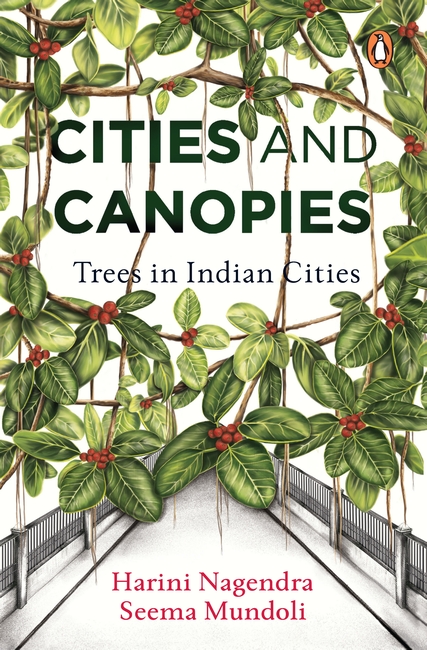
Native and imported, sacred and ordinary, culinary and floral, favourites of various kings and commoners over the centuries, trees are the most visible signs of nature in cities, fundamentally shaping their identities. Trees are storehouses of the complex origins and histories of city growth, coming as they do from different parts of the world, brought in by various local and colonial rulers. From the tree planted by Sarojini Naidu at Dehradun’s clock tower to those planted by Sher Shah Suri and Jahangir on Grand Trunk Road, trees in India have served, above all, as memory keepers. They are our roots: their trunks our pillars, their bark our texture, and their branches our shade. Trees are nature’s own museums.
Drawing on extensive research, Cities and Canopies is a book about both the specific and the general aspects of these gentle life-giving creatures.

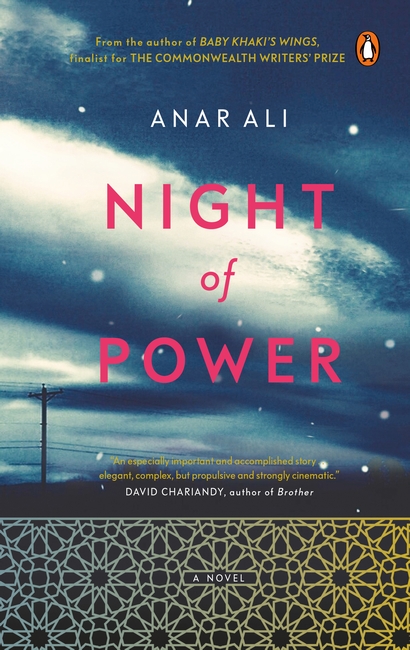
A portrait of a Muslim family?-?from the heady days in Uganda to hard times in a new country, and the tragic accident that forces them to confront the ghosts of the past.
It’s 1998. And Mansoor Visram has lived in Canada for 25 years, ever since dictator Idi Amin expelled South Asians from Uganda. As a refugee with a wife and child, Mansoor has tried his best to recreate the life they once had, but starting over in Canada has been much harder than he expected. He’s worked as a used-car salesman, as a gas-station attendant, and now he runs a small dry cleaner in suburban Calgary. But he’s hatching plans for a father-and-son empire that will bring back the wealth and status the Visrams enjoyed in Uganda. The problem is, his son Ashif does not share his dreams, and he’s moved across the country to get away from his father. He’s a rising star at a multinational corporation in Toronto, on the cusp of a life-changing promotion, but he can’t seem to forget his girlfriend from long ago. Mansoor’s wife, Layla, has spent the past decade running her own home-cooking business and trying to hold her family together. But Ashif rarely comes home to visit, and Mansoor’s pride has almost ruined their marriage. As the fissures that began generations ago-and continents away-reappear, Mansoor, Ashif, and Layla drift further and further apart.
On the Night of Power, a night during Ramadan when fates are decided for the next year, a terrible accident occurs. Will the Visrams survive this latest tragedy?
Night of Power is a heart-wrenching story of a family in crisis. Gripping and unforgettable, Anar Ali’s debut novel vividly illuminates the injustices of displacement and the nuances of identity-of losing a home and coming home again.
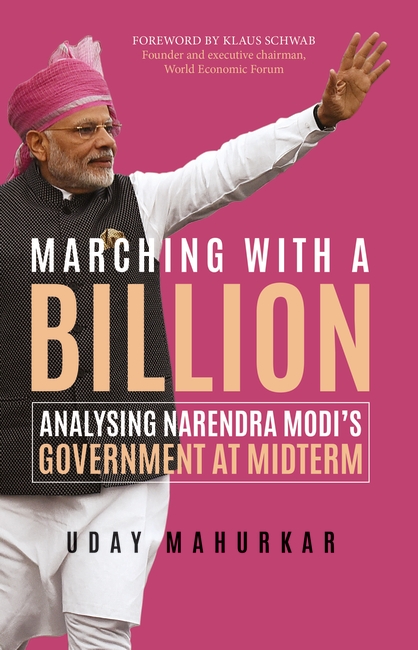
Will Modi pass the litmus test of governance? Does his performance match his promises?
In Marching with a Billion, Uday Mahurkar analyses the Modi government’s three years in power against the backdrop of years of policy paralysis and corruption before he came to power, leaving him with a stiff salvaging job. Focusing on key areas of governance like infrastructure, foreign affairs, power, the social sector, finance, digital technology and agriculture, the author showcases the work of the present government and the monumental changes the prime minister has brought about, including digital innovation and the uprooting of middlemen, which has resulted in an unprecedented level of transparency, and a resolute assault on poverty. He also points out some of the shortfalls of Modi’s government, subjecting it to critical evaluation. Will Modi become a great institution builder, a prerequisite to becoming a nation builder? What will be the long-term impact of demonetization on the economy? This book has the answers.