Girl meets boy. It’s a story as old as time. But what happens when an old story meets a brand new set of circumstances?
Ali Smith’s remix of Ovid’s most joyful myth is a story about the kind of fluidity that can’t be bottled and sold. It’s about girls and boys, girls and girls, love and transformation—a story of puns and doubles, reversals and revelations.
Funny and fresh, poetic and political, here is a tale of change for the modern world.

Sometimes when you’re desperate to leave the past behind, the past is eager to catch up!
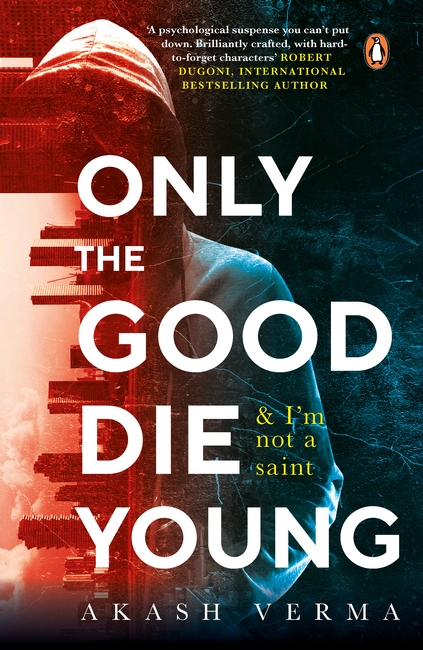
Anuradha leaves Gurgaon when Dhruv chooses his family over her. She thinks that chapter of her life has ended, and starts afresh in Mumbai. But strangely, it seems her past is trying to catch up. Dhruv suddenly comes back into her life. Even as they try to figure out their relationship, horrible things start happening to people they know. Together, Anuradha and Dhruv need to find out who it is that cannot bear to see them together. Who is carrying out these shocking crimes? Are they really soulmates cursed to stay apart, or is there some karmic debt they have to repay? Taut and thrilling, Only the Good Die Young is unputdownable.

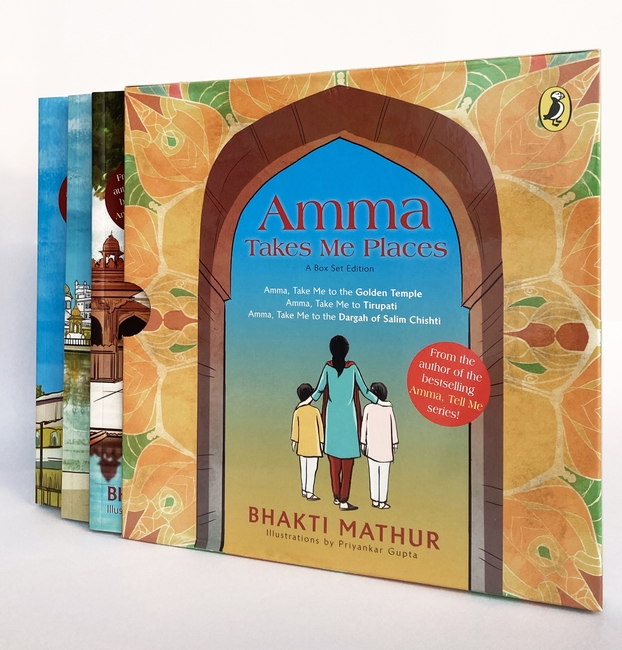
Let Amma take your young ones on a journey through three picture books to witness the wonderful sights, sounds and history of India’s popular places of worship. With Amma, Take Me to The Dargah of Salim Chishti, behold the dargah of Salim Chishti that shines like a white pearl in an oasis of red sandstone. While Amma, Take Me to Tirupati will help your child know all about the world-famous temple of Tirupati Balaji, Amma, Take Me to The Golden Templewill teach them Guru Nanak’s eternal message of equality, love and service.
Told through interesting stories with captivating illustrations, this series introduces readers to the history of different faiths and their associated monuments.

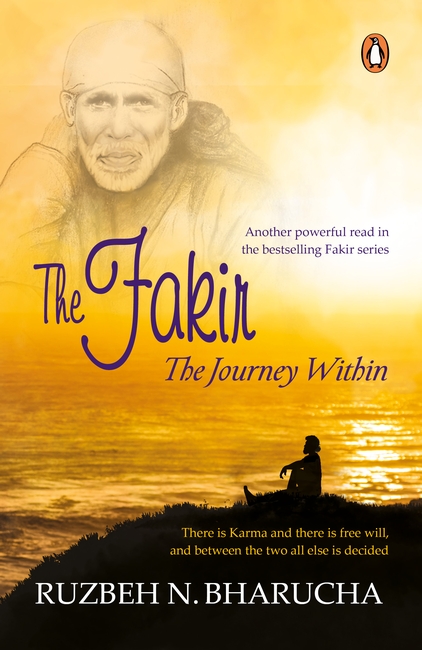
To be a better spiritual being and to better even that with every step is the goal of every soul so it can then ultimately merge into The One . . .
Rudra is exactly where he wants to be-with his kind, loving BABA, talking about life and the laws of the spiritual realm. He is taken to various villages to see for himself what the right way to live and pray is.
As he serves his BABA and asks Him questions, much is revealed to him: ‘When you pray with such intensity that The One shall listen to your prayer, then your purity, intensity, devotion and yearning will get wings to reach The One’
BABA also talks about how we should be in life, how our relationships should be, how jealousy and anger are detrimental to the development of good karma and how conducting oneself without cribbing and complaining takes on to the higher plane.
In The Fakir once again Rudra is the student and BABA the teacher as well at the MASTER.

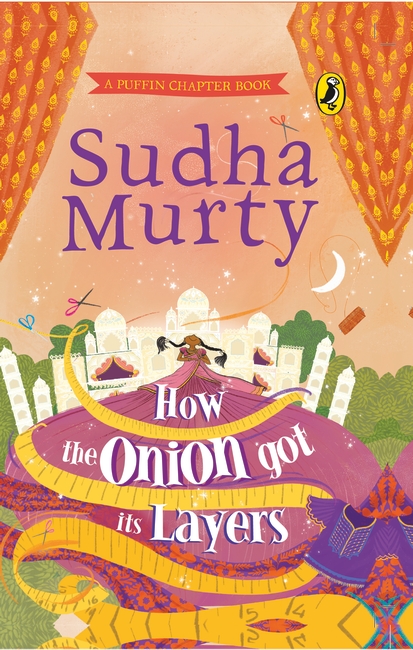
Have you noticed how the onion has so many layers? And have you seen your mother’s eyes water when she cuts an onion? Here is a remarkable story to tell you why.
India’s favourite storyteller brings alive this timeless tale with her inimitable wit and simplicity. Dotted with charming illustrations, this gorgeous chapter book is the ideal introduction for beginners to the world of Sudha Murty.

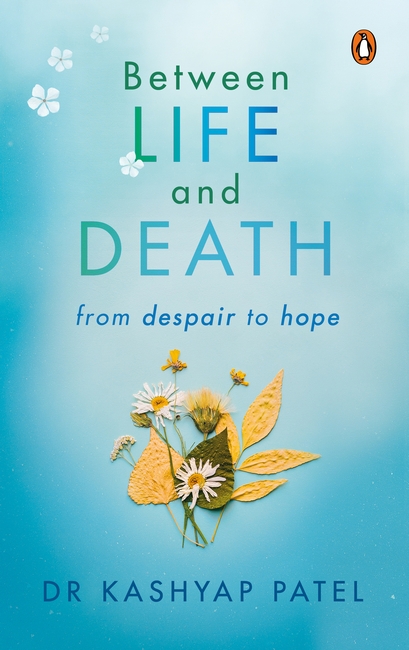
Dr Kashyap Patel is a renowned oncologist in the US who works with terminally ill cancer patients. Through him, we meet Harry, who, after a life full of adventure, is diagnosed with terminal lung cancer. As he stares death in the face, Harry leans on Dr Patel, an expert in understanding the process of death and dying. His questions and fears are addressed through the stories of many other patients that Dr Patel has treated-from the young and vivacious to those who had already lived full lives, from patients who could barely afford their rent to those who had been wildly successful. What ties these stories together is the single thread of the lessons Harry learns along the way, lessons that ultimately enable him to plan his own exit from the world gracefully-dying without fear.

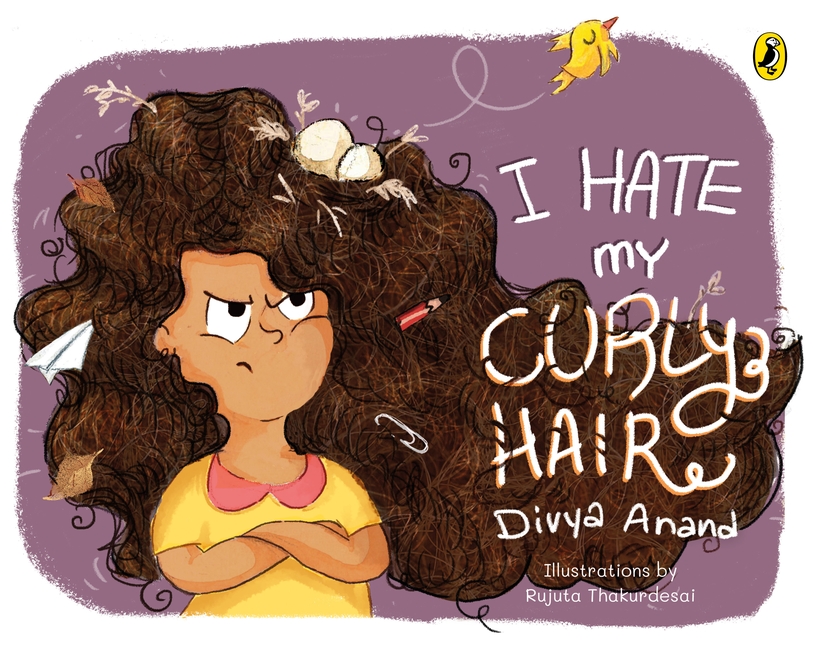
I tug till my head’s black and blue!
But nothing can tame
This wild, curly mane!
Curly haired girl does everything she can to straighten her stubborn curls-after all, everywhere she looks she sees heroines with smooth, silky hair. Then one day, a big bully comes along and everything changes! A humorous tale of self-acceptance. And of hair, lots and lots of glorious curly hair!

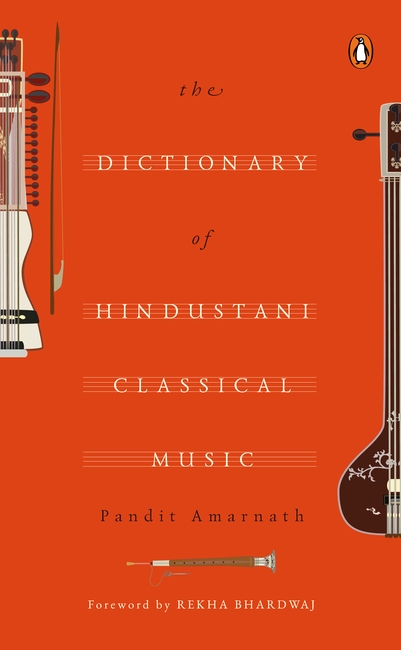
Pandit Amarnath was regarded as a musicians’ musician and the foremost interpreter of the Indore Gharana. In this book, he demystifies the many terms associated with Hindustani classical music for the common man interested in this art form. From crucial terms such as avaart and kharaj bharna to musicological terminology like moorchhana and shrutee to short profiles of stalwarts in the field and telling musical ‘proverbs’ and sayings of the great masters, this is a pathfinder to the otherwise closed traditions of Hindustani classical music whose secrets and philosophies have been restricted to masters and connoisseurs. Pandit Amarnath reveals the terms in both their etymology as well as their implications in musical practice and listening.
First published twenty-five years ago to great critical acclaim and now being updated by Rekha and Vishal Bhardwaj, this will be a must-read for music lovers and musicologists, musicians and students, linguists and historians alike.

A special collectible edition from one of the most eminent voices of our generation
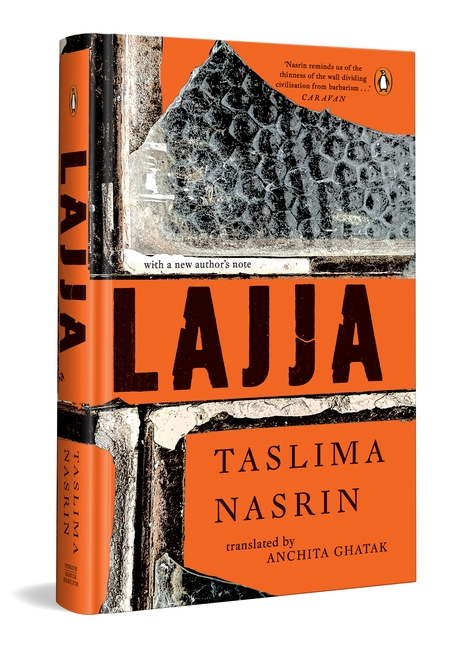
A savage indictment of religious extremism and man’s inhumanity to man, Lajja was banned in Bangladesh but became a bestseller in the rest of the world. This brand-new translation marks the twentieth anniversary of this controversial novel. The Dattas Sudhamoy and Kironmoyee and their children, Suronjon and Maya have lived in Bangladesh all their lives. Despite being members of a small Hindu community that is terrorized at every opportunity by Muslim fundamentalists, they refuse to leave their country, unlike most of their friends and relatives. Sudhamoy believes with a naive mix of optimism and idealism that his motherland will not let him down. And then, on 6 December 1992, the Babri Masjid at Ayodhya is demolished by a mob of Hindu fundamentalists. The world condemns the incident, but its immediate fallout is felt most acutely in Bangladesh, where Muslim mobs begin to seek out and attack the Hindus. The nightmare inevitably arrives at the Dattas’ doorstep and their world begins to fall apart.

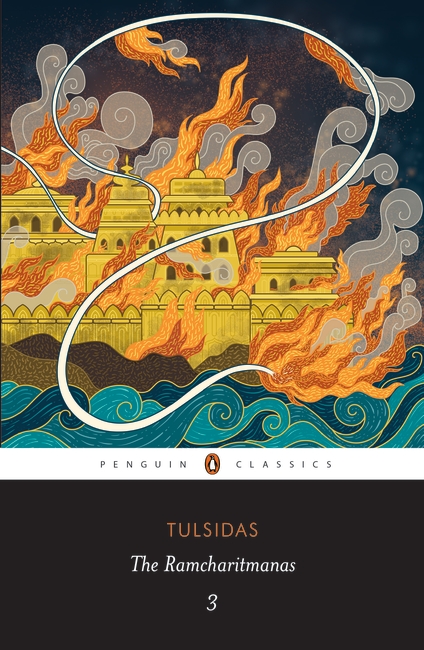
The most popular devotional text recounting the adventures of the Hindu god Ram
The Ramcharitmanas, composed by the poet-saint Tulsidas in the sixteenth century during a dynamic period of religious reform, was instrumental in making the story of Ram-and his divine feats against Ravan, the demon king of Lanka-widely accessible to the common people for the first time. Prior to that, this tale was exclusively the preserve of the priestly class who could read Valmiki’s Sanskrit epic, The Ramayana. By reimagining Valmiki’s text in the vernacular language, as a poem to be imbibed through recitation rather than reading, Tulsidas kindled a devotional revolution, forever changing the religious and social landscape of northern India.
Rohini Chowdhury’s exquisite translation brings Tulsidas’s magnum opus vividly to life, and her detailed introduction sheds crucial light on the poet and his work, placing them both in the wider context of Hindi literature.