




Set in London, The Sandglass tells the story of two feuding families whose lives are interlinked by the changing fortunes of postcolonial Sri Lanka. After his mother’s death, Prins Ducal is driven to re-examine his family’s history. In doing so, he discovers questionable circumstances surrounding another death in his family—his father’s—and sets about unravelling the secrets shrouding it. In this beautifully constructed novel, Romesh Gunesekera expertly weaves together the fabric of 1990s London and post-war Sri Lanka, moving seamlessly between past and present.
Archives: Books
Noontide Toll
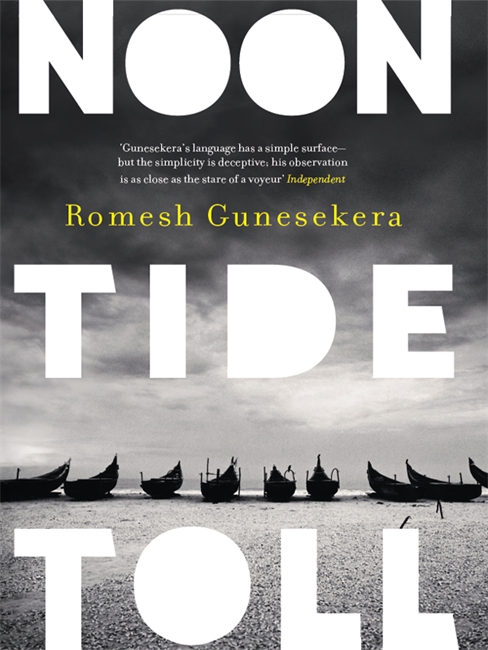
‘A driver’s job is to stay in control behind the wheel and that is all. The past is what you leave as you go. There is nothing more to it.’
Vasantha retired early, bought himself a van with his savings and now works as a driver for hire in Sri Lanka. As he ferries new entrepreneurs, charity workers and itinerant families around the country, he reveals with self-deprecating wit and folksy wisdom their uncertain lives after the end of a decades-long war.
On his journey from the army camps of the north to the moonlit beaches of the south, he begins to wonder if the past can be left behind—especially his own, and his country’s—and what the future might hold for a lovelorn soldier out on the ramparts, a fast-moving hotelier in a bombed-out town, an eager Jaffna student of Italian, or a desperate librarian of empty shelves?
A superb collection of interlinked stories—perceptive, sombre, finely tuned—Noontide Toll draws an extraordinary portrait of post-war Sri Lanka grappling with the ghosts of its troubled past.
The Non-Conformist
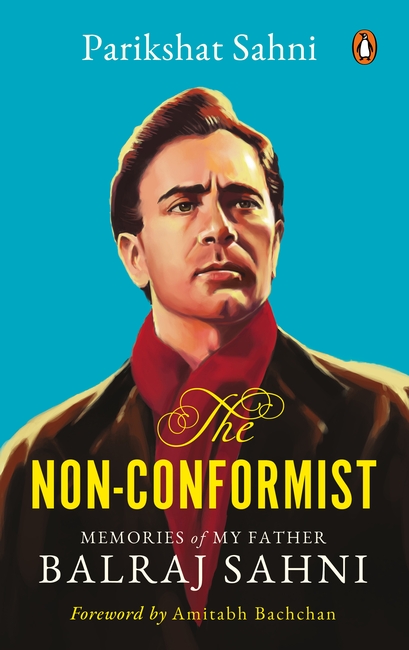
A legend with a host of admirers like Amitabh Bachchan and Om Puri, Balraj Sahni led the golden era of Indian cinema. He was known to be true to his principles, a non-conformist often remembered for his portrayals of the underprivileged. This is the untold story of one of the most iconic leading actors of this country. Written by his son Parikshat Sahni, the book–packed with unseen photos–provides personal and intimate glimpses of Balraj Sahni as a man and an actor, as a husband and friend, as a parent and patriot. It celebrates the life, times and impact of a simple man who inspired an entire generation of actors and continues to do so even today.
Monkfish Moon

This vivid and haunting short-story collection creates a masterful portrait of contemporary Sri Lanka. A married couple, living in London, find their marriage strained by the fighting in their far-off homeland. An ordinary shopkeeper is burnt alive by terrorists, leaving his neighbour’s life in turmoil. Between exile and loss, Gunesekera’s characters struggle for the elusive and divided place that they call home.
Reef

At the age of eleven, Triton goes to work as a houseboy to Mister Salgado, a marine biologist obsessed with the island’s disappearing reef. It was the biggest house he had ever seen. People from all over the world came here-to sell their wares, to talk, to live; for this was where life took place. Even the sun would rise from the garage and sleep behind the del tree at night. But beyond Mister Salgado’s house and their Sri Lankan village, there is a world falling apart, and it is in this world that Triton must become a man. An absolute classic, Reef is a luminous coming-of-age novel.
The Rule of One
Foreword by Muhammad Yunus
The Rule of One speaks about the power of social intrapreneurship in the developing world. Colleagues at Intel, Kazi I. Huque and Narayan Sundararajan founded an intrapreneurial venture between Intel and Grameen, called Grameen Intel Social Business, working with Nobel laureate Muhammad Yunus. Along with Jacen Greene, they have collected and presented their original and transformational ideas in this book that explores crippling challenges like poverty, healthcare and education which plague the developing world and how problems related to these challenges can be solved in a sustainable and comprehensive manner.
This book tells us that nearly half of the people living in developing countries are yet to benefit from information technology. Peppered with illustrative and useful examples and case studies, The Rule of One provides a comprehensive roadmap for any foundation, development agency and company to engineer solutions to deal with social and economic issues.
Phoolproof

After being forced to take a sabbatical from work because of her chronic breathing troubles, Jhelum Biswas Bose turned to flowers for solace and healing. Her blossoming connection with flowers deepened her understanding of herself and the world around her. Over the years, she has learnt to recognize and respect the soft energies of blooms with the help of healing therapies such as Bach flower remedies and aromatherapy.
Phoolproof is a complimentary bouquet to flowers, especially Indian flowers, and brings to our plain sight their subtle power and meaning. From the book’s various whorls, Jhelum teaches us how to gainfully use flowers in living spaces, foods, and beauty and healing treatments.
Many Rivers, One Sea
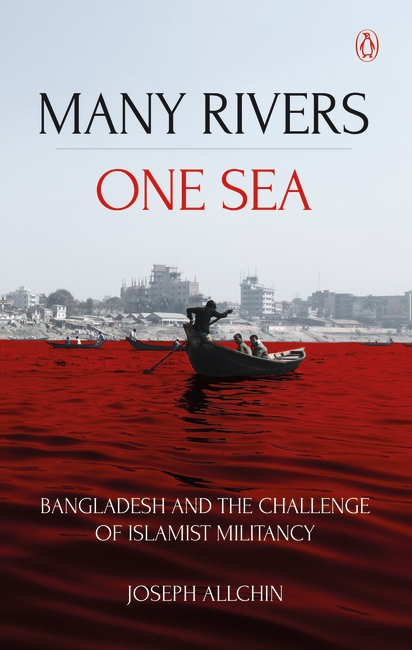
In July 2016, the world’s attention fell upon a café in a leafy Dhaka neighbourhood, as the barbarity of a distant ‘Caliphate’ was visited on this corner of South Asia. Twenty-nine died in the assault on the Holey Bakery, affixing an unbidden nightmare to the image of a supposedly tolerant Muslim nation.
Joseph Allchin dives into this burgeoning Muslim nation’s travails with extremism and politics in this penetrating work. Examining Bangladesh’s recent and not-so-recent past, Allchin explores a recent rise in Islamist politics, as well as violent terrorism. With a compelling blend of history, narrative journalism and political analysis, Allchin demonstrates how Bangladesh’s society and politics are starkly contemporary and relevant to our inter-connected world.
Delving into the local and global differences between political actors, he exposes the continued influence of the country’s independence struggle and global geopolitics on today’s tumultuous body politic. Scrutinizing the careers and dissensions of the country’s political rivals: current prime minister Sheikh Hasina, and her predecessor Khaleda Zia.
This deep-dive investigation examines the multitude of relationships between radical Islam and politics in India’s neighbourhood, laying bare the forces that seek to shape Bangladesh’s present and its destiny.
The Moonshot Game
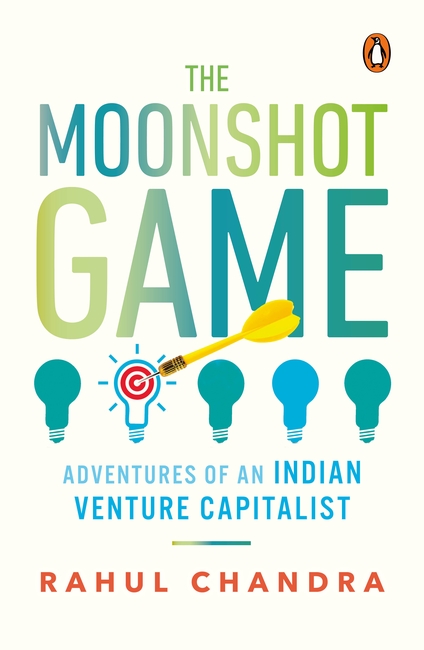
India’s start-up revolution began in 1998, when the first venture capitalists (VCs) arrived from the US and backed early businesses in IT services for global corporates. The second wave came in 2006 when home-grown VCs raised large amounts of capital and funded products and services companies for Indian consumers.
This is a gripping behind-the-scenes story of a VC’s journey, right from the beginning of the second start-up revolution in India in 2006 until the end of the funding frenzy in 2016. A story about how global conditions, local consumers, founder ambition and good old greed shaped the start-up story in India.
Rahul Chandra is the co-founder of Helion Ventures, and in this candid memoir he tells us about his journey building one of India’s oldest VC firms. In a remarkably gripping account, he recounts his adventures in India’s hyper-funded start-up ecosystem.
The Moonshot Game gives readers an insight into the secret world of a VC, with unguarded stories involving large bets and big mistakes, and tales of how one juggles several investments at the same time.
Rahul shows why being a VC is a constant journey of ups and downs, why building value is a long-term business, and why no amount of failure can be an excuse to lose optimism in the power of entrepreneurship.
End Of The Peace Process

The End Of The Peace Process is a new edition of Edward Said’s passionate critique of the Oslo Accord and its aftermath, updated to include around twenty new essays about the events of 2000-1. Said brilliantly analyses the deficiencies of Oslo, and the reasons why the subsequent Middle East peace process failed so disastrously. His criticism of the Accord has proved acutely prescient; but he retains hope, writing in an impassioned new introduction about the growing non-violent, secular Palestinian movements, and calling for those on the Israeli, European and American left to support it.