



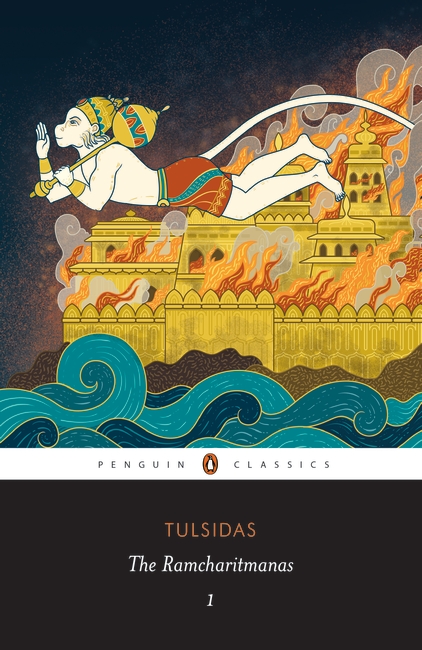
The most popular devotional text recounting the adventures of the Hindu god Ram
The Ramcharitmanas, composed by the poet-saint Tulsidas in the sixteenth century during a dynamic period of religious reform, was instrumental in making the story of Ram-and his divine feats against Ravan, the demon king of Lanka-widely accessible to the common people for the first time. Prior to that, this tale was exclusively the preserve of the priestly class who could read Valmiki’s Sanskrit epic, The Ramayana. By reimagining Valmiki’s text in the vernacular language, as a poem to be imbibed through recitation rather than reading, Tulsidas kindled a devotional revolution, forever changing the religious and social landscape of northern India.
Rohini Chowdhury’s exquisite translation brings Tulsidas’s magnum opus vividly to life, and her detailed introduction sheds crucial light on the poet and his work, placing them both in the wider context of Hindi literature.
Archives: Books
The Ramcharitmanas 2
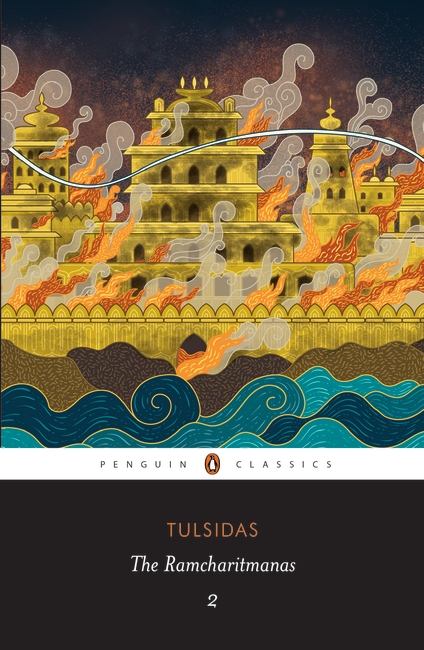
The most popular devotional text recounting the adventures of the Hindu god Ram
The Ramcharitmanas, composed by the poet-saint Tulsidas in the sixteenth century during a dynamic period of religious reform, was instrumental in making the story of Ram-and his divine feats against Ravan, the demon king of Lanka-widely accessible to the common people for the first time. Prior to that, this tale was exclusively the preserve of the priestly class who could read Valmiki’s Sanskrit epic, The Ramayana. By reimagining Valmiki’s text in the vernacular language, as a poem to be imbibed through recitation rather than reading, Tulsidas kindled a devotional revolution, forever changing the religious and social landscape of northern India.
Rohini Chowdhury’s exquisite translation brings Tulsidas’s magnum opus vividly to life, and her detailed introduction sheds crucial light on the poet and his work, placing them both in the wider context of Hindi literature.
Two Plays
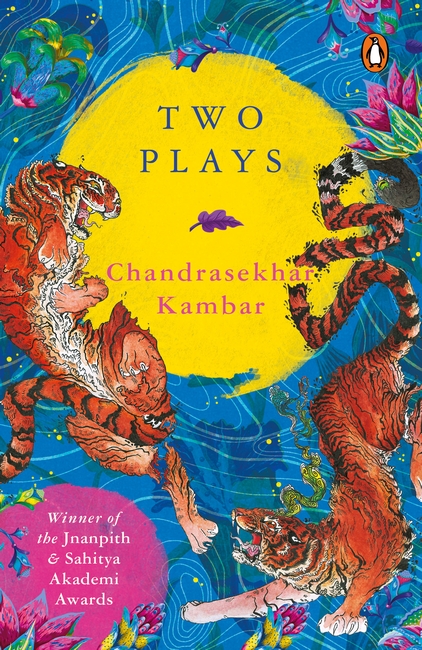
In Chandrasekhar Kambar’s timeless classic The Bringer of Rain: Rishyashringya, a village afflicted with a deadly famine eagerly awaits the arrival of the chieftain’s son, whose homecoming promises the return of rain. As the death toll rises, age-old secrets are unravelled and mythical forces step out of hiding. Will the sky relent?
Power and bloodshed run hand in hand in Kambar’s latest, Mahmoud Gawan. Set in the fifteenth-century Bahamani Sultanate, it follows Gawan’s rise to fame during a time of intense civil strife when empires routinely rose and fell.
Alluring and sublime, Two Plays is a must-read for anyone hoping to dip their toes into the rich waters of Kannada folklore and theatre.
Book of Numbers
If a person makes a special study of anyone subject, it naturally follows that he will in the end unravel, at least to some extent, the mysteries of the subject on which he has so concentrated his attention. Art reveals her mysteries of colour, form, design, pose, and a thousand and one subtleties that escape the ordinary observer to a student of Art. To the student of Biology every leaf tells its own story, every tree its age, every flower its own pedigree
The Minority Conundrum
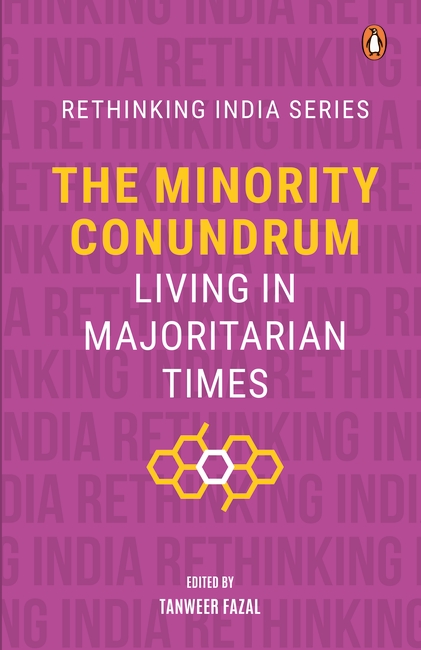
The second volume in the Rethinking India series explicates what it means to be a minority in majoritarian times. The contributors identify vulnerabilities that encumber the quest for the realization of substantive citizenship by minority groups. The essays deal with educational attainments, employment prospects in a liberalized economy, possibilities of equal opportunity, violence of the state and vigilante groups, emerging questions of citizenship and employment, linking language with the material life of its speakers, and the receding political voice of minorities amidst a majoritarian upswing.
Also examined is the concept of minority being inextricably bound with two allied ideas equally foundational to the vision of the Indian Republic: secularism and nationalism. The three together form a conceptual whole to the extent that none finds its manifestation without reference to the other two. The take-offs of the minority question in India include the archetypal nationalist’s disapproval of the very endurance of the subject post-Independence. The secular-modernists and the Hindutva nationalists converge in prescribing assimilation-one into a modernist project, the other into a national culture defined by Sanskritic Hinduism-while the pluralist vision, tolerant of divergent practices, follies in assuming cultures and religious observances as frozen. This, along with several allied issues, forms the heart of this thought-provoking volume.
Unaccustomed Earth
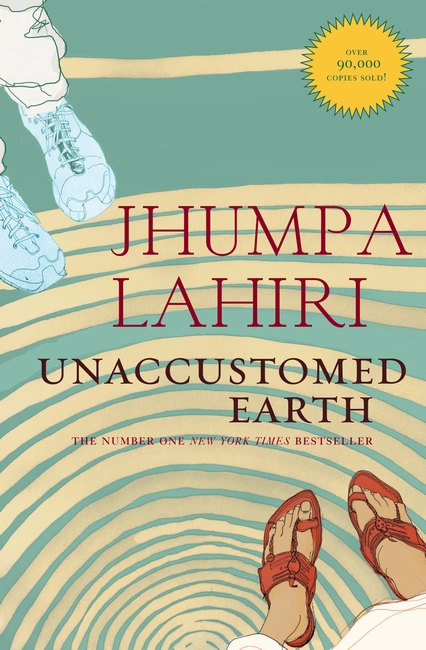
The stories of Unaccustomed Earth focus on second-generation immigrants making and remaking lives, loves and identities in England and America. We follow brothers and sisters, mothers and fathers, friends and lovers, in stories that take us from Boston and London to Bombay and Calcutta.
Blending the individual and the generational, the exotic and the strikingly mundane, these haunting, exquisitely detailed and emotionally complex stories are intensely compelling elegies of life, death, love and fate. This is a dazzling work from a masterful writer.
The Lowland
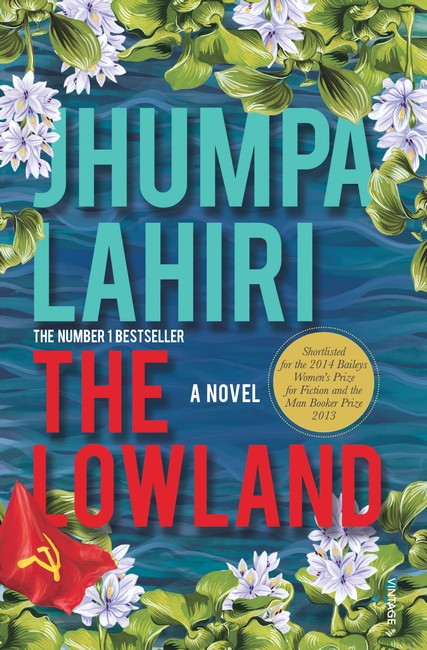
Two brothers bound by tragedy. A fiercely brilliant woman haunted by her past. A country torn by revolution. A love that lasts long past death. This extraordinary, emotionally riveting new novel, set in India and America, expands the scope and range of one of our most beloved storytellers: the Pulitzer Prize-winning, #1 New York Times best-selling author of Interpreter of Maladies and Unaccustomed Earth.
Born just fifteen months apart, Subhash and Udayan Mitra are inseparable brothers, one often mistaken for the other in the Calcutta neighborhood where they grow up. But they are also opposites, with gravely different futures ahead. It is the 1960s, and Udayan-charismatic and impulsive-finds himself drawn to the Naxalite movement: he will give everything, risk all, for what he believes. Subhash, the dutiful son, does not share his brother’s political passion; he leaves home to pursue a life of scientific research in a quiet, coastal corner of America.
But when Subhash learns what happened to his brother in the lowland outside their family’s home, he comes back to India, hoping to pick up the pieces of a shattered family, and to heal the wounds Udayan left behind-including those seared in the heart of his brother’s wife.
Suspenseful, sweeping, piercingly intimate, The Lowland is a masterly novel of fate and will, exile and return. Shifting among the points of view of a wide range of richly drawn characters, it is at once a page-turner and a work of great beauty and complex emotion; an engrossing family saga with very high stakes; and a story steeped in history that seamlessly spans generations and geographies. A tour de force and an instant classic, this is Jhumpa Lahiri at the height of her considerable powers.
In Other Words
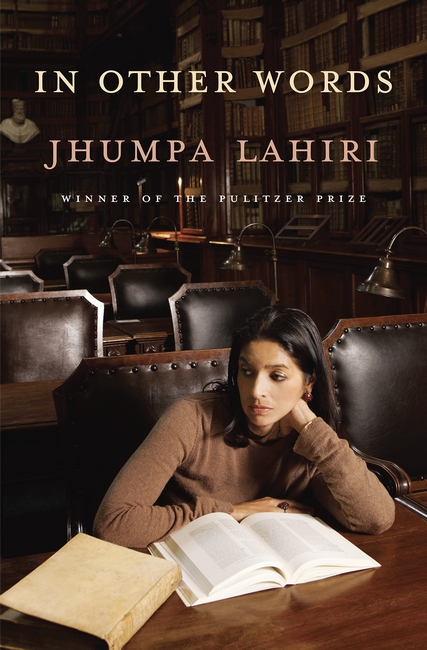
On a post-college visit to Florence, Pulitzer Prize-winning author Jhumpa Lahiri fell in love with the Italian language. Twenty years later, seeking total immersion, she and her family relocated to Rome, where she began to read and write solely in her adopted tongue. A startling act of self-reflection, In Other Words is Lahiri’s meditation on the process of learning to express herself in another language-and the stunning journey of a writer seeking a new voice.
Unabhyast Dharti
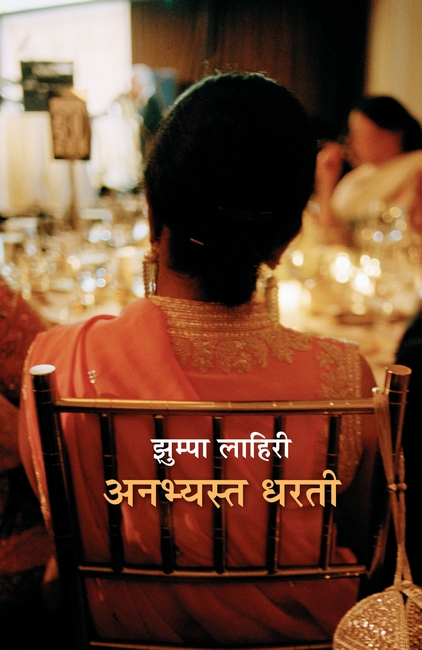
This is translated from English book Unaccustomed Earth written by Jhumpa Lahiri.
The stories of Unaccustomed Earth focus on second-generation
immigrants making and remaking lives, oves and identities in England and America. We follow brothers and sisters, mothers and fathers, friends and lovers, in stories that take us from Boston and London to Bombay and Calcutta.
Blending the individual and the generational, the exotic and the strikingly mundane, these haunting, exquisitely detailed and emotionally complex stories are intensely compelling elegies of life, death, love and fate. This is a dazzling work from a masterful writer.
The Last Burden
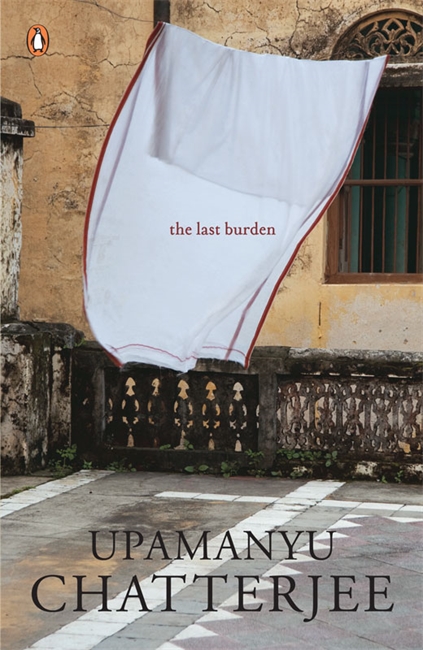
A fascinating portrayal of life in an Indian middle-class family by the best-selling author of English, August Upamanyu Chatterjee’s second novel brilliantly recreates life in an average Indian family at the end of the twentieth century. Jamun, the central character, is a young man, unmarried, adrift. He stays away from his family, which comprises his parents, Urmila and Shyamanand, his elder brother, Burfi, his sister-in-law, Joyce, his two nephews and the children’s ayah. Jamun returns to the family when his mother is hospitalized. Once there, he decides to stay on until one of his ailing parent dies. He barely admits to himself that there is another, probably stronger, reason for his extended stay in the family home- an old friend Kasturi, now married and pregnant, who has returned to the city (that she associates with Jamun) . . . Flitting back and forth in time and space, and writing in a language of unsurpassed richness and power, Upamanyu Chatterjee presents a funny, bitterly accurate and vivid portrait of the awesome burden of family ties.