



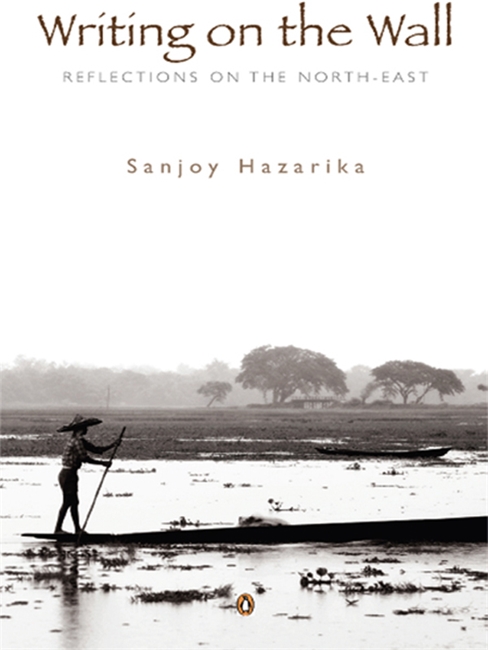
Decades of State and non-State violence in PBI – India’s landlocked North-east have taken a heavy toll on livelihoods, incomes, governance, growth and image, besides lives. Despite vast amounts of money being pumped into the region, basic needs and minimum services are yet to be met in terms of connectivity, health, education and power. What are the possible ways forward as the region stands at a crossroads? These fifteen personal essays provide an insider’s take on wide-ranging issues: from the Brahmaputra and the use of natural resources to peace talks in Nagaland; from the Centre’s failure to repeal the hated Armed Forces Special Powers Act, threats to the environment, corruption in government and extortion by armed groups to New Delhi’s Look East Policy and much more. Yet, as these essays make clear, hope, though distant, is not absent or lost. Restoring governance through people-driven development programmes, peace building through civil society initiatives, assuring the pre-eminence of local communities as evident in Hazarika’s conversations with the legendary Naga leader, Th. Muivah, and simple economic interventions through appropriate technologies — boats and health care, community mobilization and micro-credit — hold promise for solutions to the web of violence, poverty and marginalization. Writing on the Wall is a passionate call to all stakeholders in the North-east to embrace dialogue and use given platforms for peace, to go beyond the politics of tolerance to that of mutual respect. Only such multi-disciplinary, innovative approaches, rooted in realism, can bring stability and sustainable change to the region.
Archives: Books
HOSTEL ROOM 131

In the winter of 1978; Siddharth; twenty-three; meets Sudhir; twenty; in a friend’s friend’s room in Pune’s Engineering College Hostel. He falls instantly in love.
A man of unconventional views-he believes; for instance; that the two heroes in Sholay have the hots for each other rather than for the heroines-Siddharth becomes a full-time lover over the next seven years and stubbornly pursues the object of his lust and affection; despite his job as a college lecturer in Bombay.
There are many obstacles along the way; including Sudhir’s family; against whom Siddharth files a police complaint; and Sudhir’s classmates from Belgaum; led by the homophobic Ravi Humbe; who start an anti-Siddharth association. But Siddharth gets support from Gaurav and Vivek; a militant gay pair keen to ambush the enemy.
The author of Boyfriend returns with another irreverent look at India’s gay subculture.Deadpan humour and farce come together in this entertaining love story; giving us a glimpse of what really goes on in a boys’ hostel.
Cutting For Stone

Marion and Shiva Stone are twin brothers born of a secret union between a beautiful Indian nun and a brash British surgeon. Orphaned by their mother’s death and their father’s disappearance and bound together by a preternatural connection and a shared fascination with medicine, the twins come of age as Ethiopia hovers on the brink of revolution.
Moving from Addis Ababa to New York City and back again, Cutting for Stone is an unforgettable story of love and betrayal, medicine and ordinary miracles-and two brothers whose fates are forever intertwined.
Uncommon Ground
Uncommon Ground brings together titans of industry and leaders of civil society to explore eight themes that are highly relevant for our future development. Based on Rohini Nilekani’s 2008 show on NDTV, the conversations explore the middle ground between the ideological divisions that often polarize the business and voluntary sectors.
Why, despite two decades of liberalization, does economic prosperity with social inclusion remain a distant goal? Sustained GDP growth has led to the dramatic improvement in the quality of life for many. Yet millions remain untouched and are being pushed back further because of their shrinking access to the natural resources on which they now depend and because access to alternative opportunities have been denied to them.
In course of these rare dialogues between leaders who have sometimes been adversaries, a number of common concerns emerge. Among others, Anand Mahindra and Medha Patkar discuss land acquisition and use; Mukesh Ambani and R.K. Pachauri debate decentralized energy options; Sunil Mittal and Aruna Roy imagine an Indian model to enhance the employability of our labour force and Yogi Deveshwar and Sunita Narain explore how industry can become more environmentally sustainable.
The author, uniquely placed to moderate these discussions as she traverses both sides herself, demonstrates that the relationship between business, society and state need not be necessarily confrontational. In all areas -food, energy and the environment, jobs and livelihoods, transportation and mobility, poverty and financial inclusion, natural resources and economic sustainability, land use and displacement -NGOs and business can play an enabling role together with the state.
Rich in insights, Uncommon Ground highlights the critical importance of dialogue in our democracy to create a shared vision of the future. It is a significant contribution to the ongoing debate on development and equitable growth in India.
Target 3 Billion
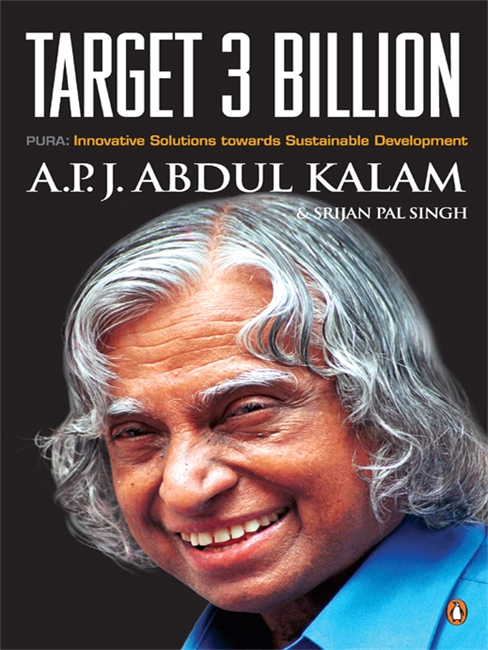
With 750 million people living in villages, India has the largest rural population in the world. Based on his Indian experience, Dr Kalam recommends a sustainable and inclusive development system called PURA—Providing Urban Amenities in Rural Areas—to uplift the rural masses not by subsidies but through entrepreneurship with community participation. To make his case, Dr Kalam cites the examples of individuals and institutions, in India and from across the world, who, with an entrepreneurial spirit and a burning desire to make a difference, have successfully generated and tapped into the potential of the rural masses. Fabio Luiz de Oliveira Rosa changed the face of the rural district of Palmares, Brazil, by acquiring for the farmers access to electricity and water, which effect combined with better agricultural methods led to an increase in prosperity and stemmed the migration to the cities The 123-strong Magar clan owned Magarpatta, a 430-acre plot on the outskirts of Pune, Maharashtra. In the 1990s, they organized and set up the Magarpatta city which is now home to over 35,000 residents and a working population of 65,000, and boasts of an IT park.
Cutting For Stone

Marion and Shiva Stone are twin brothers born of a secret union between a beautiful Indian nun and a brash British surgeon. Orphaned by their mother’s death and their father’s disappearance and bound together by a preternatural connection and a shared fascination with medicine, the twins come of age as Ethiopia hovers on the brink of revolution.
Moving from Addis Ababa to New York City and back again, Cutting for Stone is an unforgettable story of love and betrayal, medicine and ordinary miracles—and two brothers whose fates are forever intertwined.
Mirrored Mind

Vikram Chandra has been a computer programmer for almost as long
as he has been a novelist. In this extraordinary book he returns to his
early days as a writer, when he was beginning Red Earth and Pouring
Rain, and looks at the connections between these two worlds of art
and technology. Coders are obsessed with elegance and style just as
writers are but do the words mean the same thing to both? And is it a
coincidence that Chandra is drawn to two seemingly opposing ways of
thinking? To answer his questions, Chandra delves into the writings of
Abhinavagupta, the tenth- and eleventh-century Kashmiri thinker, and
creates an idiosyncratic history of coding. Part literary theory, part tech
story and part memoir, Mirrored Mind is a book of sweeping ideas. It is a
heady and utterly original work.
Unleashing Nepal
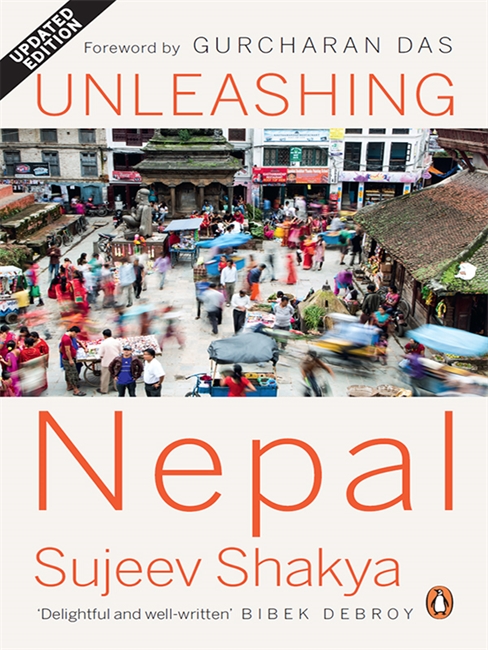
Unleashing Nepal tells the story of Nepal’s changing economy, from the time of unification to a remittance economy driven by the labour of Nepal’s diaspora. Acclaimed columnist and business leader Sujeev Shakya examines not only the squandered opportunities of the past but also what Nepali citizens need to do to escape from a feudal history of dependence and powerlessness. Here is a Nepal that could be an Asian Tiger. Here are resourceful village communities who manage their own electricity, aspirational Nepali youth, energetic migrant workers, and driven foreign-aid workers, who can make this dream a reality. Compelling and eminently readable, this updated and enriched version brings the country alive with its acute business understanding, humour and local colour.
Red Earth And Pouring Rain
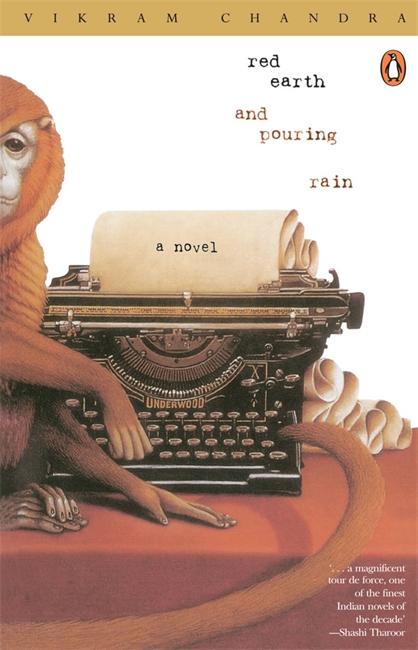
In Vikram Chandra’s astonishing first novel, the gods Hanuman, Ganesha and Yama descend on a house in an Indian city to vie for the soul of a wounded monkey. A bargain is struck: the monkey must tell a story, and if he can keep his audience entertained, he shall live.The result is Red Earth and Pouring Rain, a tale of nineteenth century India: of Sanjay, a poet, and Sikander, a warrior; of hoofbeats thundering through the streets of Calcutta and the birth of a luminous child; of great wars and love affairs and a city gone ‘mad with poetry’. And woven into this tapestry of stories is a second, totally modern narrative, the adventures of a young Indian criss-crossing America in a car with his friends and his eventual return to his homeland.
Sacred Games
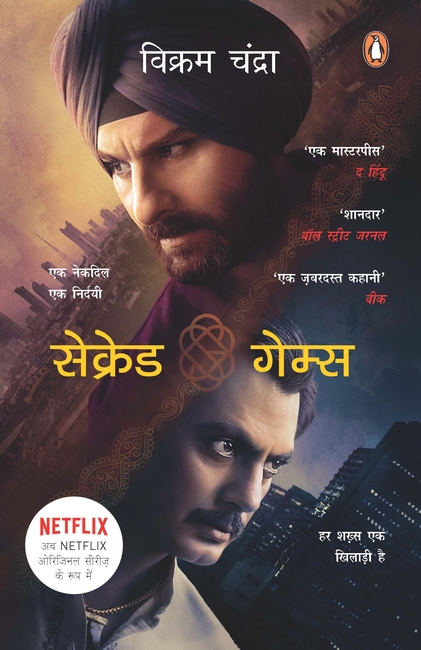
WINNER OF THE HUTCH CROSSWORD BOOK AWARD 2006 FOR BEST WORK IN ENGLISH FICTION Seven years in the making, Sacred Games is an epic of exceptional richness and power. Vikram Chandra’s novel draws the reader deep into the life of Inspector Sartaj Singh, and into the criminal underworld of Ganesh Gaitonde, the most wanted gangster in India. This is a sprawling, magnificent story of friendship and betrayal, of terrible violence, of an astonishing modern city and its dark side. Drawing on the best of Victorian fiction, mystery novels, Bollywood movies and Chandra’s years of first-hand research on the streets of Mumbai, Sacred Games reads like a potboiling page-turner but resonates with the intelligence and emotional depth of the best of literature.