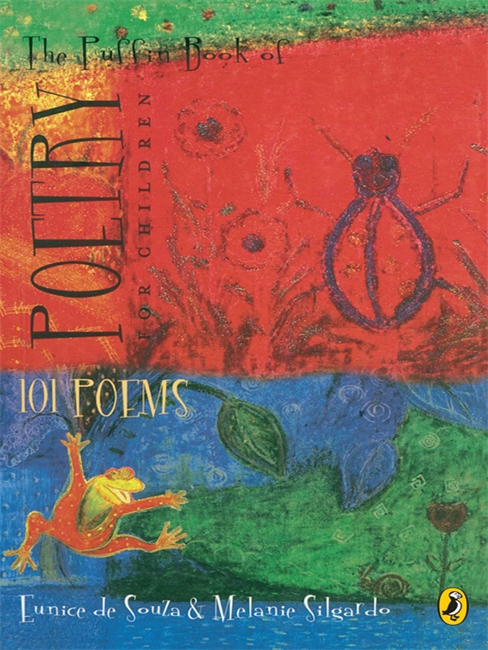
No other form of art can capture the range and diversity of human experience the way a poem can. Within these pages, you will find poems about an itch, an afternoon of play, the joys of surfing the Internet, the fear of an injection, about the cruelty of being different and being judged for it; sad poems about losing someone close; and almost anything you can think of.
Eunice de Souza and Melanie Silgardo bring together works of poets ranging from Victor Hugo to Deepa Agarwal, Alfred Lord Tennyson to T.S. Eliot in this lively and inspiring collection.
Here is the perfect introduction to the variety and sheer joy of poetry for readers of all ages.

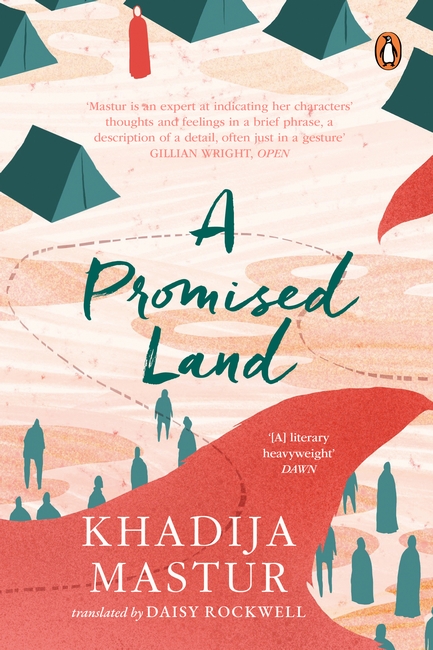
In the wake of the Partition, a new country is born. As millions of refugees pour into Pakistan, swept up in a welter of chaos and deprivation, Sajidah and her father find their way to the Walton refugee camp, uncertain of their future in what is to become their new home.
Sajidah longs to be reunited with her beloved Salahuddin, but her journey out of the camp takes an altogether unforeseen route. Drawn into the lives of another family-refugees like herself-she is wary of its men, particularly Nazim, the eldest son whose gaze lingers over her. But it is the women of the household whose lives and choices will transform her the most: the passionately beseeching Saleema, her domineering mother Khala Bi, the kind but forlorn Amma Bi, and the feisty young housemaid Taji.
With subtlety and insight, Khadija Mastur conjures a d ynamic portrait of spirited women whose lives are wrought by tragedy and trial even as they cling defiantly to the promise of a better future.
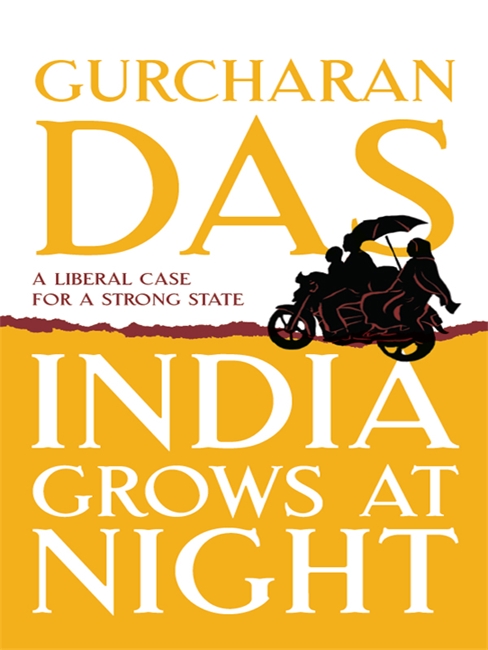
Indians wryly admit that ‘India grows at night’. But that is only half the saying: the full expression is: India grows at night . . . when the government sleeps’, suggesting that the nation may be rising despite the state. But wouldn’t it be wonderful if India also grew during the day — in other words, if public policy supported private enterprise? What India needs is a strong liberal state, but, says Das, achieving this will not be easy, because India has historically had a weak state and a strong society.

Did you know:
that the world’s first eye surgeon, who lived 2500 years ago, came from India?
Or that the standard textbook on medicine-for 600 years!-was written by a self-taught
physician from Persia?
Or that it was a seventeenth-century cloth merchant from Europe who discovered microorganisms?
Discover dozens of ‘No way!’ nuggets like these in this fun, info-packed romp through 2500 years of human health and healing. And prepare to be gobsmacked, entertained and inspired by the stories behind some of the most significant medical breakthroughs in history, and the extraordinary men and women behind them.
Featuring groundbreaking ideas, trivia, factoids, and more, this book will make you question your notions of what makes a person ‘whole’. And it will fill you with wonder at the innovations, inventions and discoveries that have made-and are continuing to make-the young science of modern medicine.

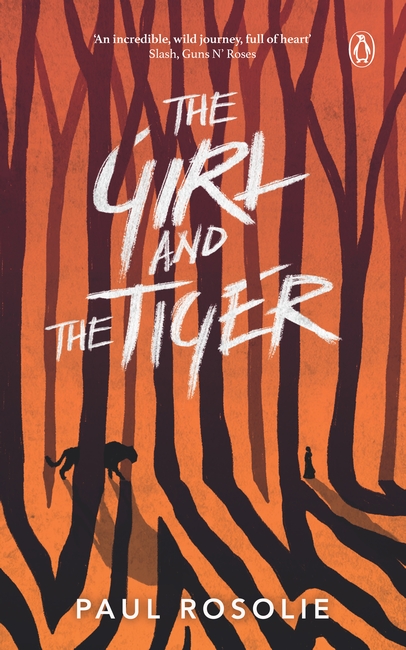
Isha is a girl who loves animals but struggles in the confines of school. When she is sent away to live with her grandparents on the Indian countryside, she discovers a sacred grove where a young Bengal tiger has taken refuge. Isha knows that the ever-shrinking forests of India mean there are few places left for a tiger to hide. When the local villagers also discover the tiger, Isha finds herself embroiled in a life or death cultural controversy.
Isha’s crusade to save the tiger becomes the catalyst of an arduous journey of awakening and survival across the changing landscape of modernizing India. Her encounters with tribal people, elephants, and her search for the wild jungle are the source of her revelations about the human relationship to the natural world. The Girl and the Tiger is a gripping story of determination, discovery and coming of age.

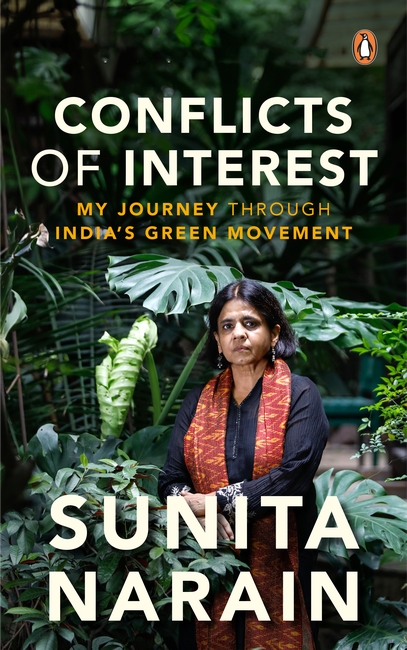
India’s foremost environmentalist, Sunita Narain, gives a personal account of her battles as part of the country’s green movement. While outlining the enormous environmental challenges that India faces today, Narain talks about how corporate lobbies and political interests often scuttle their effective resolution. She recounts some widely reported controversies triggered by research undertaken by her along with her team at the Centre for Science and Environment, such as a report on pesticides in colas, and a study on air pollution in Delhi, and includes a ringside view of global climate change negotiations. Conflicts of Interest also includes an ‘environmental manifesto’, a blueprint for the direction India must take if it is to deal with the exigencies of climate change and environmental degradation.
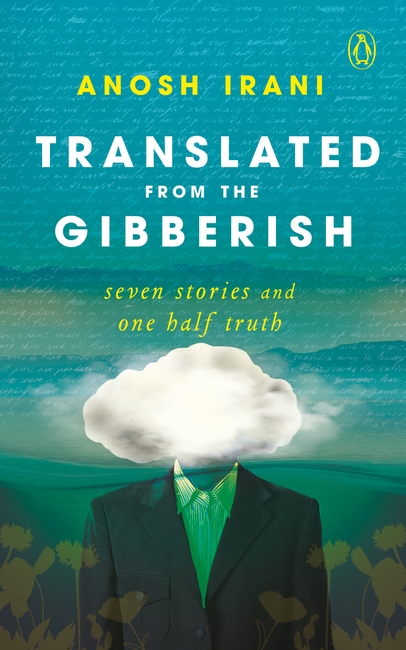
A swimming instructor is determined to re-enact John Cheever’s iconic short story, ‘The Swimmer’, in the pools of Mumbai. A famous Indian chef breaks down on a New York talk show. A gangster’s wife believes a penguin at the Mumbai Zoo is the reincarnation of her lost child. An illegal immigrant in Vancouver plays a fateful game of cricket. A kindly sweets-shop owner’s hope for a new life in Canada leads to a terrible choice.
By turns quirky and clever, poignant and powerful, Anosh Irani’s stories deftly reveal the human condition in all its vitality and vulnerability. Bookending the seven tales in this collection is a gorgeous, emotionally raw ‘translation’ of the author’s singular experience of being an immigrant, ingeniously blurring the line between fiction and fact as it shuttles between two worlds-Vancouver, where he miraculously realized his seemingly impractical dream of becoming a writer; and Mumbai, the city he could never fully leave behind.
Filled with moments of great beauty and clarity, Translated from the Gibberish confirms Anosh Irani as a unique, inventive and vitally important voice in contemporary fiction.
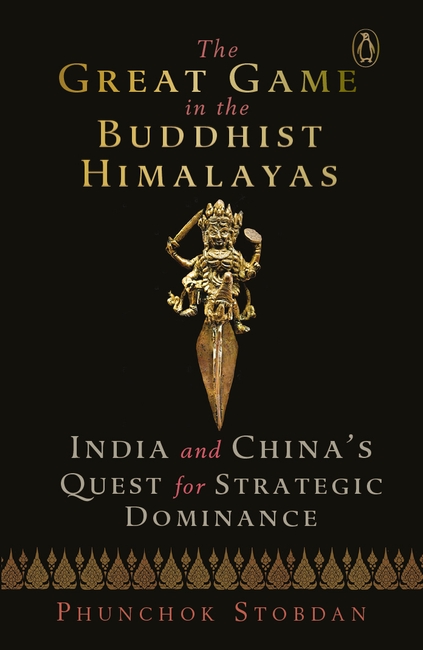
There is a new ‘great game’ being played in the Buddhist Himalayas between India, China and Tibet, which makes for a crucial third player. Together, they are leveraging their influence with the Buddhist communities to create strategic dominance, with varying degrees of success.
China’s ‘Buddhist diplomacy’ has focused on Nepal and Bhutan, and the Indian Himalayan regions of Ladakh, Arunachal Pradesh and Sikkim, which have sizeable Buddhist populations and are vulnerable to this influence. The crisis in Doklam brought into focus what will be one of the most difficult issues to unfold in the Himalayas in future: India’s insufficient ability to deal with China only through the prism of military power.
If Xi Jinping, who is known to be working towards a resolution of the Tibet question, succeeds, and the Dalai Lama does indeed return to Tibet, how will it impact Indian interests in the Buddhist Himalayas? If the Tibet issue remains unresolved, how will India and China deal with and leverage the sectarian strife that is likely to intensify in a post-Dalai Lama world?
The Great Game in the Buddhist Himalayas includes several unknown insights into the India-China, India-Tibet and China-Tibet relationships. It reads like a geopolitical thriller, taking the reader through the intricacies of reincarnation politics, competing spheres of sacred influence, and monastic and sectarian allegiances that will keep the Himalayas on edge for years to come.

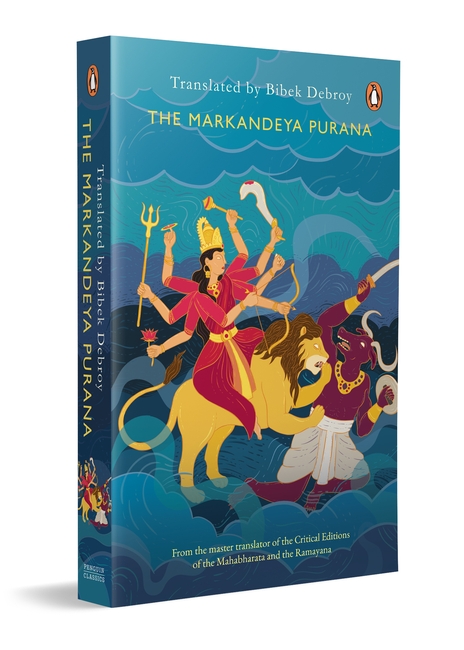
A marvellous amalgam of mythology and metaphysics, the Markandeya Purana unfolds as a series of conversations, in which the sage Markandeya is asked to answer some deeper questions raised by events in the Mahabharata. These illuminating exchanges evolve into a multi-faceted exploration of the core concepts of Hindu philosophy-from an excellent exposition of yoga and its unique attributes to a profound treatise on the worship of the goddess, the Devi Mahatmya, which also includes the popular devotional texts known as ‘Chandi’ or ‘Durga Saptashati’.
Brimming with insight and told with clarity, this luminous text is also a celebration of a complex mythological universe populated with gods and mortals, and contains within its depths many nested tales like that of Queen Madalasa and her famous song.
Bibek Debroy’s masterful translation draws out the subtleties of the Markandeya Purana, enabling a new generation of readers to savour its timeless riches.

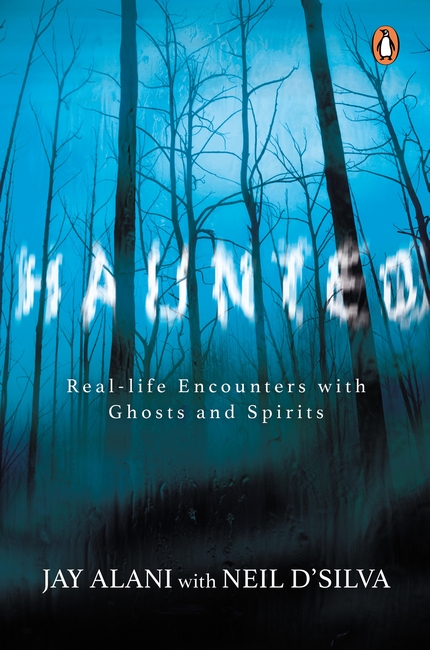
An entire town that was abandoned overnight
A fort that fell to ruins due to a curse
Mines where twenty thousand miners were trapped and perished
A village where black magic is a way of life
A fair where exorcisms are performed in public
Such are the locations dotting the colourful paranormal map of India. Intrepid adventurers and regular tourists alike have often dared to visit these places to experience for themselves their fascinating lure, and to see if ghosts truly haunt these regions. However, those who have ventured there have often returned with more questions than answers-if at all they have returned.
Haunted chronicles the real-life adventures of paranormal investigator Jay Alani in ten of the spookiest locations in India. Co-authored by Neil D’Silva, these exploits provide a ringside view of these hair-raising paranormal journeys for everyone who has an interest in exploring the dark side of the normal.