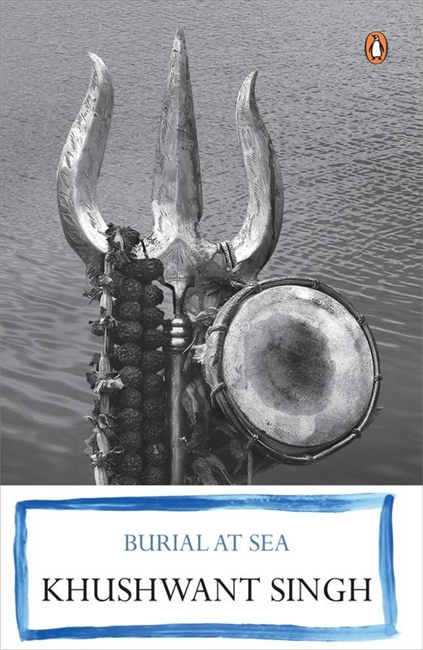
After Nehru, Victor Jai Bhagwan is Mahatma Gandhi’s favourite Indian-a brilliant young man with the temperament of a leader and fiercely committed to his country. Though Victor adores and respects Gandhi, he disagrees with the Mahatma’s vision for the future of India. He returns from university in England determined to bring the benefits of modern industry to the subcontinent, and within a few years of India’s independence, becomes the country’s biggest tycoon. But this is not the only ideal of Gandhi’s that he defies: facing a midlife crisis, he falls passionately in love with a tantric god-woman (who keeps a tiger as her pet and has a dubious past). She introduces him to the pleasures of unbridled sexuality, but also becomes the reason for his downfall.
Comic, tender and erotic by turns, Burial at Sea is vintage Khushwant Singh.

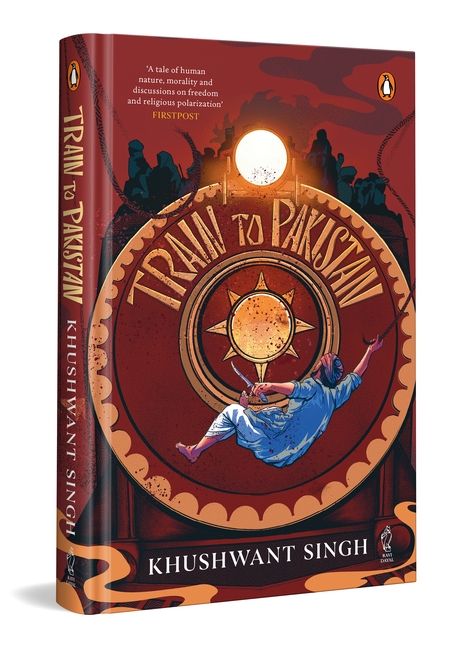
Mano Majra is a place, Khushwant Singh tells us at the beginning of this classic novel, where Sikhs and Muslims have lived together in peace for hundreds of years. Then one day, at the end of the summer, the ‘ghost train’ arrives, a silent, incredible funeral train loaded with the bodies of thousands of refugees, bringing the village its first taste of the horrors of the civil war. Train to Pakistan is the story of this isolated village that is plunged into the abyss of religious hate. It is also the story of a Sikh boy and a Muslim girl whose love endures and transcends the ravages of war.
Regarded as one of the most heart-rending testimonials of the partition of 1947, the Train to Pakistan is an ideal novel for those who wishes to learn more about India’s past and is looking for more than the socio-political scenario behind the partition.

I return to Delhi as I return to my mistress Bhagmati when I have had my fill of whoring in foreign lands . . .’ Thus begins Khushwant Singh’s vast, erotic magnum opus on the city of Delhi. The principal narrator of the saga, which extends over six hundred years, is a bawdy, ageing reprobate who loves Delhi as much as he does the hijda Bhagmati, half-man, half-woman, with sexual inventiveness and energy of both the sexes. Travelling through time, space and history to ‘discover’ his beloved city, the narrator meets a myriad of people-poets and princes, saints and sultans, temptresses and traitors, emperors and eunuchs-who have shaped and endowed Delhi with its very special mystique. And as we accompany the narrator on his epic journey we find the city of emperors transformed and immortalized in our minds forever.

A forgotten classic from India’s favourite storyteller
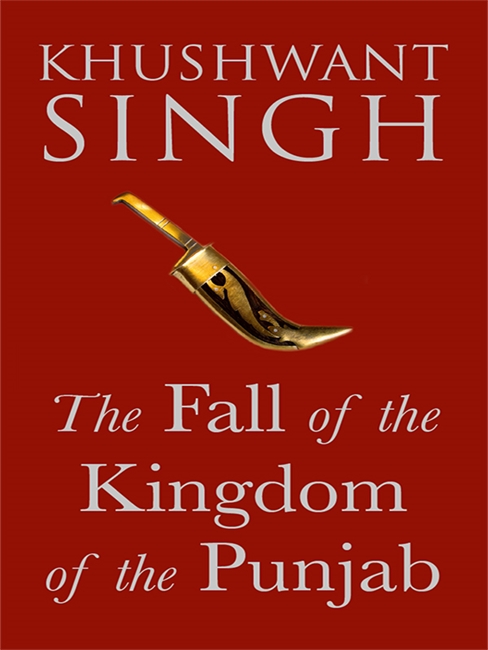
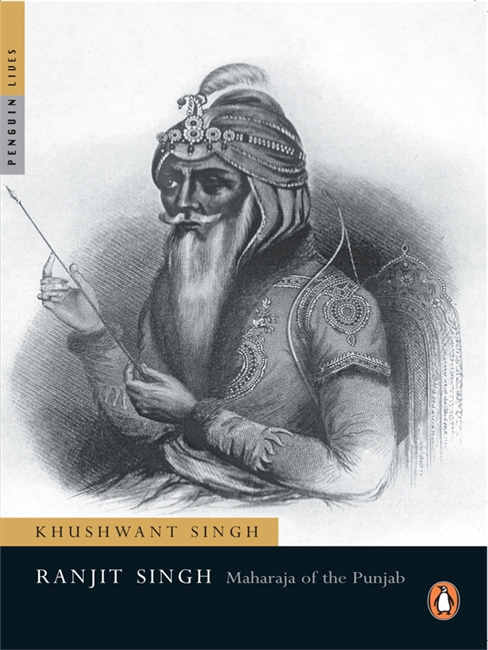
This riveting historical narrative is more full of drama than any fiction. With the death of Maharaja Ranjit Singh, the great Punjab empire he had built was riven by intrigues, betrayals, assassinations and wars until the British finally annexed it, seizing the Kohinoor diamond and sending the young Maharaja Duleep Singh into exile in Britain. Khushwant Singh brings this turbulent period to vivid life in this page-turning account of the collapse of a once-mighty kingdom.
From being a petty chieftain to becoming the most powerful Indian ruler of his time, Ranjit Singh’s empire extended from Tibet to the deserts of Sindh and from the Khyber Pass to the Sutlej. His army was one of the most powerful of the time in Asia and was the first Indian force in a thousand years to stem the tides of invasion from the north-west frontiers of Hindustan.
In this first detailed biography of the first and only Sikh ruler of the Punjab, Khushwant Singh presents Ranjit Singh as he really was. Based on Persian, Punjabi and English sources, and drawing upon the diaries and accounts of European travellers, this is a memorable account of the pageantry and brilliance of the Sikh kingdom at the height of its power, and a lively portrait of one of the most colourful characters in Indian history.
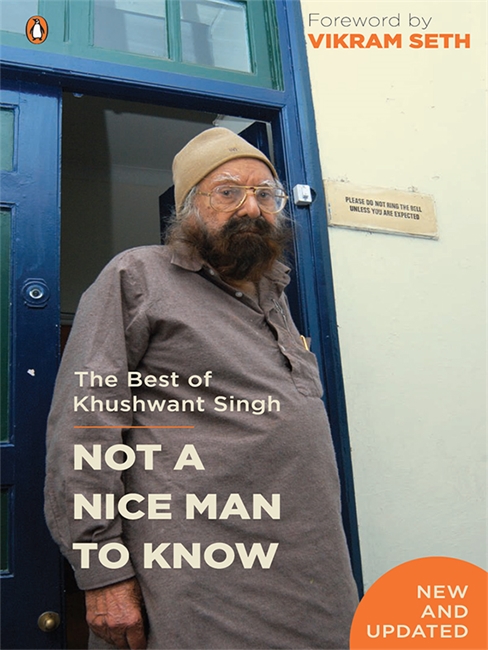
In an essay in this anthology, Khushwant Singh claims that he is not a nice man to know. Whatever the truth of that assertion, there is little question about his skill as a witty, eloquent and entertaining writer. This book collects the best of over three decades of the author’s prose, including his finest journalistic pieces, short stories, translations, jokes, plays as well as excerpts from his non-fiction books and novels. Taken together, the pieces in this selection (some of which have never been published before) show just why Khushwant Singh is the country’s most widely read columnist and one of its most celebrated authors.
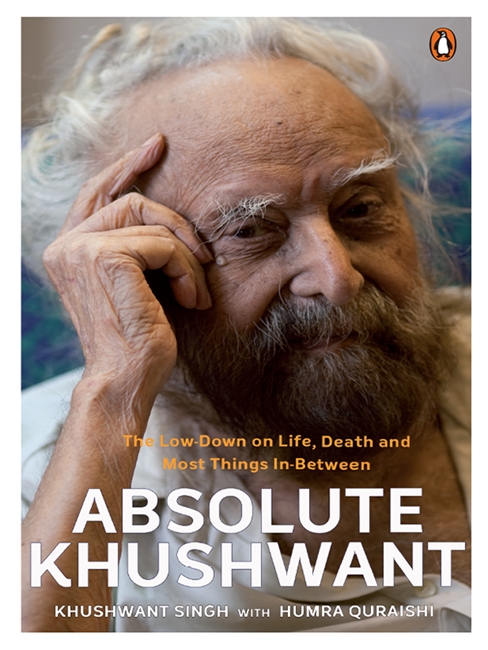
I would like to be remembered as someone who made people smile.’ One of the great icons of our time, Khushwant Singh, 95, is a man of contradictions. An agnostic who’s well-versed in the holy scriptures; a vocal champion of free speech who supported the Emergency; a ‘dirty old man’ who sees ‘the world in a grain of sand and beauty in a wild flower’. Born in 1915 in pre-Partition Punjab, Khushwant Singh has been witness to almost all the major events in modern Indian history and has known most of the figures who have shaped it. In a career spanning over six decades as writer, editor and journalist, his views have been provocative and controversial, but they have also been profound, deeply perceptive and always compelling. Khushwant Singh has never been less than honest. In Absolute Khushwant, India’s grand old man of letters tells us about his life, his loves and his work. He writes on happiness, faith and honesty. And, for the first time, about his successes and failures, his strengths and weaknesses, his highs and lows. He tells us what makes him tick and the secret of his longevity; he confesses his deepest fears and what he holds dear. He writes about sex, marriage, worship and death; the people he’s admired and detested. With personal anecdotes and rare photographs, Absolute Khushwant is uncompromising, moving, and straight from the heart.
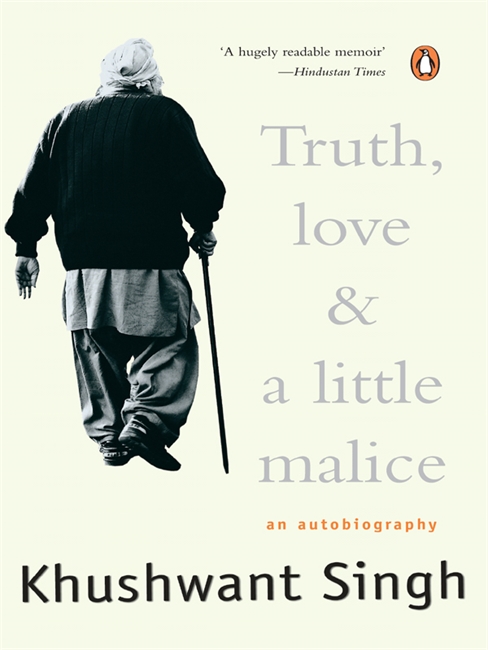
Born in 1915 in pre-Partition Punjab, Khushwant Singh, perhaps India’s most widely read and controversial writer has been witness to most of the major events in modern Indian history from Independence and Partition to the Emergency and Operation Blue Star and has known many of the figures who have shaped it. With clarity and candour, he writes of leaders like Jawaharlal Nehru and Indira Gandhi, the terrorist Jarnail Singh Bhindranwale, the talented and scandalous painter Amrita Shergil, and everyday people who became butchers during Partition.
Writing of his own life, too, Khushwant Singh remains unflinchingly forthright. He records his professional triumphs and failures as a lawyer, journalist, writer and Member of Parliament; the comforts and disappointments in his marriage of over sixty years; his first, awkward sexual encounter; his phobia of ghosts and his fascination with death; the friends who betrayed him, and also those whom he failed.

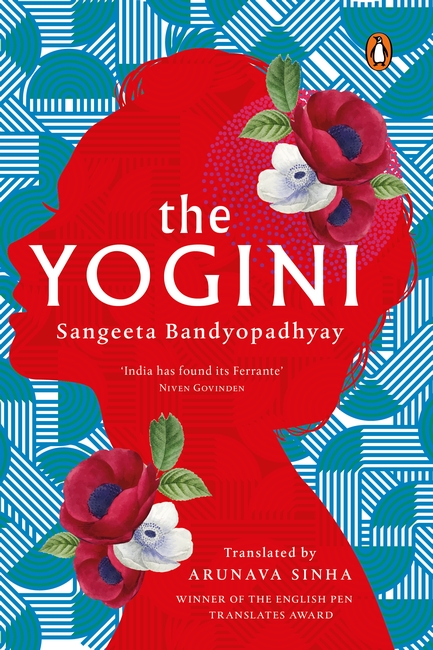
With her days split between a passionate marriage and a high-octane television studio job, Homi is a thoroughly modern young woman-until one day she is approached by a yogi on the street. This mysterious figure begins to follow her everywhere, visible only to Homi, who finds him both frightening and inexplicably arousing.
Convinced that the yogi is a manifestation of fate, Homi embarks on a series of increasingly desperate attempts to prove that her life is ruled by her own free will, much to the alarm of her no-nonsense husband and cattily snobbish mother. Her middle-class Kolkata life, and the relationships that define her identity, are disturbed to the point of disintegration.
Following the inexorable pull of tradition, the mystic forces that run beneath the shallow surface of our modern existence like red earth beneath the pavements, Homi ends up in Benaras, the holy city on the banks of the Ganga, where her final battle with fate plays out.

An accessible yet thorough introduction to Indian civilizations
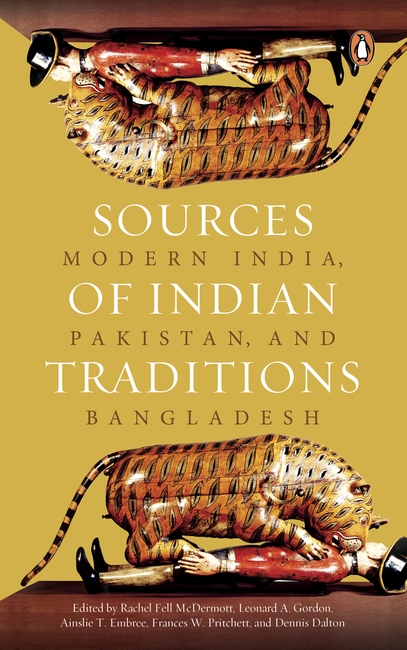
Sources of Indian Traditions is an indispensable and essential selection of primary readings on the social, intellectual, and religious history of India from the decline of Mughal rule in the eighteenth century to today. It details the advent of the East India Company, British colonization, the struggle for liberation, the partition of 1947, and the creation of Pakistan, Bangladesh, and contemporary India.
Divided thematically, it begins with a chapter on eighteenth-century intellectual and religious trends that set the stage for India’s modern development. Nineteenth-century debates over social reform, featuring the leaders of reform and revival movements, follow. Chapters on Gandhi and his reception both nationally and abroad, and different perspectives on and approaches to partition, precede a section devoted to the drafting of the Indian constitution, the rise of nationalism, the influence of Western thought, the conflict in Kashmir, nuclear proliferation, minority religions, secularism, and the role of the Indian political left. The last two sections portray Pakistan and its struggle for national identity, and Bangladesh and the controversies over the fruits of freedom.