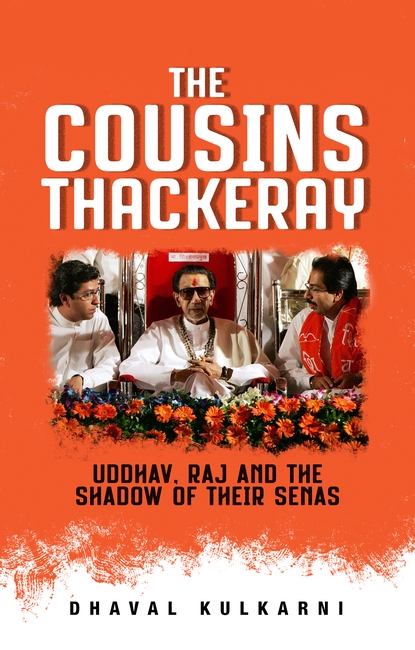
They are first cousins twice over, but have had widely divergent political trajectories. One, an abrasive, fire-breathing demagogue, was seen as his uncle’s political heir whose behavioural traits he cultivated. The other, an introvert, is at his best when plotting strategies on the drawing board rather than the rough-and-tumble of street-corner politics that his party is known for in India’s financial capital.
Starting out as brothers-in-arms, they had a bitter falling out over inheriting the party mantle. The younger cousin branched out on his own, hijacked the populist, ethno-centric plank of his parent party, putting his cousin-turned-political foe on the defensive. A series of miscalculations later, the boot seems to be on the other foot. The elder cousin has managed to keep his flock together and cemented his position as his late father Bal Thackeray’s political heir, while the other, one of the most popular crowd-pullers in Maharashtra, is itching for an electoral comeback.
The Cousins Thackeray evaluates the political careers of Shiv Sena president Uddhav Thackeray and Maharashtra Navnirman Sena (MNS) chief Raj Thackeray. It also examines questions about identity politics, and the social, cultural and economic matrix that catalysed the formation of the Shiv Sena and the MNS from it. Above all, it is a look at what makes the Thackeray cousins so integral to the politics of India, Maharashtra and Mumbai.

Did you know that the Trinity often turned to goddesses to defeat the asuras?
Did you know that the first clone in the world was created by a woman?
The women in Indian mythology might be fewer in number, but their stories of strength and mystery in the pages of ancient texts and epics are many. They slayed demons and protected their devotees fiercely. From Parvati to Ashokasundari and from Bhamati to Mandodari, this collection features enchanting and fearless women who frequently led wars on behalf of the gods, were the backbone of their families and makers of their own destinies.
India’s much-loved and bestselling author Sudha Murty takes you on an empowering journey
-through the yarns forgotten in time-abounding with remarkable women who will remind you of the strong female influences in your life.

Shivya Nath quit her corporate job at age twenty-three to travel the world. She gave up her home and the need for a permanent address, sold most of her possessions and embarked on a nomadic journey that has taken her everywhere from remote Himalayan villages to the Amazon rainforests of Ecuador. Along the way, she lived with an indigenous Mayan community in Guatemala, hiked alone in the Ecuadorian Andes, got mugged in Costa Rica, swam across the border from Costa Rica to Panama, slept under a meteor shower in the cracked salt desert of Gujarat and learnt to conquer her deepest fears.
With its vivid descriptions, cinematic landscapes, moving encounters and uplifting adventures, The Shooting Star is a travel memoir that maps not just the world but the human spirit.

The empire that was Aryavarta fades under the shadow of doom. As the bitter struggle to gain control of the divided kingdom ensues, both Krishna Dwaipayana Vyasa of the Firstborn and the Secret Keeper of the Firewrights can only watch as their own blood, their kin, savage and kill on the fields of Kurukshetra. Restraint and reason have deserted the rulers who once protected the land and they manipulate, scheme and kill with abandon – for victory is all that matters.
At the heart of the storm stands Govinda Shauri, driven by fickle allies and failed kings, to the very brink of darkness. He may well be the greatest danger Aryavarta has faced yet, for he is determined to change things forever.
Reforging the forsaken realm in the fire of his apocalyptic wrath, Govinda prepares to destroy everything he loves and make the ultimate sacrifice for the sake of one last hope: that humanity will rise.
There will be revolution.
Emperor Dharma Yudhisthir of the Kauravas and Empress Panchali Draupadi rule over a unified Aryavarta, an empire built for them by Govinda Shauri with the blessings of the Firstborn and by the might of those whom everyone believes long gone – the Firewrights.
Now the Firewrights rise from the ashes of the past, divided as before in purpose and allegiance, and no one, it seems, can stand in the way of the chaos about to be unleashed on the land – not the Firstborn, not the kings of Aryavarta, and not Govinda Shauri.
As sinister plans are put in play and treacherous alliances emerge, Aryavarta transforms into its own worst enemy. Dharma Yudhisthir gambles away his empire, the tormented empress is forced into a terrifying exile and the many nations of the realm begin to take up arms in a bid to fight, conquer and destroy each other.
His every dream shattered, Govinda is left a broken man. The only way he can protect Aryavarta and the woman in whose trusted hands he had left it is by playing a dangerous game. But can he bring himself to reveal the terrible secrets that the Vyasa has guarded all his life – secrets that may well destroy the Firstborn, and the Firewrights with them?

On a visit to the Park Street cemetery in Calcutta, Feluda and his friends chance upon an old grave that has been dug into. Slight clues lead them into the heart of a mystery that is both complex and blood-curdling. When the jigsaw that involves a seance in a gloomy old building, a singer in a restaurant, a ruthless and rich collector and a midnight vigil at the graveyard is put together, what emerges is one of the most intriguing mysteries Feluda has ever been faced with.
The murder of a stranger in a Calcutta hotel leads Feluda and his friends to Kathmandu, straight into the den of Maganlal Meghraj, their old adversary. With an incident at Swayambhunath, an ambush in a prayer wheel factory, a thrilling night at the casino, and a prolonged LSD-induced delusion for Jatayu, the case soon turns into a memorable adventure. In a sensational climax, the master sleuth uncovers an international racket in spurious drugs and emerges victorious yet again.
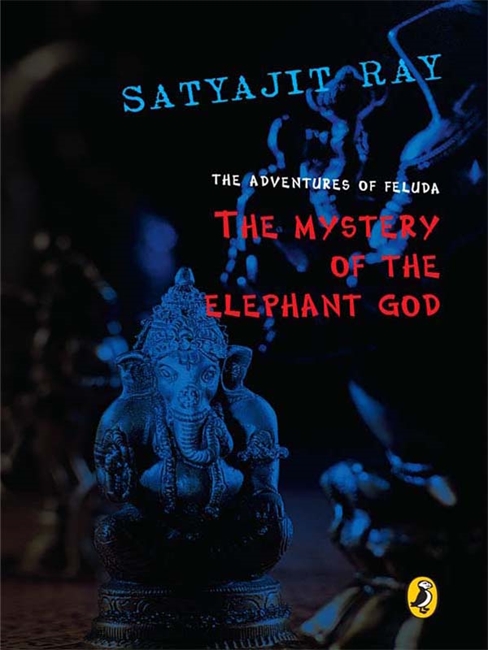
In Varanasi during the Durga Puja, a valuable statuette of Ganesh is stolen from the famous Ghoshal household. Before he can recover it, Feluda has to face the arch-villain Maganlal Meghraj, solve a murder case, and unmask a fraud sadhu. One of Feluda’s most hair-raising adventures, this case puts all his skills to the test.

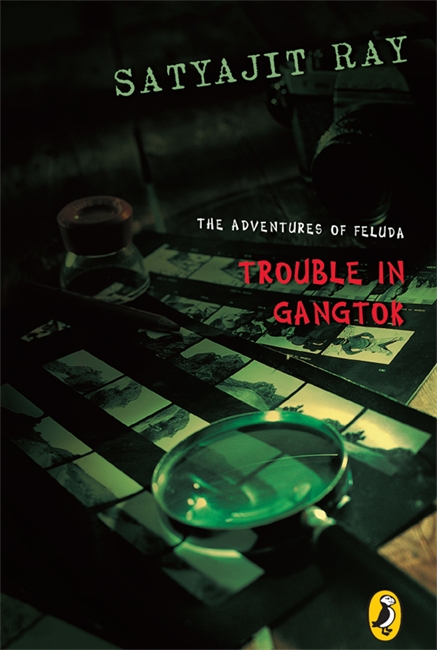
Feluda and Topshe are on vacation in picturesque Gangtok when they stumble upon the mysterious murder of a business executive. There are many suspects-the dead man’s business partner Sasadhar Bose, the long-haired foreigner Helmut, the mysterious Dr Vaidya, perhaps even the timid Mr Sarkar. Feluda unravels the knotty case with his usual aplomb and tracks the criminal down in a far-flung monastery.
In Temptations of the West, Pankaj Mishra brings literary authority and political insight to bear on journeys through South Asia, and considers the pressures of Western-style modernity and prosperity on the region. Beginning in India, his examination takes him from the realities of Bollywood stardom, to the history of Jawaharlal Nehru’s post-independence politics. In Kashmir, he reports on the brutal massacre of thirty-five Sikhs, and its intriguing local aftermath. And in Tibet, he exquisitely parses the situation whereby the atheist Chinese government has discovered that Tibetan Buddhism can be “packaged and sold to tourists.” Temptations of the West is essential reading about a conflicted and rapidly changing region of the world.