



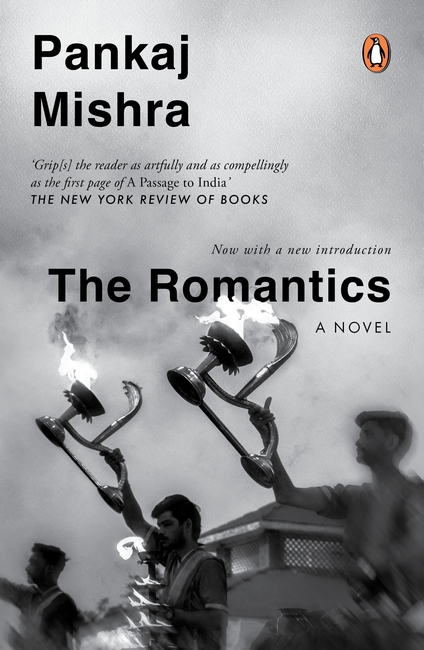
Samar, a young man of limited means, moves to Benares, the ancient city of learning, to lose himself in the world of books. There he meets Rajesh, a poor student, and Catherine, a young French woman, who shows him a very different side of his own country—and self. A resonant and ambitious novel, The Romantics is both the story of a sentimental education and of the widening fault lines within contemporary India.
Archives: Books
Butter Chicken In Ludhiana
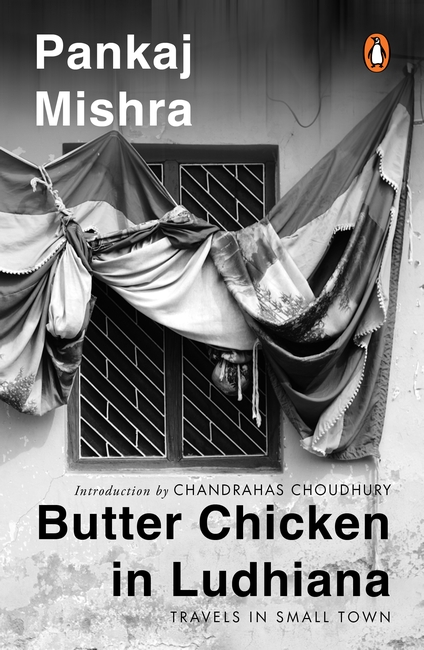
In Butter Chicken in Ludhiana, Pankaj Mishra captures an India which has shrugged off its sleepy, socialist air, and has become instead kitschy, clamorous and ostentatious. From a convent-educated beauty pageant aspirant to small shopkeepers planning their vacation in London, Pankaj Mishra paints a vivid picture of a people rushing headlong to their tryst with modernity. An absolute classic, this is a witty and insightful account of India’s aspirational middle class.
India In Mind
This superb anthology, edited and with an introduction by Pankaj Mishra, gives us some of the finest writings on India by foreigners over the past two centuries. From Mark Twain’s puzzled fascination with Indian castes and customs to J.R. Ackerley’s delightful recollections of his visits with an eccentric gay Maharajah, here are pieces that will amuse, charm and surprise.
The Ultimate Memory Handbook for Students
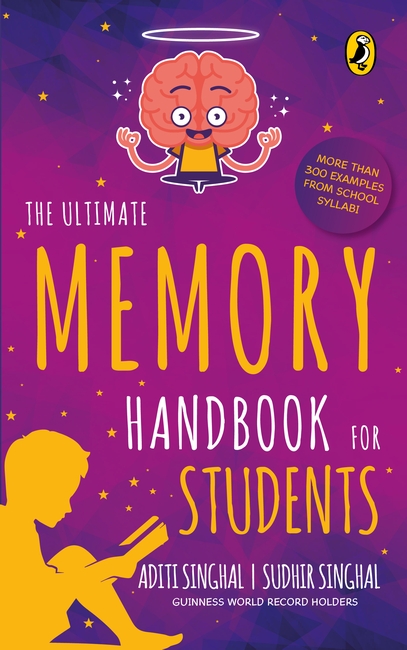
Ace your curriculum and assessments with these ultimate memory techniques
Retaining information can be hard, especially when you have so many things to focus on-your homework, the rigorous school syllabus and the ever-dreaded competitive exams. Today, students just have too much to learn!
This book will serve as a handbook for you to memorize information, topics and answers from your course of study. Using memory-enhancing practices and techniques along with tips, activities and practice sections, you can train your brain to retain a wide range of topics and subjects. From the periodic table to trigonometry, history dates to countries and their capitals, master it all with these practical techniques, supported by some quirky and fun artwork that serves as a great visual aid.
An End To Suffering
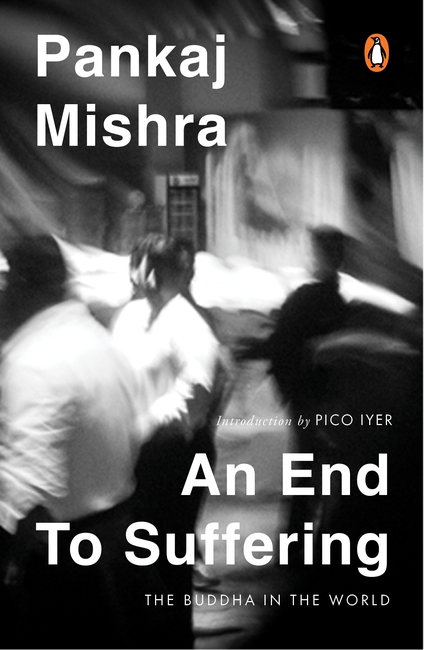
Is the Buddha still relevant today and, if so, in what way? Pankaj Mishra tries to answer this question as he travels through poverty-ridden South Asia to gilded Europe and America. Along the way he discovers how Buddhist thought has flowered even in a materialistic world, and reveals the parallels between the age of the Buddha and the contemporary world. A rich, challenging and deeply contemplative work, An End to Suffering is regarded as many to be Mishra’s masterpiece.
Crack the Code
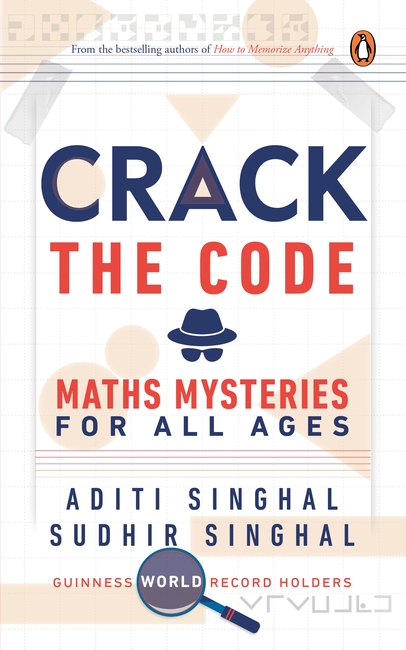
CRACK THE CODE: Maths Mysteries for All Ages is packed with clever conundrums and ciphers for anyone interested in critical thinking, logical reasoning and mathematics, of course. Whether you are 11 or 41, you’re going to love solving the 25 mysteries in this book that combine simple cryptology and arithmetic with some quick, out-of-the-box thinking. Use these innovative puzzle-based activities and stories to build problem-solving skills, remember maths concepts and practise mental maths in a way that’s effective and, most importantly, interesting.
Mathematics just became more fun!
Happiness
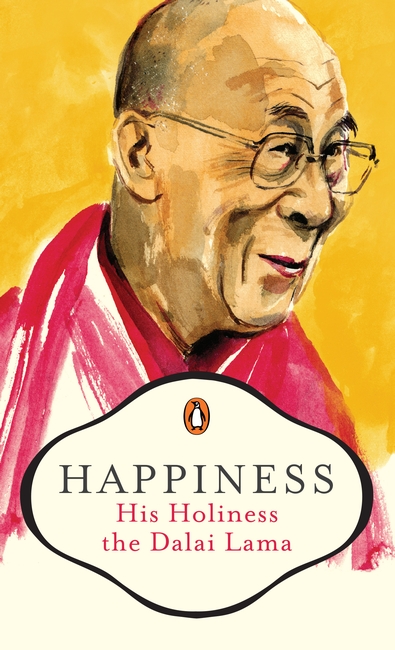
From the realization of mental peace to the experience of illness, suffering, death, pain, pleasure, desire and contentment, the Dalai Lama opens a window into the attainment of absolute happiness in day to day life.
Path To Tranquility
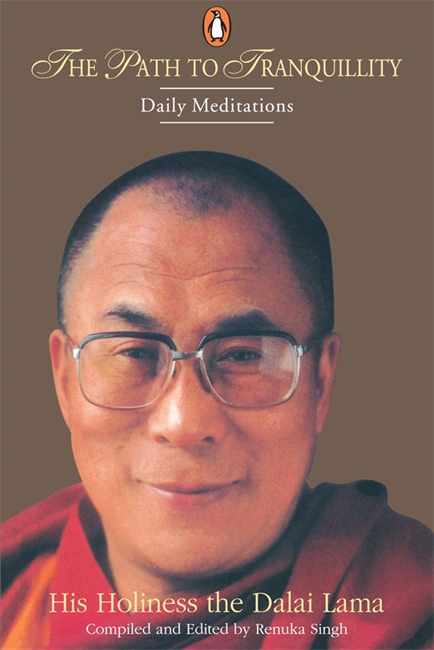
Sayings, prayers and stories drawn from the life and teachings of one of the worldýs greatest spiritual teachers. The quotations brought together here for the first time in the form of daily reflections, one for each day of the year, reflect His Holiness the Dalai Lamays inclusive vision of the world. He speaks in each of these with an endearing informality and practicality about almost every aspect of human life, dwelling on diverse issues ranging from religious differences to the ethics of advertising. Yet, in spite of his honest acceptance of the state of modern life, His Holiness never lets us forget the essential goodness of the human heart.Wise, humane and inspiring, these words will bring solace to young and old alike with their message of hope and their deep yet easily understandable philosophy of compassion and non-violence.
The Trotter-Nama
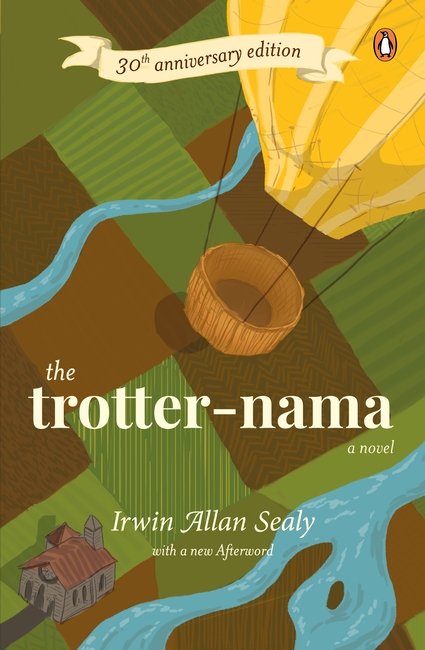
In the eighteenth century, Justin Aloysius Trotter, or the Great Trotter, tumbles earthward to his death while surveying his vast lands and admiring his wealth from a hot air balloon. Two centuries later, the Seventh Trotter, Eugene Aloysius, narrates the epic story of a family at the fraying ends of its past glory.
Laced with verses, advertisements, journal entries, elegies, quotations and learned interpolations, The Trotter-Nama is the chronicle of seven generations of Trotters as they struggle to hold on to their shifting identities. They are Indian at lunch and British at dinner; eat curry with a dessert spoon and dessert with a teaspoon. Over the years, the expanding clan of Trotters produces soldiers, artists, poets, politicians-even a dhoti-wearing nationalist. As their excesses slowly turn to improvidence and the family chateaux is turned into a hotel, their increasing numbers and declining fortunes strain against a rapidly changing country.
Allan Sealy’s epic comedy of manners about Britain and India’s motley offspring is as much a treat today as it was thirty years ago.
Ghalib
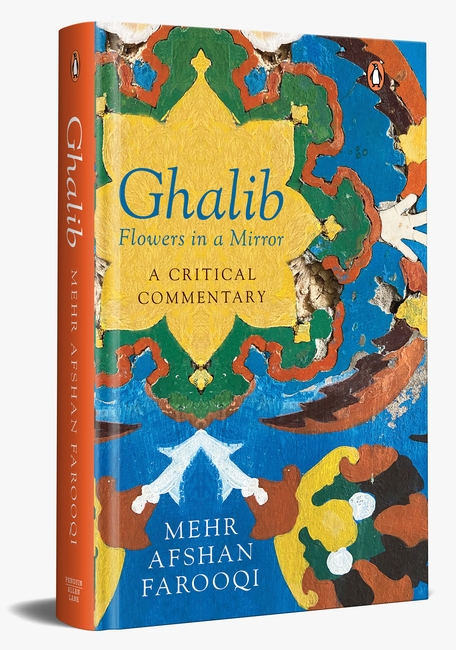
Mirza Asadullah Khan Ghalib was born in Agra in the closing years of the eighteenth century. He wrote in both Urdu and Persian and was also a great prose stylist. Ghalib fascinates his readers for many reasons, but one of the most noted qualities in Ghalib was that he was a careful, even strict, editor of his work. It is said that he discarded or disregarded more than half of his Urdu verses. These verses were forgotten for long, until as late as 1918, in the library of the princely state of Bhopal. In 1921, they were edited and published as a new Divan-e Ghalib.
In Flowers in a Mirror, Mehr Afshan Farooqi continues her research in the strain of her first book, A Wilderness at My Doorstep. She examines Ghalib’s approach to his work, the world in which he lived and composed, and ultimately, his genius. She selects 30 ghazals from the rejected corpus, translates them into English and provides an erudite, sparkling critical commentary. Through this book, she highlights the significance of marginalized poetry and the need to reinstate the forgotten verses in our lives and hearts.