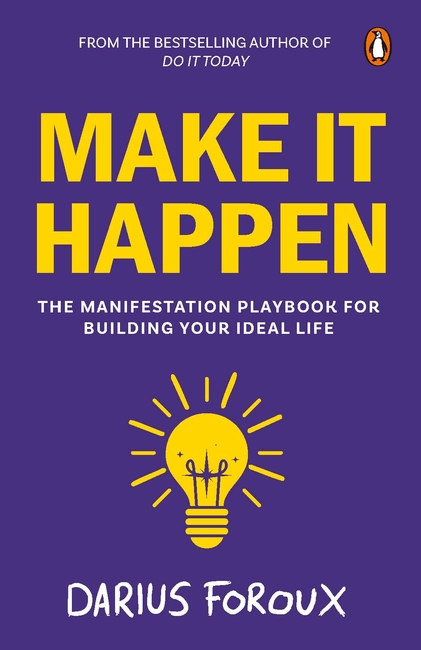
Make It Happen: The Manifestation Playbook for Building Your Ideal Life
Manifesting isn’t magic—it’s about mindset and execution. Make It Happen is your step-by-step guide to turning dreams into reality through focus, belief, and intentional action.
Many people think manifestation is simply about wishful thinking, but true manifestation is about making things happen. It starts with knowing exactly what you want, trusting in your ability to achieve it, and aligning your actions with your words. Most of us are stuck in a cycle of groupthink, letting external influences dictate our beliefs and results. This book helps you break free and take control of your future.
In this practical and powerful guide, you’ll discover:
- Mindset Mastery – Build the foundation for manifestation by identifying your true desires, clarifying your vision, and overcoming mental barriers like doubt, fear, and negativity.
- Execution Strategies – Learn how to turn intention into action, recognize opportunities, build momentum, and stay on track—even when obstacles arise.
Manifestation isn’t passive—it’s an intentional process, and this book shows you exactly how to make it work for you. If you’re ready to step into your full potential and create the life you desire, it’s time to make it happen!

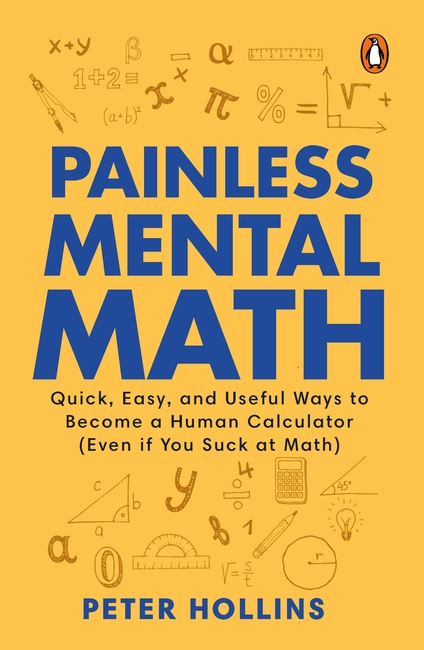
Master Mental Math & Take Control of Your Transactions
In a world filled with constant transactions—both professional and personal—being quick with numbers can be the key to success. Whether you’re negotiating deals, splitting bills, or calculating discounts, having strong mental math skills ensures you’re never taken for granted or misled.
Mental math isn’t as hard as you think—you’ve just been doing it the difficult way.
Painless Mental Math teaches you the simplest, most practical techniques to calculate effortlessly. Learn how to handle tax, tips, discounts, weights, conversions, and measurements—all without reaching for a calculator.
This book will help you:
- Overcome math anxiety and develop a confident mindset.
- Master real-world math scenarios with ease.
- Discover the power of Vedic Math, the Trachtenberg Method, and other mental math frameworks.
- Perform quick calculations effortlessly—anytime, anywhere.
- Make faster decisions and reduce dependency on calculators in everyday scenarios.
No fluff. No complicated formulas. Just practical, easy-to-use math shortcuts that will transform the way you think about numbers.
Stop being intimidated by math—take charge and start calculating like a pro!

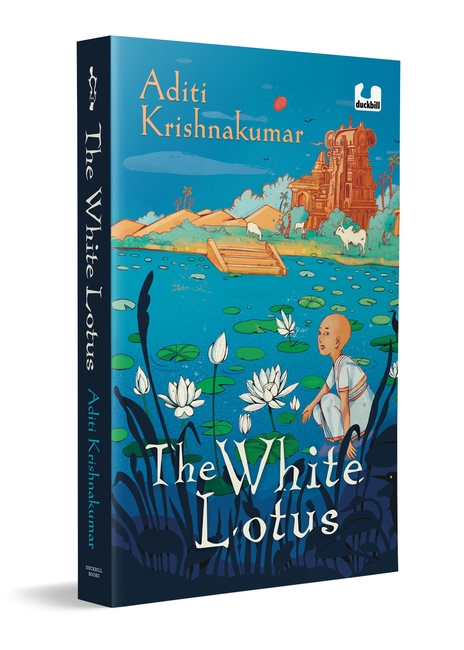
‘I can hardly imagine it, but everything will be different tomorrow. I’ve looked forward to it for years. I’ll truly be Sundaram’s wife, together in body as in spirit . . .’
But that tomorrow never comes, and at just fourteen, Aru is left a widow. Worse, the village whispers name Sundaram a drunkard and a thief—the thief who called down the wrath of the local goddess by stealing the most precious jewel from her temple. The future Aru once envisioned vanishes, leaving only bleak and endless days ahead. So when a ray of hope appears in the form of the landlord’s children offering her a job as their grandmother’s companion, Aru seizes the opportunity.
In the landlord’s house, Aru gains an education, finds that her charge is an unexpected ally, and dreams impossibly of having a profession of her own one day. But she also learns uncomfortable truths. Soon, her very life is in danger . . .
The White Lotus is a gripping murder mystery and a rich social portrait of the plight of widows in rural Tamil Nadu at the very start of the twentieth century.
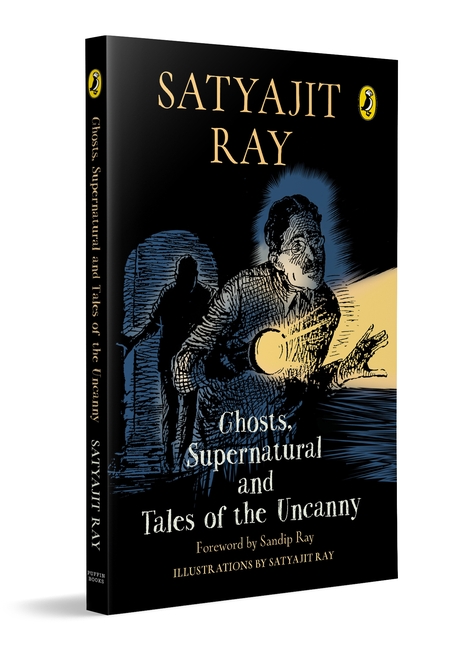
Strange things happen all the time—doors creak open, shadows shift when no one’s looking and some places never quite forget their past.
Enter the world of mystery, magic and macabre with master storyteller Satyajit Ray as he weaves the finest supernatural tales. Featuring haunted houses, curious doppelgangers, sinister shape-shifters and the lingering echoes of a forgotten past, these hauntingly beautiful stories are presented for the first time to a new generation of readers in this collectable edition, featuring Ray’s original artworks.
Come, venture into the realms where the boundaries blur!
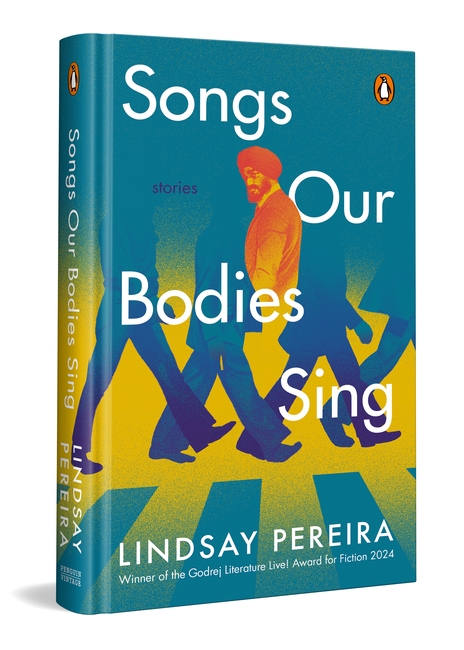
A heartbroken father in London turns to the Beatles to make sense of what he has lost. An antique dealer in Bombay rejects jingoism in favour of racism. Two immigrants in Toronto look for ways of belonging with a local rock band. And, in Paris, a tourist rejects long-held ideas about trust.
The East and West have clashed in innumerable ways since each first acknowledged the existence of the other. The stories of Songs Our Bodies Sing are set at these points of intersection. What they reveal are commonalities rather than differences, with protagonists on opposite sides of an imaginary divide, trapped in boxes of their own making.
This collection pulls back a curtain ever so slightly, in ways that are strange yet tender, to show how our struggles to understand the human condition are the same, wherever we are.

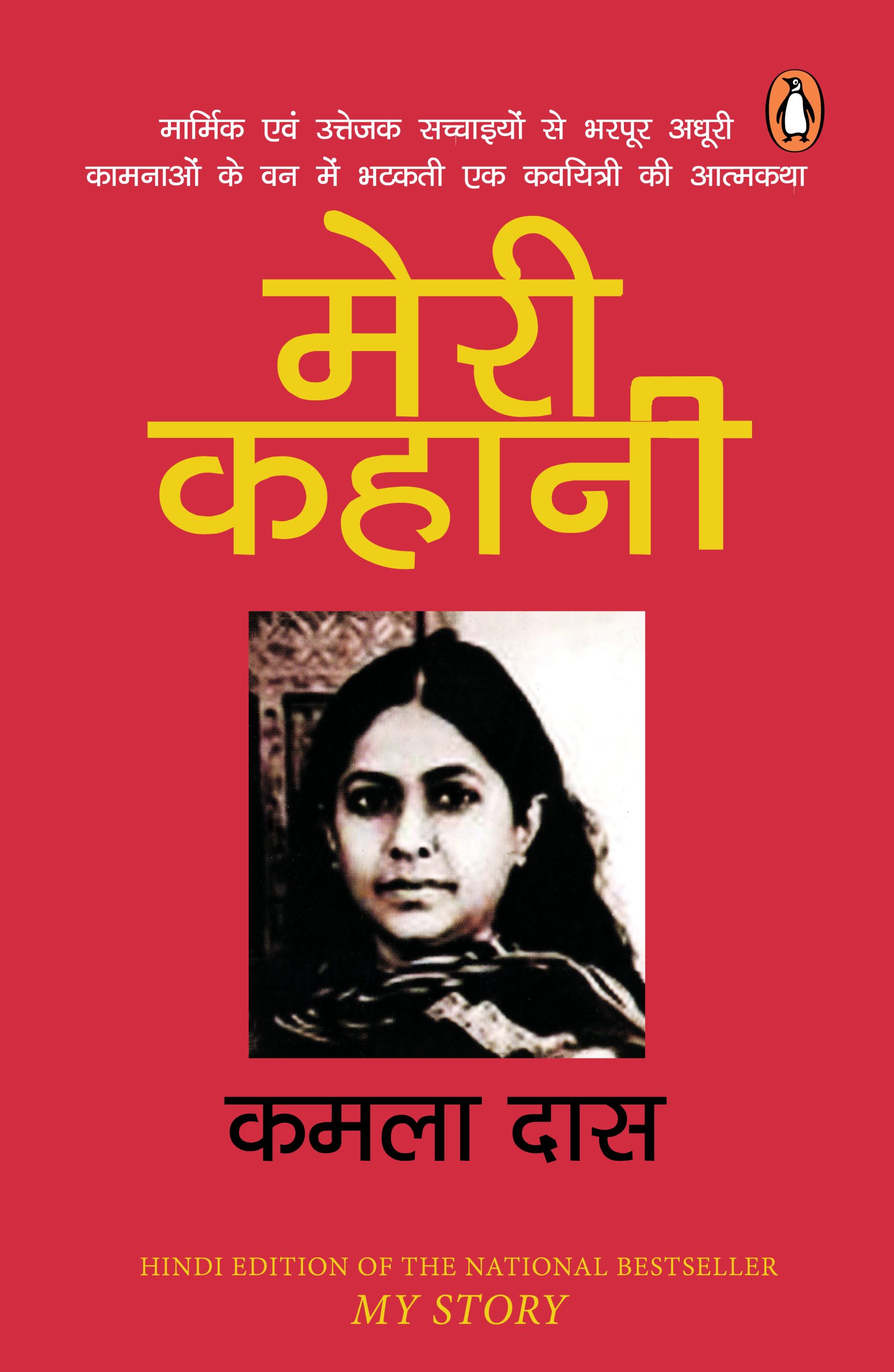
मेरी कहानी कमला दास की विश्वप्रसिद्ध आत्मकथा है। इस पुस्तक की लोकप्रियता का अंदाजा इसी बात से लगाया जा सकता है कि इसका पंद्रह विदेशी भाषाओं में अनुवाद हुआ। इसमें कमला दास ने उन बातों को भी लिखा है, जिसके कारण उनकी छवि पर असर पड़ा, लेकिन वे बातें उनके जीवन की कड़वी सच्चाई थी। एक साधारण गृहस्थ महिला जब अपनी भावनाओं को अपनी पूरी ताकत और साहस के साथ कागज़ पर उतारती है, तो साहित्य की दुनिया में तहलका मच जाता है। कमला दास के साथ ऐसा ही हुआ था।
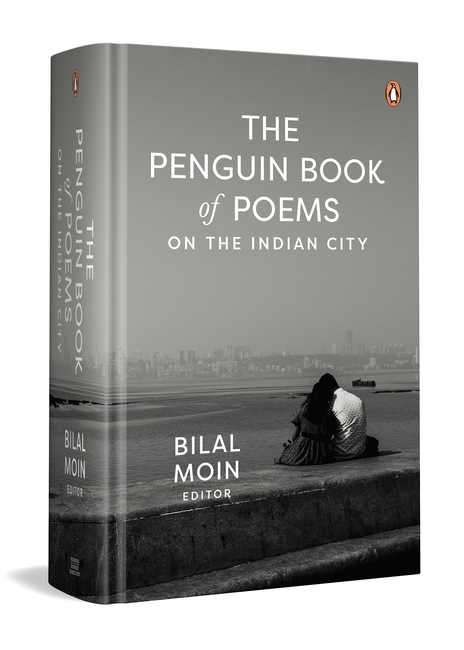
From Ghalib’s Delhi and Nissim Ezekiel’s Bombay to Agha Shahid Ali’s Srinagar and Kamala Das’s Calcutta, from Sarojini Naidu’s Hyderabad to Arundhathi Subramaniam’s Madras to Kynpham Sing Nongkynrih’s Shillong; The Penguin Book of Poems on the Indian City takes you on a spectacular poetic journey across thirty-seven cities in India.
This anthology contains 375 poems, those written in English and those translated from nearly twenty languages. From the classical voices of Valmiki and the Sangam poets to the Bhakti and Sufi strains of Surdas, Kabir and Amir Khusrau, and the early modern figures like Mir Taqi Mir, Narmad, Rudyard Kipling and Rabindranath Tagore, this collection offers an immersive lyrical exploration of India’s urban landscape.
Contemporary poets such as Arvind Krishna Mehrotra, Vikram Seth, Eunice de Souza, Arun Kolatkar, Amrita Pritam, Amit Chaudhuri and Gulzar carry this tradition into the present. Together, they take the reader through depictions of cities as imperial capitals, colonial outposts and dynamic, ever-evolving spaces that serve as the backdrop for postmodern life. At its core, this collection portrays the Indian city as a complex organism and living embodiment of the collective consciences of its many, many residents. A collection for not just those who live in the cities featured in this book but for anyone who is familiar with the chaotic, paradoxical and magical tableau that constitutes life in a city in this part of the world.
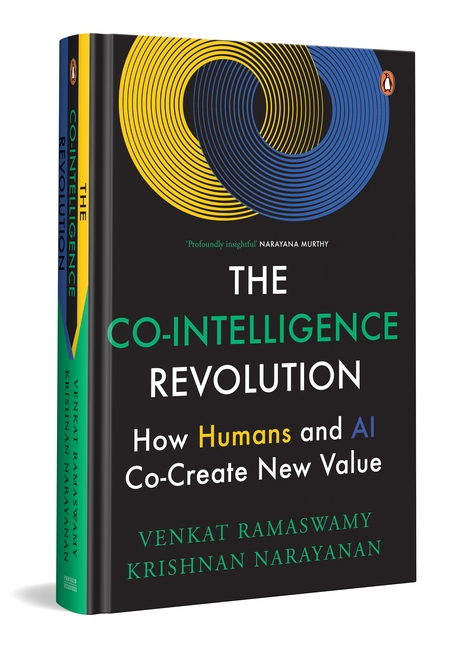
We stand at the dawn of a new industrial revolution—not one defined by automation and substitution of human intelligence but by co-intelligence, where human ingenuity and artificial intelligence (AI) (as a different kind of intelligence) collaborate in ways never imagined. The Co-Intelligence Revolution is a visionary road map for this emerging era, which will redefine human experiences, innovations, and economic and social systems—reshaping not just how we work but also how we live.
With over a hundred compelling real-world examples from over twenty-five ecosystems— from L’Oréal’s inclusive beauty platforms, through Siemens’s industrial metaverse, to India’s Digital Public Infrastructures (DPIs) expanding access to finance, citizen-services, and education—the book illustrates co-intelligent enterprises across private, public and plural sectors unlocking new frontiers of value.
The Co-Intelligence Revolution is a call to action to co-create a world where intelligence emerges from the interactive, ever-evolving relationships between humans, AI and ecosystems.
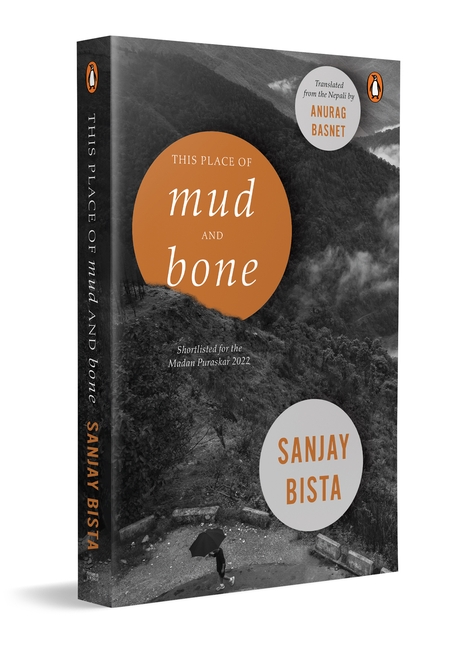
1986. Labda, a rain-washed, sun-soaked village near Darjeeling. Six friends—Karnabahadur, Tshering, Ambar,
Buddha, Rajvir and Sarita—attend school together here. Elsewhere, on the streets of Darjeeling, a struggle is brewing for a separate state of Gorkhaland in India. Soon, the hot winds of that violent Andolan sweep inexorably into Labda and transform the village into a battleground. Students turn on their teachers, villages and families are divided along party lines, and everyone is forced to take sides. Those who don’t are compelled to run away, never to return.
Spanning thirty years, This Place of Mud and Bone follows the lives of these schoolmates as they negotiate a political struggle that continually shapeshifts but never ends. The novel tells the story of how Karnabahadur transformed into Angulimaal and why Buddha was forced to kill him; it describes why Tshering became Tshering the Murderer and, eventually, Mad Tshering; it explores the circumstances that made Ambar hang himself; and describes why Sarita ended up selling eggs in a hospital. Even as it captures the minutiae of individual, yet intertwined, lives, this capacious novel—also a contemporary history of the Darjeeling hills—shows how people learn to absorb violence and live with it, and how a man who has made up his mind can be the strongest force on earth.
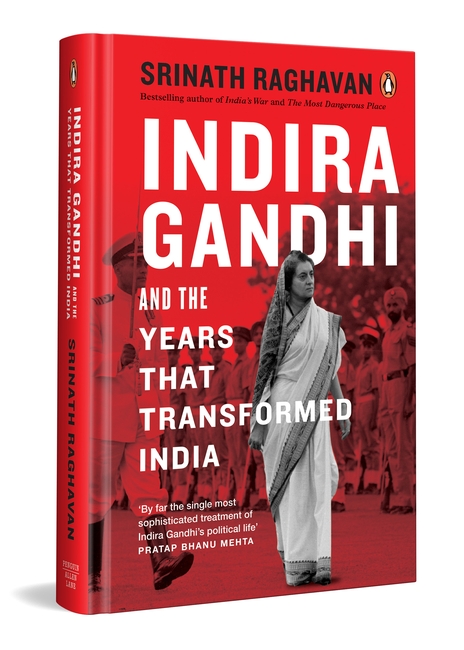
Indira Gandhi’s ascent as prime minister of India in 1966 was entirely unforeseen. But she soon emerged as one of the most powerful political leaders of her times, who transformed the world’s largest democracy. She served as prime minister for a remarkable fifteen years, leaving behind a complex and deeply controversial legacy.
In this fascinating account, Srinath Raghavan tells the story of Indira Gandhi’s political career and the momentous changes that India experienced under her leadership. From her tentative start in high office to her remarkable electoral victories, the dark days of the Emergency of 1975–77, and her assassination at the hands of her bodyguards in 1984, Raghavan sheds new light on her politics and government, as well as on her adversaries and critics. He shows how the 1970s were the hinge on which the history of the country turned—and how Indira Gandhi transformed the new postcolonial nation into the India of today.