



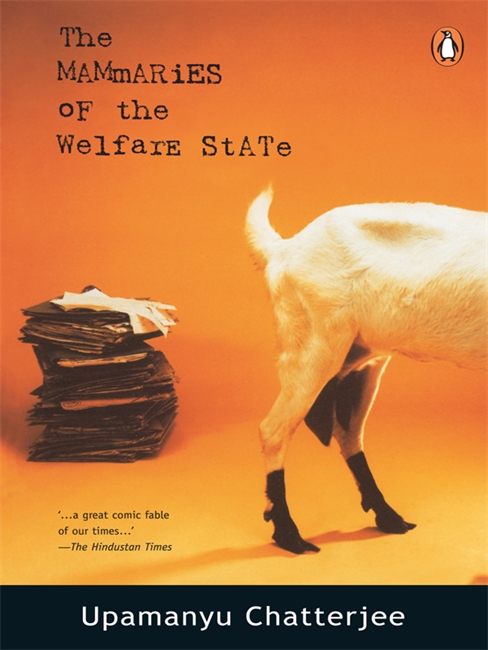
In this sequel to Upamanyu Chatterjee’s debut novel, English, August, Agastya Sen- older, funnier, more beleaguered, almost endearing- and some of his friends are back. Comic and Kafkaesque, The Mammaries of the Welfare State is a masterwork of satire by a major writer at the height of his powers.
Archives: Books
Weight Loss
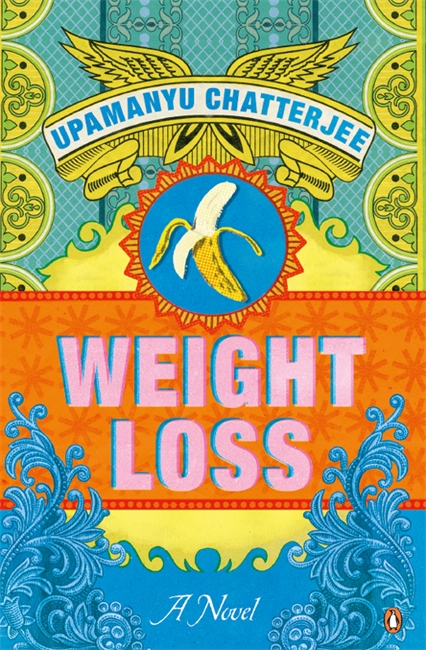
Innocent and unremarkable, but for his near crippling obsessions with sex and running, Bhola goes through life falling for all the wrong people. At School, he lusts indiscriminately after his teachers, both male and female, and is equally attracted to eunuchs. While in college, he has vaguely demeaning affairs with his landlady, and a vegetable vendor-cum-nurse and her husband. Later, he marries (a woman with a voice like liquid gold), fathers a daughter and suspects he is close to balance and beauty. Then his past catches up with him.
Upamanyu Chatterjee’s genius for black humour and the absurd has never been more compelling than in this unforgettable portrait of a lost life.
Bridgital Nation
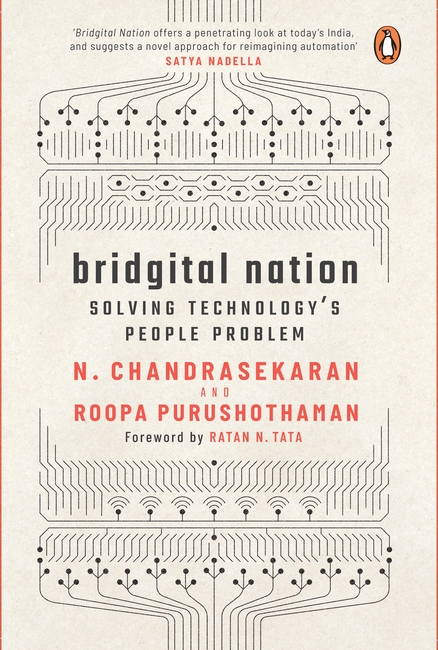
It is 2030. India is among the world’s top three economies. All Indians use advanced technology to either do their job or get their job done. All Indians have access to quality jobs, better healthcare and skill-based education. Technology and human beings coexist in a mutually beneficial ecosystem.
This reality is possible. It is within reach. With Bridgital.
In this ground-breaking book, N. Chandrasekaran, chairman of Tata Sons, presents a powerful vision for the future. To the coming disruption of artificial intelligence, he proposes an ingenious solution, where India is perfectly positioned to pave a unique path from the rest of the world. Instead of accepting technology as an inevitable replacement for human labour, India can use it as an aid; instead of taking them away, AI can generate jobs.
Chandrasekaran and his co-author, Roopa Purushothaman, chief economist of the Tata Group, survey the country for inspirational stories of resilience and determination, and seek the ideal way to bring Indians closer to their dreams through on-ground application of a cutting-edge approach called ‘Bridgital’. This brilliant concept addresses India’s biggest challenges by bridging the huge chasm between rural and urban, illiteracy and education, aspirations and achievement. From healthcare to education to business, the model can be applied in various sectors, and, by a conservative estimate, it can create and impact 30 million jobs by 2025.
One of the country’s foremost industry leaders and pioneers, N. Chandrasekaran brings his expertise of over thirty years with the Tata Group to offer a blueprint for building a prosperous India, where everyone is included in the growth story.
Foreword by Ratan N. Tata
Everybody Loves a Good Drought
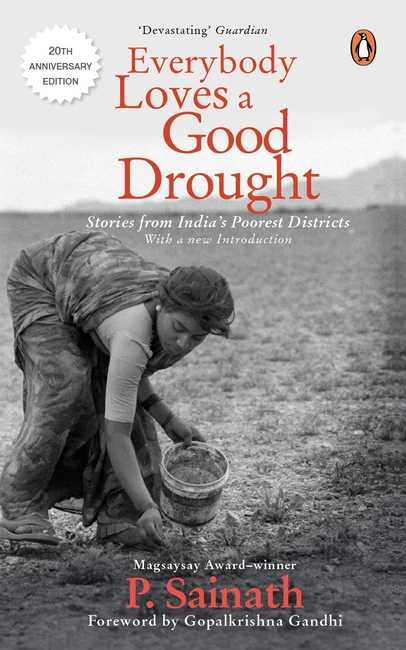
A CLASSIC OF REPORTAGE FROM RURAL INDIA BY AWARD-WINNING AUTHOR, WITH A FOREWORD BY GOPALKRISHNA GANDHI
– Prescribed in over 100 universities
– Reveals the human face of poverty
– Key to understanding issues of globalization, human rights, development economics in India
– One of the classics of journalism
Acclaimed across the world, prescribed in over 100 universities and colleges, and included in part in The Century’s Greatest Reportage (Ordfront, 2000), alongside the works of Gabriel Garcia Marquez, Studs Terkel and John Reed, Everybody Loves a Good Drought is the established classic on rural poverty in India. Twenty years after publication, it remains unsurpassed in the scope and depth of reportage, providing an intimate view of the daily struggles of the poor and the efforts, often ludicrous, made to uplift them.
An illuminating introduction accompanying this twentieth-anniversary edition reveals, alarmingly, how a large section of India continues to suffer in the name of development so that a small percentage may prosper. Besides exposing chronic misgovernance, it is also a devastating comment on the media’s failure to speak for the voiceless.
Democracy on the Road (Hindi): Loktantra via Sadak Marg
On the eve of a landmark general election, Ruchir Sharma offers an unrivalled portrait of how India and its democracy work, drawn from his two decades on the road chasing election campaigns across every major state, travelling the equivalent of a lap around the earth. Democracy on the Road takes readers on a rollicking ride with Ruchir and his merry band of fellow writers as they talk to farmers, shopkeepers and CEOs from Rajasthan to Tamil Nadu, and interview leaders from Narendra Modi to Rahul Gandhi.
No book has traced the arc of modern India by taking readers so close to the action. Offering an intimate view inside the lives and minds of India’s political giants and its people, Sharma explains how the complex forces of family, caste and community, economics and development, money and corruption, Bollywood and Godmen, have conspired to elect and topple Indian leaders since Indira Gandhi. The ultimately encouraging message of Ruchir’s travels is that, while democracy is retreating in many parts of the world, it is thriving in India.
Democracy on the Road
On the eve of a landmark general election, Ruchir Sharma offers an unrivalled portrait of how India and its democracy work, drawn from his two decades on the road chasing election campaigns across every major state, travelling the equivalent of a lap around the earth. Democracy on the Road takes readers on a rollicking ride with Ruchir and his merry band of fellow writers as they talk to farmers, shopkeepers and CEOs from Rajasthan to Tamil Nadu, and interview leaders from Narendra Modi to Rahul Gandhi.
No book has traced the arc of modern India by taking readers so close to the action. Offering an intimate view inside the lives and minds of India’s political giants and its people, Sharma explains how the complex forces of family, caste and community, economics and development, money and corruption, Bollywood and Godmen, have conspired to elect and topple Indian leaders since Indira Gandhi. The ultimately encouraging message of Ruchir’s travels is that, while democracy is retreating in many parts of the world, it is thriving in India.
Wisdom for Start-ups from Grown-ups
What makes some companies survive the test of time while others struggle and perish?
Corporations do not exist in isolation; they are always part of something else, something bigger-an ecosystem. Inspired by the secrets of shinise (Japanese companies dating back to the time of samurais), R. Gopalakrishnan and
R. Narayanan take a deep dive into the art of growing and sustaining a business. Over the forty-eight years of his close association with Unilever and Tata, Gopalakrishnan has gathered experiences and know-how about what makes companies tick, while Narayanan, having worked with Coca-Cola, Nestlé and then two start-ups of his own, has developed keen insights about angel investing and mentoring.
Wisdom for Start-ups from Grown-ups is the culmination of their collaborative effort to bring the best of what grown-ups have to offer to start-ups, presented in the form of all-important lessons.
Land Of The Seven Rivers-Pb
Did ancient India witness the Great Flood? Why did the Buddha give his first sermon at Sarnath? How did the Europeans map India?
Combining scholarship with sparkling wit, Sanjeev Sanyal sets out to explore how India’s history was shaped by its geography-answering questions you may have never thought to ask. Moving from geological and genetic origins to present-day Gurgaon, Land of the Seven Rivers is riveting, wry and full of surprises.
Pataakha
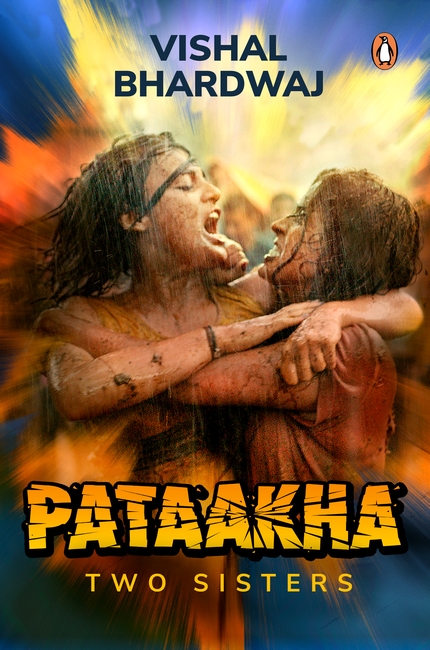
They cannot live with each other, they cannot live without each other. As children, they squabbled all day long. When they were old enough, they married two brothers, and took with them their feuds to their in-laws. Boisterous and fiery pataakhas, sisters Badki and Chhutki are the bane of each other’s existence. Their days start and end with petty squabbles and violent clashes, marked by unapologetic use of free-flowing abuses. But one day things go too far and a decision made upturns the trajectory of both their lives.
Based on Charan Singh Pathik’s eponymous short story, Vishal Bhardwaj’s adaptation is a hilarious tour de force that obliquely and mischievously takes into its ambit notions of patriarchy and diplomacy between nations. This translation, which includes the novella and the screenplay that the film-maker developed from the short story, not only brings to the reader a rustic, elemental tale rooted in the soil, but also provides a unique glimpse into the art of adapting a literary work into film.
India’s Most Fearless
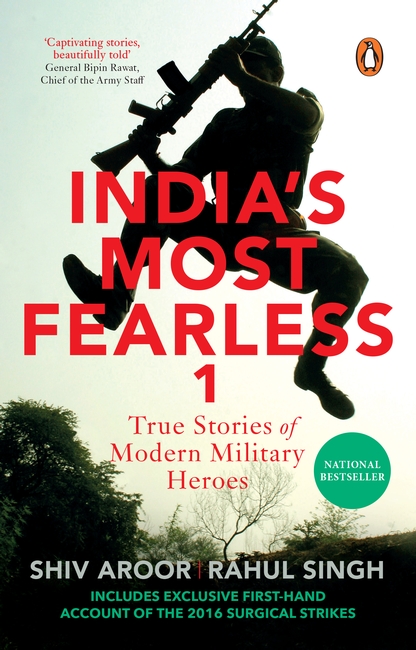
The Army major who led the legendary September 2016 surgical strikes on terror launch pads across the LoC; a soldier who killed 11 terrorists in 10 days; a Navy officer who sailed into a treacherous port to rescue hundreds from an exploding war; a bleeding Air Force pilot who found himself flying a jet that had become a screaming fireball . . .
Their own accounts, or of those who were with them in their final moments.
India’s Most Fearless covers fourteen true stories of extraordinary courage and fearlessness, providing a glimpse into the kind of heroism our soldiers display in unthinkably hostile conditions and under grave provocation.